How to Maintain Your E-Bike: The Complete Maintenance Schedule for US Riders in 2026
Intro
An e-bike is a bigger investment than a regular bicycle, and it has more parts that can wear out. Between the motor, the battery, the electronics, and the extra weight, a neglected e-bike can turn into a costly repair bill fast. The good news is that most e-bike maintenance is simple, cheap, and takes only a few minutes a week.
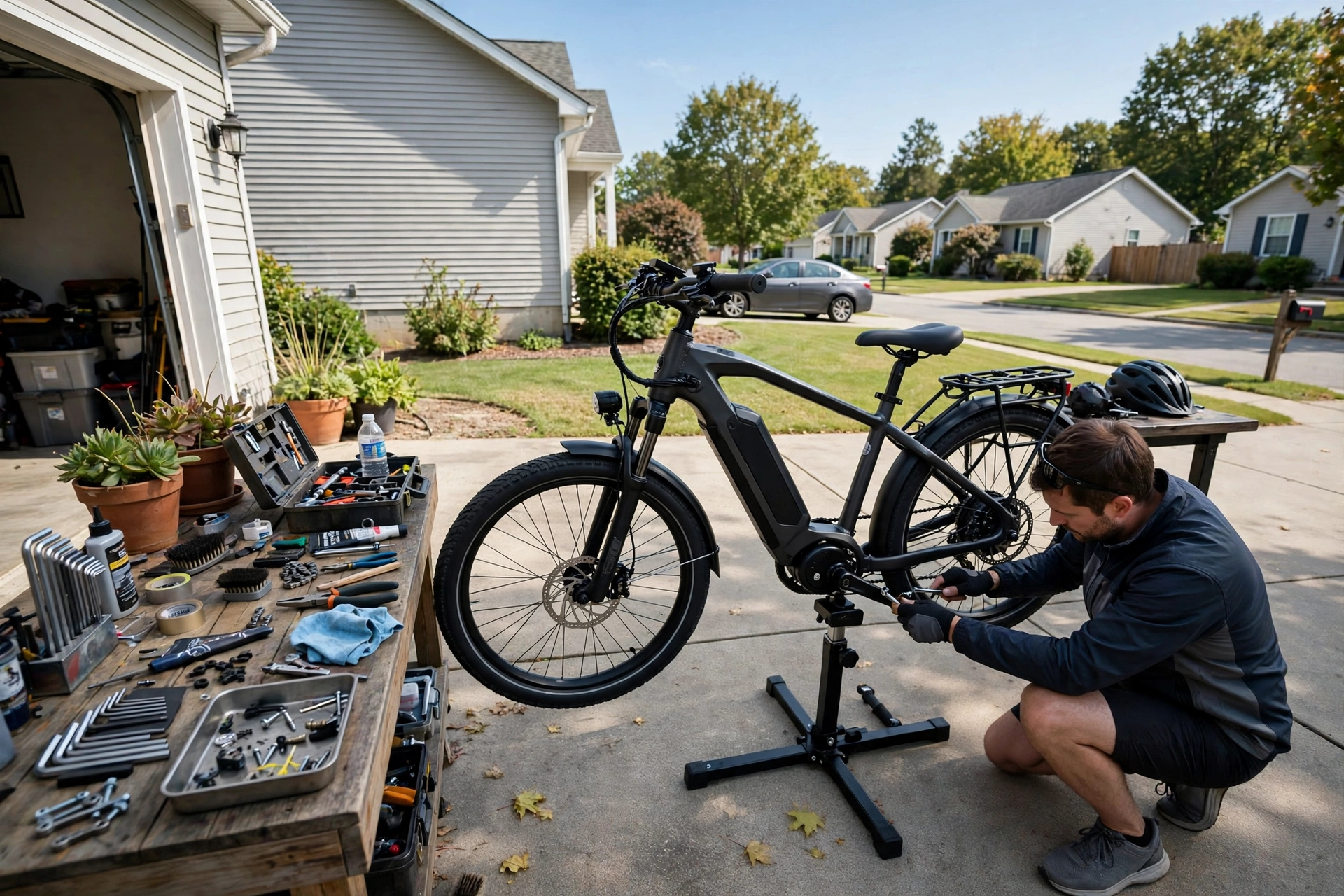
This guide gives you a complete e-bike maintenance schedule for US riders in 2026. Follow it and your bike will ride smoother, last longer, and hold its value if you ever decide to sell it. You do not need to be a mechanic. You need a few basic tools, a rag, some chain lube, and a habit of checking your bike before small problems become big ones.
Why E-Bike Maintenance Matters
A typical e-bike weighs 50 to 70 pounds, roughly twice as much as a regular bike. That extra weight puts more stress on the brakes, tires, chain, and spokes. Add a motor that delivers up to 750 watts and you have a machine that wears its parts faster than a normal bicycle.
Skipping maintenance has real costs. A worn chain can chew through a cassette and chainring, turning a $25 chain replacement into a $150 drivetrain job. Brake pads worn down to metal can score a rotor and double the repair bill. A battery stored at full charge in a hot garage can lose capacity years early, and a replacement battery costs $400 to $900.
Regular care also keeps you safe. Brakes that fade on a downhill, a loose quick release, or a tire that blows out at 28 mph are not minor annoyances. They are accidents waiting to happen. A two minute check before each ride is the cheapest insurance you can buy.
Your E-Bike Maintenance Schedule at a Glance
| When | What to do | Time needed |
|---|---|---|
| Before every ride | Tire pressure, brake squeeze, quick releases, battery charge | 2 minutes |
| Weekly | Clean the frame and chain, lube the chain, wipe the display | 15 minutes |
| Monthly | Check tire tread and brake pads, tighten bolts, inspect spokes | 20 minutes |
| Every 6 months | Deep clean drivetrain, check chain wear, update firmware, inspect cables | 45 minutes |
| Yearly | Professional tune-up, brake bleed if hydraulic, battery health check | Shop visit |
Print this table or save it on your phone. The rest of this guide walks through each step in detail.
Before Every Ride: The 2-Minute Check
Make this a habit, like checking your mirrors before driving a car.
First, squeeze both brake levers. They should feel firm and stop well before the lever reaches the handlebar. If a lever pulls all the way to the bar, do not ride until you find out why.
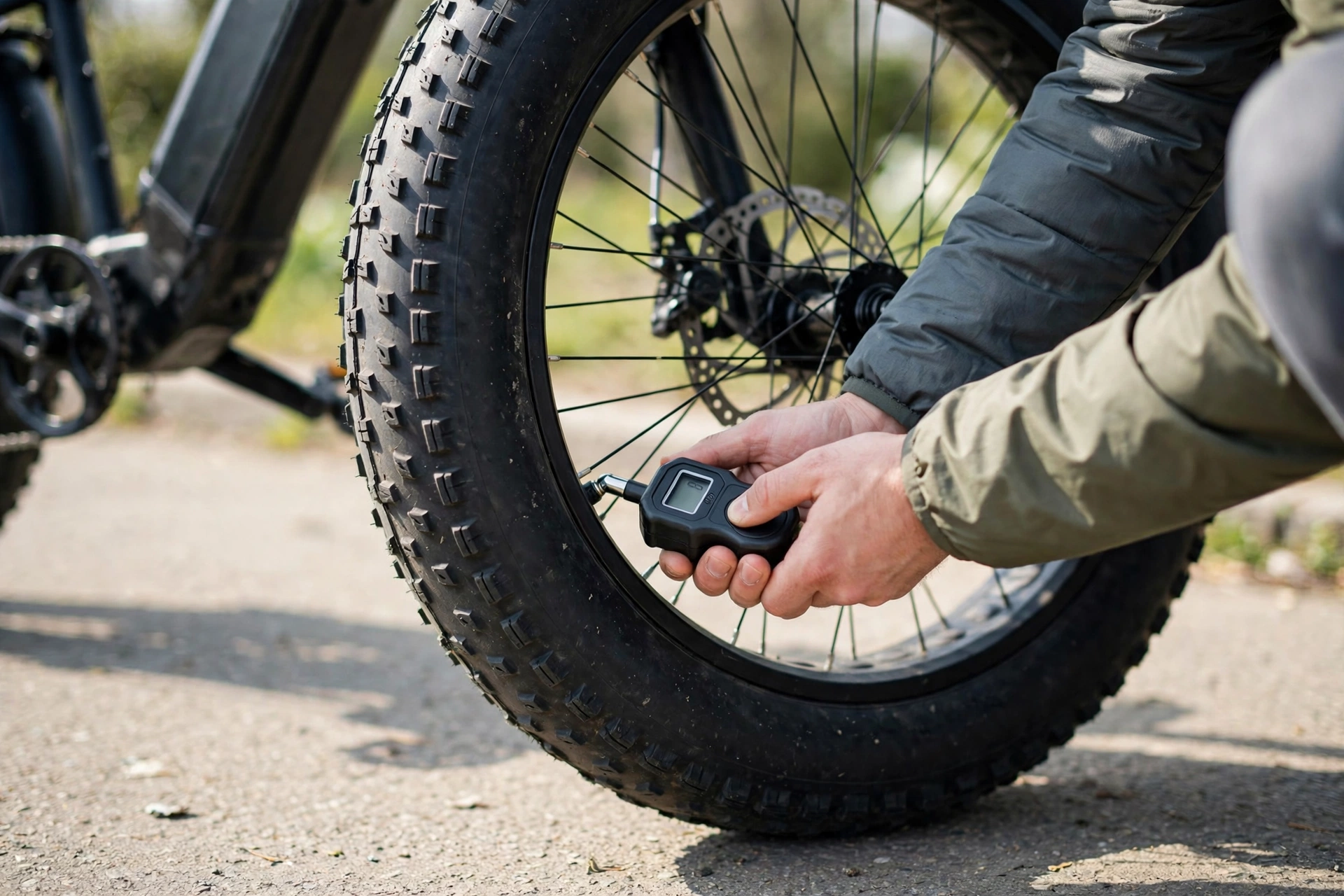
Second, check your tires. Press them with your thumb. They should feel firm, not soft or squishy. Riding on underinflated tires wears them out faster, hurts your range, and raises the risk of a pinch flat. Most e-bike tires list their pressure range on the sidewall, usually 30 to 65 PSI depending on the tire.
Third, check that the wheels are secure. If your bike has quick releases, make sure the levers are closed tight. If it has thru axles, give them a quick check with your hand.
Fourth, look at the battery. Make sure it is clicked in fully and that you have enough charge for the ride. Running a battery to empty on a regular basis shortens its life, so plan to finish your ride with at least 20 percent left when you can.
Weekly: Cleaning and Chain Care
E-bikes attract dirt, especially if you ride in rain or on dusty trails. Dirt on the chain acts like sandpaper and wears out the drivetrain. A weekly clean takes about fifteen minutes and saves real money.
Start by wiping the frame with a damp cloth. Avoid pressure washers and garden hoses aimed at the motor, battery, and display. Water forced into electrical connections causes corrosion that is expensive to fix. A bucket, a sponge, and a soft brush are all you need.
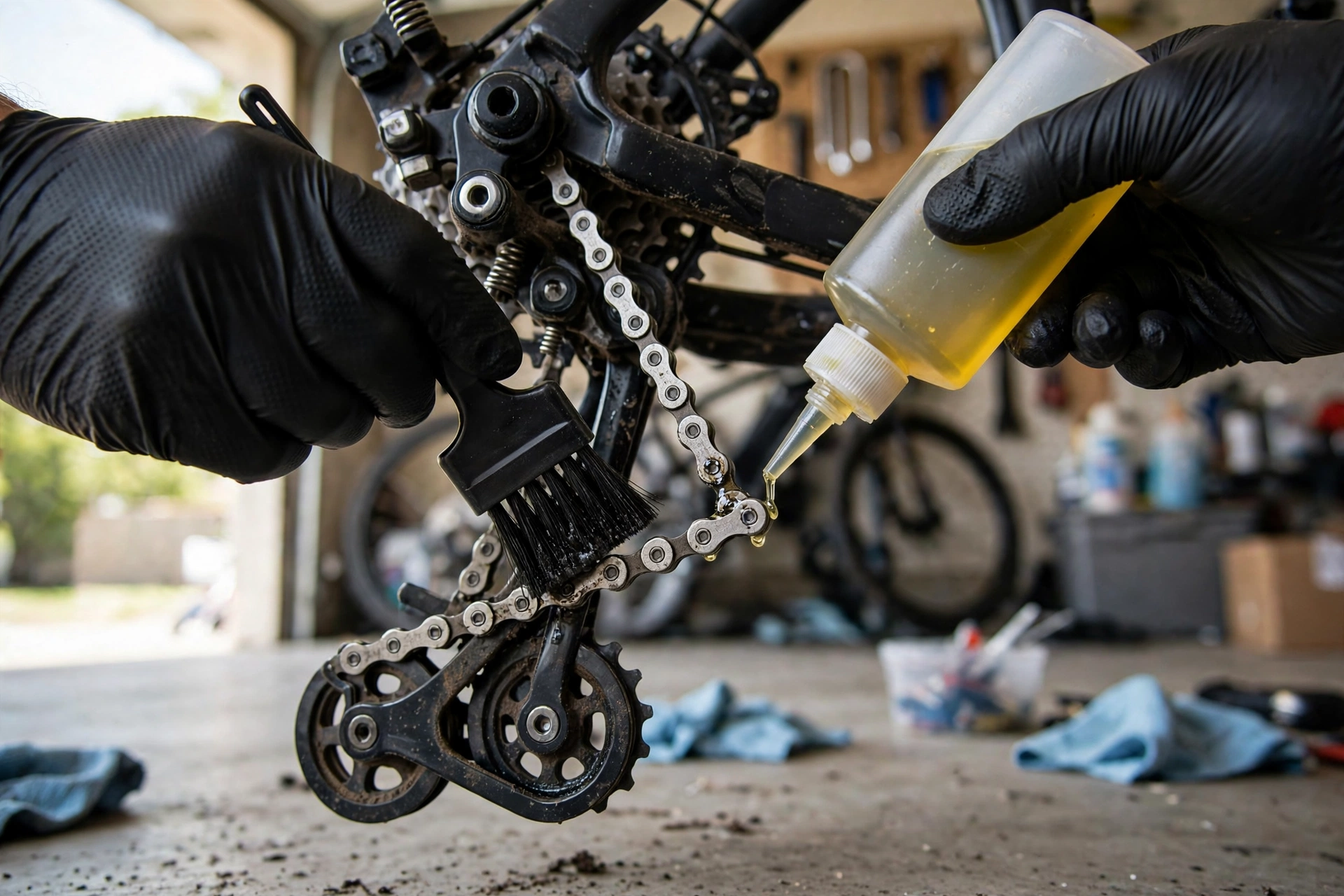
Next, clean the chain. Hold a rag around the chain and pedal backward to wipe off grime. For a deeper clean, use a chain cleaner or a brush with a degreaser made for bikes. Once the chain is clean and dry, apply one drop of bike chain lube to each link, pedal backward a few times to work it in, then wipe off the excess. Too much lube attracts dirt, so wipe until the chain looks almost dry.
Use wet lube if you ride in rain and dry lube if you mostly ride in dry weather. A bottle of chain lube costs about $8 to $12 and lasts for months.
While you are at it, wipe the display screen and check the battery contacts for dirt or corrosion. A clean contact keeps the power flowing smoothly.
Monthly: Tires, Brakes, and Bolts
Once a month, give your e-bike a closer look.
Check the tires for cuts, embedded glass, and worn tread. E-bike tires wear faster than regular bike tires because of the weight and the torque. If you can see the casing threads through the rubber, or if the center tread is bald, it is time for a new tire. A replacement tire costs $30 to $80, and most riders replace the rear tire first because it carries more weight and drive force.
Check the brake pads next. Look at the pad material through the caliper. If less than 1 millimeter of pad is left, replace them. E-bike brake pads typically last 500 to 1,000 miles, less if you ride in hills or carry cargo. A set of pads costs $10 to $25 and is one of the easiest DIY jobs on an e-bike, though hydraulic brakes need more care.
Now go over the bolts. E-bike motors vibrate, and vibration loosens fasteners over time. Check the stem, handlebar, seat post, rack, fenders, and crank bolts. A basic torque wrench costs about $30 and helps you tighten bolts to the right spec without cracking parts.
Finally, spin each wheel and watch for wobble. A wheel that wobbles side to side may have loose spokes. Pluck the spokes like guitar strings. They should all sound roughly similar. One loose or dead sounding spoke is a sign to have the wheel trued at a shop before it gets worse.
Battery Care: The Part That Costs the Most to Replace
Your battery is the most expensive part of your e-bike. Treat it well and it can last 3 to 5 years and 500 to 1,000 full charge cycles. Treat it badly and you could be shopping for a replacement in two years.
Store and charge your battery at room temperature, between about 50 and 77 degrees Fahrenheit. Never charge a frozen battery, and never leave one baking in a hot car or garage in summer. Heat is the biggest enemy of lithium batteries.
Keep the charge level between 20 and 80 percent for everyday riding. You do not need a full charge for a short commute, and sitting at 100 percent for days stresses the cells. Charge to 100 percent only when you need the full range.
If you will not ride for a few weeks, store the battery at around 40 to 60 percent charge and check it once a month. A battery stored fully charged or fully empty for months can lose capacity permanently. For a deeper look at battery life and replacement costs, see our guide on how long e-bike batteries last.
Remove the battery before washing the bike, and keep the contacts dry. If the contacts get dirty, wipe them with a dry cloth. Never use water or solvents on them.
Every 6 Months: Drivetrain, Spokes, and Software
Twice a year, go deeper. Measure chain wear with a chain checker tool, which costs about $10. If the chain has stretched past 0.75 percent, replace it. A worn chain wears out the cassette and chainring, and replacing all three costs far more than a $25 chain.
Check the cassette and chainring teeth. If they look hooked or shark fin shaped, they are worn and should be replaced. This is also a good time to inspect the motor area for loose mounting bolts and to check the cables and housing for cracks or fraying.
Update your firmware if your bike offers it. Many brands release updates through a phone app that improve battery management and motor smoothness. Check the app every few months.
Inspect the spokes again and check the wheels for true. If you hear creaking from the bottom bracket or the motor area, have a shop look at it. Creaks are usually a loose bolt, but catching them early prevents bigger damage.
Tire pressure matters more than most riders think. Underinflated tires cut your range, so keeping them at the right pressure is one of the easiest ways to get more miles per charge. We covered this in detail in our guide on how to extend your e-bike range.
Yearly: Professional Tune-Up and What It Costs
Even if you do your own basic maintenance, a yearly professional tune-up is worth the money. A shop will check the motor, true the wheels, bleed hydraulic brakes, check the battery health, and catch problems you cannot see.
| Service | Typical US cost in 2026 |
|---|---|
| Basic tune-up (adjust brakes and gears, check bolts, lube chain) | $60 to $100 |
| Full tune-up (includes wheel truing and drivetrain cleaning) | $100 to $180 |
| Hydraulic brake bleed (per brake) | $25 to $50 |
| New chain | $20 to $40 |
| New brake pads (per wheel) | $15 to $35 |
| New tires (each) | $30 to $80 |
| Replacement battery | $400 to $900 |
A yearly tune-up usually pays for itself. Shops often find a worn chain or a loose spoke before it becomes a $200 repair. If you ride more than 3,000 miles a year, consider a tune-up every six months instead. For typical prices before you book a shop visit, see how much does it cost to repair an e-bike.
When choosing a shop, call ahead. Not every bike shop works on e-bikes, and some brands require dealer service for motor and battery work. Ask whether the shop is certified for your brand before you drop the bike off.
Winter Storage and Seasonal Care
If you live where winters are cold, how you store your e-bike matters. Remove the battery and store it indoors at room temperature, at about 50 percent charge. Clean the bike before storage so dirt and salt do not sit on the frame for months. Cover it or keep it in a dry place.
In spring, before your first ride, run through the full monthly checklist. Check the tires for flat spots, top up the air, lube the chain, and test the brakes. A bike that sat all winter needs a fresh look before you trust it at speed.
For summer, the main risk is heat. Never leave your e-bike or its battery in a closed car on a hot day. If you ride in rain, dry the bike afterward and wipe the chain, since wet chains rust fast.
Common E-Bike Maintenance Mistakes to Avoid
The most common mistake is using a pressure washer. It forces water into the motor, the battery mount, and the bearings. Use a bucket and a sponge instead.
The second mistake is over-lubing the chain. A dripping chain attracts dirt and turns into grinding paste. One drop per link, then wipe off the excess.
The third mistake is ignoring the brakes. E-bikes are heavy and fast, so brake pads wear quickly. Check them monthly and replace them early. Brake pads are cheap. Rotors and hospital visits are not.
The fourth mistake is storing the battery at full charge for months. If you are not riding, bring the charge down to around 50 percent.
The fifth mistake is skipping the yearly tune-up. A professional sees things you will miss, and the cost of a tune-up is small compared to a motor or battery repair.
FAQ
How often should I service my e-bike?
Do a quick check before every ride, a clean and chain lube weekly, and a deeper inspection monthly. Get a professional tune-up once a year, or every six months if you ride more than 3,000 miles a year.
How much does e-bike maintenance cost per year?
For a typical US rider, expect $100 to $250 a year for a tune-up, chain, brake pads, and lube if you do the basic work yourself. Add $200 to $400 more if the shop does everything, and budget for a new tire every year or two.
Can I wash my e-bike with a hose?
You can use a gentle rinse, but never a pressure washer. Keep water away from the motor, battery mount, display, and controller. Wipe the bike dry afterward and re-lube the chain.
How long do e-bike brake pads last?
Usually 500 to 1,000 miles, depending on your weight, the hills you ride, and whether you carry cargo. Check them monthly and replace them when less than 1 millimeter of pad material remains.
Do I need a special mechanic for my e-bike?
For basic work like chains, tires, and brakes, any good bike shop can help. For motor, battery, and controller problems, use a shop certified for your brand, since those parts often need brand specific tools and parts.
Closing
E-bike maintenance is not complicated, but it is consistent. Two minutes before each ride, fifteen minutes a week, and one shop visit a year will keep your bike safe, fast, and reliable for years. The riders who spend the most on repairs are usually the ones who skipped the small stuff.
Start today. Check your tire pressure, squeeze your brakes, and put a bottle of chain lube and a rag next to your bike. Your e-bike will thank you with more miles, fewer repairs, and a smoother ride every time you get on it.
If you are still shopping for a bike, read our guide on how to choose your first e-bike before you buy, so you start with a bike that fits your riding and is easy to maintain.
And if a tire does go flat despite regular checks, our guide to how to fix a flat tire on an e-bike walks you through the repair step by step.