One of the most important things of being a car owner that every driver is to know is car engine repair. The heart of your vehicle is your engine, and failure of it means that you are stranded and have a potentially costly repair ahead of you. Whether it is due to minor problems such as engine misfire or major overhauls, the knowledge acquired in the basics of auto car engine repair can save you thousands of dollars in the course of the life of your vehicle. Modern engines are not only complicated machines, but also thousands of moving parts that work together in flawless harmony. Failure of one component may cause a chain of issues that can impact performance, fuel economy, and reliability.
This is a complete guide that contains all the information you need to know about car engine maintenance, common repair problems, diagnostic methods, and preventive care methods. Whether you are experiencing rough idling, loss of power, or strange sounds under the hood, knowing how to fix a misfiring engine and other common problems will make you empowered to make informed decisions. We will discuss professional repair options, DIY options, cost-reducing options, and the recent automotive news in relation to the repair of engines today.
Learning the basics of the car engine
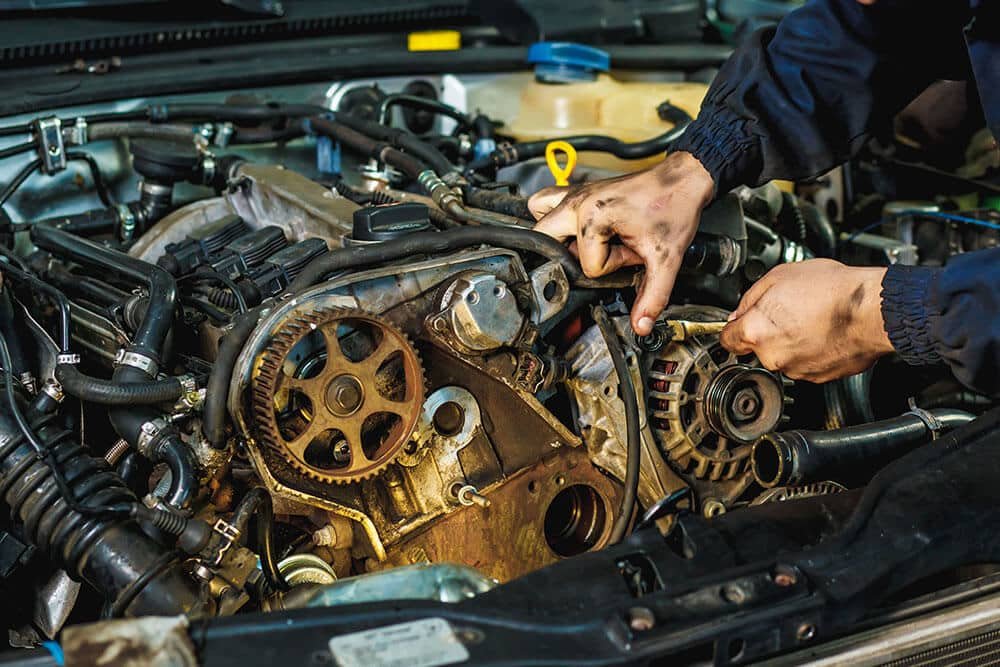
The first step towards car engine repair is to know how your engine really works and functions. The fuel is converted into mechanical energy by internal combustion engines through controlled explosions in cylinders. The four-stroke cycle is made up of intake, compression, combustion, and exhaust cycles, which repeat thousands of times in a minute. The present engines have advanced technologies like direct fuel injection, variable valve timing, and turbocharging systems. Being aware of these factors will help you to communicate with the mechanics properly and diagnose the problems with the mechanics. The cylinders are contained in the engine block where the pistons go up and down to generate power. The cooling system maintains the operating temperatures in an optimum range to ensure engines do not overheat and destroy themselves. The engine has sensors that monitor the engine performance and provide the engine control unit with the necessary data.
Major Engine Components
| Component | Function | Common Issues |
| Pistons | Turns combustion energy into motion | Rings worn, carbon deposits |
| Cylinder Head | Valves and camshafts are housed | warped or gasket failure |
| Timing Belt/Chain | Coordinates the valve action | Flexing, rupturing |
| Fuel Injectors | Spray fuel into the cylinders | Clogging, leaking |
| Spark Plugs | Ignite the air-fuel mixture | Fouling, electrode wear |
| Oil Pump | Recirculates lubricant | Loss of pressure, failure. |
| Water Pump | Moves coolant Seal leaks | bearing failure. |
| Crankshaft | Transforms the movement of the piston into rotation | Wear on bearings, sensor problems |
Common Engine Problems Requiring Repair
Auto car engine repair addresses numerous issues that develop over time from normal wear. Engine issues have several symptoms that motorists need to be aware of as soon as possible to take the necessary steps. The appearance of loss of power during acceleration means that there is a problem with fuel delivery or the ignition system beginning to develop at a rapid pace. Rough idling indicates the presence of vacuum leaks, dirty fuel injectors, or broken engine mounts, which require replacement. Overconsumption of oil can be caused by the presence of worn piston rings or seals to valves that have allowed oil into combustion chambers. The exhaust fumes are blue, and it confirms that oil is burning in the cylinders, which have to be repaired immediately. Black smoke indicates a rich fuel mixture from faulty sensors or injectors spraying too much fuel. White smoke suggests coolant entering cylinders through head gasket failure or cracked cylinder heads.

Engine Warning Signs
Acute symptoms that need urgent treatment:
- Check engine light flashing (severe misfire)
- Failure of the oil pressure warning.
- The temperature gauge is in the red zone
- Loss of power when driving.
- Loud knocking or rattling noises
- Sweet smell (leak of coolant)
- Burning oil smell
- Excessive exhaust smoke
Typical Engine Issues that need to be repaired
Auto care engine repair is the solution to many problems that arise due to normal wear. The engine problems are characterized by a number of symptoms that drivers must be aware of in order to take the necessary action. Loss of power during acceleration means that there is a problem with the fuel delivery or the ignition system that is developing very quickly. Rough idling indicates vacuum leaks, dirty fuel injectors, or broken engine mounts that require replacement. High consumption of oil indicates the problem of worn piston rings or valve seals that admit oil into combustion chambers. The smoke of the exhaust is blue, which proves that oil is burning in the cylinders, which should be repaired immediately. The black smoke is an indication of a rich fuel mixture due to defective sensors or injectors that spray excessively. White smoke is an indication of coolant being introduced into cylinders due to head gasket failure or cracking cylinder heads. The presence of knocking or pinging sounds is an indication of low-octane fuel or carbon deposits in the cylinders.
Engine Misfire: The Causes and the Solutions
One of the most prevalent issues with modern cars today is engine misfire. A misfire is the failure of the combustion process of one or more of the engine cycle cylinders. This incomplete combustion results in rough running, loss of power, and increased emissions that cannot pass the inspection tests. There are several causes that may lead to misfires that need to be properly diagnosed to find out the actual cause of the misfire. The failure of spark plugs is the most prevalent reason for misfires in gasoline engines. Aged electrodes widen the gap to render sparks feeble or erratic under working conditions. The failure of the ignition coils does not allow the spark plugs to obtain enough voltage to spark the fuel mixture.
How to Fix a Misfiring Engine
The question of how to fix a misfiring engine is to first find out the root cause of the problem. Start with diagnostic trouble codes with an OBD-II scanner to identify which of the cylinders is misfiring. Code P0300 is the random misfires, whereas P0301-P0308 are the specific misfires on the particular cylinder that happen on a consistent basis. Check spark plugs for wear, fouling, or damage that may cause the spark plug not to ignite the fuel properly. Change spark plugs as dictated by the manufacturer or earlier as they begin to show signs of wear. Inspect ignition coils on checks to identify cracks or carbon tracks that can permit leakage of voltage to ground. Check for vacuum leaks using a smoke machine or the propane enrichment method around the intake manifold.
Step-by-step misfire diagnosis:
1. Connect the scan tool and read the trouble codes.
2. Detect misfiring cylinder(s) using codes.
3. Check spark plugs in involved cylinders.
4. Test ignition coil resistance and operation
5. Check fuel injector pulse and flow
6. Carry out compression test as required.
7. Systematically check the existence of a vacuum leak.
8. Check fuel pressure requirements.
9. Clean the dirty MAF sensor.
10. Obvious codes and test drive to confirm repair.
Essentials in Car Engine Maintenance
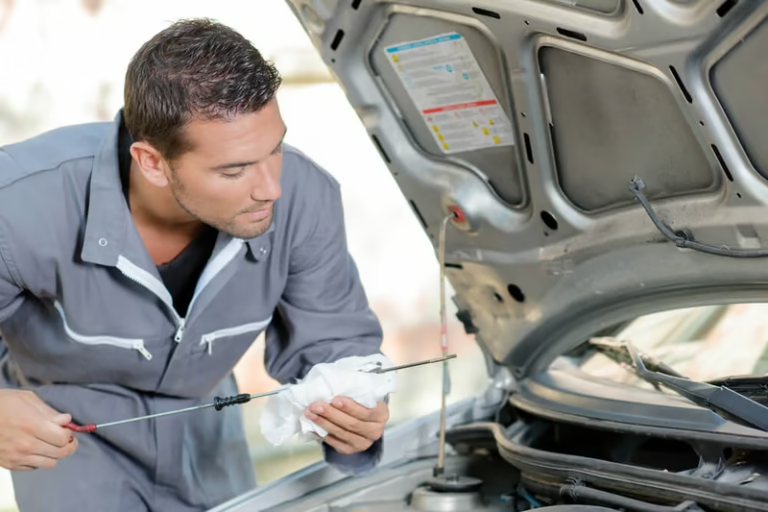
Car engine maintenance avoids the majority of repair issues due to the regularity of service and inspections carried out on a regular basis. The most important maintenance procedure that helps safeguard your engine against degradation is oil changes. New oil greases moving components, eliminates impurities, and does not allow the formation of sludge that blocks the passages.
Oil filter: Replace the oil filter every time you replace oil in order to eliminate particles and contaminants that flow through the engine. Report a weekly change in the amount of check fluids such as oil, coolant, brake fluid, and power steering fluid on a weekly basis.
Professional service vs DIY Engine Repair
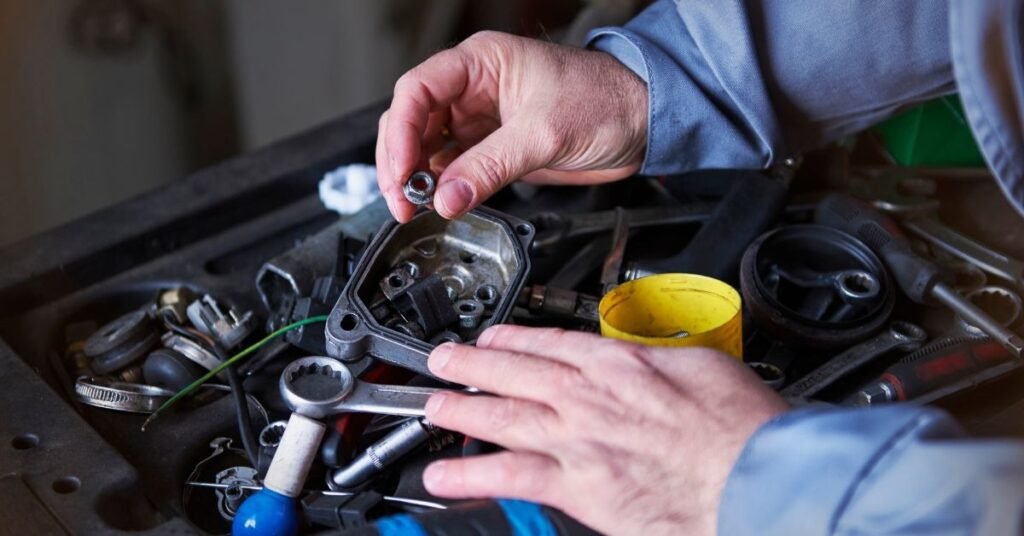
Car engine repair can be done at home for minor repairs that save a lot of money. Basic tools will be required for simple maintenance, including changes of oil, air filters, and spark plugs. Intermediate repairs, like ignition coils, sensors, and belts, call for moderate mechanical skills. The repair work on advanced work, such as replacement of the timing belt, head gasket work, or engine rebuilds, requires professional expertise. Self-assess your skill level and then make sure that you do not undertake complex repairs that may lead to other damage. When reassembling components to avoid leaks, damage, etc., follow torque specifications precisely. Professional service should be considered to have warranty-covered repairs at the hands of experts so that vehicle warranty coverage may be fully maintained.
When professional help should be sought
Complex issues require the use of professional auto care engine repair:
- Replacement of timing belt/chain (will assist in avoiding damage to the valves)
- Head gasket (excluding precision torque)
- Rebuild or replacement of the engine.
- Transmission-related engine issues
- Advanced diagnostic problems
- Warranty-covered repairs
- Repairs on the emission system (to be inspected)
- Issues that are outside your capability.
Recent News in the Automotive Industry: Improved Engine Technology
The automotive news in the recent past notes that there have been great advancements in the technology and methods of car engine repair that will affect the car models in 2025-2026. Manufacturers are even coming up with engines that have longer service intervals that decrease the frequency of maintenance, and some with the capability of changing the oil every 10,000 miles. The EA897evo4 V6 TDI engine announced by Audi on the Q5 and A6 was the first to employ an electrically powered compressor that enhances efficiency and performance to a great extent.
Hyundai and Kia are at the forefront of developing hydrogen engines, and it is planned to introduce ready models to the vehicles by 2025 with a promise of a zero-emissions future. Direct injection technology enhances fuel economy but introduces new carbon accumulation issues on intake valves that need special cleaning. Turbocharged engines have more power at a smaller displacement but demand a high-maintenance schedule that must be adhered to. Cylinder deactivation switches off cylinders when the load is small, and the fuel economy can be increased dramatically during everyday driving. By 2025, domain controllers, zonal controllers, or high-performance central compute units to support advanced diagnostics will be found in one-third of Chinese-manufactured cars.
AI is driving accuracy in product development and processes that enable predictive maintenance schedules before failures take place. Mercedes-Benz CLA has cloud-based infotainment and over-the-air software updates, including upgrades to active safety technology. Hybrid powertrains are electric motors coupled with smaller gasoline engines that demand expertise in their repair and unique tools. The European automakers are confronted by the software advantage of China with a 3-pronged response strategy to suit the new market requirements.
Emerging Engine Technologies (2025-2026)
Recent developments that have affected the maintenance and repairs of car engines:
- Hydrogen combustion engines operate in the same manner as traditional engines; they are very clean, they burn hydrogen and only emit water vapour.
- Powertrain efficiencies: driving a shift to advanced silicon carbide (SiC) and gallium nitride (GaN) power devices, with a forecasted dollar increase of 60% by 2025.
- Predictive analytics and ML could be employed to work on the demand forecasting and risk management to secure the parts availability.
- Ram 1500 REV is powered by a V6 engine that generates electricity through a 130-kW generator that stores energy in a 92-kWh battery pack.
- The improvement of solid-state batteries and the chemistry of lithium-ion batteries enhanced the energy density, lowered the charging time, and decreased the costs.
- The demand for 5G chipsets will exceed that of 4G because consumers expect to have better infotainment systems in terms of quality and/or speed.
- Hydrogen engines are compliant with the new Euro 6d standards of emissions that set new environmental standards.
Factors of the cost of Engine Repair
The cost of car engine repair differs radically depending on the level of the problem and the car model. Labor costs are between 75 and 150+ or less per hour, depending on the location and experience of the shop. Dealerships usually charge a premium rate but have specialized training and equipment with regard to certain brands. Independent shops are competitively priced, with technicians experienced in their field, and can handle most repairs. The quality of parts is a major factor that impacted cost since the OEM parts were more expensive than aftermarket alternatives. The size and design of the engine affect the time spent laboring, where the V6 and V8 engines are more expensive.
The availability of parts also influences the labor hours because other repairs may take a long time to be completed, as they may require a lot of dismantling to reach the part of the car requiring repair. Diagnostic costs usually differ in price between $100-150 to detect issues, then estimate the cost of repairing. Always request written estimates prior to making a decision to have repairs done to prevent being charged later. Enquire about the warranty on parts and labor prior to the acceptance of any costly repair work. The second important consideration is to seek a second opinion on general repairs to ensure accuracy of diagnosis and pricing.
The common repair cost ranges are based on the 2025 average repair costs in the United States.
| Service Type | Do It Yourself (DIY) Cost | Independent Shop Cost | Dealership Cost |
| Oil Change | $30-50 | $50-100 | $75-150 |
| Spark Plugs (4-cyl) | $20-100 | $100-300 | $150-400 |
| Ignition Coils (per coil) | $50-200 | $150-500 | $200-600 |
| Engine Misfire Diagnosis | $0 (scanner) | $100-200 | $150-250 |
| Head Gasket | $500-1,000 | $1,500-3,000 | $2,000-4,000 |
| Timing Belt/Chain | $200-400 | $500-1,200 | $800-1,800 |
| Engine Rebuild | $2,500-4,000 | $3,000-7,000 | $4,500-10,000 |
| Engine Replacement (Used) | $1,500-3,000 | $3,000-6,500 | $5,000-9,000 |
| Engine Replacement (New) | $3,500-6,000 | $6,000-12,000 | $8,000-15,000 |
| Fuel Injector Cleaning | $15-30 | $100-200 | $150-300 |
Note: Costs based on 2025 U.S. market data from ConsumerAffairs, Airtasker, and SoFi automotive reports. Luxury and high-performance vehicles cost 40-60% more.
Diagnostic Tools and Techniques

Modern auto care engine repair today involves advanced diagnostic equipment that is not within the scope of knowledge of basic mechanics. OBD-II scanners detect trouble codes in the engine control module, which defines problem areas. Advanced scan tools result in real-time streaming of data and sensor values in the course of operation to help identify problems. To determine the worn rings, valves, or head gasket issues, compression testers are devices that measure the pressure in the cylinder. The leak-down testers very precisely identify where the compression loss is in the combustion chamber.
Fuel pressure gauges are used to ensure that the operation of the fuel system is in accordance with the specifications given by the manufacturer under all conditions. Vacuum gauges identify intake leakage and also determine the overall engine mechanical integrity based on the readings. Timing lights allow the ignition timing to be set correctly to achieve optimum performance and fuel economy. Multimeters are used to test electrical circuits, sensors, and components across the engine management system. Smoke machines force smoke into the intake and EVAP systems, causing vacuum leakage to be visible. Oscilloscopes are used to measure the electrical signals of sensors and actuators that detect intermittent problems that are hard to locate.
Essential Diagnostic Equipment
The stuff that any serious DIY mechanic should have:
- An OBD-II scanner that has quality with live data.
- A digital multimeter is used to test electricity.
- Compression testers, leak-down testers.
- Fuel pressure gauge and adapters.
- Light timing ignition timing.
- Vacuum pump and gauge set
- Torque wrench (several ranges)
- Service manual for your vehicle.
- Safety equipment (gloves, glasses)
- Correct jack stands and wheel chocks.
Avert Catastrophic Engine Failure
All these preventive care engine maintenance to help prevent catastrophic failures that concern engine replacement or rebuilding. Religiously check the oil level by checking once a week and refilling as required between intervals. Always take heed of warning lights, particularly oil pressure or temperature warnings, with serious issues. Minimise small issues as they occur before they lead to major, costly failures that they have to rebuild. Always use quality fluids that are in accordance with the specifications of the manufacturers to ensure optimal protection and performance. Avoid aggressive driving when the engine is cold, and it is good to allow the engine to warm up before hard acceleration. Don’t ignore unusual noises or vibrations that indicate developing problems needing immediate attention.
FAQ’s
1. Can you spot any signs of engine trouble?
If the engine is making knocking or ticking noises, it’s losing power, not getting good gas mileage, and there’s a lot of exhaust smoke, you are having trouble with the engine. Warning lights, idling, or stalling may also be noticed. If the performance changes suddenly, check it out right away, or big trouble may result.
2. What are the major reasons for engine problems?
Many engine problems arise from a lack of maintenance, particularly when oil is not changed. Dirty fluids, worn parts, or incorrect sensors can also impact performance. These issues can be avoided by regular servicing.
3. What is the typical time for engine repair?
Repair time varies according to the problem. Any minor repairs can be completed within one day, and major internal repairs may take several days. This varies depending on diagnostics and parts.
4. What are the benefits of regular maintenance to avoid engine repairs?
Regular servicing ensures your engine is maintained in prime condition. Oil changes, fluid checks, and early inspections prevent small problems from becoming large problems and enhance performance and fuel economy.
5. What does the battery light indicate when you’re driving?
When the battery light comes on, it is generally an indicator that the charging system is not functioning properly. Your car can start on battery for a short time, but it can stall when the battery voltage drops. Minimize the use of electricity and have it checked out in the near future.
6. If your brakes squeal or grind, what does it mean?
Squealing usually means that the brake pads are rusted on the surface, or that they are worn; grinding noise is an indication that the brake pads are worn to the point of damaging the rotors. Immediate assessment is suggested.
7. When to replace tyres when they appear to be in good condition?
Consider replacing worn tyres if there is uneven wear, cracks, or aged rubber. Older tyres can lose traction even if they have good tread. If there are visible signs of damage (such as bulges on the sidewalls), replace it right away.
Conclusion
Car engine repair is a critical skill and knowledge area for all vehicle owners in the contemporary world. Knowledge of common issues, how to maintain your equipment, and when to use professional assistance is a great way of saving lots of money. Routine servicing of the car engine maintenance helps to avoid the most severe problems and transform them into costly, serious work.
Early detection of the symptoms of Car Engine Repair and understanding how to fix a misfiring engine prevent the destruction of the catalytic converter. By keeping up with the latest automotive news, you can be informed about new technologies that will influence the future of auto care engine repair. Also invest in good diagnostic equipment in case you intend to do your own maintenance and repairs. Establish contacts with reputable mechanics to carry out repairs that are either beyond your skill level or in your comfort zone. Always pay attention to warning signs or delay the needed repairs because little issues lead to big failures.
When it comes to maintaining your vehicle, Car Engine Repair is one of the most critical aspects you should never overlook. A well-functioning engine ensures your car runs smoothly, efficiently, and safely on the road. Ignoring early warning signs can lead to costly breakdowns, which is why timely Car Engine Repair is essential for every car owner. Whether it’s unusual noises, reduced performance, or increased fuel consumption, these issues often signal the need for professional Car Engine Repair services. Regular maintenance combined with expert Car Engine Repair can extend the lifespan of your vehicle and improve overall performance. Many drivers underestimate the importance of routine inspections, but consistent Car Engine Repair checks can prevent major mechanical failures. Skilled technicians use advanced tools to diagnose problems accurately and provide reliable Car Engine Repair solutions. Investing in quality Car Engine Repair not only saves money in the long run but also ensures your safety while driving. From minor fixes to major overhauls, Car Engine Repair plays a vital role in keeping your vehicle dependable. Choosing a trusted service provider for Car Engine Repair guarantees better results and peace of mind. Ultimately, prioritizing Car Engine Repair is the smartest way to keep your car running at its best every day.
About the Author