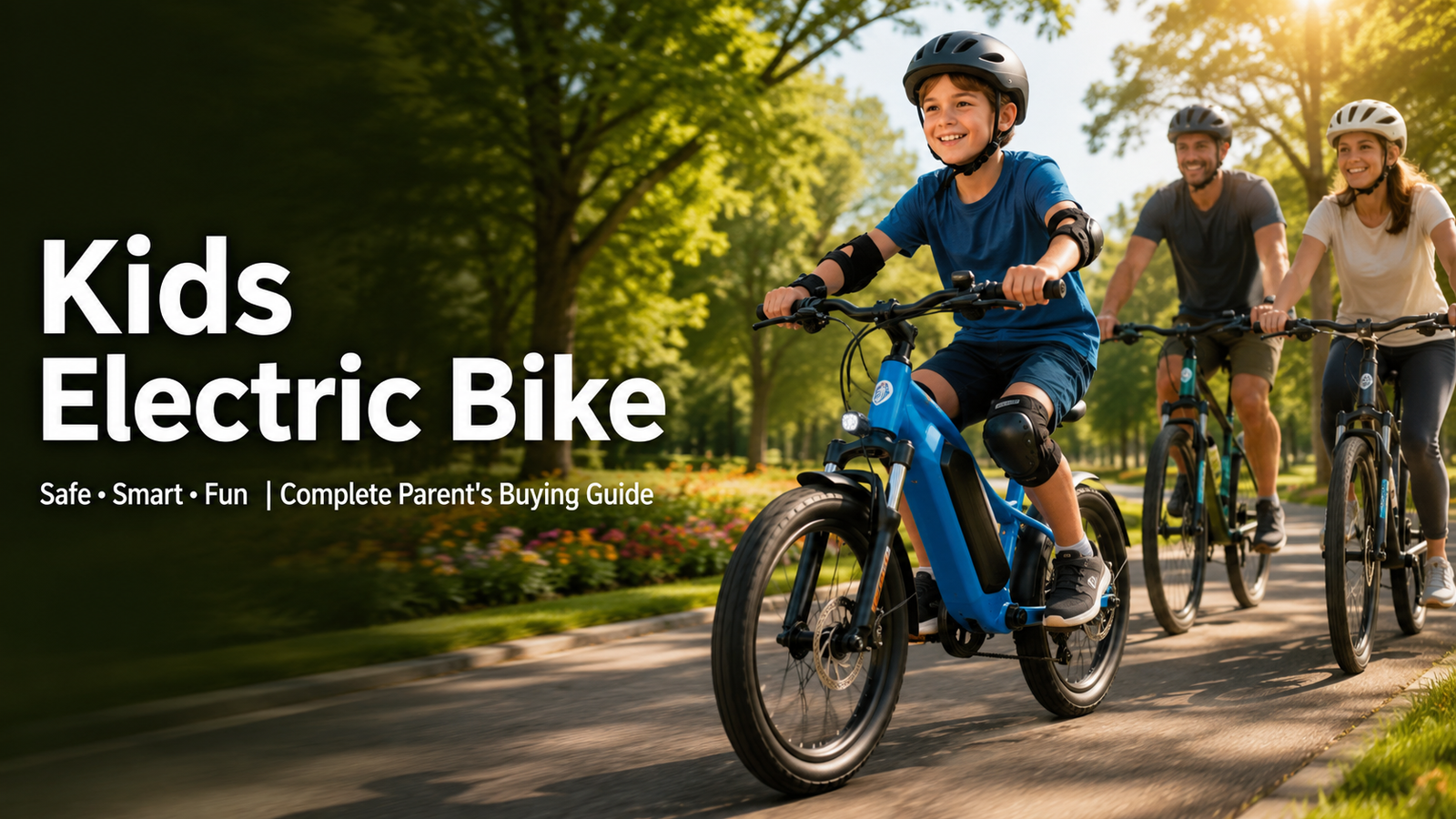
Introduction
Picture this.
Your child watches older kids ride around the neighborhood on electric bikes. They ask the same question every weekend:
“Can I have one too?”
As a parent, you probably have mixed feelings. You want your child to enjoy outdoor activities. At the same time, safety, cost, battery life, and legal concerns may leave you uncertain.
That is completely normal.
A kids electric bike is more than a fun toy. It can help children build confidence, improve balance, learn responsibility, and spend less time looking at screens. However, choosing the wrong model can lead to disappointment or even safety risks.
The market has changed quickly over the last few years. Manufacturers now offer electric bikes for children as young as three years old and teenagers preparing for adult e-bikes. These models vary in speed, battery technology, motor power, safety features, and price.
According to industry reports, the global electric bicycle market continues to grow as more families choose eco-friendly transportation and outdoor recreation. Children’s electric bikes have become one of the fastest-growing categories because parents increasingly value active lifestyles over indoor entertainment.
But there is a challenge.
Many online guides focus only on specifications. They rarely explain what actually matters during everyday family use.
Questions like these often go unanswered:
- Is an electric bike safe for an 8-year-old?
- Which battery lasts the longest?
- How much should parents really spend?
- Should you buy a balance e-bike or a pedal-assist model?
- Which brands actually provide reliable customer support?
This guide answers those questions using practical advice, real-world examples, honest product comparisons, and industry knowledge.
Instead of promoting the most expensive models, we’ll focus on helping parents choose the best kids electric bike for their child’s age, riding skills, and budget.
Executive Summary
Buying a kids electric bike involves much more than comparing prices.
Parents should evaluate:
- Child’s age and riding experience
- Motor power
- Maximum speed
- Battery range
- Safety certifications
- Weight capacity
- Build quality
- Replacement parts availability
- Brand reputation
- Long-term maintenance costs
Throughout this guide, you’ll learn:
- How kids electric bikes work
- Different types available today
- Important safety features
- Common buying mistakes
- Battery maintenance tips
- Cost comparisons
- Real family experiences
- Expert buying strategies
- Future technology trends
- Honest reviews of leading brands
We’ll also compare trusted manufacturers including Razor, Hiboy, Segway-Ninebot, Jetson, Woom, Guardian Bikes, Specialized, Kuberg, STACYC, and Burromax to help you understand which brands suit different age groups.
By the end of this guide, you’ll know exactly how to choose an electric bike that provides fun without compromising safety.
What Is a Kids Electric Bike?
A kids electric bike is a bicycle designed specifically for children that uses an electric motor to provide additional power while riding.
Unlike traditional bicycles, these bikes reduce the amount of physical effort required. Some models assist only when the child pedals, while others allow riding using a throttle.
Manufacturers carefully adjust these bikes for children’s needs by limiting:
- Maximum speed
- Motor power
- Weight
- Frame size
- Seat height
- Handlebar reach
This creates a riding experience that feels exciting while remaining easier to control.
These differences improve both comfort and safety.
How Does a Kids Electric Bike Work?
The technology is surprisingly simple.
Several components work together.
Electric Motor
The motor provides extra power.
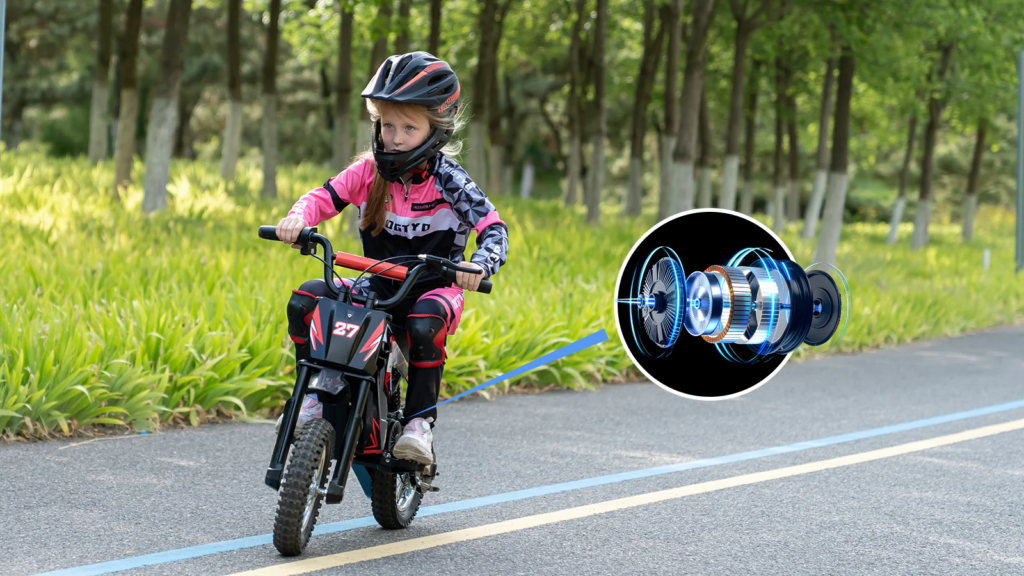
Most children’s models use brushless hub motors because they require little maintenance and operate quietly.
Common motor sizes include:
- 100W
- 150W
- 250W
- 350W
Higher wattage generally means stronger acceleration.
However, more power isn’t always better for younger riders.
Battery
Most modern bikes use lithium-ion batteries.
These batteries are:
- Lightweight
- Rechargeable
- Long-lasting
- Energy efficient
Depending on the model, one charge may last between 30 minutes and several hours.
Controller
The controller acts as the bike’s brain.
It manages:
- Speed
- Power delivery
- Battery usage
- Safety systems
Without the controller, the motor would not operate properly.
Throttle or Pedal Assist
Different bikes provide power differently.
Some use:
- Twist throttle
- Thumb throttle
Others use:
- Pedal assist
Pedal-assist bikes encourage children to continue pedaling while receiving gentle assistance.
Many experts recommend pedal assist because it promotes healthy exercise.
Different Types of Kids Electric Bikes
Not every child needs the same type of electric bike.
Understanding each category makes shopping much easier.
Electric Balance Bikes
These are designed for younger children.
Instead of pedals, riders push off the ground using their feet.
Eventually, they learn balance before progressing to pedal bikes.
Ideal ages:
- 3–6 years
Advantages:
- Easy learning
- Builds confidence
- Lightweight
- Low speeds
Pedal-Assist Electric Bikes
These resemble traditional bicycles.
The motor activates only while pedaling.
Ideal ages:
- 7–14 years
Benefits include:
- More exercise
- Longer rides
- Better riding skills
- Improved endurance
Throttle-Control Electric Bikes
These work more like small electric motorcycles.
Children can ride without pedaling.
They deliver exciting acceleration but require greater responsibility.
Usually recommended for:
- Older children
- Teenagers
- Experienced riders
Off-Road Electric Bikes
Some families enjoy trail riding together.
These bikes include:
- Strong suspension
- Larger tires
- Powerful brakes
- Durable frames
They’re built for rough terrain rather than neighborhood streets.
Key Components Every Parent Should Understand
Before buying any kids electric bike, it’s helpful to understand the major components that affect performance, safety, and long-term value.
Frame Material
Most frames use either aluminum or steel.
Aluminum
Pros:
- Lightweight
- Rust resistant
- Easier for children to control
Cons:
- Slightly more expensive
Steel
Pros:
- Durable
- Affordable
Cons:
- Heavier
For most families, aluminum provides the best balance of weight and durability.
Brakes
Stopping power matters just as much as speed.
Common brake types include:
Rim Brakes
Suitable for beginners.
Affordable and easy to maintain.
Disc Brakes
Provide stronger stopping power.
Perform better in wet conditions.
Usually found on premium bikes.
Tires
Different tire styles affect riding comfort.
Smooth tires work well for sidewalks.
Knobby tires perform better on dirt trails.
Hybrid tires offer versatility for families who ride on mixed surfaces.
Suspension
Some bikes include front suspension.
Others have full suspension.
Suspension improves comfort by absorbing bumps.
However, it also increases cost.
For neighborhood riding, rigid frames often work perfectly well.
Benefits of a Kids Electric Bike
Encourages Outdoor Activity
Children spend more time indoors than ever before.
Video games, smartphones, and streaming services often replace outdoor play.
A kids electric bike gives them a reason to head outside.
Many parents notice their children become more active after getting an electric bike.
by about 35%.
Improves Balance and Coordination
Even though the motor provides assistance, children still:
- Steer
- Brake
- Balance
- Navigate obstacles
These skills improve over time.
Makes Family Cycling Easier
Without electric assistance, younger children often become tired long before adults.
A kids electric bike helps the entire family enjoy longer rides together.
Parents no longer need to stop every few minutes because one rider is exhausted.
Helps Children Learn Responsibility
Electric bikes require basic maintenance.
Children quickly learn to:
- Charge the battery
- Check tire pressure
- Clean the bike
- Store it properly
These habits encourage responsibility.
Reduces Fear of Hills
Many children lose interest because climbing hills feels difficult.
Electric assistance removes much of that frustration.
Instead of avoiding hills, children often see them as part of the adventure.
Complete Buying Guide for Parents
Choosing the right kids electric bike involves more than selecting the nicest color.
Here are the factors that matter most.
Step 1 – Choose the Right Age Group
| Age | Recommended Type |
|---|---|
| 3–5 years | Electric balance bike |
| 5–7 years | Low-speed electric bike |
| 8–12 years | Pedal-assist e-bike |
| 13–16 years | Advanced pedal-assist or throttle model |
Never buy a bike solely because your child will “grow into it.”
A bike that is too large is harder to control.
Step 2 – Select the Correct Motor Power
Motor power affects speed and climbing ability.
- 100W for young beginners.
- 150W for neighborhood riding.
- 250W for family rides.
- 350W for older teenagers.
Higher power does not always mean better performance.
The safest option usually matches the child’s experience level.
Step 3 – Consider Battery Range
Think about how your family rides.
Short neighborhood rides require less battery capacity than long park adventures.
Typical battery ranges:
| Riding Style | Recommended Range |
|---|---|
| Around the block | 5–8 miles |
| Weekend rides | 10–20 miles |
| Trail riding | 20–30 miles |
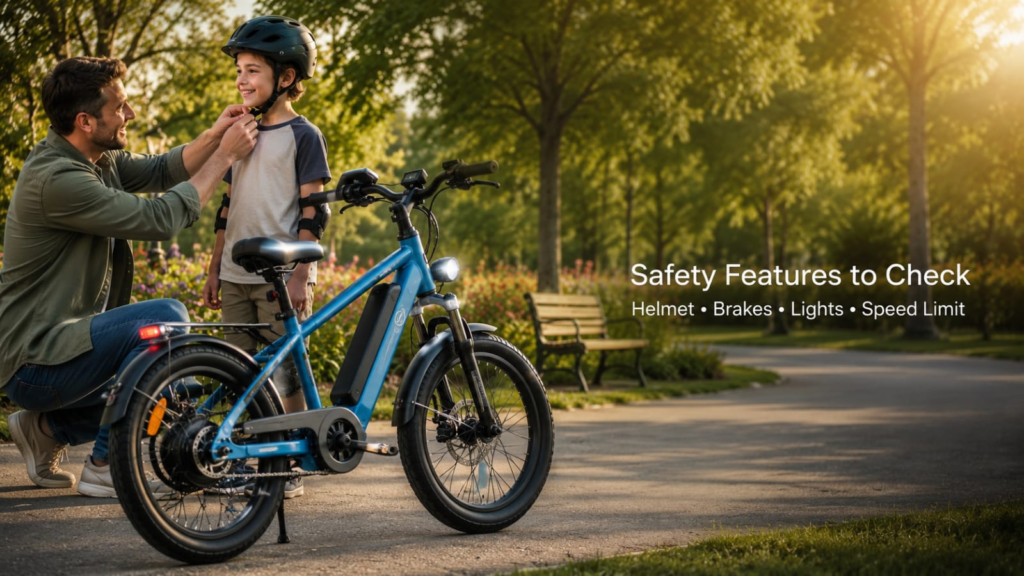
Step 4 – Evaluate Safety Features
Never compromise on safety.
Look for:
- Adjustable speed modes
- Reliable brakes
- LED lights
- Battery protection
- Wide tires
- Reflectors
- Chain guards
- Non-slip pedals
These features make everyday riding much safer.
Step 5 – Check Weight Capacity
Every manufacturer lists:
- Maximum rider weight
- Recommended height
- Frame size
Ignoring these recommendations affects handling and battery performance.
Step 6 – Review Warranty and Customer Support
Good customer service matters.
Ask:
- Are replacement batteries available?
- Can you buy spare tires?
- Does the company sell replacement chargers?
- Is technical support easy to reach?
A longer warranty often reflects better product quality.
Essential Safety Equipment
Buying the bike is only part of the investment.
Proper safety gear protects children during every ride.
| Safety Gear | Why It Matters |
|---|---|
| Helmet | Protects the head |
| Knee Pads | Reduce injury risk |
| Elbow Pads | Prevent scrapes |
| Gloves | Improve grip |
| Reflective Vest | Better visibility |
| Closed-Toe Shoes | Better pedal control |
Never allow sandals while riding.
Common Buying Mistakes Parents Make
Many expensive mistakes can be avoided.
Buying Based Only on Speed
Children rarely need the fastest model.
Reliable braking matters more.
Ignoring Bike Weight
A lightweight bike is easier to control.
Heavy bikes can intimidate younger riders.
Choosing Cheap Unknown Brands
Low prices often come with:
- Poor battery quality
- Weak customer support
- Limited replacement parts
- Lower durability
Buying from established brands usually offers better long-term value.
Forgetting Future Growth
Avoid buying a bike that’s too small.
At the same time, don’t buy one that’s far too large.
A proper fit is always the safest choice.
Ignoring Local Regulations
Some areas have:
- Speed limits
- Helmet requirements
- Age restrictions
Always check local rules before riding.
Expert Buying Tips
After reviewing dozens of children’s e-bikes, several buying habits consistently lead to better satisfaction.
Buy From Reputable Dealers
Authorized sellers often provide:
- Better warranty service
- Genuine replacement parts
- Faster repairs
Let Your Child Test Ride
Comfort matters more than appearance.
A short test ride can reveal:
- Seat comfort
- Brake reach
- Handlebar position
- Overall confidence
Prioritize Safety Over Speed
Many parents initially focus on motor power.
Experienced riders often recommend the opposite.
A slower, well-built bike usually creates a better learning experience.
Read Long-Term Reviews
Look beyond first impressions.
Reviews written after six months often reveal:
- Battery durability
- Motor reliability
- Customer support quality
Best Kids Electric Bike Brands Compared
Choosing the right kids electric bike brand is just as important as choosing the right model. A trusted manufacturer often provides better safety standards, stronger warranties, and easier access to replacement parts.
The following brands are well known in the industry and have earned positive reputations among parents and riders.
1. STACYC
Best For: Ages 3–8 learning balance and riding skills
STACYC specializes in electric balance bikes designed to help young children develop confidence before moving to pedal bikes.
Pros
- Lightweight aluminum frame
- Adjustable power modes
- Excellent build quality
- Easy battery replacement
- Strong resale value
Cons
- Premium pricing
- Limited for older children
Price Range
$650–$1,200
Best Use Case
Families introducing young children to off-road or neighborhood riding.
2. Razor
Best For: Budget-conscious families
Razor has been a trusted name in electric scooters and bikes for years.
Pros
- Affordable pricing
- Easy to find replacement parts
- Beginner-friendly
- Reliable customer support
Cons
- Shorter battery range
- Fewer premium features
Price Range
$300–$700
Best Use Case
Children taking their first step into electric biking.
3. Hiboy
Best For: Everyday family riding
Hiboy offers modern electric bikes with a good balance between performance and affordability.
Pros
- Good battery life
- Comfortable riding position
- Attractive design
- Solid braking system
Cons
- Limited model selection for younger kids
Price Range
$500–$900
Best Use Case
Regular neighborhood rides and family cycling trips.
4. Segway-Ninebot
Best For: Smart technology lovers
Segway has built a reputation for dependable electric mobility products.
Pros
- Excellent safety systems
- High-quality batteries
- Smooth acceleration
- Durable construction
Cons
- Higher price
- Premium replacement parts
Price Range
$700–$1,500
Best Use Case
Parents looking for long-term reliability.
5. Jetson
Best For: Urban riding
Jetson products focus on stylish designs with user-friendly controls.
Pros
- Lightweight
- Easy handling
- Affordable maintenance
- Comfortable seats
Cons
- Smaller battery capacity
Price Range
$350–$800
Best Use Case
Short daily rides.
6. Kuberg
Best For: Off-road adventures
Kuberg builds high-performance electric dirt bikes for children and teenagers.
Pros
- Powerful motors
- Excellent suspension
- Strong frames
- Trail-ready tires
Cons
- Expensive
- Not ideal for beginners
Price Range
$1,500–$4,000
Best Use Case
Families who enjoy trail riding.
Kids Electric Bike Price Comparison by Brand
| Brand | Average Price (USD) | Best For |
|---|---|---|
| Razor | $300–$700 | Budget-friendly beginners |
| Jetson | $350–$800 | Daily neighborhood rides |
| Hiboy | $500–$900 | Family rides & recreational use |
| STACYC | $650–$1,200 | Young riders (3–8 years) |
| Segway-Ninebot | $700–$1,500 | Premium features & smart technology |
| Kuberg | $1,500–$4,000 | Off-road adventures & experienced riders |
Maintenance Guide
A well-maintained kids electric bike lasts longer, performs better, and stays safer.
Daily Maintenance
Before every ride:
- Check battery level.
- Test the brakes.
- Inspect the tires.
- Confirm lights are working.
- Look for loose bolts.
Time required: 5 minutes
Weekly Maintenance
Once a week:
- Clean the frame.
- Remove dirt from the chain.
- Check tire pressure.
- Inspect brake cables.
- Wipe battery contacts with a dry cloth if needed.
Time required: 15–20 minutes
Monthly Maintenance
Every month:
- Tighten all visible bolts.
- Lubricate the chain (avoid getting lubricant on brakes).
- Check spoke tension if applicable.
- Inspect brake pad wear.
- Examine tires for cuts or excessive wear.
Time required: 30–45 minutes
Frequently Asked Questions (FAQs)
1. What is the best age for a kids electric bike?
Most manufacturers recommend electric balance bikes for children aged 3–5 years, while pedal-assist kids electric bike models are generally suitable for children aged 7 years and older. Always choose a bike based on your child’s height, weight, and riding experience rather than age alone.
2. Are kids electric bikes safe?
Yes, a kids electric bike can be safe when it is age-appropriate and used responsibly. Children should always wear a certified helmet and other protective gear, ride under adult supervision when needed, and follow local traffic rules.
3. How fast does a kids electric bike go?
Speed depends on the model. Beginner bikes usually have lower speed limits, while advanced models for older riders can travel faster. Parents should select a speed that matches the child’s experience and the intended riding environment.
4. How long does the battery last?
Battery life varies based on battery capacity, rider weight, terrain, and riding style. With proper charging and storage, most lithium-ion batteries provide several years of regular use before their performance begins to decline.
5. Can children ride electric bikes in the rain?
Light rain may not damage many modern bikes, but riding in heavy rain is generally not recommended. Wet surfaces reduce tire grip and increase braking distance. Always follow the manufacturer’s recommendations regarding water resistance.
6. How often should I service a kids electric bike?
Basic inspections should be completed before every ride. A more detailed maintenance check every month helps keep the bike safe and reliable. If the bike is ridden frequently or on rough terrain, professional servicing may be needed more often.
7. How much should parents spend on a kids electric bike?
Budget-friendly models typically start around $250–$500, while premium options can exceed $2,000. The right choice depends on your child’s experience, expected usage, and desired features. Investing in quality often results in better durability and safety.
8. Is pedal assist better than a throttle?
For most younger riders, pedal-assist is the better option because it encourages physical activity while providing gentle support. Throttle-controlled models may be more suitable for older and experienced riders who can safely manage higher levels of assistance.
Final Thoughts
A kids electric bike is more than just a fun way to ride. When chosen carefully, it can encourage outdoor activity, strengthen family connections, build confidence, and help children develop lifelong cycling skills.
The best choice is not always the fastest or the most expensive. Instead, focus on finding a bike that matches your child’s age, experience, and riding goals. Prioritize safety features, dependable construction, and long-term value over unnecessary extras.
By comparing trusted brands, understanding maintenance requirements, and following safe riding practices, parents can make an informed purchase that benefits the entire family for years to come.
Whether your child is learning balance on their first electric bike or progressing to longer family adventures, the right kids electric bike can make every ride safer, more enjoyable, and more memorable.
About the Author