How Much Does It Cost to Replace an E-Bike Battery in 2026? Prices, Signs, and Where to Buy for US Riders
Your e-bike battery is the most expensive part of the whole bike, and it is also the part that wears out first. A motor can last for years with almost no attention, but a lithium-ion battery slowly loses capacity every time you charge it. One day you notice the range has dropped, the battery dies at 20 percent, or it will not hold a charge at all. That is when the question hits: how much does it cost to replace an e-bike battery?
In 2026, most US riders pay between $300 and $900 for a replacement e-bike battery, including the battery itself and any shop labor. Budget batteries for common hub-drive bikes sit at the low end of that range. Name-brand batteries from Bosch, Shimano, Specialized, or Trek can cost $800 to $1,200 or more. The final price depends on the battery’s capacity, the brand, whether you buy original or aftermarket, and whether you install it yourself or pay a shop.
This guide breaks down real 2026 prices by battery size and brand, the signs that tell you replacement is the right move, where to buy a safe replacement, and the mistakes that waste money. If you want the full picture on battery life first, read our guide on how long do e-bike batteries last, which explains how many charge cycles you can expect before capacity drops.
How Much Does an E-Bike Battery Replacement Cost in 2026?
For most riders, the battery itself is 80 to 90 percent of the total cost. Labor is usually small, because swapping a battery on most e-bikes takes 15 to 30 minutes. The table below shows typical US prices for the most common battery sizes.
| Battery type | Typical capacity | Battery only | With shop install |
|---|---|---|---|
| Budget aftermarket (36V) | 10 to 13 Ah | $250 to $400 | $300 to $450 |
| Mid-range (48V) | 13 to 17 Ah | $400 to $650 | $450 to $700 |
| High capacity (48V or 52V) | 17 to 21 Ah | $550 to $900 | $600 to $950 |
| Bosch PowerTube / PowerPack | 400 to 750 Wh | $700 to $1,100 | $750 to $1,200 |
| Shimano STEPS | 418 to 630 Wh | $650 to $1,000 | $700 to $1,050 |
| Specialized / Trek proprietary | 320 to 750 Wh | $800 to $1,200 | $850 to $1,300 |
These are typical retail prices from US bike shops and major online sellers in 2026. Sale prices can be lower, especially in fall when shops clear inventory. Shipping a lithium-ion battery is expensive, so add $25 to $60 for freight if you order online. Some sellers include shipping in the price, so compare the delivered total, not just the sticker price.
What Decides the Price of a Replacement Battery?
Capacity in watt-hours
Capacity is the biggest price driver. A 400 Wh battery holds less energy and costs less than a 750 Wh battery from the same brand. As a rough rule, expect to pay about $1 to $1.50 per watt-hour for a quality battery. A 500 Wh pack at that rate lands around $500 to $750. Cheap packs that cost far less per watt-hour usually use lower-grade cells, and those cells fade faster.
Brand and proprietary design
Batteries made for Bosch, Shimano, Yamaha, Specialized, and Trek systems are built to fit one frame and talk to one motor system. That lock-in costs money. You cannot swap in a generic pack, so the brand sets the price. Generic batteries for common hub-drive bikes from Rad Power Bikes, Lectric, Aventon, and similar brands are much cheaper because many sellers make compatible packs.
Cell quality
Inside every e-bike battery are dozens of individual lithium-ion cells. Premium cells from Samsung, LG, Panasonic, or Molicel hold their capacity longer and handle heat better. Budget packs often use unbranded cells that lose capacity quickly. A $300 battery that dies in one year costs more than a $550 battery that lasts four years. Ask the seller which cells are inside before you buy. If they will not say, that is your answer.
Aftermarket vs original
An original equipment battery from the bike maker is the safest fit and usually carries the best warranty, but it costs the most. A quality aftermarket battery from a known seller can save 30 to 40 percent. The risk with aftermarket packs is fit, connector type, and battery management system quality. Buy aftermarket only from a seller with a real US address, a warranty of at least one year, and reviews from riders with your exact bike model.
Signs You Need a New E-Bike Battery
Not every battery problem means replacement. A loose connector or a tired charger can look like a dead battery. But these signs usually mean the battery itself is done.
Range has dropped by a third or more
If your bike used to go 40 miles on a charge and now dies at 25 miles under the same riding conditions, the cells have lost real capacity. Battery health below 70 percent of original capacity is the usual replacement point. Our guide on how much does it cost to charge an e-bike explains how charging habits speed up or slow down this decline, and it is worth reading before you buy a new pack.
The battery dies suddenly
A healthy battery fades gradually as it drains. A failing battery can show 30 percent on the display and then shut off with no warning. Sudden cutoffs under load, like on a hill, usually point to one or more dead cell groups inside the pack.
It will not charge fully
If the charger light never turns green, or the display never climbs past 80 or 90 percent, the battery management system may be blocking a full charge to protect a damaged cell group. Try a different charger first, because chargers fail too. If a known good charger still cannot finish the job, the battery is the problem.
Swelling, heat, or strange smells
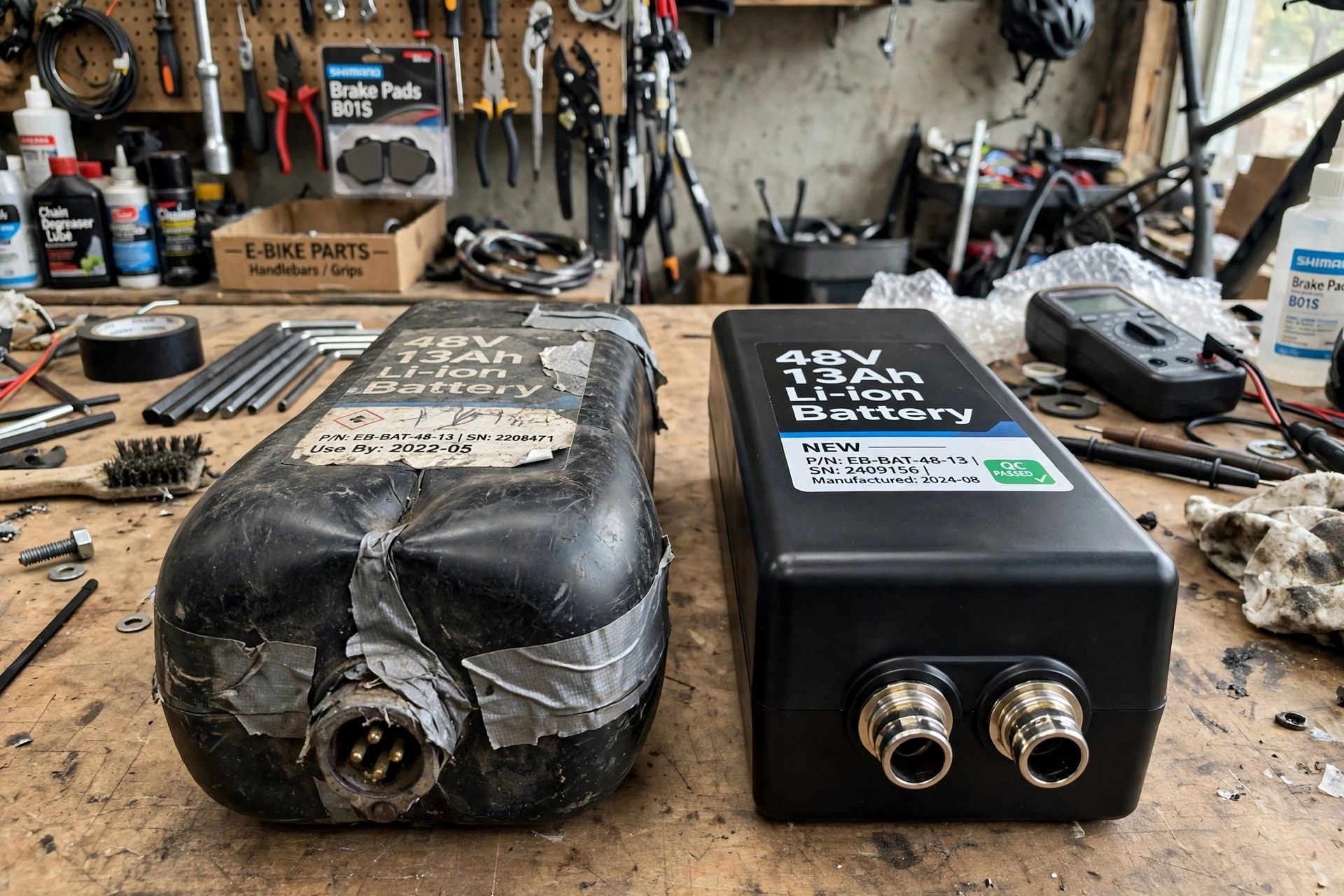
A swollen battery case, a pack that gets hot during normal charging, or a sweet chemical smell means stop using it immediately. Do not charge it again. Store it outside, away from anything flammable, and take it to a bike shop or a battery recycling drop-off. A damaged lithium-ion battery is a fire risk, and no repair is worth that risk.
Age and charge cycles
Most e-bike batteries last 500 to 1,000 full charge cycles, or about three to five years of regular riding. A five-year-old battery that has lost range has simply reached the end of its natural life. Replacement is normal maintenance at that point, not a defect.
Where to Buy a Replacement E-Bike Battery in the US
Your local bike shop
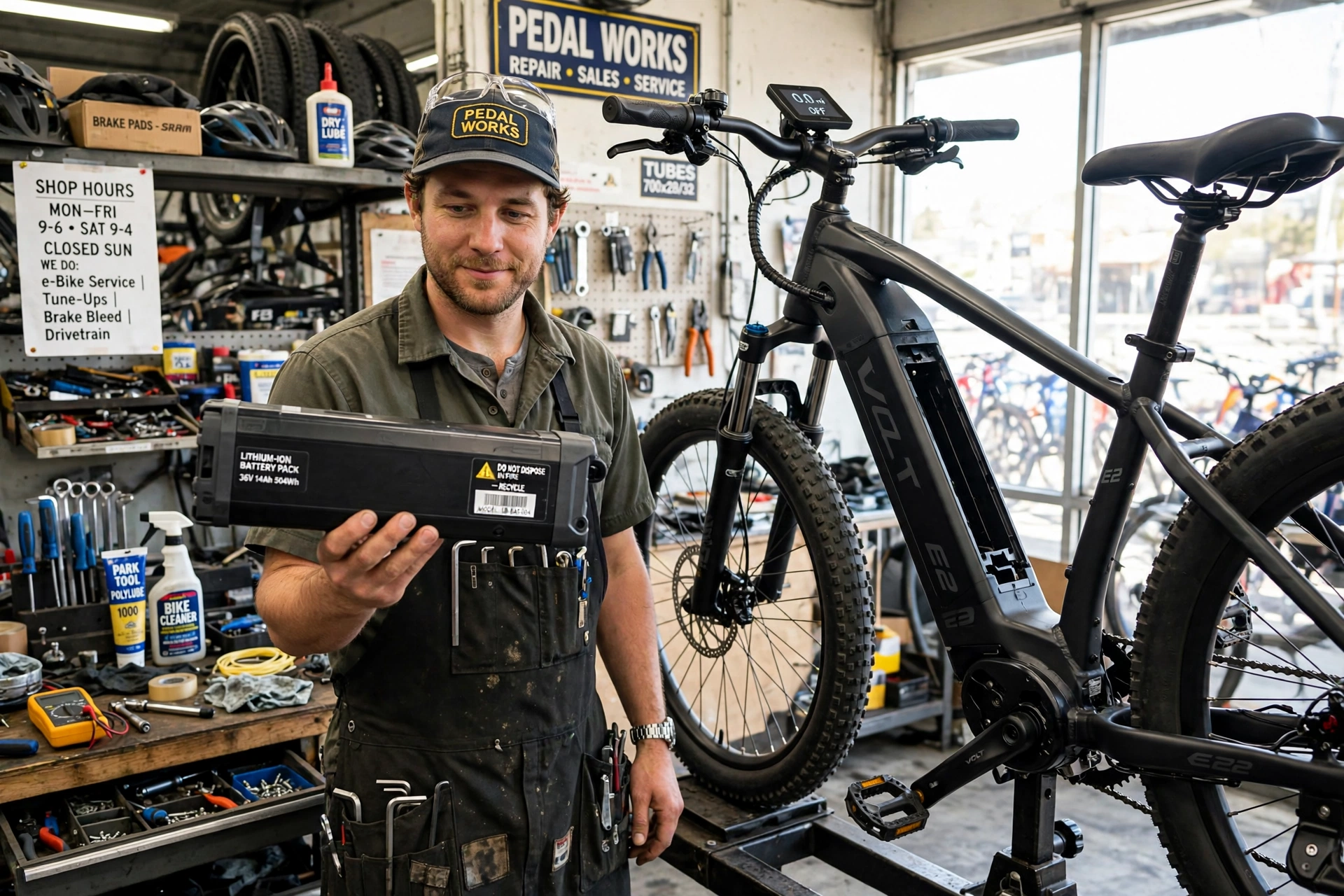
A local shop is the best option for Bosch, Shimano, and other proprietary systems. The shop can confirm the exact part number, order the right pack, and install it correctly. You pay more, but you get a genuine battery, a warranty you can actually use, and someone to call if anything goes wrong. Ask the shop to test your old battery first. Some shops charge $25 to $50 for a diagnostic, and that fee is often waived if you buy the replacement from them.
The bike maker’s website
Rad Power Bikes, Lectric, Aventon, and most direct-to-consumer brands sell replacement batteries on their own sites. This is the safest route for a compatible pack, and prices are usually fair. Check that the battery matches your exact model and year, because connectors and mounts change between model years.
Trusted online sellers
Reputable US sellers like Luna Cycle, EM3ev, and Unit Pack Power sell quality aftermarket packs with real warranties. Read reviews from riders with your bike model, confirm the connector type and dimensions, and make sure the seller offers at least a one-year warranty. Avoid no-name listings on marketplaces with no US address and no warranty. A battery that costs half the normal price is usually half the battery.
Battery rebuild services
Some shops rebuild your old battery by replacing the cells inside the original case. A rebuild typically costs $300 to $600, which can save money on expensive proprietary packs. A good rebuild uses name-brand cells and a tested battery management system. A bad rebuild is a fire risk, so use only a rebuilder with strong reviews and a written warranty. Never attempt a DIY cell rebuild unless you genuinely know lithium-ion battery work.
Can You Replace an E-Bike Battery Yourself?
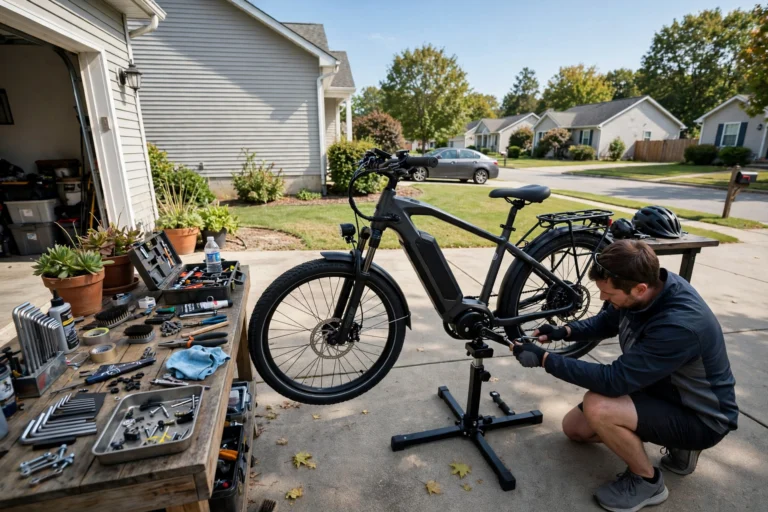
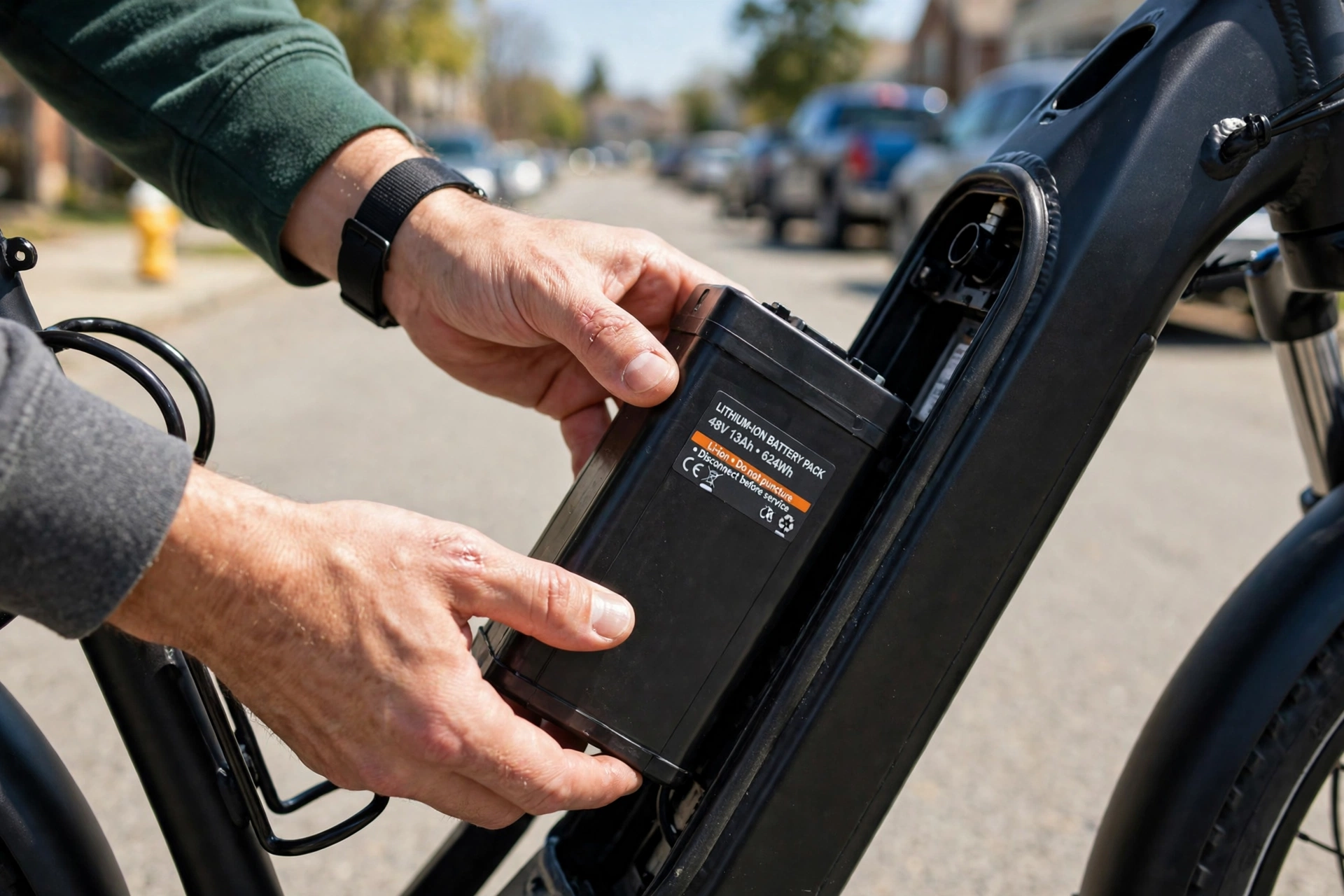
Yes, on most bikes it is a simple job. Slide-out frame batteries and rear-rack batteries usually come off with a key turn and a pull. The new battery slides in, clicks into place, and you are done. Budget 15 to 30 minutes and no tools beyond the battery key.
Integrated batteries that hide inside the frame take more care. You need to remove covers, disconnect the cable carefully, and route the new cable the same way. If you are not comfortable with that, pay the shop. Most shops charge $50 to $100 for installation, which is cheap insurance against a damaged connector or a pinched wire.
Three rules for a DIY swap: match the voltage exactly, never force a connector, and charge the new battery fully before your first ride. A 48V bike needs a 48V battery. A 36V pack in a 48V bike will not work properly, and a 52V pack in a 48V system can damage the controller.
How to Make Your New Battery Last Longer
A new battery is a big purchase, so protect it. Keep the charge between 20 and 80 percent for daily riding instead of running it to empty and charging to 100 percent every time. Store the bike indoors in mild temperatures, and never leave the battery in a freezing garage or a hot car. Charge at room temperature, and unplug the charger once the battery is full. Use the charger that came with your bike or a charger the battery maker approves. These habits can add a year or more to a battery’s life, which is real money saved.
Replacement vs Repair vs a New Bike
Sometimes a new battery is not the smartest spend. If your bike is five years old, the motor is noisy, the brakes need work, and a new battery costs $900, you may be better off putting that money toward a new bike with a fresh warranty. As a rule of thumb, if the battery costs more than half the current value of the bike, compare the price of a new bike before you buy the battery. On the other hand, if the bike is in good shape and the battery is the only problem, a replacement is almost always cheaper than a new e-bike, and it gives you several more years of riding. For a full picture of other repair bills, see how much does it cost to repair an e-bike.
FAQ
How much does it cost to replace an e-bike battery?
Most US riders pay $300 to $900 for a replacement e-bike battery in 2026, including the battery and any shop labor. Budget aftermarket packs start around $250, while proprietary batteries from Bosch, Shimano, Specialized, or Trek can cost $800 to $1,200 or more.
How do I know if my e-bike battery needs replacing?
Replace the battery when range has dropped by a third or more, the bike shuts off suddenly under load, the battery will not charge fully with a known good charger, or the case is swollen or hot. Age matters too: most batteries last 500 to 1,000 charge cycles, or about three to five years.
Can I use a cheaper aftermarket e-bike battery?
Yes, if it matches your bike’s voltage, connector, and physical size, and comes from a seller with a real US address and at least a one-year warranty. Quality aftermarket packs can save 30 to 40 percent. Avoid no-name packs with no warranty and no stated cell brand.
Is it worth replacing the battery on an old e-bike?
It is worth it if the rest of the bike is in good shape. A new battery costs far less than a new e-bike and can add several years of riding. If the battery costs more than half the bike’s current value and other parts need work too, compare new bike prices first.
Can I replace my e-bike battery myself?
Yes, most slide-out and rear-rack batteries swap in 15 to 30 minutes with just the battery key. Integrated frame batteries take more care, so pay a shop $50 to $100 if you are not comfortable removing covers and routing cables. Always match the voltage exactly.
Closing
An e-bike battery replacement is the biggest maintenance bill most riders will ever face, but it does not have to be a surprise. Expect $300 to $900 for most bikes, more for premium brands, and budget for it once your battery passes three years of regular use. Buy the right capacity, check the cells and the warranty, and have a shop test the old battery before you spend anything. With good charging habits, the new battery should give you years of full-range riding, and that is money well spent.