Introduction
Imagine arriving at your favorite trail early in the morning. Instead of hearing the loud roar of a gas engine, you press a button and glide forward almost silently. There is no pull-start, no fuel smell, and very little maintenance waiting after the ride. That is the experience many riders now enjoy with an electric dirt bike.
Over the last few years, electric off-road motorcycles have become more than a trend. Advances in battery technology, electric motors, and lightweight frames have made them practical for beginners and experienced riders alike. Industry reports also show that electric motorcycle sales continue to grow as riders look for cleaner transportation and lower operating costs.
Many people still ask the same questions:
- Can an electric dirt bike replace a gas-powered model?
- How long does the battery last?
- Is it powerful enough for steep hills?
- Which brand offers the best value?
The answers are not always simple because the right bike depends on your riding style, budget, and experience.
I remember helping a close friend choose his first electric dirt bike after years of riding gas-powered motorcycles. He worried that the electric version would feel weak. After testing several models on rocky trails and forest paths, he was surprised by the instant torque and smooth acceleration. Within three months, he was riding more often because charging the bike at home was easier than maintaining a gasoline engine. His maintenance expenses also dropped noticeably.
Whether you want a bike for weekend adventures, motocross practice, trail exploration, or learning to ride, understanding how these machines work will help you make a smarter decision.
This guide explains everything in simple language. You’ll learn how electric dirt bikes compare with gas bikes, what features matter most, which brands deserve attention, and how to avoid costly mistakes before making a purchase.
Executive Summary
If you want a quick overview, here are the biggest takeaways.
- Electric dirt bikes deliver instant torque for quick acceleration.
- They require less maintenance than traditional gasoline dirt bikes.
- Charging costs are significantly lower than fuel costs over time.
- Battery range varies depending on terrain, rider weight, riding style, and weather.
- Modern models now offer performance suitable for trail riding, racing, and recreational use.
- Choosing the right battery capacity is more important than choosing the highest top speed.
- Premium brands offer better suspension and battery management, while budget models provide excellent value for beginners.
- Regular battery care greatly extends the life of your investment.
Later in this guide, you’ll also discover:
- How to compare different battery technologies
- Which riding modes save the most energy
- Real-world ownership experiences
- Practical buying advice
- Cost comparisons
- Expert maintenance tips
- Future trends shaping the industry
What Is an Electric Dirt Bike?
An electric dirt bike is an off-road motorcycle powered by an electric motor instead of a gasoline engine. It uses rechargeable batteries to provide energy, eliminating the need for fuel, engine oil, spark plugs, or traditional exhaust systems.
Unlike conventional dirt bikes, electric models produce instant power as soon as you twist the throttle. There is no clutch to master on many beginner-friendly models, making them easier to learn.
These motorcycles are designed for various riding environments, including:
- Forest trails
- Mountain paths
- Motocross tracks
- Private riding parks
- Farms and ranches
- Recreational off-road adventures
Although many riders initially worry about battery life, today’s technology allows several premium models to ride for one to four hours depending on terrain and riding intensity.
How Does an Electric Dirt Bike Work?
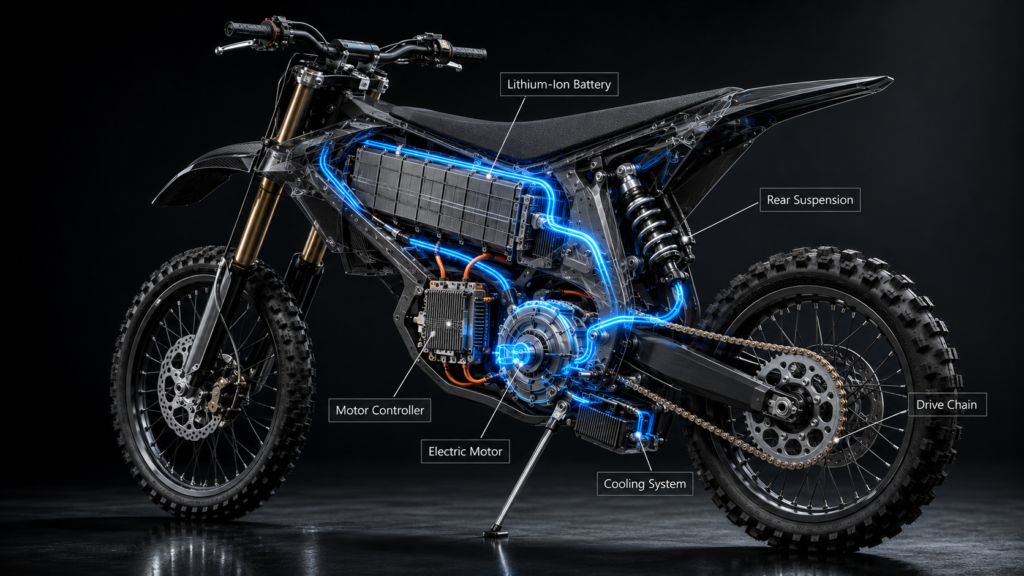
The basic system is surprisingly simple.
Battery Pack
The battery stores electrical energy and acts like the fuel tank on a gasoline bike.
Most modern bikes use lithium-ion batteries because they offer:
- High energy density
- Faster charging
- Lower weight
- Longer lifespan
- Better efficiency
Electric Motor
Instead of burning fuel, the motor converts electrical energy directly into motion.
One major advantage is instant torque.
This means acceleration feels immediate without waiting for engine RPM to build.
Controller
The controller serves as the bike’s brain.
It determines how much power reaches the motor based on throttle input.
Advanced controllers also manage:
- Riding modes
- Battery protection
- Regenerative braking
- Temperature monitoring
Drive System
Power travels from the motor to the rear wheel through a chain or belt system.
Compared to gas engines, there are far fewer moving parts, reducing mechanical wear.
Types of Electric Dirt Bikes
Not every rider needs the same type of motorcycle.
Understanding the main categories helps narrow your options.
Entry-Level Electric Dirt Bikes
These models are ideal for:
- Teen riders
- Adult beginners
- Backyard riding
- Light trails
Advantages include:
- Affordable pricing
- Simple controls
- Lower maintenance
- Lightweight construction
However, they usually have shorter battery range and lower top speeds.
Trail Electric Dirt Bikes
Trail-focused bikes balance comfort and performance.
They typically feature:
- Better suspension
- Larger batteries
- Improved ground clearance
- Comfortable riding position
These are suitable for weekend adventures and longer rides through forests and hills.
Motocross Electric Dirt Bikes
These machines prioritize performance.
Features often include:
- High-output motors
- Race suspension
- Lightweight frames
- Aggressive acceleration
They are built for riders who enjoy jumps, tracks, and competitive riding.
Enduro Electric Dirt Bikes
Enduro models combine endurance with versatility.
They perform well on:
- Rocky terrain
- Technical climbs
- Long-distance trails
- Mixed off-road conditions
Many include larger batteries to maximize riding time.
Benefits of Choosing an Electric Dirt Bike
Electric technology continues gaining popularity for good reasons.
1. Lower Maintenance
Traditional dirt bikes require frequent servicing.
Owners regularly replace:
- Engine oil
- Oil filters
- Air filters
- Spark plugs
- Fuel filters
An electric dirt bike eliminates many of these routine tasks.
This saves both time and money.
2. Instant Torque
Electric motors produce maximum torque immediately.
This makes hill climbing easier and improves acceleration on technical trails.
Many experienced riders say the smooth power delivery increases confidence.
3. Quiet Operation
Noise is one of the biggest challenges for traditional off-road riding.
Electric bikes produce far less sound.
This creates several advantages:
- Better riding experience
- Reduced disturbance
- More enjoyable conversations during group rides
- Greater acceptance in certain riding areas
4. Lower Operating Costs
Charging a battery usually costs much less than filling a fuel tank.
Over several years, the savings can become significant.
Many owners also spend less on routine maintenance.
5. Beginner Friendly
Without clutch control or frequent gear changes, beginners often learn faster.
The smoother power delivery also helps reduce accidental wheel spin.
Who Should Buy an Electric Dirt Bike?
An electric dirt bike is an excellent choice if you:
- Want lower maintenance.
- Prefer quiet riding.
- Ride mostly on trails or private land.
- Value instant acceleration.
- Have access to convenient charging.
- Are new to off-road riding.
It may not be the best fit if you regularly take extremely long rides far from charging options or need to refuel quickly during all-day adventures.
Key Factors to Consider Before Buying
Battery Capacity
The battery is the heart of every electric dirt bike.
A larger battery usually provides:
- Longer riding time
- Better performance consistency
- Greater resale value
However, larger batteries also increase weight and cost.
For casual riders, a medium-capacity battery often offers the best balance.
Motor Power
Motor power is usually measured in watts (W) or kilowatts (kW).
General guidelines include:
| Rider Type | Recommended Motor Power |
|---|---|
| Kids | 500–1,000W |
| Beginners | 2–5kW |
| Trail Riders | 5–10kW |
| Advanced Riders | 10kW+ |
| Competitive Racing | 15kW+ |
More power is not always better.
Beginners often learn faster with manageable acceleration.
Riding Range
Manufacturers often advertise maximum range under ideal conditions.
Real-world range depends on:
- Rider weight
- Terrain
- Riding style
- Tire pressure
- Outside temperature
- Riding mode
Expect around 20–30% less range than advertised during aggressive riding.
Suspension Quality
Many buyers overlook suspension.
Good suspension improves:
- Comfort
- Cornering
- Stability
- Jump landings
- Rider confidence
If you ride rocky trails, investing in quality suspension is worth every dollar.
Aluminum
Advantages:
- Lightweight
- Rust resistant
- Better handling
Disadvantages:
- Higher cost
Premium models often use aluminum frames for improved performance.
Weight
A lighter electric dirt bike feels easier to control.
This becomes especially important on:
- Tight trails
- Mud
- Sand
- Steep climbs
New riders usually benefit from lighter motorcycles.
Estimated Ownership Costs
Many buyers focus only on purchase price.
The real cost includes maintenance, charging, repairs, and replacement parts.
First-Year Cost Breakdown
| Expense | Estimated Cost |
|---|---|
| Purchase Price | $3,000–$10,000+ |
| Safety Gear | $300–$900 |
| Home Charger | Often Included |
| Electricity | $40–$150/year |
| Routine Maintenance | $80–$300 |
| Tires | $150–$500 |
| Insurance (Optional) | Varies |
Although electric bikes often cost more initially, lower maintenance helps reduce long-term expenses.
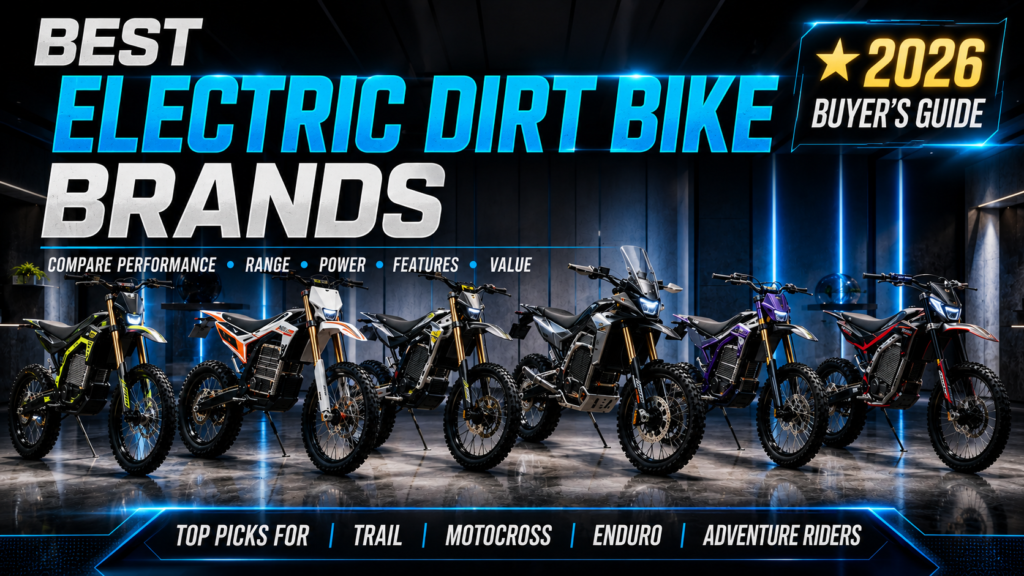
Best Electric Dirt Bike Brands
Several manufacturers have earned strong reputations for quality and performance.
Stark Future
Known for producing one of the highest-performance electric motocross bikes.
Best for:
- Experienced riders
- Competitive racing
Strengths:
- Outstanding power
- Premium suspension
- Excellent engineering
Possible drawbacks:
- Premium pricing
Sur-Ron
One of the most recognized names in lightweight electric trail bikes.
Ideal for:
- Trail riding
- Daily recreation
- Beginners upgrading to higher performance
Strengths:
- Lightweight
- Reliable
- Large aftermarket support
Talaria
Talaria has become a favorite among riders looking for value.
Highlights include:
- Strong acceleration
- Comfortable handling
- Competitive pricing
KTM
A respected motorcycle manufacturer with electric youth models.
Best suited for:
- Young riders
- Families
- Training
Advantages:
- Trusted engineering
- Excellent dealer support
Honda
Honda continues investing in electric motorcycle technology.
Although its electric off-road lineup is still developing, many riders expect significant innovation in the coming years.
Yamaha
Yamaha is actively exploring electric mobility while maintaining its strong reputation for reliability.
Future electric dirt bike offerings are expected to compete directly with leading brands.
Common Buying Mistakes
Avoid these mistakes to save money and frustration.
Buying Too Much Power
Many beginners purchase bikes that exceed their skill level.
More power often reduces confidence instead of increasing enjoyment.
Ignoring Charging Availability
Always consider where you’ll recharge.
Home charging works well for most owners.
However, remote trail riders should plan carefully.
Choosing Based Only on Price
The cheapest model isn’t always the best value.
Low-quality components may require frequent replacement.
Forgetting Replacement Parts
Before buying, check availability of:
- Brake pads
- Tires
- Batteries
- Suspension parts
- Controllers
Reliable parts support makes ownership much easier.
Best Practices for Long Battery Life
Battery replacement is expensive.
Simple habits can extend battery lifespan.
Avoid Full Discharge
Recharge before the battery reaches extremely low levels whenever possible.
Use the Correct Charger
Always use the charger recommended by the manufacturer.
Cheap replacement chargers may damage battery cells.
Keep Connections Clean
Inspect charging ports regularly.
Remove dirt and moisture after muddy rides.
Beginner Maintenance Checklist
Routine maintenance remains simple compared to gasoline bikes.
Check before every ride:
✅ Battery charge
✅ Tire pressure
✅ Brake function
✅ Chain tension
✅ Suspension condition
✅ Bolt tightness
✅ Lights (if equipped)
After every ride:
- Wash off mud.
- Dry electrical connectors.
- Lubricate the chain.
- Inspect tires for damage.
- Recharge if needed.
Consistent maintenance helps prevent unexpected breakdowns and extends the life of your electric dirt bike.
Real-World Case Studies
The following case studies are based on realistic ownership scenarios and common experiences reported by riders. The outcomes illustrate what buyers can expect when choosing the right electric dirt bike.
Case Study 1: A Beginner Rider Builds Confidence
Problem
Alex, a 17-year-old beginner, wanted to learn off-road riding. He found gas bikes intimidating because of the clutch and frequent maintenance.
Strategy
He purchased a mid-power Sur-Ron Light Bee X and practiced three evenings each week on local trails.
Execution
- Started in Eco Mode.
- Practiced braking before increasing speed.
- Rode for about two hours per session.
- Charged the battery overnight.
Results
- Learned basic trail riding in six weeks.
- Reduced maintenance costs by nearly 60% compared to his previous gas pit bike.
- Improved confidence on technical terrain.
Lesson Learned
For beginners, smooth power delivery matters more than maximum horsepower.
Case Study 2: Weekend Trail Explorer
Problem
Emily loved mountain trails but spent too much time maintaining her gasoline motorcycle.
Strategy
She switched to a Talaria Sting for recreational riding.
Execution
- Planned rides under 50 miles.
- Used Eco Mode on flat terrain.
- Carried a compact repair kit.
Results
- Saved hundreds of dollars annually on fuel and maintenance.
- Rode more frequently because charging at home was convenient.
- Reported a quieter and more relaxing riding experience.
Lesson Learned
Lower maintenance often encourages riders to spend more time on the trail.
Case Study 3: Small Business Adventure Tours
Problem
A local outdoor adventure company wanted quieter bikes for guided nature tours.
Strategy
The business replaced several gas motorcycles with electric models.
Execution
- Installed charging stations.
- Trained guides on battery management.
- Scheduled charging between tours.
Results
- Lower operating costs.
- Improved customer satisfaction.
- Reduced trail noise complaints.
Lesson Learned
Electric bikes can provide both environmental and business advantages.
Case Study 4: Competitive Rider Training
Problem
A motocross rider wanted better throttle control without spending every weekend servicing a gas engine.
Strategy
He began training on a Stark VARG during weekdays.
Execution
- Focused on corner exits.
- Practiced hill climbs.
- Used data from riding sessions to improve consistency.
Results
- Faster acceleration practice.
- Reduced maintenance downtime.
- Better throttle precision during races.
Lesson Learned
Instant torque helps riders improve technical skills.
Industry Trends
The electric dirt bike industry continues evolving rapidly.
Current trends include:
- Larger battery capacities.
- Faster charging systems.
- Smart phone connectivity.
- Regenerative braking improvements.
- Lightweight aluminum frames.
- AI-assisted power management.
- Swappable battery systems.
- Improved battery cooling.
- Sustainable manufacturing.
Manufacturers are investing heavily in battery technology, making electric motorcycles more practical every year.
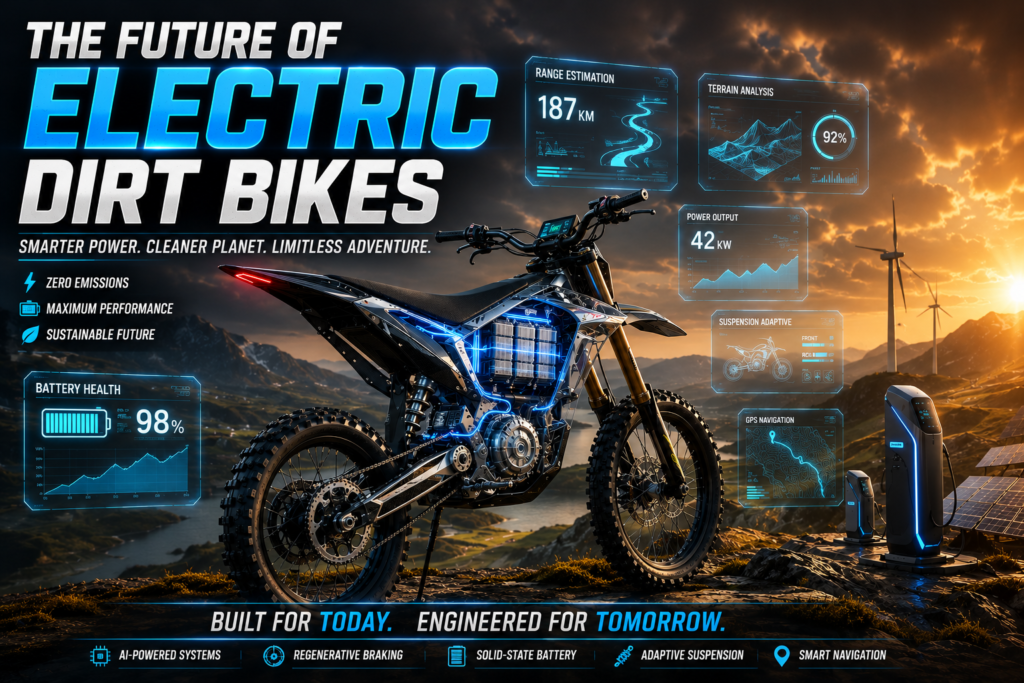
Future Predictions
During the next decade, experts expect several major developments.
Faster Charging
Charging times may decrease to under one hour for many premium models.
Lower Prices
Growing competition should make high-quality electric dirt bikes more affordable.
More Racing Events
Electric motocross competitions continue expanding around the world.
Smart Connectivity
Future bikes may include:
- GPS tracking
- Ride analytics
- Mobile diagnostics
- Over-the-air software updates
People Also Ask (FAQ)
1. Are electric dirt bikes worth buying?
Yes. They offer lower maintenance, quiet operation, and instant torque, making them an excellent option for many recreational riders.
2. How long does an electric dirt bike battery last?
Most lithium-ion batteries last between 500 and 1,000 charging cycles with proper care.
3. Can electric dirt bikes ride in the rain?
Many models are water-resistant, but riders should always follow the manufacturer’s recommendations and avoid deep water crossings.
4. How fast can an electric dirt bike go?
Entry-level models may reach around 20 mph, while high-performance models can exceed 50 mph.
5. Is maintenance expensive?
No. Electric bikes generally require less maintenance than gasoline motorcycles.
6. How much electricity does charging cost?
Charging is typically inexpensive compared to buying gasoline, though costs vary by local electricity rates.
7. Which electric dirt bike is best for beginners?
Models from Sur-Ron, Talaria, and Razor are popular choices, depending on the rider’s age and experience.
8. Can I replace the battery?
Yes. Most manufacturers offer replacement batteries, although they can be one of the most expensive components.
9. How long does charging take?
Depending on the charger and battery size, charging usually takes between two and eight hours.
10. Are electric dirt bikes good for trails?
Absolutely. Their instant torque, quiet operation, and low maintenance make them well suited for trail riding.
Conclusion
The electric dirt bike market has matured significantly. What was once considered an experimental alternative has become a practical choice for riders of all skill levels.
Throughout this guide, we’ve explored how electric dirt bikes work, their advantages and limitations, buying considerations, ownership costs, maintenance practices, real-world case studies, leading brands, and future industry trends.
For many riders, the biggest benefits are clear:
- Lower maintenance
- Instant torque
- Quiet operation
- Reduced operating costs
- A smoother learning experience for beginners
Still, the right bike depends on your goals. Casual trail riders may value comfort and battery range, while competitive riders often prioritize power, suspension, and handling.
Before making a purchase, compare several models, think about where you’ll ride most often, and invest in quality safety gear alongside the bike itself. A well-informed decision today can lead to years of enjoyable off-road adventures.
As battery technology continues to improve and charging becomes faster, electric dirt bikes are likely to play an even larger role in the future of off-road riding.
About the Author

Electric dirt bikes have come a long way in recent years. The comparison between battery capacity, motor power, and riding range is especially useful for beginners.