How Much Does a Spark Plug Replacement Cost in 2026? Prices, Signs, and DIY vs Shop for US Drivers
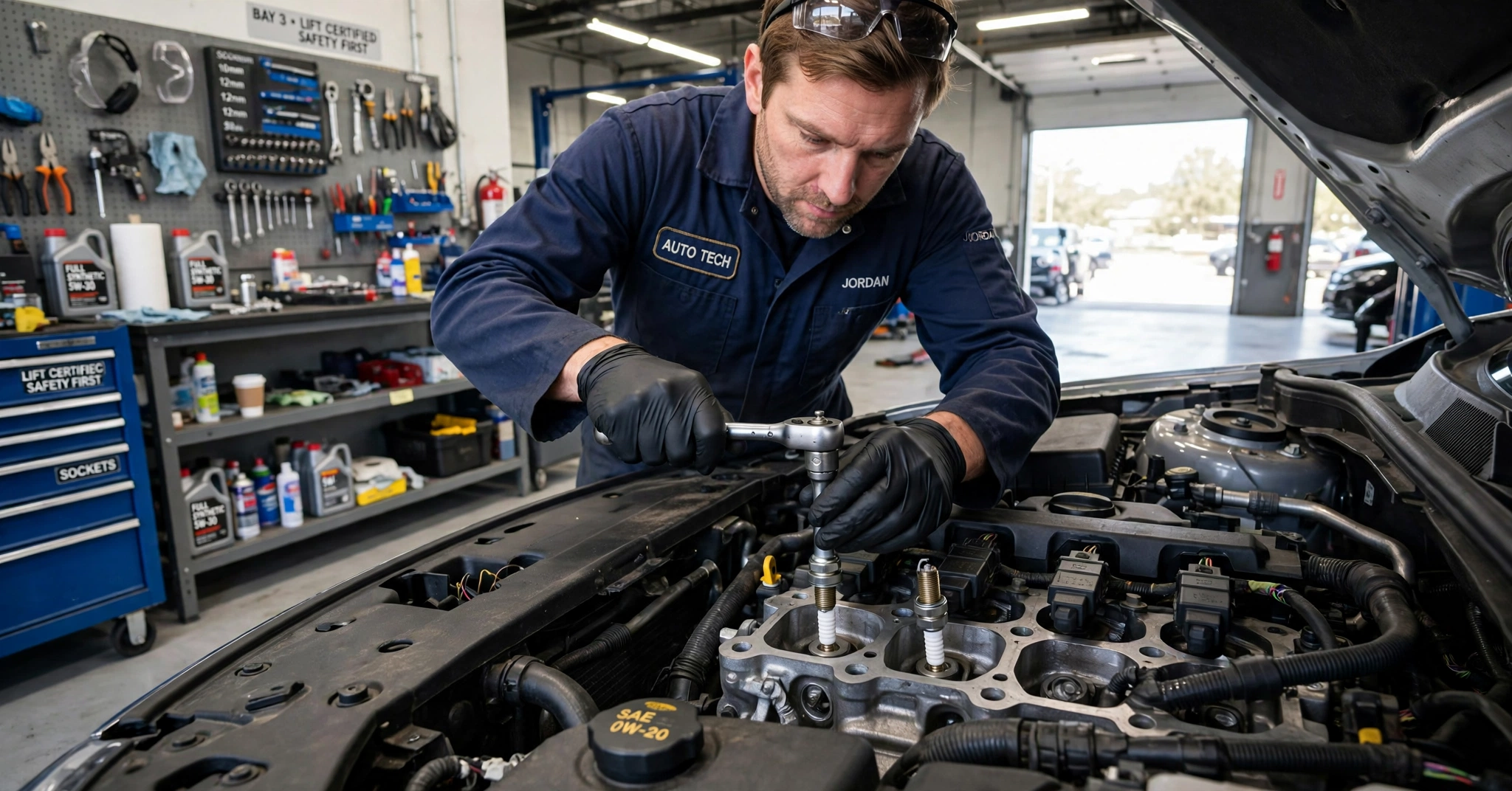
Spark plugs are small, cheap parts that do a big job. Every time your engine fires, a spark plug creates the spark that ignites the fuel and air mixture in the cylinder. When plugs wear out, your car can misfire, waste gas, and struggle to start. The good news is that a spark plug replacement is one of the most affordable repairs you can have done, and it is also one of the easiest jobs to do yourself if you are comfortable with basic tools.
In this guide, we break down exactly what a spark plug replacement costs in the US in 2026, what affects the price, the signs your plugs are worn out, and whether you should pay a shop or do it yourself.
What Does a Spark Plug Replacement Cost in 2026?
For most US drivers, a spark plug replacement costs between $150 and $400 at a repair shop in 2026. That total includes both the parts and the labor. The wide range exists because cars differ a lot. A four-cylinder sedan with easy-to-reach plugs sits at the low end, while a V6 or V8 truck with plugs buried under the intake manifold can cost much more in labor alone.
Here is what you can expect to pay at a typical independent shop or dealership in 2026.
| Vehicle type | Parts cost | Labor cost | Total cost |
|---|---|---|---|
| 4-cylinder car | $40 to $80 | $80 to $150 | $120 to $230 |
| V6 sedan or SUV | $60 to $120 | $120 to $250 | $180 to $370 |
| V8 truck or SUV | $80 to $160 | $150 to $350 | $230 to $510 |
| Performance or luxury car | $100 to $200 | $200 to $400 | $300 to $600 |
Dealerships usually charge 20 to 40 percent more than independent shops, mostly because of higher hourly labor rates. An independent shop in the US typically charges $100 to $150 per hour in 2026, while a dealership often charges $150 to $200 per hour.
If you replace the plugs yourself, you only pay for parts. A set of four copper plugs can cost as little as $10 to $20, while a set of four iridium plugs usually runs $40 to $80. For a V8, expect $80 to $160 in parts for a full set of iridium plugs.
Spark Plug Types and Their Prices
Not all spark plugs are the same, and the type your car uses has a direct effect on the price. Most cars built in the last 20 years use one of three types.
Copper spark plugs are the cheapest option, usually $2 to $5 each. They conduct electricity very well, but they wear out fast, typically lasting only 20,000 to 30,000 miles. They are common in older cars and some performance engines.
Platinum spark plugs cost about $5 to $10 each and last much longer, usually 60,000 to 100,000 miles. The platinum tip resists wear, so the gap stays correct for longer. Many mid-2000s and newer cars came with platinum plugs from the factory.
Iridium spark plugs are the most expensive at $8 to $20 each, but they are also the longest lasting. A good set of iridium plugs can last 100,000 to 120,000 miles. Most cars built after 2015 use iridium plugs, and many manufacturers now specify them as the only acceptable replacement.
Always use the plug type your owner’s manual calls for. Putting cheap copper plugs in an engine designed for iridium can cause misfires and poor fuel economy, and the savings disappear when you have to replace them three times as often. If you are unsure which type your car needs, check the manual or ask the parts counter at any auto parts store. They can look it up by your car’s year, make, and model in seconds.
Labor Costs: Why the Shop Bill Varies So Much
The parts are cheap. The labor is where the bill grows, and it all comes down to access. On many four-cylinder cars, the spark plugs sit right on top of the engine under a plastic cover. A mechanic can reach them in 30 to 45 minutes, so labor stays low.
On many V6 and V8 engines, especially in trucks and SUVs, the rear plugs can be hard to reach. Some cars require removing the intake manifold, the windshield wiper cowl, or even part of the suspension to get to the back bank of plugs. In those cases, labor alone can run $250 to $400.
Some models are famous for expensive spark plug jobs. Certain Ford trucks with three-valve V8 engines, some Subaru boxer engines, and a few transverse V6 minivans can take two to three hours of labor. Before you approve a quote, ask the shop to explain the labor time and whether anything else has to come off to reach the plugs. A good shop will walk you through it.
Signs Your Spark Plugs Need Replacing
Spark plugs wear out slowly, so the symptoms creep up on you. You may not notice the change until the problem is obvious. Here are the most common signs that your plugs are past their best.
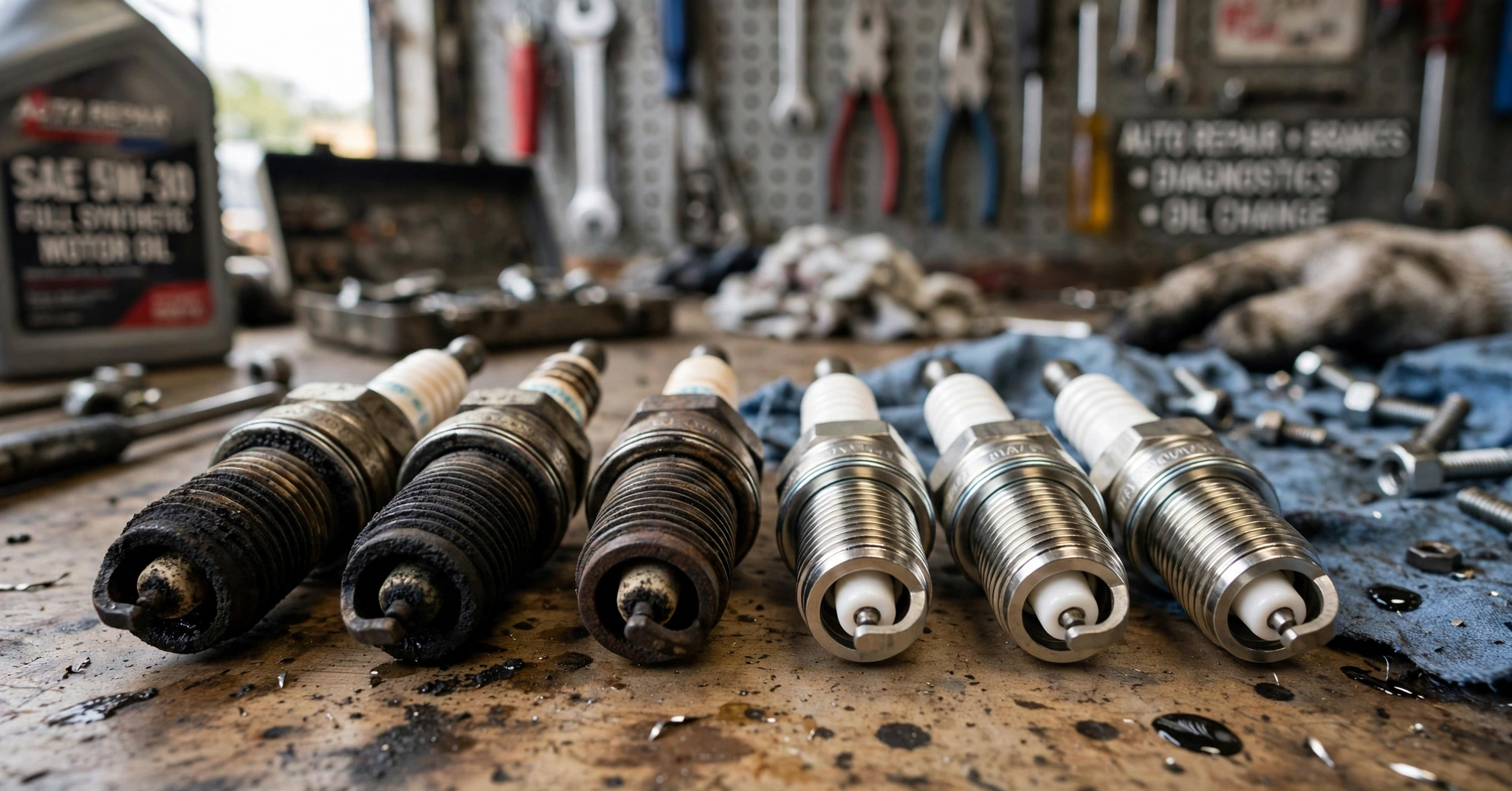
Rough idling is one of the first clues. If your car shakes, vibrates, or sounds uneven when sitting at a red light, worn plugs may be misfiring at low speed. A misfire means one cylinder is not firing cleanly, and you feel it as a stumble or shake.
Hard starting is another sign. Worn plugs produce a weaker spark, so the engine may crank longer than usual before it catches, especially on cold mornings. If your car used to start instantly and now takes a few extra cranks, the plugs are a likely suspect.
Poor fuel economy often follows. When plugs do not fire cleanly, some fuel goes unburned. Many drivers notice their gas mileage drop by 10 to 30 percent before any other symptom shows up. If your fuel economy has fallen and your tires are fine and your driving has not changed, check the plugs.
Loss of power and sluggish acceleration can also point to worn plugs. The engine may hesitate when you press the gas, or it may feel flat when climbing a hill or merging onto a highway. A misfiring cylinder simply does not make its full share of power.
A check engine light with a misfire code is the clearest sign. Codes like P0300 through P0308 point to a misfire in a specific cylinder. A scan tool at any auto parts store can read the code for free, and a misfire code often means the plugs, the ignition coils, or both need attention.
If you want to learn how to check other parts of your car yourself, our guide on how much does a car battery replacement cost covers another common repair that shows similar warning signs.
How Often Should You Replace Spark Plugs?
There is no single answer, because it depends on the plug type and your car. The general rule in the US is to replace copper plugs every 20,000 to 30,000 miles, platinum plugs every 60,000 to 100,000 miles, and iridium plugs every 100,000 to 120,000 miles.
Your owner’s manual has the exact interval for your car, and it is the best source to follow. Some manufacturers list 30,000 miles even for platinum plugs, while others stretch iridium intervals to 120,000 miles. Driving conditions matter too. Lots of short trips, stop-and-go traffic, and towing can wear plugs faster than steady highway driving.
A good habit is to have the plugs inspected at every major service. A mechanic can pull one plug and read its condition in minutes. The color and wear on the electrode tell a story about how the engine is running, and catching a problem early can save you from a bigger repair.
DIY vs Shop: Is It Worth Doing Yourself?
Replacing spark plugs is one of the most beginner-friendly car repairs, but only when the plugs are easy to reach. If your car has a four-cylinder engine with the plugs on top, the job usually takes 30 to 60 minutes with basic tools: a spark plug socket, a ratchet, an extension, and a torque wrench.
Here is a quick comparison to help you decide.
| Factor | DIY | Repair shop |
|---|---|---|
| Cost for a 4-cylinder car | $10 to $80 in parts | $120 to $230 total |
| Cost for a V6 or V8 | $40 to $160 in parts | $180 to $510 total |
| Time needed | 30 to 90 minutes | Drop off and wait |
| Tools needed | Socket set, torque wrench | None |
| Risk | Cross-threading a plug, over-tightening | Very low |
| Best for | Easy-access engines, confident beginners | Hard-to-reach plugs, no tools, no time |
The biggest risk in a DIY spark plug job is cross-threading a plug when you screw it in, or over-tightening it and cracking the plug or damaging the cylinder head. Both are avoidable. Start each plug by hand, turning it gently until it seats, and then use a torque wrench set to the value in your manual, usually 15 to 20 foot-pounds for most cars.
Never change plugs on a hot engine. Let the car cool for at least an hour first. A hot aluminum cylinder head is easy to damage, and a plug can seize in the threads. Work on one plug at a time so you do not mix up the ignition coil order, and use a small dab of anti-seize on the threads only if your manual recommends it.
If your plugs are hard to reach, or if the job requires removing the intake manifold, paying a shop is usually the smarter choice. The labor cost hurts, but a stripped thread in a cylinder head costs far more to fix.
What Happens If You Ignore Bad Spark Plugs?
Worn plugs do more than make your car run rough. A misfiring cylinder sends unburned fuel into the exhaust, where it can overheat and damage the catalytic converter. A catalytic converter replacement costs $1,000 to $2,500 in the US, which is many times the cost of a set of plugs.
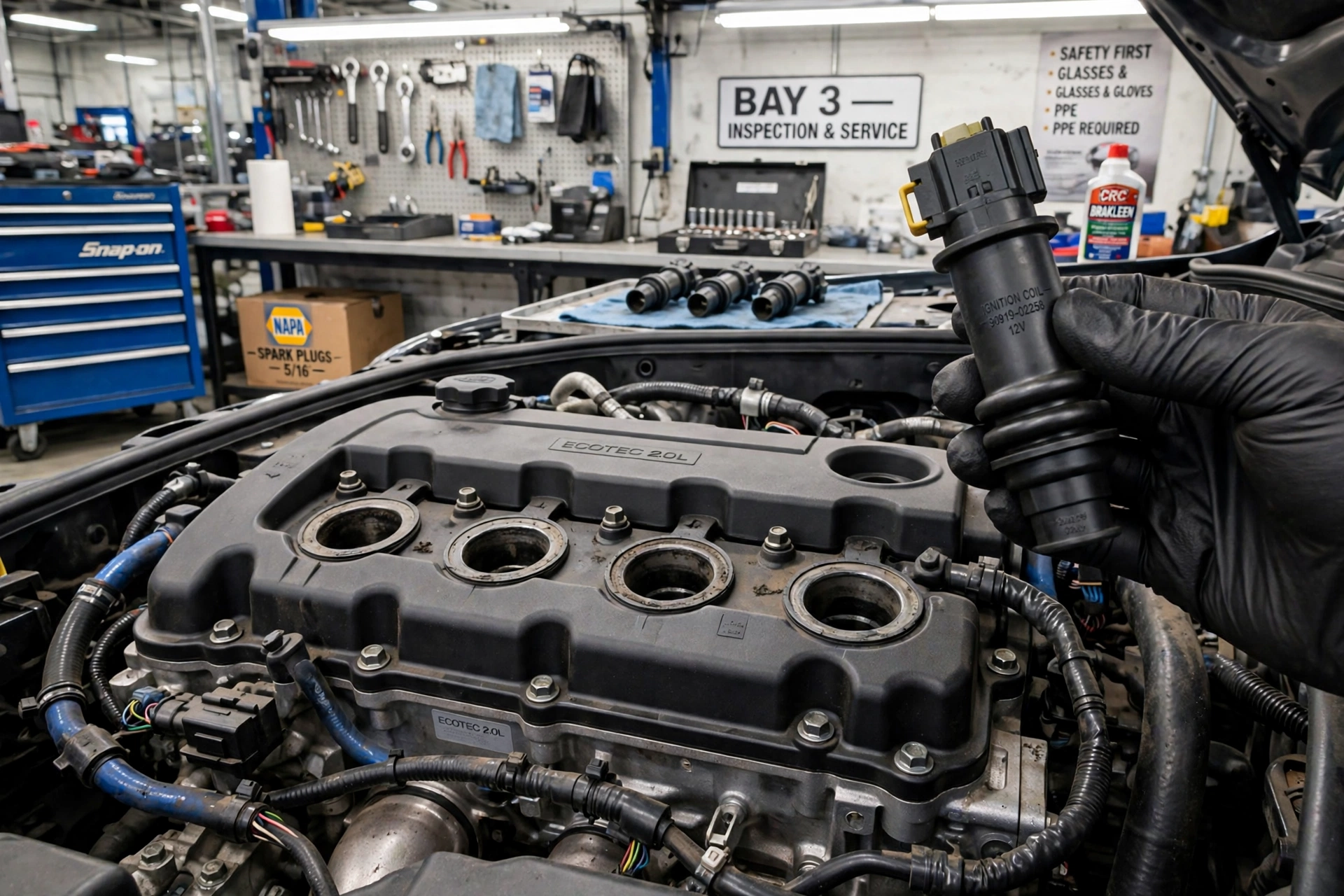
Bad plugs can also foul the ignition coils. When a plug wears out, the coil has to work harder to push a spark across a wider gap, and the extra strain can burn out a coil. Ignition coils cost $50 to $150 each, plus labor, so ignoring the plugs can turn a $200 job into a $600 job.
Fuel waste adds up too. If your gas mileage drops by 15 percent and you drive 12,000 miles a year, you could burn an extra $200 to $300 of fuel in a year. That alone can pay for a new set of plugs.
The lesson is simple. Spark plugs are cheap, and the damage from ignoring them is not. Replace them on schedule and your engine will thank you with smooth running, better mileage, and fewer surprises.
How to Save Money on a Spark Plug Replacement
You do not need to pay dealership prices for this job. A few simple steps can cut the bill without cutting corners.
First, get quotes from two or three independent shops. Prices for the same job can vary by $100 or more between shops in the same town. Ask each shop to break out parts and labor separately so you can compare fairly.
Second, buy your own plugs if the shop allows it. Shops mark up parts, sometimes by 50 percent or more. Buying a set of iridium plugs online or at an auto parts store can save $30 to $60 on the total bill. Just make sure you buy the exact part number your manual calls for, and confirm with the shop that they will install customer-supplied parts.
Third, replace the plugs before they fail. A scheduled replacement is a quick, cheap job. A misfire that damages a coil or a catalytic converter is not. Following the interval in your manual is the cheapest strategy of all.
Fourth, ask about a bundle. If your car is due for an oil change and new plugs, some shops will discount the labor when both jobs are done in one visit. It never hurts to ask, and it can save you $20 to $50. For a look at what that oil change should cost, see our guide on how much does an oil change cost so you can spot a fair price when you see one.
Frequently Asked Questions
How much does a spark plug replacement cost in 2026?
A spark plug replacement in the US usually costs $150 to $400 at a repair shop in 2026, including parts and labor. A four-cylinder car typically costs $120 to $230, while a V8 truck can cost $230 to $510. Doing it yourself costs only $10 to $160 in parts.
How long do spark plugs last?
Copper plugs last 20,000 to 30,000 miles, platinum plugs last 60,000 to 100,000 miles, and iridium plugs last 100,000 to 120,000 miles. Always follow the interval in your owner’s manual, since driving conditions can shorten plug life.
Can I drive with bad spark plugs?
You can drive for a short time, but you should not put it off. Bad plugs cause misfires that waste fuel and can damage the catalytic converter and ignition coils. A repair that starts at $200 can grow into a $1,000-plus repair if you ignore it.
How do I know if my spark plugs are bad?
The most common signs are rough idling, hard starting, poor fuel economy, loss of power, and a check engine light with a misfire code. If you notice two or more of these symptoms together, have the plugs checked.
Is it better to replace spark plugs yourself or at a shop?
If your plugs are easy to reach and you have basic tools, DIY is a great way to save $100 to $300. If the plugs are hard to reach, or the job requires removing the intake manifold, paying a shop is usually safer and worth the labor cost.
Closing
A spark plug replacement is one of the best value repairs in car ownership. For $150 to $400 at a shop, or under $100 in parts if you do it yourself, you get smoother running, better fuel economy, and protection against far more expensive damage. The key is to replace your plugs on schedule, use the correct plug type for your car, and never ignore the warning signs.
If your car is idling rough, starting hard, or drinking more gas than usual, check the plugs first. It is a small job with a big payoff, and your engine will run like it should again. For more on keeping your car in top shape, learn what a spark plug does inside your engine and why its condition matters so much for performance and fuel economy.
If your timing belt is also due, check how much does a timing belt replacement cost before it snaps and causes far more expensive engine damage.
Before your next repair, see how much does a catalytic converter replacement cost in 2026 — it is often the most expensive part in the exhaust system.