How to Choose Your First E-Bike in 2026: A Beginner’s Buying Guide for US Riders
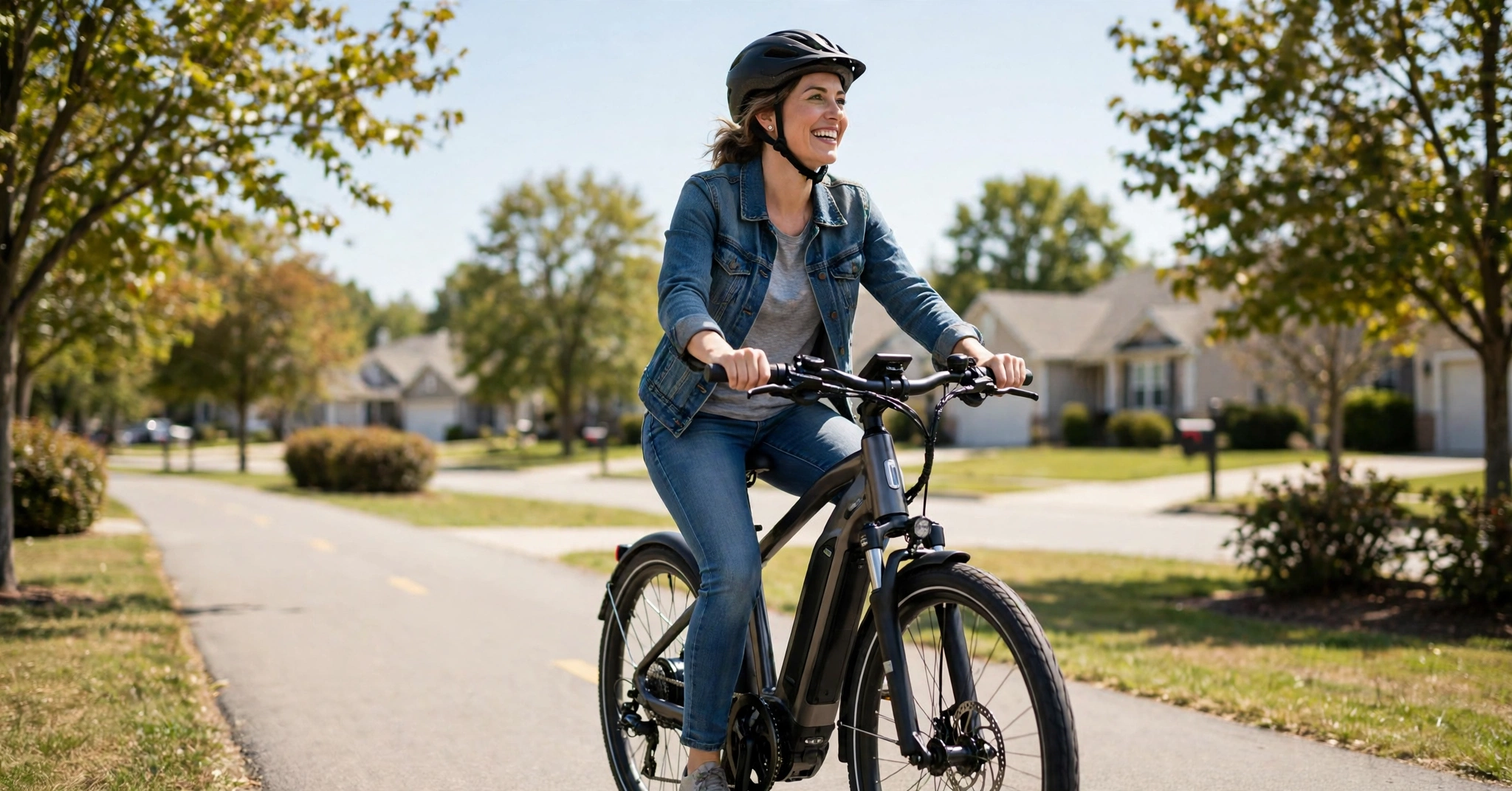
Buying your first e-bike is exciting, and a little overwhelming. Walk into a bike shop or open an online store and you will see dozens of models, prices from $600 to $6,000, and a wall of specs that mean nothing if you have never owned an electric bike before. An e-bike is a bicycle with an electric motor that helps you pedal, and the right one can replace car trips, flatten hills, and make a 10 mile commute feel easy. The wrong one can sit in your garage after a month.
This guide walks you through every decision that matters, in the order you should make them. By the end you will know which class, motor, battery, and price range fit your riding, and which mistakes to avoid. If you already know you will mainly ride to work, our guide to the best e-bike for commuting in 2026 is a good next read after this one.
Start With How You Will Actually Ride
Before you compare a single spec, answer one question honestly: how will you use this bike most days? The answer decides almost everything else, from motor power to frame style to how much you should spend.
A rider who wants a 12 mile commute on flat city streets needs a very different bike from a rider who wants weekend trail rides in the hills. A parent hauling two kids to school needs a cargo frame and a strong motor. A rider in an apartment needs a folding bike that fits in a closet. Write down your top three uses, and keep them in front of you while you shop. Every feature you pay for should serve one of those uses.
Think about distance too. A 3 mile ride to the store is easy on almost any e-bike, even a small battery will cover it. A 20 mile round trip commute needs a bigger battery and a comfortable riding position, or you will arrive tired and sore. And think about terrain. Flat Florida riding and hilly San Francisco riding are different sports, and the motor that feels fine on one will struggle on the other.
Finally, be honest about your fitness and your knees. There is no shame in wanting more help from the motor. That is exactly what e-bikes are for. A stronger motor and a throttle are not cheating, they are the reason many people ride every day instead of driving.
E-Bike Classes: Pick the Right One for Your State
The United States sorts e-bikes into three classes, and the class decides where you can legally ride and how fast the motor will help you. Most states follow this system, but a few have their own rules, so check your state law before you buy. Our full breakdown of e-bike classes explains each one in detail, and here is the short version.
Class 1: Pedal Assist Up to 20 MPH
Class 1 bikes only help while you pedal, and the assist stops at 20 miles per hour. There is no throttle. These are welcome on most bike paths and trails, which makes them the safest choice if you plan to ride mixed-use paths or parks. For a first-time buyer who wants a bike that feels like a normal bicycle with a friendly push, Class 1 is hard to beat.
Class 2: Throttle Assist Up to 20 MPH
Class 2 bikes add a throttle, so you can ride without pedaling at all, up to 20 miles per hour. This is the class to pick if your knees hurt, if you want to arrive at work without sweating, or if you need a boost to get moving from a stop with a heavy load. Most bike paths still allow Class 2, but a few trail systems do not, so check local rules if trails matter to you.
Class 3: Pedal Assist Up to 28 MPH
Class 3 bikes assist up to 28 miles per hour while you pedal, with no throttle in most states. They are built for longer commutes and faster roads. The trade-off is access: many bike paths ban Class 3 bikes, and some states require a helmet and a minimum age of 16. If your commute is long and mostly on roads, Class 3 saves real time. If you want paths and parks, stick with Class 1 or 2.
Motor Power: How Much Do You Really Need?
Motor power is measured in watts, and the number on the box is only part of the story. In the US, most e-bikes top out at 750 watts, which is the legal limit in many states. Here is how the common sizes feel in real riding.
A 250 watt motor is fine for flat ground and light riders, but it will feel weak on hills and with cargo. It is common on lightweight city bikes and folding bikes where low weight matters more than power. A 500 watt motor is the sweet spot for most first-time buyers. It handles moderate hills, a rider up to about 220 pounds, and a loaded pannier without complaint. A 750 watt motor is the strongest legal option in most states, and it is the right pick for steep hills, heavier riders, cargo hauling, and towing a kid trailer.
Torque matters as much as watts. Torque, measured in Newton meters, is the twisting force that gets you moving from a stop and pushes you up a hill. A motor rated at 60 Newton meters or more will feel strong even if its wattage looks modest. When you compare two bikes, check the torque number, not just the watts.
Battery Size and Real-World Range
The battery is the most expensive part of your e-bike, and its size decides how far you can ride. Battery size is measured in watt-hours, written as Wh. A bigger number means more range, but also more weight and a higher price.
A 400Wh battery is common on light city bikes and will give you roughly 20 to 30 miles of real riding. A 500Wh battery is the most common size in 2026 and usually delivers 30 to 45 miles. A 750Wh battery or larger can push past 50 miles, and it is worth the money if your commute is long or you ride in hilly areas.
Ignore the maximum range number on the box. That number comes from a light rider, on flat ground, in the lowest assist level, on a calm day. Your real range will be lower, especially in cold weather, on hills, at high assist, or with a heavy load. A safe rule is to take the advertised range and multiply by 0.7. If that number still covers your round trip with room to spare, the battery is big enough.
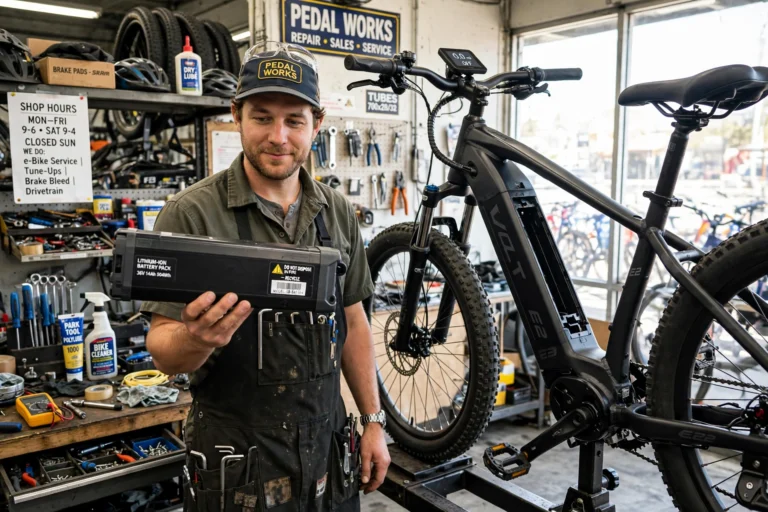
Look for a battery from a known cell maker, such as Samsung, LG, or Panasonic, and check that the battery is removable. A removable battery lets you charge it inside your home or office, which matters in winter and in apartments, and it makes replacement much cheaper later. A replacement battery usually costs $300 to $600, so plan for that cost in a few years.
Hub Motor or Mid-Drive: Which Is Better for a Beginner?
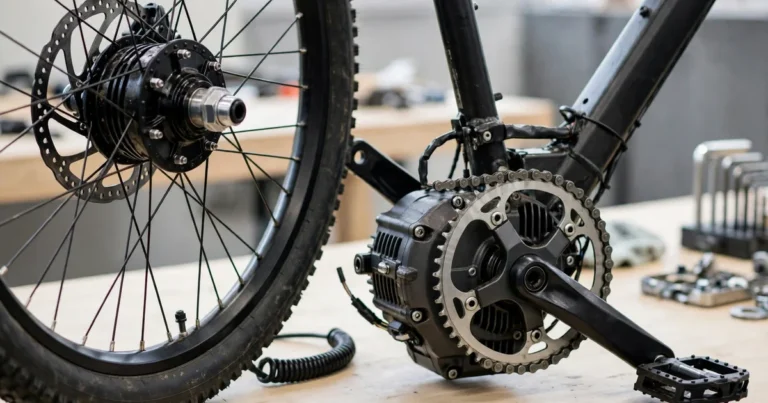
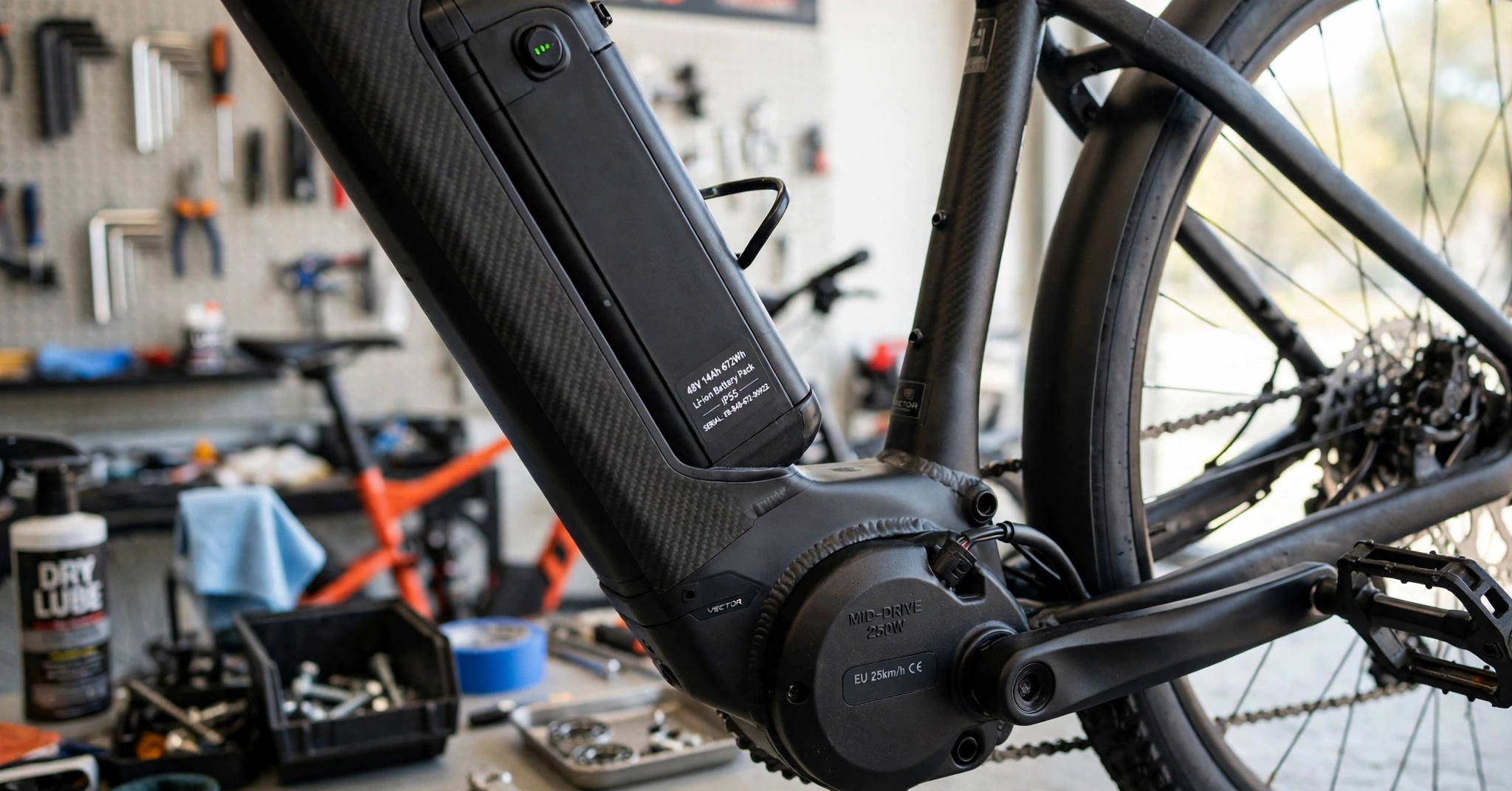
E-bike motors sit in one of two places. A hub motor lives in the center of the front or rear wheel and pushes the bike along directly. A mid-drive motor sits at the pedals and drives the chain, so it works with your gears.
Hub motors are simpler, quieter, and cheaper, which is why most first e-bikes use them. They are easy to maintain and they work well on flat ground and gentle hills. Their weakness is steep, long climbs, where they can overheat and lose power.
Mid-drive motors cost more, but they climb better, feel more natural, and use the battery more efficiently on hills. They wear out chains and cassettes faster, so they need a little more maintenance. If you live somewhere hilly, or you plan to ride trails, a mid-drive is worth the extra money. If your riding is mostly flat city streets, a hub motor will serve you well and save you hundreds of dollars.
Frame, Fit, and Comfort
The best motor in the world will not help if the bike hurts to ride. Fit matters more than any spec, and it is the one thing you cannot judge from a website.
Stand over the bike. You should have at least an inch or two of clearance between you and the top tube on a standard frame. Step-through frames, with a low top tube, are easier to mount and dismount, and they are a smart choice for commuters, older riders, and anyone who rides in regular clothes.
Sit on the bike and check the reach to the handlebars. Your back should be fairly upright, not stretched out flat. An upright position is more comfortable for commuting and casual riding, and it gives you a better view of traffic. Adjustable stems and swept-back handlebars can fix a reach problem cheaply, so do not reject a bike over a small fit issue a shop can adjust in five minutes.
E-bikes are heavy, usually 50 to 70 pounds, so test how it feels to lift the front wheel over a curb, walk it up a step, and carry it into your home if you need to. If you live upstairs, a folding e-bike or a lighter model may be worth more to you than extra power.
Brakes, Gears, and Tires
Brakes are a safety item, not a luxury, and e-bikes need better brakes than regular bikes because they are heavier and faster. Hydraulic disc brakes are the best choice, and they are worth paying for. They stop smoothly in the rain, need little hand strength, and last longer between adjustments. Mechanical disc brakes work, but they need more frequent adjustment and more hand effort. Avoid rim brakes on an e-bike unless the bike is very light and you ride only on flat ground.
Gears matter more than most beginners expect. A bike with 7 or 8 speeds is enough for flat city riding, but hills and heavy loads are easier with 9 or 10 speeds. Make sure the gear range includes a low gear for climbing. You will use it more than you think.
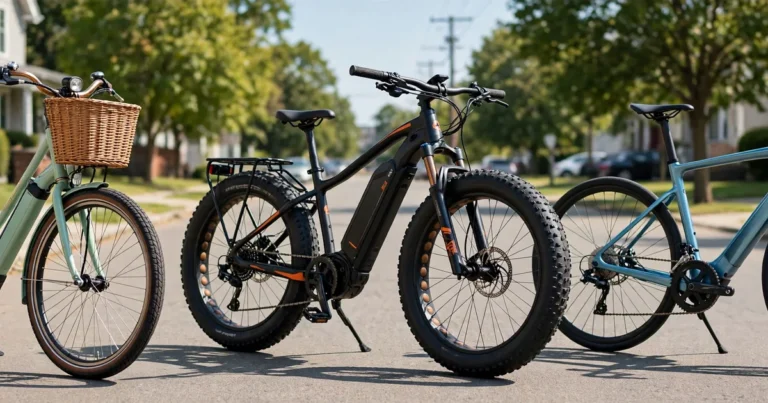
Tires are your connection to the road. Wider tires, 2 inches or more, give a smoother ride and better grip, and they are more forgiving on rough city streets. Puncture-resistant tires or tire liners are worth the small extra cost, because fixing a flat on a heavy e-bike with a hub motor is no fun on the side of the road. Check the tire pressure every week. Soft tires waste battery and wear out fast.
How Much Should Your First E-Bike Cost?
Prices have settled into clear tiers in 2026, and knowing what each tier buys helps you spend wisely.
| Price Range | What You Get | Best For |
|---|---|---|
| $600 to $1,000 | Basic hub motor, small battery, mechanical brakes | Short flat rides, testing the waters |
| $1,000 to $2,000 | 500 to 750W motor, 500Wh or larger battery, hydraulic brakes | Commuting and daily riding |
| $2,000 to $3,500 | Mid-drive motor, better components, longer range | Long commutes, hills, heavy use |
| $3,500 and up | Premium motor, large battery, top quality parts | Serious riders, cargo, long range |
For most first-time buyers, the $1,000 to $2,000 range is the sweet spot. Bikes in this range are reliable enough for daily use, have batteries big enough for real commutes, and use parts any bike shop can service. Bikes under $600 often use no-name batteries and brakes that are hard to get serviced, and that false economy can cost more later.
Remember the total cost, not just the bike. Budget $100 to $200 for a good lock, $50 to $100 for a helmet, and $50 or so for lights if the bike does not include them. A rack and panniers add another $100 or so if you plan to carry things. These accessories are not optional extras, they are part of the real price of riding every day.
Where to Buy: Bike Shop vs Online
You have two main ways to buy, and each has real advantages.
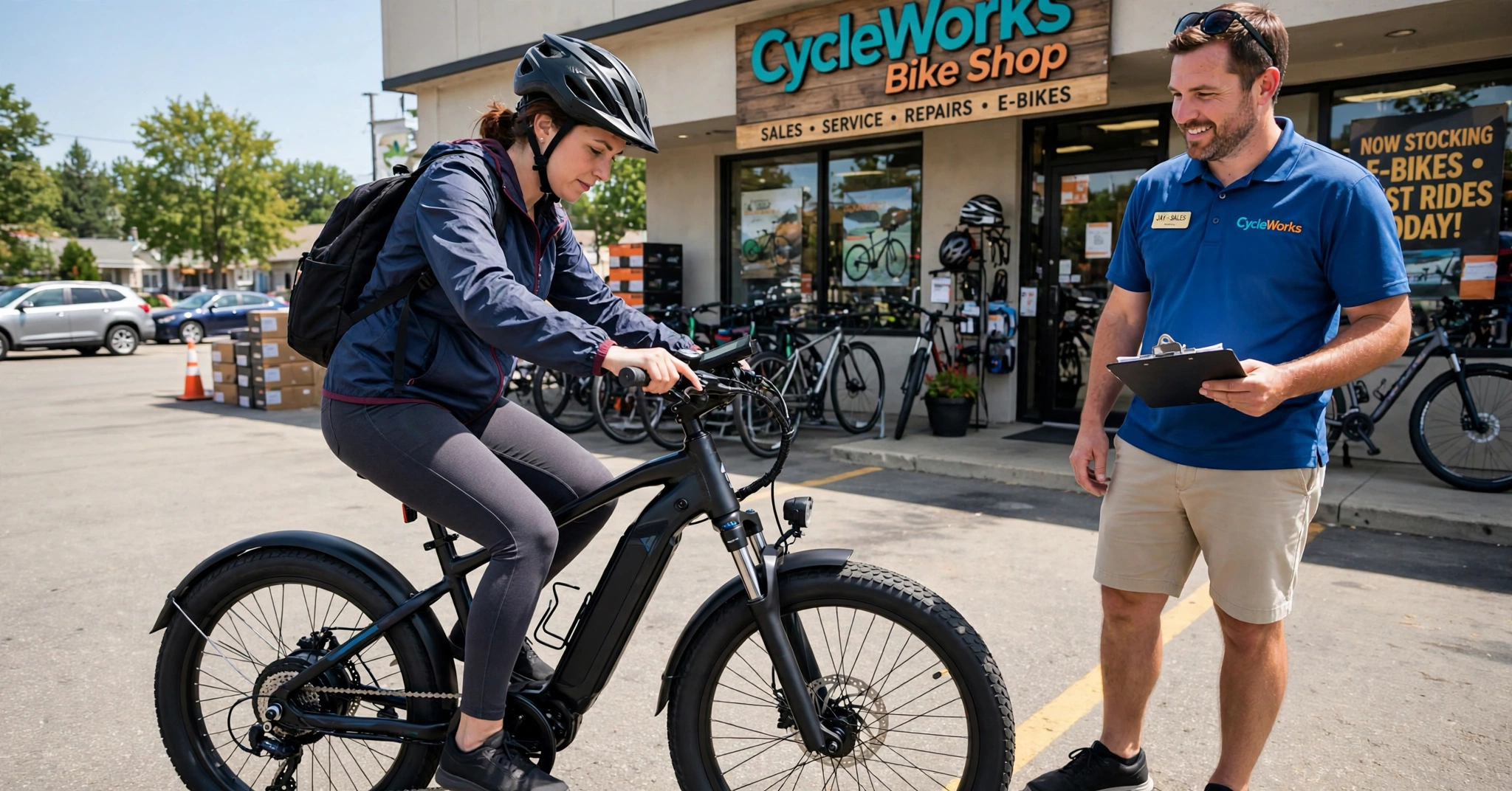
A local bike shop lets you test ride before you buy, and that alone is worth a lot. You can compare three bikes in one afternoon, get fitted properly, and ask questions to a person who rides. Most shops also include a free first tune-up and will service the bike later, which matters because many online brands have no local service network. Expect to pay $100 to $300 more at a shop than online for a similar bike, and for a first bike, that premium is usually money well spent.
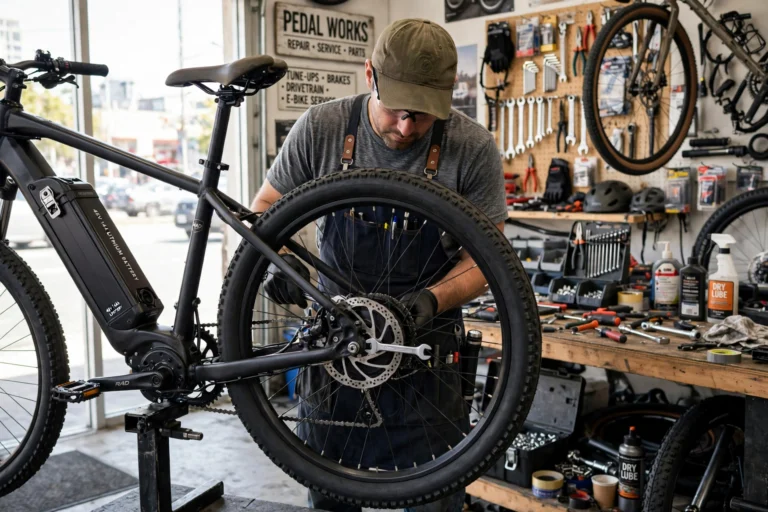
Buying online gives you more choice and lower prices, and direct-to-consumer brands have improved a lot in 2026. The risk is assembly and service. Most online e-bikes arrive about 85 percent assembled, and you will need to attach the handlebars, front wheel, and pedals, then check the brakes and bolts. If you are not comfortable with that, pay a local shop $75 to $150 to assemble and safety check it. Before you order online, check whether any shop near you will service that brand. Some shops refuse to work on brands they do not sell.
Either way, check the warranty before you pay. A good e-bike warranty covers the frame for at least two years and the motor, battery, and electronics for at least one year. Read the fine print on the battery, because some warranties only cover a battery that drops below a certain capacity, not one that simply wears down with normal use.
7 Mistakes First-Time E-Bike Buyers Make
- Buying on price alone. The cheapest bike is often the most expensive one to own, once you add repairs, a replacement battery, and the days it spends in the shop.
- Skipping the test ride. Two bikes with the same specs can feel completely different. Ride before you buy, even if it means driving to a shop.
- Ignoring the weight. A 70 pound bike is hard to carry upstairs, load onto a car rack, or push home if the battery dies. Lift it before you buy it.
- Choosing a battery that is too small. Range anxiety is real, and it is the top reason new owners stop riding. Buy more battery than you think you need.
- Forgetting about service. Ask who will fix the bike, where parts come from, and how long they take. A bike no shop will touch is a problem waiting to happen.
- Buying the wrong class for your trails. A Class 3 bike is a poor choice if your favorite trail bans it. Check your local rules first.
- Skipping the lock and helmet. E-bikes are a top target for thieves, and they are fast enough that a helmet is not optional. Buy both on day one.
Frequently Asked Questions
How much should I spend on my first e-bike?
For most riders, $1,000 to $2,000 buys a reliable e-bike with a strong enough motor, a battery big enough for real trips, and brakes a shop can service. Spending less is possible, but you give up battery size, brake quality, and service support, which usually costs more later.
Do I need a license or registration for an e-bike in the US?
In most states, no. Class 1, 2, and 3 e-bikes under 750 watts are treated like bicycles, so no license, registration, or insurance is required. A few states and cities have their own rules, especially for Class 3 bikes, so check your state law before you buy.
How far can an e-bike go on one charge?
A typical 500Wh battery delivers 30 to 45 miles of real riding, and larger batteries can pass 50 miles. Your actual range depends on your weight, the hills, the assist level, the wind, and the temperature. Cold weather can cut range by 20 percent or more.
Can I ride an e-bike in the rain?
Yes. Most e-bikes are built to handle rain, and the motor and battery are sealed against water. Avoid deep puddles and pressure washers, dry the bike after a wet ride, and store the battery indoors. Never charge a wet battery, and wipe the contacts dry first.
Is a cheap e-bike worth it?
A bike under $600 can work for short, flat rides, but it usually comes with a no-name battery, weak brakes, and no local service support. For daily riding, a cheap bike often costs more over two years in repairs and replacements than a mid-priced bike. If your budget is tight, a used e-bike from a known brand is often a better buy than a new no-name bike.
Final Thoughts
Choosing your first e-bike comes down to three honest answers: how you will ride, where you will ride, and how much range you really need. Get those three right, test ride before you buy, and spend in the $1,000 to $2,000 sweet spot, and you will end up with a bike you actually use every week.
Start with the class that fits your local trails, pick a motor strong enough for your hills, buy more battery than you think you need, and make sure a shop near you can service the bike. Do those things and your first e-bike will not be a garage ornament. It will be the bike that gets you out of the car and onto the road, and that is the whole point.
If you are still deciding whether a bike or a scooter suits your commute better, our guide to e-bike vs electric scooter compares the two side by side for US riders.