How Much Does a Catalytic Converter Replacement Cost in 2026? Prices, Signs, and Theft Protection for US Drivers
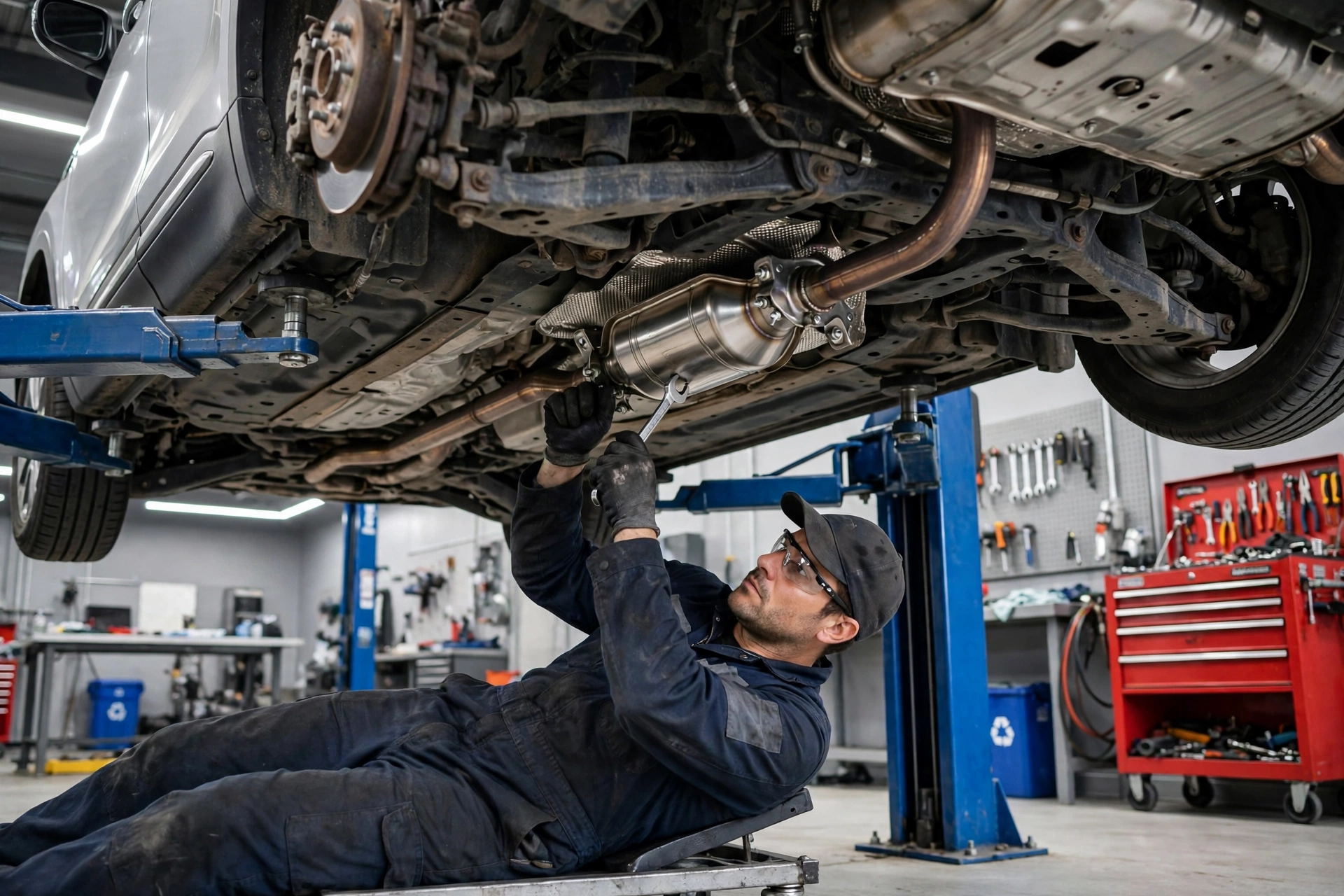
A catalytic converter is one of the most expensive parts under your car, and most drivers only learn that when the check engine light comes on or a mechanic hands them a four figure estimate. In 2026, a catalytic converter replacement in the United States usually costs between $1,000 and $2,500 for parts and labor, but the real number depends on your vehicle, your state, and whether you choose an original equipment part or an aftermarket one. Some economy cars come in under $1,000, while luxury SUVs and trucks can pass $3,000. This guide breaks down the real prices by vehicle type, the warning signs of a failing converter, whether you can keep driving with a bad one, and the simple steps that keep thieves away from yours.
What Does a Catalytic Converter Do?
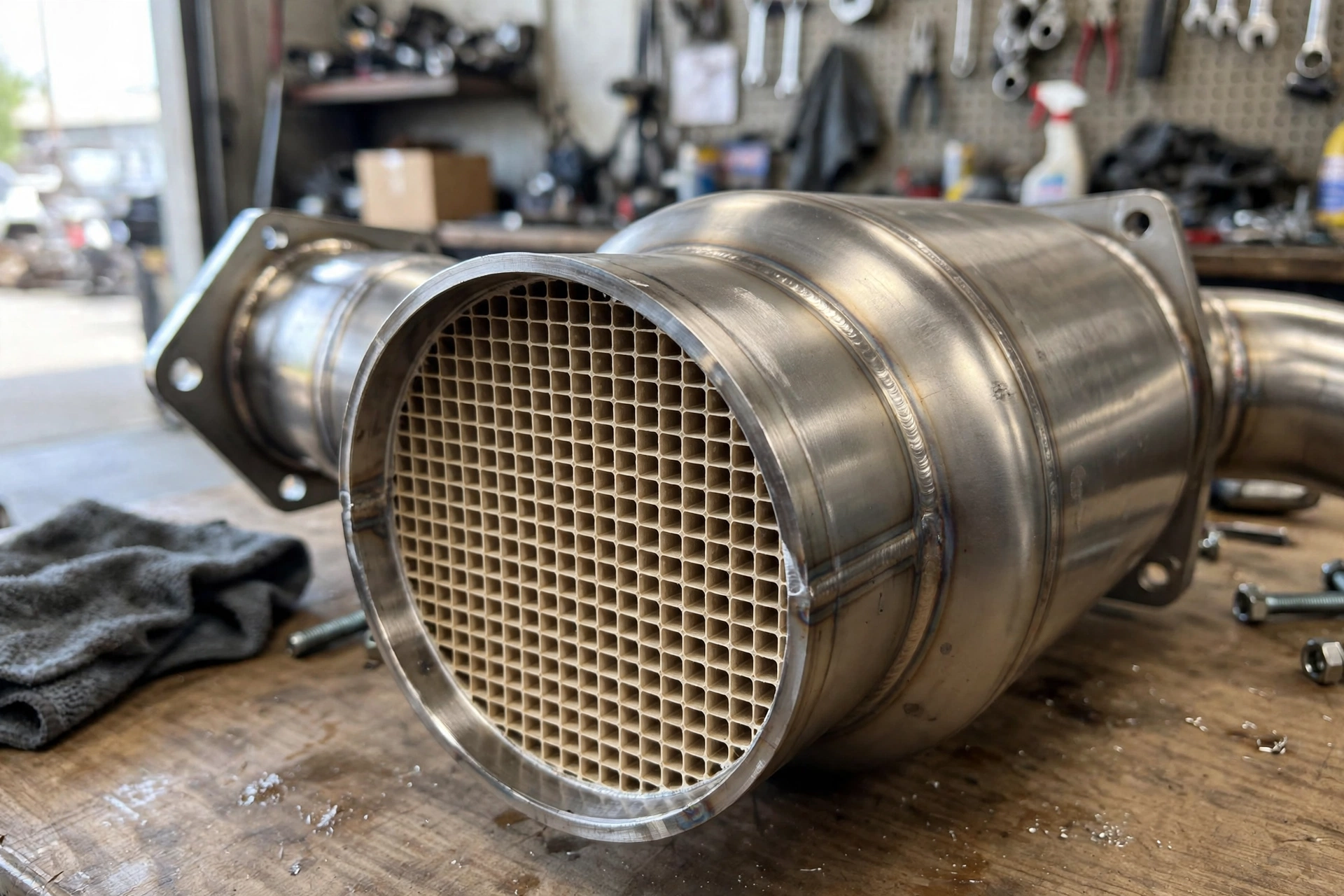
Your catalytic converter sits in the exhaust system between the engine and the muffler. Its job is to turn harmful gases from the engine into less harmful ones before they leave the tailpipe. Inside the metal shell is a ceramic honeycomb coated with precious metals: platinum, palladium, and rhodium. Those metals trigger the chemical reactions that convert carbon monoxide into carbon dioxide, nitrogen oxides into nitrogen and oxygen, and unburned hydrocarbons into water and carbon dioxide. Those precious metals are also the reason a converter costs so much, and the reason thieves target them. A single converter contains only a few grams of precious metal, but at 2026 prices that scrap value is enough to make converter theft one of the fastest growing auto crimes in the country. A thief with a battery powered saw can cut one out in under two minutes. If you want the full technical background, the Wikipedia page on the catalytic converter explains the chemistry in detail.
How Much Does a Catalytic Converter Replacement Cost in 2026?
Here is what US drivers typically pay in 2026, parts and labor included. Prices assume a standard shop rate of $100 to $200 per hour and a converter that bolts on without major exhaust damage.
| Vehicle type | Parts | Labor | Total |
|---|---|---|---|
| Compact sedan (Civic, Corolla) | $700 to $1,200 | $150 to $300 | $850 to $1,500 |
| Midsize sedan or SUV (Camry, RAV4) | $900 to $1,600 | $200 to $350 | $1,100 to $1,950 |
| Full-size truck or SUV (F-150, Tahoe) | $1,200 to $2,200 | $250 to $450 | $1,450 to $2,650 |
| Luxury vehicle (BMW, Mercedes, Lexus) | $1,800 to $3,000 | $300 to $500 | $2,100 to $3,500 |
| Hybrid (Prius, RAV4 Hybrid) | $1,000 to $2,000 | $200 to $400 | $1,200 to $2,400 |
A few notes on these numbers. First, the part itself is most of the bill. An original equipment manufacturer (OEM) converter from your carmaker can cost two to three times as much as an aftermarket one, and for some luxury models the OEM part alone passes $2,500. Second, trucks and SUVs often have two converters, one per exhaust bank, so a full replacement can double the parts cost. Third, quotes vary by region. Shops in California, New York, and other states with strict emissions rules must install converters that meet tougher standards, and those parts cost more.
OEM vs Aftermarket: Is the Cheaper Part Worth It?
An aftermarket converter usually costs $300 to $1,000 for the part, while the same OEM converter can run $1,000 to $3,000 or more. The aftermarket part is tempting, but there are three things to check before you buy one. First, your state rules. California, New York, Maine, and several other states follow California Air Resources Board (CARB) standards. In those states, only a CARB compliant converter is legal, and it must match your exact year, make, model, and engine. An EPA compliant converter that is legal in Texas may fail inspection in California. Ask the shop to confirm the part is legal in your state before it goes on the car. Second, warranty. OEM converters typically carry a longer warranty, often 2 years or more, while many budget aftermarket converters carry only a 1 year or 25,000 mile warranty. If the cheap part fails early, you pay labor twice. Third, fit. Aftermarket universal converters need cutting and welding to fit, which adds labor cost and can create exhaust leaks if the weld is poor. A direct fit aftermarket converter costs more than a universal one but bolts on like the original and usually saves money overall. For most drivers, a direct fit aftermarket converter from a known brand is the sweet spot between price and reliability.
What Else Affects the Final Bill?
The converter itself is not the only line on the invoice. Rusted exhaust bolts are common on cars older than seven or eight years, especially in the Rust Belt, and a shop may charge an extra $50 to $150 in labor to cut them free. Oxygen sensors sit right next to the converter and often get replaced at the same time, adding $150 to $300 for parts and labor. If the old converter failed because the engine was burning oil or running rich, the shop should fix that root cause too, or the new converter will fail early. And if your car needs an emissions test to renew registration, budget for a retest fee of $25 to $50. One cost many drivers miss: the federal emissions warranty. By law, your catalytic converter is covered for 8 years or 80,000 miles, whichever comes first. If your car is inside that window, the dealer must replace a failed converter free of charge. Some states extend that coverage further. Always check your warranty before paying out of pocket.
7 Signs Your Catalytic Converter Is Failing
A failing converter rarely dies quietly. Watch for these signs, and get the car checked as soon as two or more show up together.
- Check engine light with code P0420. This is the most common sign. Code P0420 means the converter is not cleaning the exhaust efficiently. A scan tool at any auto parts store can read the code free of charge.
- Rotten egg smell. When a converter stops working, hydrogen sulfide in the exhaust escapes unconverted, and it smells like rotten eggs. If the smell is strong inside the cabin, stop driving and get it checked, because exhaust fumes can enter the car.
- Loss of power. A clogged converter chokes the exhaust flow, so the engine cannot breathe. The car feels sluggish on acceleration and struggles on hills.
- Rattling noise underneath. The ceramic honeycomb inside the converter can crack and break apart. The pieces rattle when you start the car or tap the gas, and the sound comes from under the middle of the car.
- Poor fuel economy. A failing converter forces the engine to work harder, and many drivers notice a drop of 2 to 5 miles per gallon before any other symptom appears.
- Failed emissions test. If your state tests emissions, a bad converter is one of the most common reasons for a failure. You cannot renew registration until it is fixed.
- Dark or blue exhaust smoke. This usually points to engine trouble upstream, such as burning oil, but that same trouble kills converters. Dark smoke plus a check engine light is a strong hint the converter is already damaged.
Can You Drive With a Bad Catalytic Converter?
For a short trip to the shop, usually yes. For weeks of normal driving, no. A clogged converter builds back pressure that can overheat the engine, melt internal parts, and eventually leave you stranded. A converter that is broken inside can also send ceramic debris back toward the engine. And in most states, driving with a failed converter means driving a car that cannot pass emissions, which can bring a fine and a failed inspection. If the check engine light is flashing, that means the engine is misfiring, and you should stop driving right away. A misfire dumps raw fuel into the converter and can destroy a new one in a single drive, which is why a spark plug replacement cost is often the first thing a mechanic checks when a converter fails early. Fix the misfire, then replace the converter.
Repair or Replace: What Actually Works?
Fuel additives and converter cleaners are sold everywhere, and they sometimes clear a P0420 code for a few weeks, but they cannot repair a melted or broken honeycomb. If the converter is clogged, cracked, or melted, replacement is the only real fix. The one exception is a converter that failed because of a sensor problem. A bad oxygen sensor can trigger the same code as a bad converter, so a good shop will test the sensors first. Paying $150 for a sensor beats paying $1,500 for a converter you did not need. If replacement is the answer, replace it once and replace it right. A quality direct fit converter, new oxygen sensors if yours are old, and a fix for whatever killed the original converter will usually last the life of the car.
How to Protect Your Catalytic Converter From Theft
Converter theft is fast, quiet, and expensive to fix, but a few cheap steps make your car a much harder target.
Park smart. A garage is best. If you park outside, choose a well lit spot close to foot traffic or a security camera. Thieves prefer dark, quiet corners where a saw goes unnoticed.
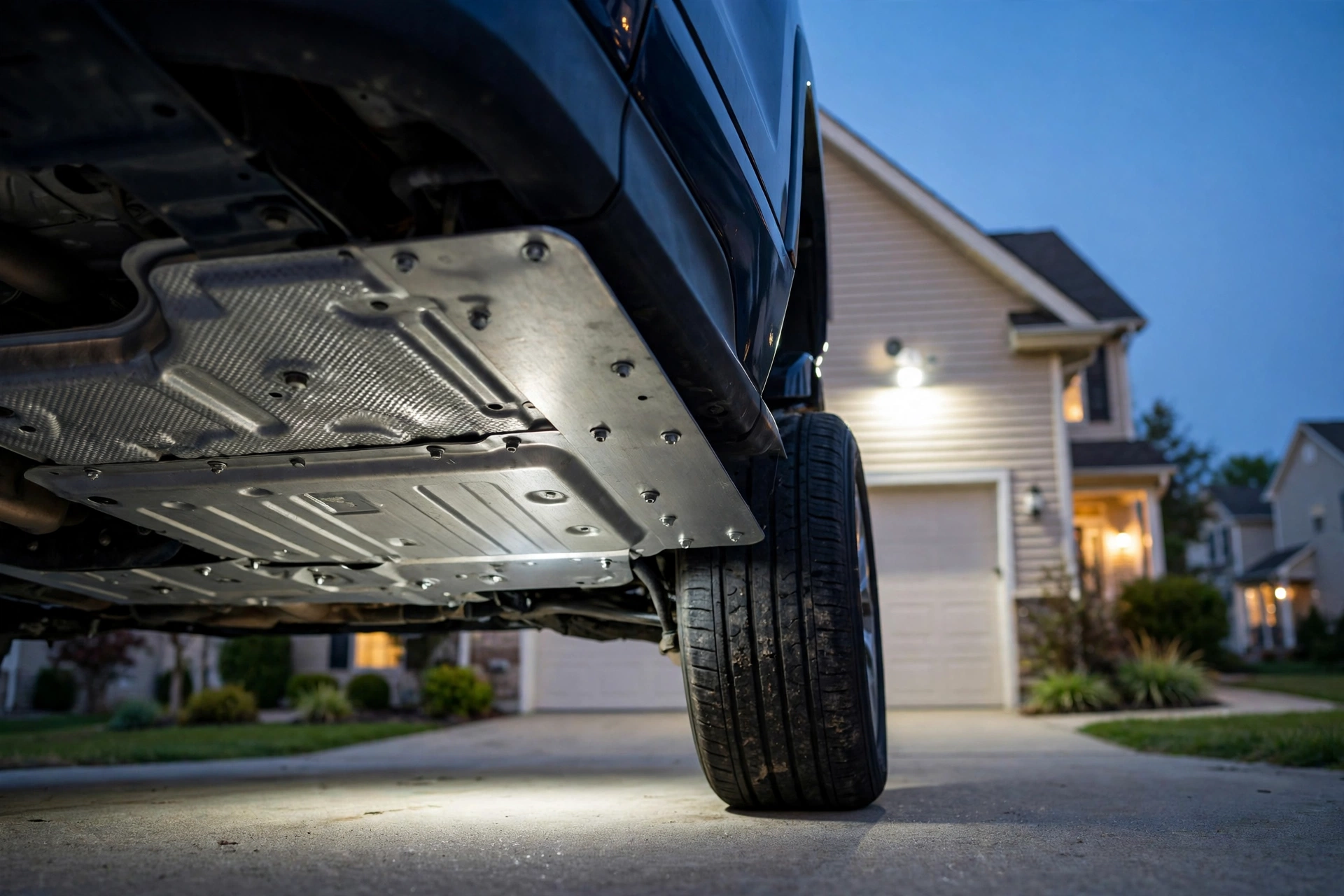
Install a shield. A catalytic converter shield or cage is a metal plate that bolts under the car and blocks access to the converter. Installed cost runs $200 to $500, which is far less than a $1,500 replacement, and many insurers now offer a discount for one.
Etch your VIN. Some shops and police departments etch the vehicle identification number onto the converter free of charge. A marked converter is harder to sell to a scrap yard, and some states now require scrap dealers to record the VIN.
Add an alarm with a tilt sensor. A standard alarm does not trigger when a thief jacks up the car. A tilt sensor does, and it costs about $100 to $200 installed.
Paint it. A coat of bright, high temperature paint on the converter makes it easy to identify and less attractive to scrap buyers. It costs under $20 and takes ten minutes.
Check your insurance. Comprehensive coverage usually pays for a stolen converter minus your deductible. If your deductible is $500 and the replacement costs $1,800, the claim is worth filing. Call your insurer before you need it and confirm converter theft is covered.
DIY vs Shop Replacement
A bolt on converter on a rust free car is a job a skilled home mechanic can do in an afternoon with a socket set, penetrating oil, and jack stands. But most cars are not that easy. Rusted bolts snap, exhaust flanges seize, and a universal converter needs welding. A shop charges $150 to $500 in labor and guarantees the work, including the emissions test afterward. For most drivers, the shop is the better call, especially because an incorrect install can fail inspection and cost more to fix than the labor you saved. If you do go the DIY route, never work under a car supported only by a jack, always use jack stands, and wear eye protection. Exhaust work is hot, sharp, and dirty, and a falling car is not a risk worth taking to save $200.
Frequently Asked Questions
How long does a catalytic converter last?
A catalytic converter usually lasts 10 years or more than 100,000 miles when the engine runs properly. Most fail early because of an engine problem upstream, such as oil burning or a misfire, not because the converter itself wore out.
Will insurance cover a stolen catalytic converter?
Yes, if you carry comprehensive coverage. The insurer pays the replacement cost minus your deductible. Liability only coverage does not cover theft, so check your policy before you need it.
Can I drive without a catalytic converter?
Not legally in most states. A car without a converter will fail an emissions test, run loud, and can bring a fine. It also pollutes far more than a legal car, which is the reason the part is required by federal law.
How long does a catalytic converter replacement take?
A straightforward bolt on replacement takes 2 to 4 hours at a shop. A welded universal converter or a car with heavy rust can take a full day, especially if the shop has to order the part.
Why are catalytic converters so expensive?
The price comes from the precious metals inside: platinum, palladium, and rhodium. Those metals are rare and costly, and a converter needs all three to clean the exhaust. That same metal value is what makes converters a target for thieves.
The Bottom Line
A catalytic converter replacement costs $1,000 to $2,500 for most US drivers in 2026, with the part itself making up most of the bill. Check your federal emissions warranty first, because a converter under 8 years or 80,000 miles may be free. Choose a direct fit part that is legal in your state, fix whatever killed the old converter, and spend a little on theft protection, because a $300 shield beats a $1,800 replacement every time. And if your check engine light comes on with code P0420, do not wait. The sooner you act, the cheaper the fix, and the less likely a small problem turns into a big one. A related job worth knowing about is the timing belt replacement cost, since a snapped timing belt can send debris and heat through the engine and damage the exhaust system the converter lives in.