How to Fix a Flat Tire on an E-Bike: Step-by-Step Guide for US Riders in 2026
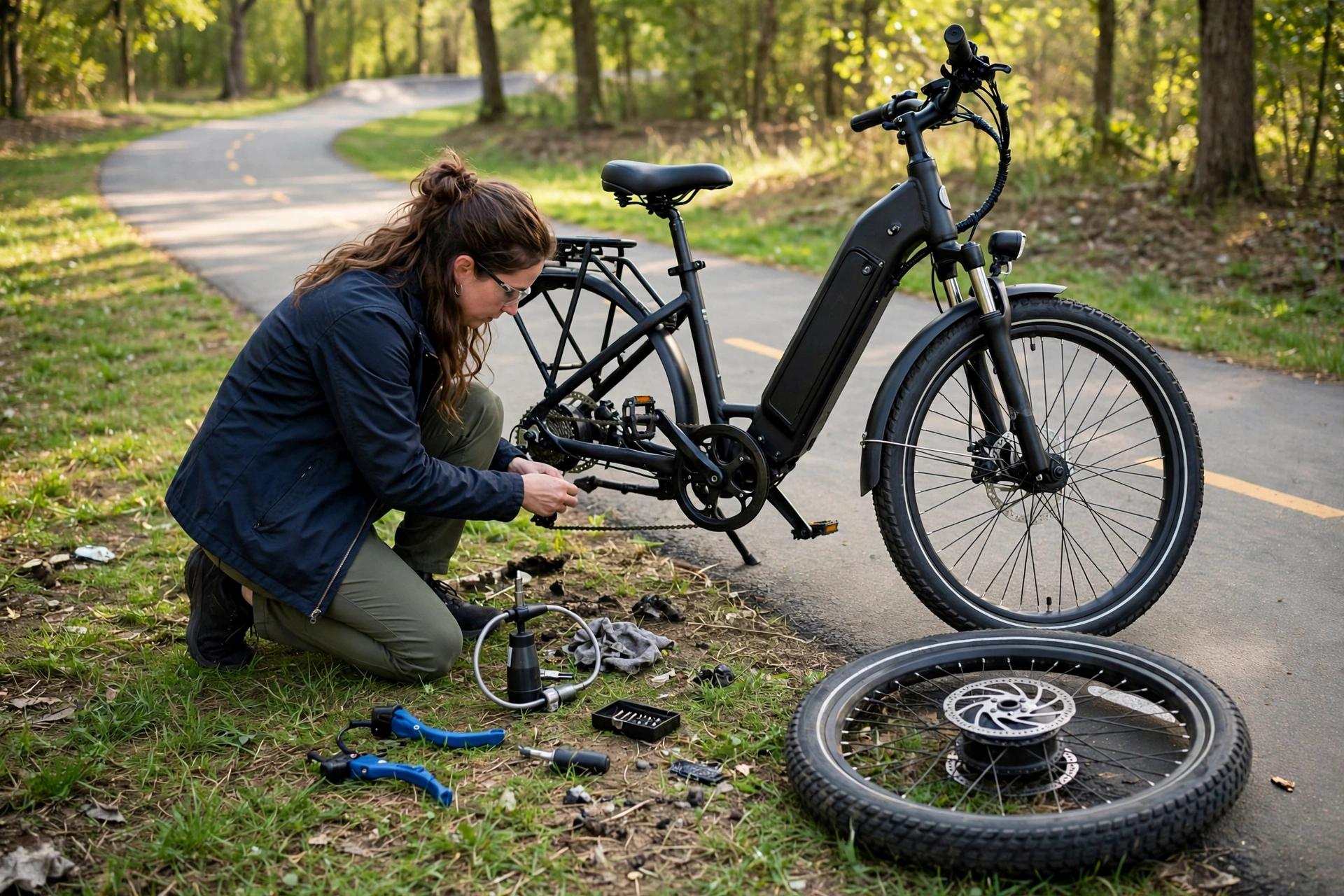
A flat tire can end a ride in seconds, and on an e-bike it feels worse because the bike is heavier and harder to push home. The good news is that fixing a flat on an e-bike is a skill any rider can learn in one afternoon. The process is almost the same as fixing a flat on a regular bicycle, with two extra things to watch: the motor cable on a hub motor wheel and the extra weight of the bike itself.
This guide walks you through the whole job step by step, from the tools you need to the final pressure check. It also covers what the job costs if you do it yourself versus paying a shop, and how to stop flats from happening again. If you can change a regular bike tube, you can do this. If you have never done it, this is the guide to start with.
What You Need Before You Start
A flat repair is a small job, but it needs the right tools. Trying to pry a tire off with a screwdriver is how rims get scratched and new tubes get pinched. Keep a repair kit in your bag or pannier so you are ready on the trail, not just at home.
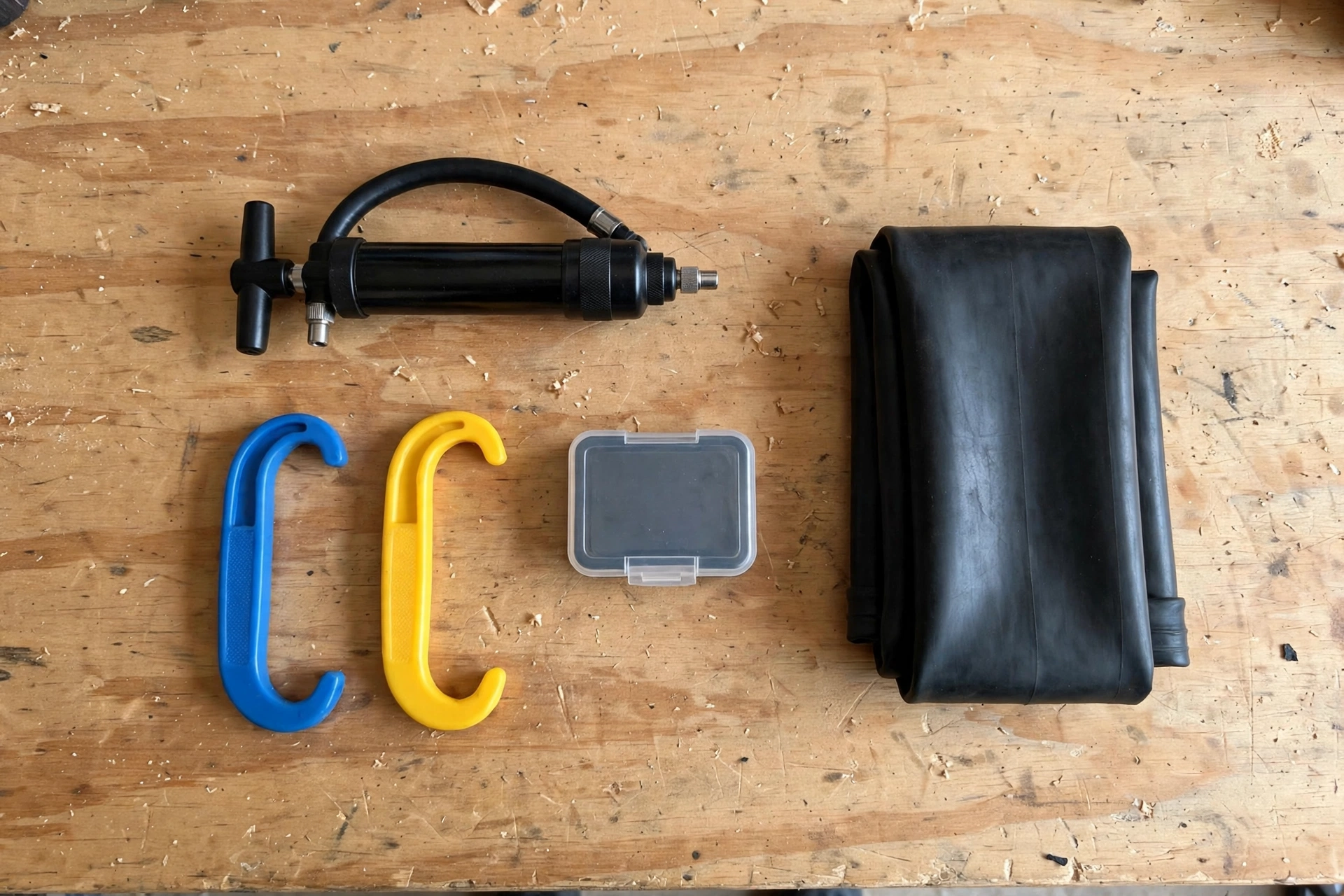
Here is the basic kit:
- Two or three plastic tire levers
- A spare inner tube in the right size for your tire (check the size printed on the tire sidewall, for example 26 x 2.0 or 27.5 x 2.4)
- A patch kit or a set of self-adhesive patches
- A mini pump or a CO2 inflator with cartridges
- A multi-tool with the wrench sizes your axle needs (many e-bikes use a 15 mm axle nut or a 5 mm or 6 mm hex key)
- A pair of gloves, because a dirty chain and road grime get everywhere
- A small rag
A spare tube costs about $8 to $15 at a US bike shop or online, a patch kit costs about $5, and a decent mini pump costs $15 to $30. A full kit pays for itself the first time it saves you a $25 shop visit or a long walk home. Learning how to maintain your e-bike on a regular schedule also helps you spot worn tires before they go flat, which is cheaper than any repair.
Step 1: Remove the Wheel
First, turn the bike off and remove the battery if your model allows it. This removes weight and makes sure the motor cannot spin while your hands are near the wheel. Shift the rear derailleur to the smallest cog, which gives the chain slack and makes the wheel easier to remove.
For the front wheel, loosen the axle nuts or the quick release, then lift the wheel out of the fork. For the rear wheel, the job is a little different on most e-bikes because many use a rear hub motor. Look for the motor cable running from the frame to the hub. It usually has a quick-disconnect plug near the rear dropout. Unplug it gently and note how it was routed so you can put it back the same way. Never yank the cable or let the wheel hang by it.
Loosen the axle nuts, pull the chain off the smallest cog, and ease the wheel out of the dropouts. Lay the bike on its side on a soft surface or flip it upside down so it rests on the handlebars and saddle, with a rag under the display to protect it. An e-bike is heavy, so ask for help lifting it if you need to.
Step 2: Remove the Tire and Find the Cause
Let all the remaining air out of the tube by pressing the valve core. Push one side of the tire bead toward the center of the rim with your thumbs, which creates slack. Hook a tire lever under the bead, clip it to a spoke, then use a second lever a few inches away to work the bead over the rim edge. Once one side is off, pull the tube out, starting at the valve stem.
Now find what caused the flat, because a new tube will go flat again if the thorn or glass is still in the tire. Run your fingers carefully along the inside of the tire, feeling for anything sharp. Check the outside tread too. Look at the old tube to find the hole: pump a little air into it and listen for the hiss, or hold it near your cheek to feel the air. A single small hole on the tread side usually means a puncture. Two small holes close together, called a snake bite, usually means you hit a pothole or curb with low tire pressure. A hole on the rim side can mean a spoke poked through or the rim tape shifted.
If you find a thorn, nail, or piece of glass, remove it before you go any further. This is the step most beginners skip, and it is the reason their repair fails on the next ride.
Step 3: Patch or Replace the Tube
You have two choices here: patch the old tube or fit a new one. A patch is fine for a single small hole and costs almost nothing, but a new tube is faster and more reliable, especially on the road. Most experienced riders patch at home and carry a spare tube on the trail.
To patch, rough up the area around the hole with the sandpaper in your kit, spread a thin layer of glue, wait for it to dry, then press the patch on firmly for 30 seconds. To fit a new tube, pump a small amount of air into it first so it holds its shape, then tuck it inside the tire starting at the valve stem. Make sure the tube is not twisted and that no part of it is trapped between the tire bead and the rim.
Check the tire itself while you work. A bicycle tire with a cut in the sidewall, a bulge, or tread worn down to the casing should be replaced, not patched. Riding on a damaged tire risks a blowout at speed, and on a heavy e-bike that risk is not worth taking.
Step 4: Reinstall the Tire and Wheel
Starting opposite the valve, push the tire bead back onto the rim with your thumbs, working your way around both sides toward the valve. The last section is always the tightest. Use your palms, not a tire lever, because a lever can pinch the new tube and cause a fresh flat. If the bead will not seat, let a little air out of the tube to give yourself more slack.
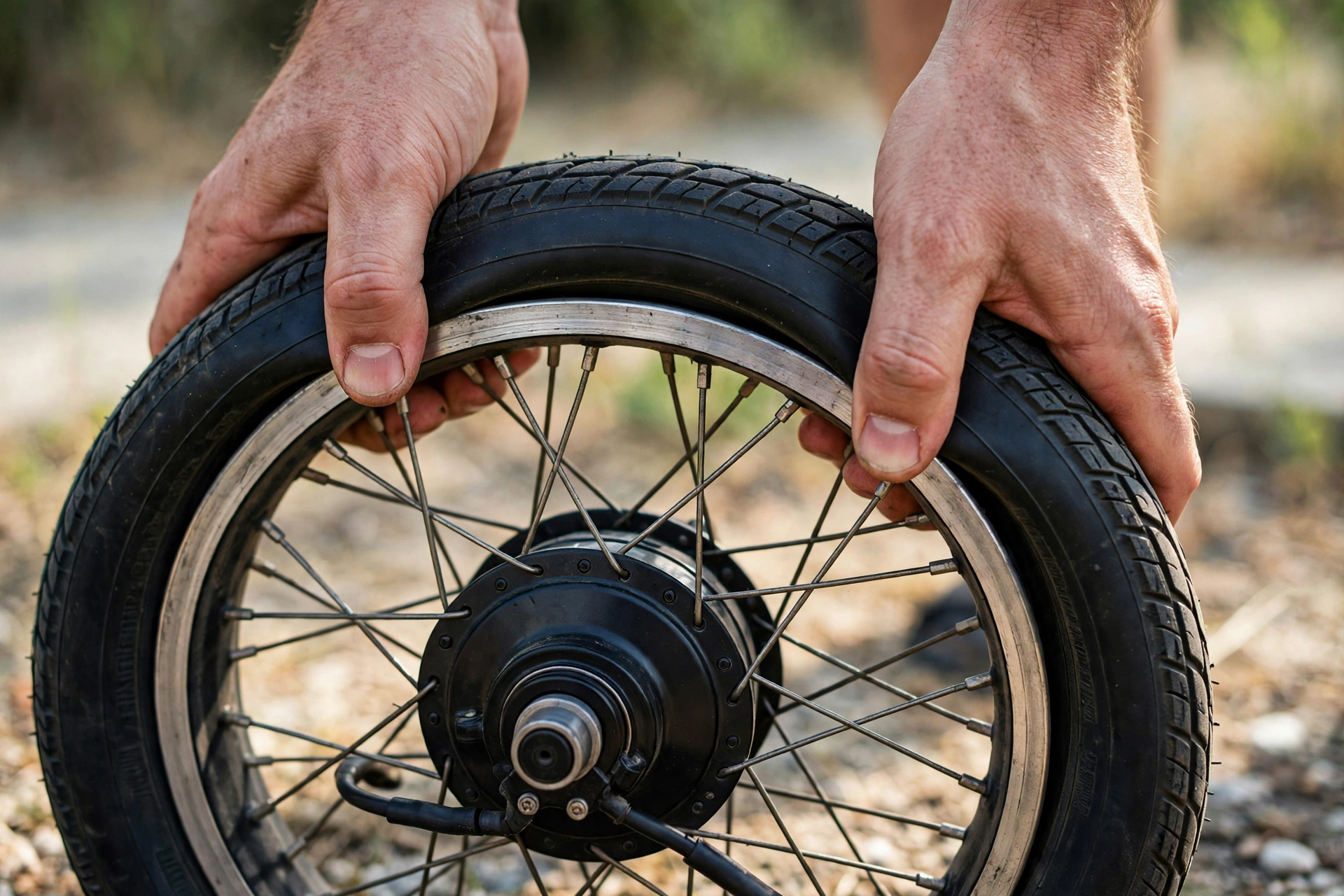
Once the tire is on, pump it up to about half pressure and check that the bead sits evenly around the rim on both sides. Spin the wheel and look for any wobble or bulge. If it looks even, inflate to the pressure printed on the tire sidewall. Most e-bike tires run between 30 and 65 PSI, depending on the tire size and whether you ride on pavement or trails.
Put the wheel back on the bike, reconnect the motor cable if you unplugged it, and tighten the axle nuts to the torque your manual specifies. Reconnect the battery, turn the bike on, and spin the wheel to make sure the motor engages and the brakes are not rubbing. Give the bike a short test ride at low speed before you head out for real.
How Much Does It Cost to Fix a Flat Tire on an E-Bike?
The cost depends on whether you do it yourself or pay a shop. Here is what US riders can expect to pay in 2026.
| Repair option | Typical cost | What it includes |
|---|---|---|
| DIY with a patch kit | $5 to $10 | Patches, glue, and sandpaper |
| DIY with a new tube | $8 to $15 | One standard inner tube |
| DIY with a new tire and tube | $35 to $80 | Tire plus tube, fitted at home |
| Bike shop flat repair | $20 to $40 | Labor plus a new tube |
| Bike shop, rear hub motor wheel | $30 to $60 | Extra labor for the motor cable and heavy wheel |
| Mobile repair service | $40 to $75 | They come to you, parts included |
A shop charges more for a rear wheel flat on a hub motor e-bike because the mechanic has to disconnect the motor cable and handle a much heavier wheel. That is one more reason to learn the job yourself. If you want a fuller picture of shop prices for bigger jobs, our guide to how much does it cost to repair an e-bike breaks down common repairs, from brakes to batteries, with DIY and shop prices side by side.
How to Prevent Your Next Flat
Fixing a flat is a useful skill, but not getting one is better. A few habits cut your flat rate dramatically.
First, keep your tires at the right pressure. Check the pressure at least once a week, because underinflated tires pinch flat on potholes and curbs. Second, inspect your tread regularly and replace tires before the tread wears smooth. Third, consider tire liners or sealant. A tire liner is a tough strip that sits between the tube and the tire and blocks thorns and glass; it costs about $15 to $25 per wheel. Sealant goes inside the tube and seals small holes as they happen; a bottle costs about $10 to $15 and covers both wheels.
Fourth, ride smart. Avoid the gutter and the edge of the road, where glass and debris collect. Scan ahead for potholes, and unweight the bike slightly when you cannot avoid a bump. Fifth, carry your kit. A flat 10 miles from home with no tools is a long walk. A small saddle bag with a tube, levers, and a pump weighs almost nothing and saves the ride.
When to Call a Shop Instead
Most flats are a DIY job, but some situations belong in a shop. Go to a shop if the tire sidewall is cut, the rim is bent or cracked, the valve stem tore out of the tube, or the wheel will not spin true after you reinstall it. Also go to a shop if the motor cable or connector looks damaged, because a bad connection can cause the motor to cut out while you ride. A shop can also check whether your rim tape needs replacing, which is a common cause of repeat flats on older wheels.
Frequently Asked Questions
Can I ride my e-bike with a flat tire?
You should not ride more than a very short distance on a flat tire. The rim can get damaged, the tire can come off the rim, and on a heavy e-bike the handling gets unsafe fast. Walk the bike or call for a ride if you cannot fix it on the spot.
How long does it take to fix a flat tire on an e-bike?
A first timer should allow 30 to 45 minutes. With practice, most riders do it in 15 to 20 minutes. A rear hub motor wheel takes a few minutes longer because of the motor cable and the extra weight.
Do I need special tools for an e-bike flat?
No special tools are needed beyond a normal bike flat kit, but check your axle first. Many e-bikes use axle nuts instead of a quick release, so you may need a 15 mm wrench or the right hex key. A torque wrench helps you tighten the axle nuts to the correct setting.
Can I use tire sealant in my e-bike tubes?
Yes, sealant works in standard e-bike inner tubes and seals small punctures from thorns and glass as they happen. It does not fix large cuts or sidewall damage. Use a sealant made for bicycle tubes, not car tire sealant.
Why does my e-bike keep getting flat tires?
Repeat flats usually come from one of four causes: the sharp object is still in the tire, the tire pressure is too low, the rim tape has shifted and a spoke is poking the tube, or the tire itself is worn out. Check all four before you fit another tube.
Final Thoughts
A flat tire feels like a big problem the first time it happens, especially on a heavy e-bike with a motor cable to deal with. After one successful repair, it becomes a 20 minute job you barely think about. Learn it at home once, carry a small kit on every ride, and keep your tires at the right pressure. The next time you hear that hiss on the trail, you will know exactly what to do, and you will be riding again before most people have finished calling for a ride.