How Much Does a Car AC Repair Cost in 2026? Recharge, Compressor, and Common Fixes for US Drivers
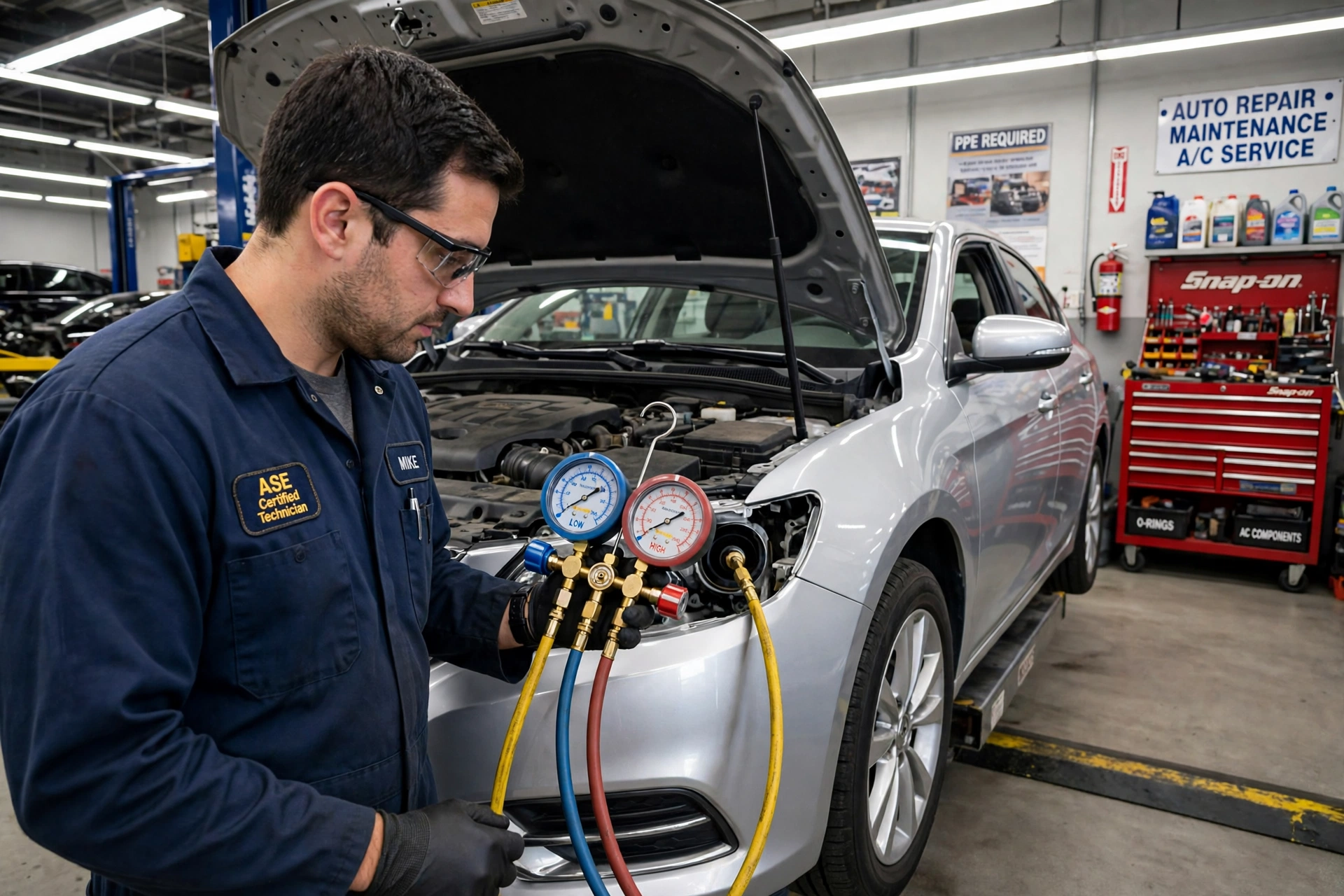
Nothing ruins a summer drive faster than an air conditioner that blows warm air. One minute you are cruising in cool comfort, and the next you are rolling the windows down on a 95-degree highway just to stay sane. If that has happened to you, the first question is always the same: how much is this going to cost me?
The honest answer is that a car AC repair in the US usually costs between $150 and $1,500 in 2026, and the final number depends almost entirely on which part has failed. A simple refrigerant recharge sits at the low end, while a failed compressor sits at the high end. Most drivers land somewhere in the middle, around $300 to $700, for a common repair like a leak fix or a condenser replacement.
This guide breaks down every common AC repair by price, explains the warning signs to watch for, and shows you where it is safe to save money and where it is not. All prices are for US shops in 2026, including parts and labor.
How Your Car AC Works (And Why It Fails)
Your car’s air conditioning is a sealed loop that moves heat out of the cabin. A compressor pressurizes refrigerant gas, a condenser at the front of the car dumps the heat, an expansion valve drops the pressure, and an evaporator inside the dash absorbs heat from the cabin air. A blower fan then pushes that cooled air through your vents. It is a simple idea, but it depends on several parts working together under high pressure. For the full technical background, see the Wikipedia page on automotive air conditioning.
Most AC failures come down to one of four causes. Refrigerant slowly leaks out through aging seals and hoses, so the system gradually loses its cooling power. The compressor wears out, which is the most expensive single failure. Electrical parts like the blower motor, pressure switch, or compressor clutch stop working. Or road debris and corrosion damage the condenser, which sits exposed behind the front grille.
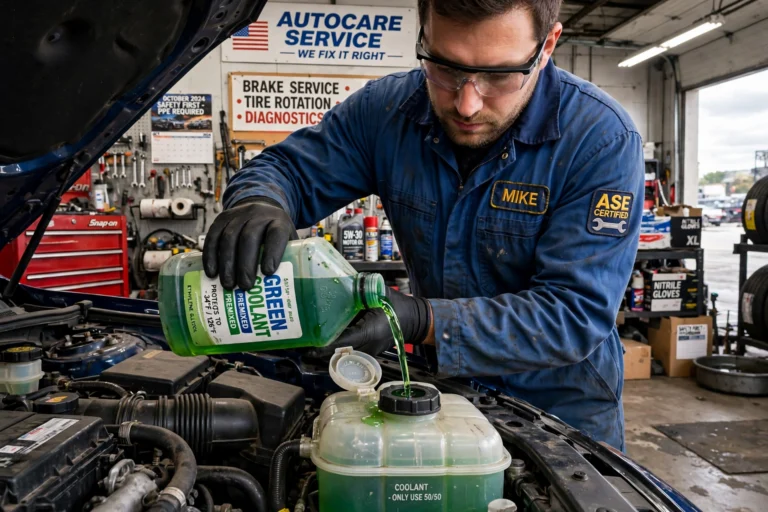
Age matters too. On a car older than eight years, rubber seals dry out and small leaks become normal. On a newer car, an AC problem is more likely to be a single failed part than general wear, and it is often worth fixing properly the first time. If you want a broader view of how your car’s cooling systems age, our guide on how much does a coolant flush cost covers the engine cooling side, which is a separate system from the cabin AC but just as important in summer heat.
Car AC Repair Cost in 2026: The Full Price Table
Use this table as a quick reference before you call a shop. Prices include parts and labor at a typical independent US repair shop. Dealer prices run 20 to 40 percent higher, and luxury or European cars often cost more because parts are pricier.
| Repair | Typical Cost (Parts + Labor) | How Long It Takes |
|---|---|---|
| AC recharge (R-134a) | $150 to $300 | 45 to 60 minutes |
| AC recharge (R-1234yf) | $200 to $400 | 45 to 60 minutes |
| Leak detection and repair | $200 to $600 | 1 to 3 hours |
| AC compressor replacement | $800 to $1,500 | 3 to 5 hours |
| Condenser replacement | $400 to $900 | 2 to 4 hours |
| Evaporator replacement | $600 to $1,200 | 4 to 8 hours |
| Blower motor replacement | $250 to $500 | 1 to 2 hours |
| Compressor clutch replacement | $300 to $600 | 1 to 3 hours |
| AC hose or line replacement | $150 to $400 | 1 to 2 hours |
| Cabin air filter replacement | $30 to $70 | 15 minutes |
A recharge alone is cheap, but remember that refrigerant does not just disappear. If your system is low, there is almost always a leak somewhere. A shop that only tops it off without finding the leak is selling you a repair you will need again in a few months.
AC Recharge Cost: R-134a vs R-1234yf
The type of refrigerant in your car is the biggest factor in recharge cost. Cars built before about 2017 mostly use R-134a, which is cheap and widely available. A full R-134a recharge usually costs $150 to $300, including a system check.
Most cars built after 2017 use R-1234yf, a newer refrigerant with a much lower environmental impact. It works the same way, but the gas itself costs several times more than R-134a, so a recharge usually runs $200 to $400. Some shops also charge a separate fee for the recovery machine service, so ask for an all-in quote before you agree.
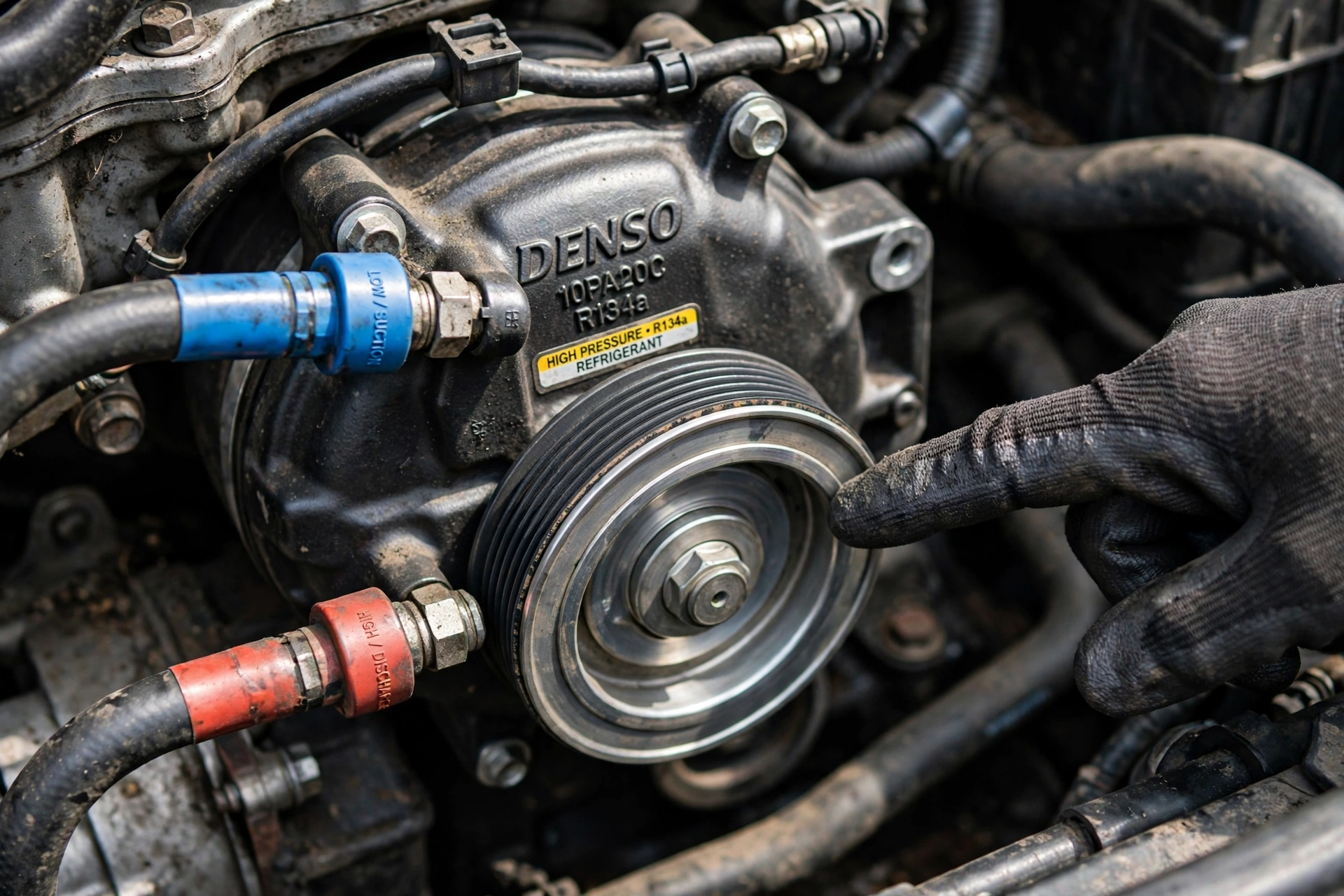
One thing to never do is mix refrigerants. The two gases use different fittings and different oils, and putting the wrong one in your system can damage the compressor and void a warranty. A reputable shop will check the label under your hood before touching anything.
AC Compressor Replacement: The Big One
The compressor is the heart of the system, and it is also the most expensive part to replace. A new compressor costs $400 to $900 for the part alone on most mainstream cars, and labor adds another $300 to $600 because the system must be evacuated, flushed, and recharged after the swap. Total cost usually lands between $800 and $1,500.
Signs of a failing compressor include a grinding or squealing noise when the AC is on, the AC clutch not engaging, or air that stays warm even after a recharge. If the compressor has failed internally and sent metal debris through the system, the shop may also need to replace the condenser and flush the lines, which pushes the bill higher. That is why catching a weak compressor early matters: a $300 clutch repair today can prevent a $1,200 compressor job next summer.
On some cars, only the clutch fails while the compressor itself is fine. A clutch replacement costs $300 to $600 and is a much cheaper fix, so ask the shop to test the clutch separately before quoting a full compressor.
Signs Your Car AC Needs Repair
Your AC usually warns you before it quits completely. Watch for these signs:
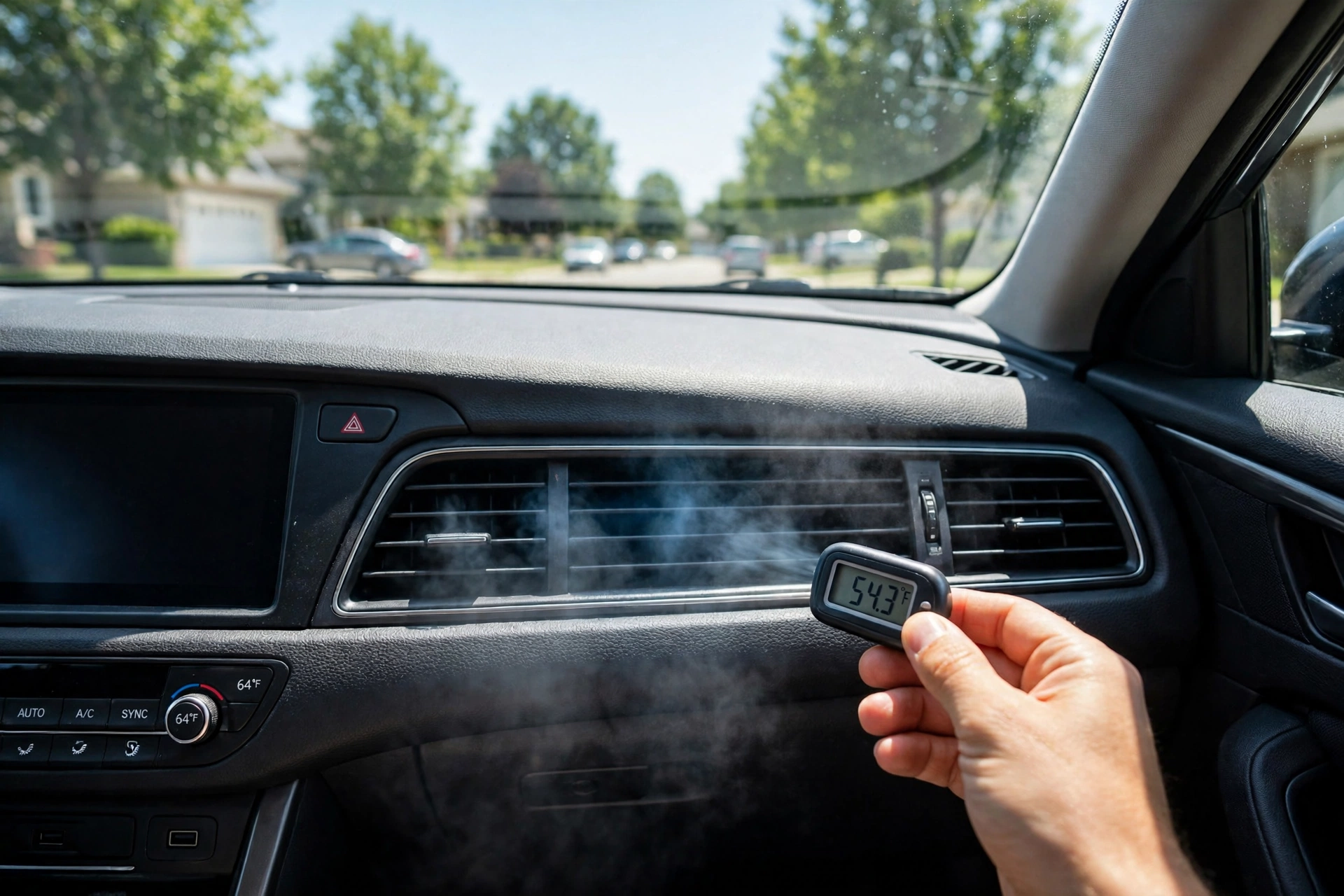
- Warm or weak airflow. The most common symptom. Air from the vents is barely cooler than outside air, or the airflow feels weak even on the highest fan setting. Weak airflow can also mean a clogged cabin air filter, which is a $30 to $70 fix, so check that first.
- Strange noises when the AC runs. Clicking, grinding, or squealing when you turn the AC on usually points to the compressor or its clutch. A rattling sound behind the dash often means a failing blower motor.
- Bad smell from the vents. A musty or moldy smell means moisture is sitting in the evaporator housing, which lets mold grow. An evaporator cleaning service costs $80 to $150 and usually fixes it, though a very dirty system may need the evaporator removed.
- AC works, then stops, then works again. Cycling on and off usually means low refrigerant or a failing pressure switch. The system protects itself by shutting down when pressure drops too low.
- Visible leaks or oily residue. Refrigerant leaks often leave an oily film on AC hoses, fittings, or the condenser. If you see green or yellow dye around a fitting, a shop probably added leak-detection dye during a previous service, and the leak is active.
DIY vs Shop: What You Can Safely Do Yourself
Some AC jobs are fine for a careful DIY driver, and others are not. Changing the cabin air filter is a 15-minute job on most cars and needs no tools beyond a screwdriver. Cleaning the condenser fins with a gentle hose spray is also safe and can improve cooling on a car that has picked up bugs and road grime.
A DIY recharge kit from an auto parts store costs $40 to $70 and seems tempting, but it is risky. The cans have no way to measure exactly how much refrigerant your system needs, and overfilling can damage the compressor. They also cannot find or fix the leak that made the system low in the first place. If you use one, treat it as a temporary fix and get the system checked by a shop within a few weeks.
Anything that opens the sealed refrigerant loop, including compressor, condenser, evaporator, and hose replacement, belongs to a licensed shop. Federal law requires refrigerant to be recovered with proper equipment, not vented into the air, and a shop has the vacuum pump and gauges needed to do the job right. The electrical side matters too: a weak battery can make the AC clutch behave strangely, so if your AC acts up alongside slow cranking or dim lights, check our guide on how much does a car battery replacement cost before assuming the AC itself is broken.
How to Save Money on AC Repairs
Get a second quote on any repair over $500. Compressor and evaporator prices vary widely between shops, and an independent AC specialist is often 20 to 30 percent cheaper than a dealer for the same job.
Ask the shop to show you the leak. A good shop will use UV dye or an electronic sniffer and point to the exact failed seal or hose. If a shop quotes a compressor without any leak test, that is a red flag.
Fix small problems in spring. AC shops are busiest and priciest in June and July. A recharge or leak repair done in April or May often costs less, and you will not be stuck in a two-week waiting line when the first heat wave hits.
Use OEM or quality aftermarket parts, not the cheapest compressor on the shelf. A bargain compressor that fails in a year costs far more than a good one that lasts eight years, especially since the labor to replace it is the same either way.
Keep the system running through winter. Running your AC for ten minutes once a month in cold weather keeps the seals lubricated and the compressor oil circulating, which prevents the slow seal leaks that cause most spring AC failures.
Is It Worth Fixing the AC on an Old Car?
This is the question every owner of a 12-year-old car eventually faces. The rule most mechanics use is simple: if the repair costs less than about 20 percent of the car’s current value and the rest of the car is solid, fix it. A $400 condenser on a car worth $6,000 is an easy yes. A $1,400 compressor on a car worth $2,000 with rust and transmission trouble is usually a no.
Consider your climate too. In Arizona, Texas, or Florida, working AC is not a luxury, it is a safety feature and a major factor in resale value. A car without AC in those states can lose $1,000 or more in resale value, which often makes the repair pay for itself. In a cooler climate where you use the AC two months a year, the math is different.
If you decide not to fix it, at least get the system properly evacuated by a shop so leaking refrigerant does not keep escaping, and keep the windows down and the cabin filter fresh for airflow.
Frequently Asked Questions
How much does it cost to recharge car AC in 2026?
A recharge costs $150 to $300 for older R-134a systems and $200 to $400 for newer R-1234yf systems in the US, including a basic system check. If the system is low, there is almost always a leak, so budget for a leak test as well.
Why is my car AC blowing warm air?
The most common causes are low refrigerant from a leak, a failed compressor or compressor clutch, a clogged condenser, or an electrical fault like a bad pressure switch or blower motor. A shop can diagnose the cause with a pressure gauge test in under an hour.
How long does a car AC repair take?
A recharge takes under an hour. A condenser or clutch replacement takes 2 to 4 hours. A compressor replacement takes 3 to 5 hours, and an evaporator replacement can take a full day because the dashboard often has to come out.
Can I drive with a broken car AC?
Yes, a broken AC is not a safety problem by itself, and the car will drive normally. But if the compressor has seized, the serpentine belt can be damaged, so have a seized compressor checked promptly even if you do not plan to fix the AC right away.
How often should car AC be serviced?
Have the AC checked every 2 to 3 years, or sooner if cooling weakens. Run the AC for ten minutes once a month year-round to keep seals lubricated, and replace the cabin air filter every 12,000 to 15,000 miles.
Final Thoughts
Car AC repair costs in 2026 range from a $150 recharge to a $1,500 compressor replacement, and the difference is almost always which part failed. The cheapest repair is the one you catch early, so do not ignore weak cooling, strange noises, or that musty smell from the vents. A quick diagnosis in spring costs far less than an emergency compressor job in the middle of July.
Get the leak found, get a second quote on big jobs, and keep the system running through the winter. Do that, and your AC should keep you cool for years without a surprise bill.