Best E-Bike Accessories for US Riders in 2026: Must-Have Gear for Commuting and Everyday Riding
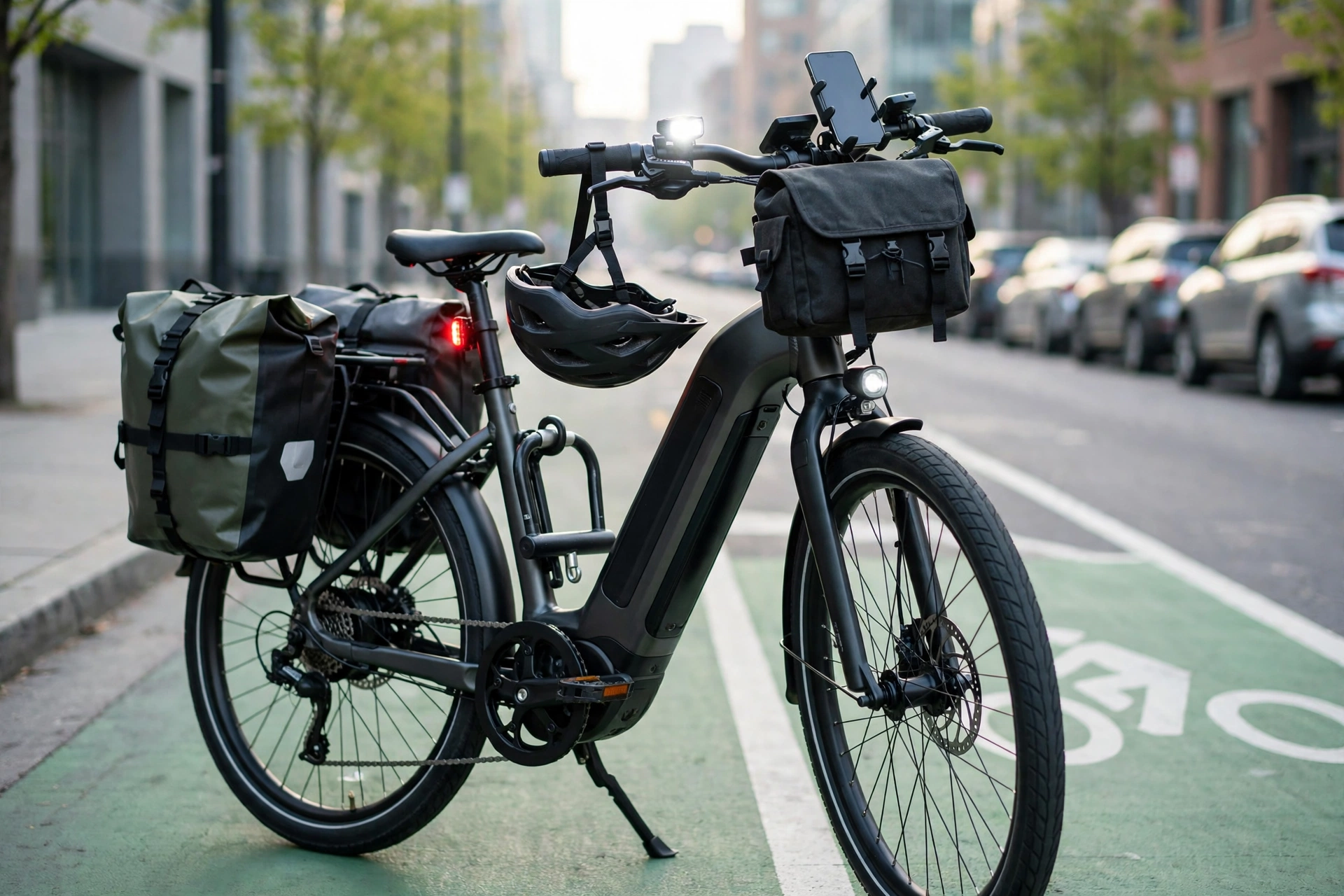
An electric bike is only half the setup. The right accessories decide whether your daily ride feels easy and safe or turns into a daily hassle. A good lock protects a bike that cost $1,500 or more. Bright lights keep you visible in traffic. Panniers carry your work bag, groceries, and gym clothes so your back stays dry and free.
If you just bought your first e-bike, or you have been riding for a while and want to upgrade your setup, this guide covers the accessories that actually matter. Every pick below is something US riders use every day, with realistic 2026 prices and honest advice on what is worth the money and what is not.
An e-bike is a bicycle with an electric motor that assists your pedaling, and the accessories that fit a regular bike mostly fit an e-bike too, with a few important differences. E-bikes are heavier, faster, and more expensive than regular bikes, so locks need to be stronger, lights need to be brighter, and racks need to carry more weight. If you are still deciding which bike to buy, read our guide on how to choose your first e-bike before you spend money on gear.
1. A Strong Lock: The One Accessory You Cannot Skip
E-bikes are a top target for thieves in US cities. A basic cable lock can be cut in seconds, so it is not real protection for a bike worth over $1,000. Spend at least $80 to $120 on a lock, and think of it as cheap insurance.
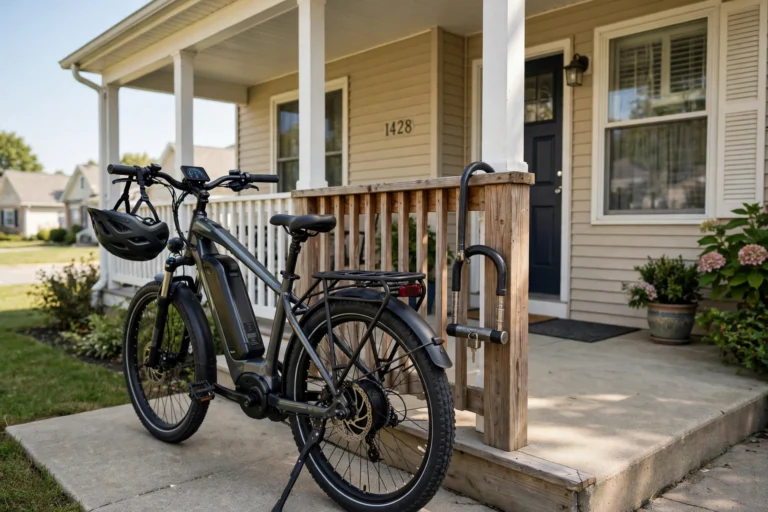
The best choice for most riders is a hardened steel U-lock from a known brand such as Kryptonite or Abus. A U-lock resists bolt cutters far better than a cable, and it is small enough to carry on a frame mount. For extra protection, pair it with a heavy chain lock for the front wheel, or use two locks when you park in a high theft area.
Always lock through the frame, not just a wheel, and lock to a solid bike rack or a fixed post. If your battery is removable, take it with you or lock it separately, because batteries are easy to steal and cost $300 to $800 to replace. Read our full guide on how to prevent e-bike theft for lock types, parking tricks, and GPS tracker options that work with the gear in this article.
A good rule: your lock should cost about 10 percent of your bike’s value. On a $2,000 e-bike, that means a $150 to $200 lock setup. It sounds like a lot until you compare it with replacing the whole bike.
2. Lights: Be Seen, Not Just See
E-bikes travel at 20 to 28 mph, which is fast enough that drivers misjudge your speed. Good lights are not optional. Many US states also require a white front light and a red rear light after dark, so check your local rules.
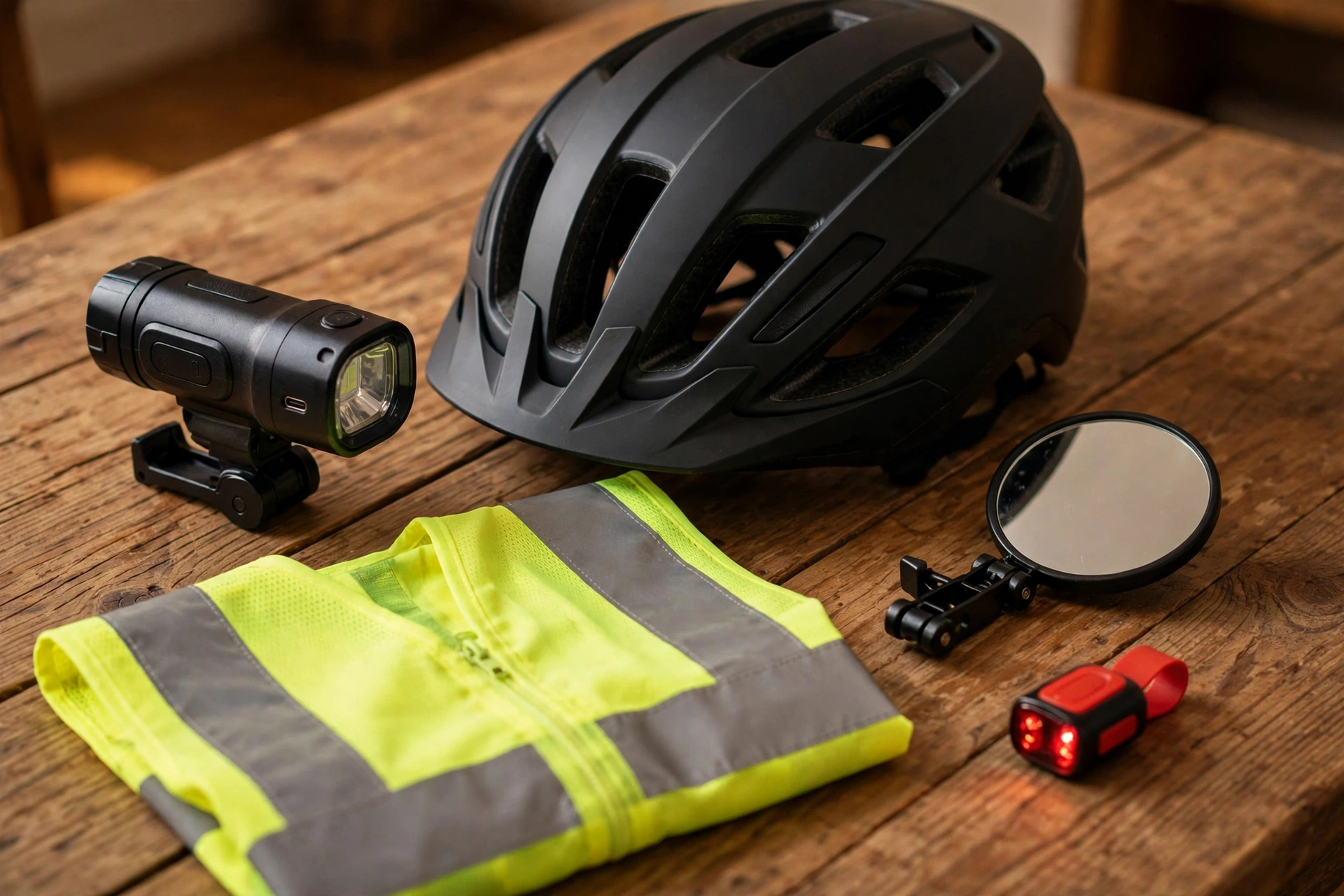
Look for a front light rated at 400 lumens or more for city riding, and 800 lumens or more if you ride dark suburban roads or trails. USB rechargeable lights are the standard now, and a good set charges in about 2 to 3 hours. A rear light with a flashing daytime mode is one of the best safety upgrades you can buy for under $30.
Some e-bikes have built-in lights wired to the main battery. If yours does, use them, but still carry a small backup rear light. If your bike’s lights ever fail mid-ride, a $20 clip-on light keeps you visible until you get home.
Expect to pay $30 to $60 for a solid front and rear light set, and $80 to $120 for a high power set with a long run time. Replace the batteries or charge them on a schedule, not when they die on the road.
3. A Helmet That Fits Your Speed
A regular bike helmet is fine for a slow Class 1 e-bike, but if you ride a Class 3 e-bike at 28 mph, look for a helmet rated to the Dutch NTA 8776 standard, which is designed for faster e-bikes. These helmets cover more of the back of the head and handle higher impact speeds.
Fit matters more than price. A $60 helmet that fits well protects you better than a $200 helmet that wobbles. The helmet should sit level on your head, cover your forehead, and stay snug when you shake your head. Replace any helmet after a crash, even if it looks fine, because the foam inside can be damaged invisibly.
For commuters, a helmet with a built-in rear light or a visor is worth the extra $20 to $40. A visor keeps rain and sun out of your eyes, and an integrated light means one less thing to charge. Budget $60 to $150 for a good e-bike helmet.
4. Panniers and Racks: Carry Your Stuff the Easy Way
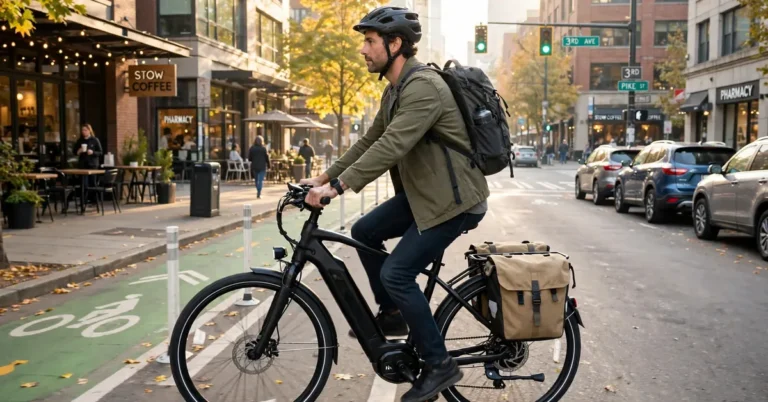
A backpack works for short rides, but on a 30 minute commute in summer it leaves you sweaty, and on a heavy e-bike it throws off your balance. A rear rack with pannier bags is the upgrade most new riders notice first.
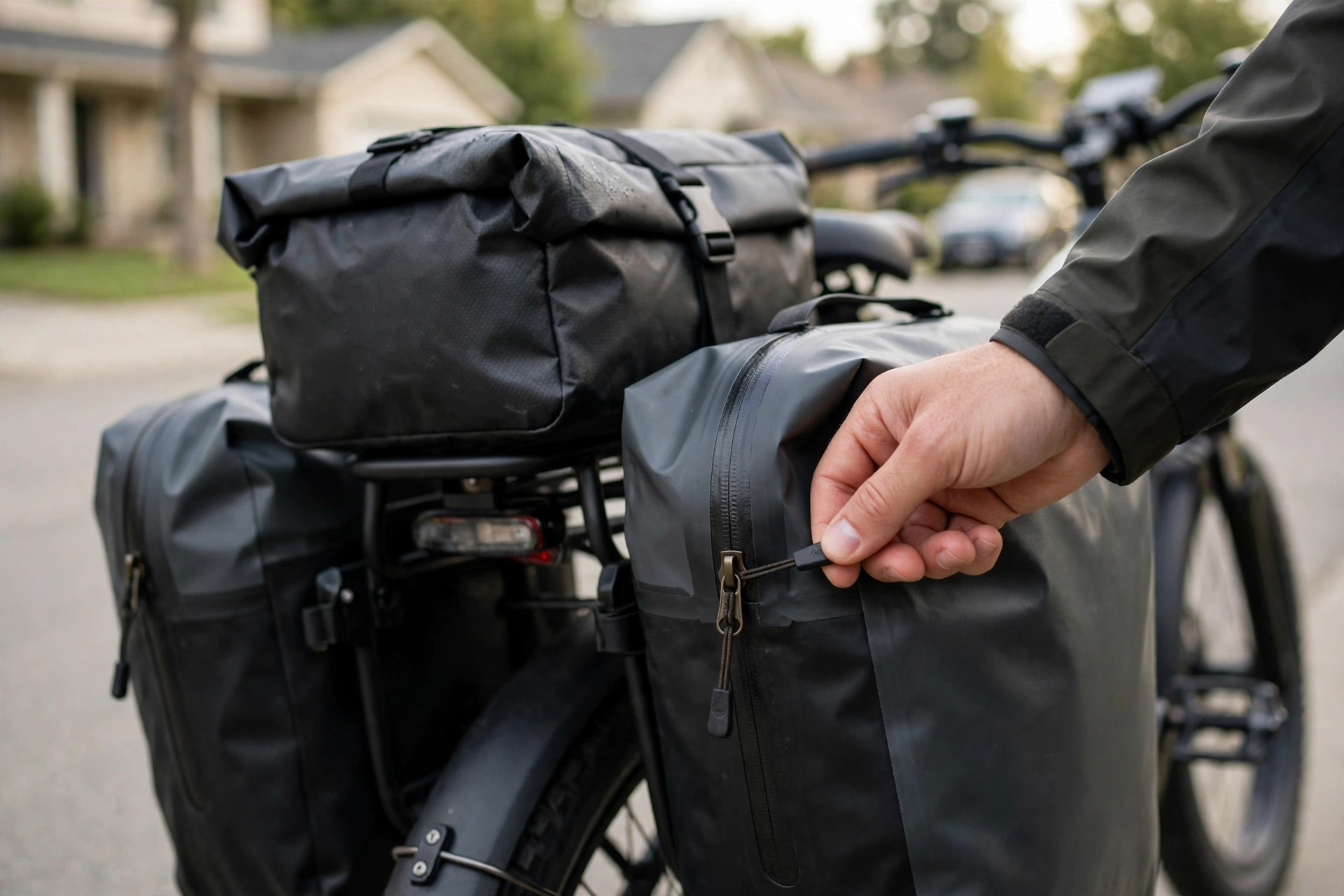
A good rear rack costs $30 to $60 and should be rated for at least 55 pounds, because e-bike gear adds up fast. Make sure the rack fits your bike’s frame and fender mounts before you order, since some folding e-bikes and full suspension models need a special rack.
Panniers come in pairs and clip onto the rack. Waterproof roll-top panniers are the best choice for commuters, because a sudden rainstorm should not ruin your laptop. A pair of 20 liter panniers holds a laptop, lunch, a change of clothes, and a small lock. Expect $80 to $150 for a quality waterproof pair, and $40 to $70 for a basic pair.
A trunk bag that sits on top of the rack is a useful add-on for groceries and quick errands. Many trunk bags expand, fold out into panniers, and include a shoulder strap so you can carry them into the store.
5. Fenders: Stay Dry on Wet Roads
E-bike tires throw up a surprising amount of water, and without fenders a wet road means a wet back and wet shoes within minutes. Full coverage fenders are one of the cheapest comfort upgrades you can buy.
A good fender set costs $30 to $60 and should match your tire width. Fat tire e-bikes need wider fenders, so measure before ordering. Plastic fenders are light and cheap, while metal fenders last longer and look better on a commuter build.
If your e-bike did not come with fenders, fitting them takes about 30 minutes with basic tools. Some shops charge $20 to $40 for installation if you would rather not do it yourself.
6. A Phone Mount and a Small Repair Kit
A phone mount turns your phone into a navigation screen, a speed display, and a ride tracker. A solid mount costs $20 to $40 and should grip your phone tightly even on rough roads. Cheap mounts vibrate loose, so buy one with a locking clamp or a silicone band backup.
Your repair kit should include a spare tube, tire levers, a mini pump or CO2 inflator, and a multi-tool with Allen keys. E-bike tires are heavier and tighter than regular bike tires, so a good set of levers matters. A small saddle bag or frame bag holds the whole kit for $15 to $30.
Learn how to fix a flat before you need to. A flat tire 5 miles from home is a small problem if you have the kit and the practice, and a long walk if you do not.
7. Mirrors and a Bell: Small Gear, Big Safety
A handlebar or helmet mirror lets you check traffic behind you without turning your head at 25 mph. A mirror costs $15 to $30 and takes a few rides to get used to, but most riders who try one never go back.
A bell is legally required on bike paths in some US cities, and it is the polite way to pass pedestrians on a shared trail. A loud bell costs $10 to $20. If you ride trails often, add a louder horn for $20 to $30, because a small bell is easy to miss with headphones on.
8. Comfort Upgrades: Grips, Saddle, and Suspension Seatpost
E-bikes are heavier than regular bikes, and the extra weight means more vibration on rough roads. Ergonomic grips cost $20 to $35 and reduce hand numbness on longer rides. A comfortable saddle costs $40 to $80 and is worth trying in a shop before you buy, because saddle comfort is personal.
A suspension seatpost costs $50 to $120 and smooths out bumps without the weight and cost of full suspension. It is one of the best comfort upgrades for riders on hardtail e-bikes who ride rough city streets.
What to Buy First: A Starter Kit by Budget
If you are buying accessories for the first time, start with safety, then comfort, then convenience. The table below shows a sensible order for three budgets.
| Priority | Budget setup (about $200) | Mid-range setup (about $450) | Full setup (about $800) |
|---|---|---|---|
| Lock | $80 U-lock | $120 U-lock plus chain | $150 U-lock plus chain plus GPS tracker |
| Lights | $30 USB light set | $60 high power set | $100 high power set plus backup light |
| Helmet | $60 standard helmet | $100 commuter helmet with visor | $150 NTA 8776 rated helmet |
| Cargo | $40 basic panniers | $100 waterproof panniers | $150 waterproof panniers plus trunk bag |
| Fenders | $30 fender set | $40 full coverage fenders | $50 metal fenders |
| Repair kit | $20 tube, levers, pump | $30 kit plus multi-tool | $40 kit plus frame bag |
You do not need to buy everything at once. Start with a lock, lights, and a helmet, then add panniers and fenders as your riding routine settles. Buy quality on the items that protect you and your bike, and save money on the items that only add convenience.
Mistakes to Avoid When Buying E-Bike Accessories
Do not buy a cheap lock. A $20 cable lock is not protection, it is decoration. Do not buy accessories before you check what your e-bike already includes, because many commuter e-bikes ship with a rack, fenders, and lights already fitted. Do not overload a rack beyond its weight rating, because a broken rack mount can damage your frame. And do not buy a pannier set without checking that it fits your rack, since mounting systems differ between brands.
One more mistake: buying gear for the rider you wish you were instead of the rider you are. If you commute 5 miles on flat roads, you do not need a $300 suspension seatpost and a $200 GPS tracker. Buy for your real rides, not your dream rides.
Closing
The best e-bike accessories are the ones you use every day. A strong lock, bright lights, a helmet that fits, and a way to carry your stuff will change your ride more than any other upgrade. Start with the safety essentials, add cargo and comfort gear as you learn what your commute really needs, and buy quality where it protects you or your bike.
Your e-bike is an investment, and good accessories protect that investment while making every ride easier. Pick the gear that matches your rides, your budget, and your roads, and enjoy the ride.
What are the most important e-bike accessories for a beginner?
A strong U-lock, a bright front and rear light set, and a helmet that fits well are the three essentials. Add a rear rack and panniers next, then fenders and a repair kit. These five items cover safety, security, and everyday practicality.
How much should I spend on e-bike accessories?
Most US riders spend $200 to $450 on a solid starter setup: a good lock, lights, a helmet, panniers, and fenders. A full setup with premium gear can reach $800 or more, but you do not need to buy everything at once.
Do I need a special lock for an e-bike?
Yes. E-bikes cost more and are stolen more often than regular bikes, so use a hardened steel U-lock or heavy chain lock rated for high security. Cable locks can be cut in seconds and are not enough on their own for an e-bike.
Are panniers better than a backpack for e-bike commuting?
For most commuters, yes. Panniers keep weight off your back, keep you cooler, and carry more without affecting your balance. A backpack is fine for short rides, but panniers are more comfortable on rides longer than 15 minutes.
Can I use regular bike accessories on my e-bike?
Mostly yes. Lights, helmets, panniers, and repair kits work the same on both. Locks should be stronger, racks should carry more weight, and fenders should match your wider e-bike tires, so check weight ratings and sizes before you buy.