How Often Should You Rotate Your Tires in 2026? A US Driver’s Guide to Tire Rotation
Your tires are the only part of your car that touches the road, yet tire rotation is one of the easiest maintenance jobs for US drivers to forget. You remember the oil change, you notice a low tire pressure warning, and you replace a flat tire right away. Rotation is quieter. It does not make a noise, it does not leave a warning light on your dashboard in most cars, and it does not feel urgent until one pair of tires is worn out far earlier than the other pair. By then, you have already lost money, grip, and safety margin.
This guide answers a simple question in plain US terms: how often should you rotate your tires in 2026? You will learn the standard mileage interval, the exceptions for front wheel drive, rear wheel drive, all wheel drive, electric vehicles, trucks, and performance cars, what rotation costs at a US shop, how to spot wear before it becomes a problem, and how rotation fits with balancing and alignment. The goal is not to sell you a service you do not need. It is to help you keep four tires wearing evenly, so you replace them as a set when they are truly worn out, not one or two at a time because of neglect.
The Short Answer: How Often Should You Rotate Your Tires?
For most US drivers, rotate your tires every 5,000 to 7,500 miles, or about every six months, whichever comes first. That range covers the majority of cars, SUVs, and light trucks sold in the United States, and it matches the interval many automakers and tire makers print in the owner manual. If your owner manual gives a different number, follow that number first. The manual is written for your exact vehicle, your drivetrain, and your original tire size, so it should win over any general rule.
A practical shortcut helps many drivers stay on schedule without tracking mileage to the mile. Rotate your tires at every oil change if you drive a gasoline car with a 5,000 to 7,500 mile oil change interval. For electric vehicles and cars with longer oil change intervals, set a separate reminder at 6,000 miles or six months. For drivers who drive less than 7,500 miles per year, rotate once a year at minimum, and ask the shop to inspect tread depth and tire age at the same visit. Time matters even when mileage is low, because tires can develop uneven wear from parking, short trips, and seasonal temperature changes.
Think of rotation as sharing the work. Front tires on a front wheel drive car do most of the steering, braking, and pulling. Rear tires do less work, so they often last longer if they stay in place. On a rear wheel drive truck, the rear tires carry the driving load and can wear faster. All wheel drive vehicles spread the load more evenly, but they still wear tires at different rates because of weight, steering, and suspension geometry. Rotation moves each tire to a different corner, so no single tire stays in the hardest working position for its whole life.
Why Tire Rotation Matters for Safety and Your Wallet
Uneven wear is not just a cosmetic issue. A tire with shallow tread on one edge grips less in rain, takes longer to stop, and is more likely to hydroplane on a wet interstate. If the front tires are worn and the rear tires still have deep tread, or the other way around, the car can feel less stable in an emergency lane change. Even wear keeps handling predictable, and predictable handling matters most when you need to brake hard or steer around debris at highway speed.
The money case is just as clear. A set of four quality all season tires for a typical sedan or small SUV can cost $600 to $1,000 installed in 2026, and a set for a larger SUV or truck can cost $900 to $1,600 or more. If you skip rotation and wear out the front pair at 30,000 miles while the rear pair could have lasted 50,000 miles, you may end up buying tires in pairs, losing the chance to shop for a full set deal, and paying for extra mounting and balancing visits. A rotation that costs $25 to $50 is cheap insurance against that early replacement.
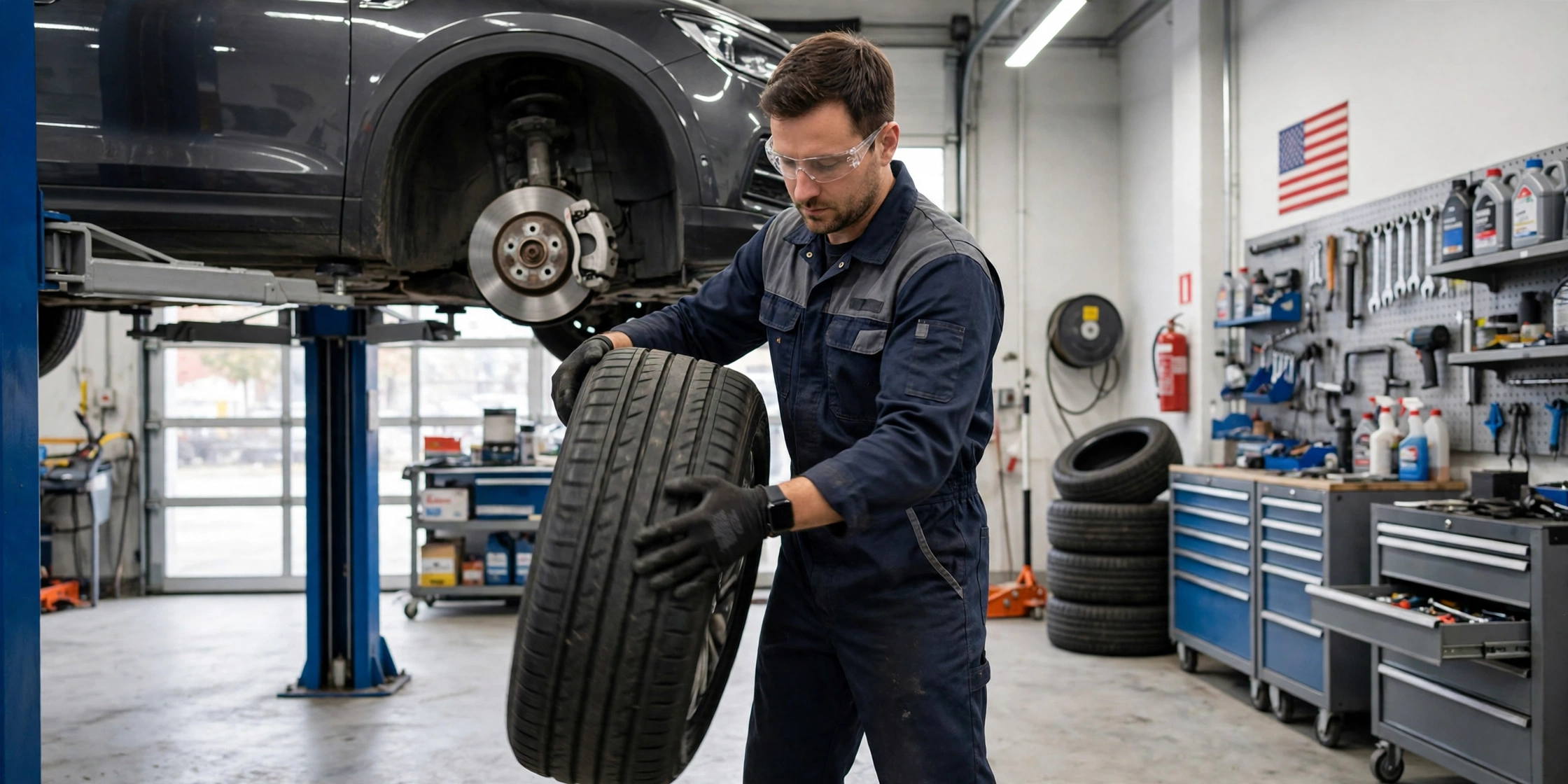
Rotation also helps your shop spot problems early. When a technician removes each wheel, they can see inner edge wear, cuts, bulges, nails, and uneven tread that you cannot see from the curb. That inspection can reveal a worn suspension part, a slow leak, or a tire that is aging out even if the tread still looks acceptable. Catching those issues during a $30 rotation visit is far better than discovering them during a roadside flat tire change on a dark highway shoulder.
Rotation Intervals by Vehicle and Driving Style
There is no single interval that fits every driver, because how you drive and where you drive change how fast tires wear. Use the ranges below as a starting point, then adjust for your own use. If you are unsure, the shorter end of the range is the safer choice, especially for heavy vehicles, performance tires, and cars that tow.
Front wheel drive cars
Most front wheel drive sedans, hatchbacks, and crossovers should rotate every 5,000 to 7,500 miles. The front tires handle steering and drive power, so they wear faster than the rear tires. A common pattern moves the front tires straight back and crosses the rear tires to the front. That pattern spreads steering wear across all four tires over time. If you drive mostly in city traffic with frequent stops, turns, and tight parking, stay closer to 5,000 miles.
Rear wheel drive cars and trucks
Rear wheel drive vehicles often rotate every 5,000 to 7,500 miles as well, but the pattern is reversed. The rear tires move straight forward, and the front tires cross to the rear. Trucks that haul loads, tow trailers, or drive on gravel and construction sites may need rotation every 5,000 miles. Payload and towing put extra heat and stress into the rear tires, and that stress shows up as faster center or shoulder wear if rotation is delayed.
All wheel drive and four wheel drive vehicles
All wheel drive and four wheel drive vehicles are the most sensitive to uneven tire wear. Many systems expect all four tires to be close in tread depth and diameter. A large difference can strain the drivetrain and, in some cases, trigger warning lights. For that reason, many all wheel drive owners rotate every 5,000 to 6,000 miles and replace tires as a full set when the time comes. If one tire is damaged beyond repair, ask the shop whether the remaining tread depth is close enough to match a new tire, or whether a set replacement is the safer choice.
Electric vehicles
Electric vehicles deserve special attention. Instant torque and heavier battery weight can wear tires faster than a similar gasoline car, especially on the driven axle. Many EV owners find that 5,000 to 6,000 miles is a better interval than waiting for 7,500 miles. Check your EV manual for the recommended pattern, because some EVs use different front and rear tire sizes. When front and rear sizes differ, tires can only rotate side to side on the same axle, not front to back, unless the shop confirms the sizes match.
Directional, staggered, and performance tires
Directional tires have a tread pattern designed to roll in one direction only, usually marked with an arrow on the sidewall. Those tires rotate front to back on the same side, not in a cross pattern. Staggered setups, where rear tires are wider than front tires, also limit rotation to side to side on the same axle. Performance summer tires with soft compounds wear faster in general, so owners who drive aggressively or attend track days should inspect tread every few thousand miles and rotate at the short end of the interval when the setup allows it.
What Does Tire Rotation Cost in 2026?
Rotation is one of the least expensive services in a US auto shop, and in many cases it is bundled with other work. Prices vary by city, shop type, and vehicle size, but the table below gives realistic 2026 ranges for most drivers. Dealerships and large cities such as Los Angeles, New York, Chicago, and San Francisco tend to charge at the higher end, while independent shops and tire chains in smaller towns often charge less.
| Service | Typical 2026 price in the US | Best for |
|---|---|---|
| Standalone tire rotation | $25 to $50 | Drivers who only need rotation |
| Rotation included with an oil change | $0 to $25 added | Gasoline cars on a regular oil change schedule |
| Rotation plus tire balancing | $50 to $90 | Vibration at highway speed or new tire installation |
| Rotation plus multi point inspection | $35 to $75 | Drivers who want brakes, tread, and pressure checked together |
| Do it yourself rotation at home | $0, plus tools you already own | Experienced owners with a jack, stands, and a torque wrench |
| Full set of four new all season tires, installed | $600 to $1,600 | Comparison point for what early wear can cost |
Many national tire chains offer free rotation for tires bought from them, sometimes for the life of the tires. If you bought your tires at a chain store, check your receipt or account before you pay for rotation elsewhere. Some shops also include rotation in a prepaid maintenance plan. Even when rotation is free, ask for a printed tread depth report. A free service is only useful if the shop actually measures all four tires and tells you what they found.
Signs You Need a Rotation Sooner Than Scheduled
Do not wait for your next scheduled visit if your tires are telling you something is wrong. Uneven wear across the tread, feathering where tread blocks feel sharp in one direction and smooth in the other, or one tire that looks visibly more worn than the others are all reasons to book rotation and an inspection right away. A vibration that starts at 55 to 70 mph, a car that pulls to one side on a flat road, or new road noise that was not there last month can also point to a tire, balance, or alignment issue.
Other triggers include a seasonal tire change, a new set of tires, a suspension repair, and a long road trip. If you switch between summer and winter tires, that swap is a natural time to rotate and inspect. If you just replaced two tires, ask the shop where the newer tires should go. In general, many shops recommend putting the tires with deeper tread on the rear axle for stability in wet conditions, even on front wheel drive cars. If you hit a large pothole or curb hard enough to bend a wheel or knock the steering off center, get an inspection before you assume rotation alone will fix it.
Tire Rotation vs Tire Balancing vs Wheel Alignment
Drivers often confuse these three services, but they solve different problems. Rotation changes the position of each tire on the car. Balancing corrects small weight differences in a tire and wheel assembly so it spins smoothly at speed. Alignment adjusts the angles at which the wheels meet the road. You can rotate tires without balancing them, and you can balance tires without aligning the car, but all three work together to protect tread life.
As a simple rule, rotate on schedule, balance when you feel vibration or install new tires, and check alignment when you see uneven wear, a crooked steering wheel, or pulling. If you want a full price breakdown for the alignment side of that plan, read our guide on how much a wheel alignment costs in 2026. Pairing rotation with an alignment check after a hard pothole hit is often cheaper than replacing a set of tires early.
Can You Rotate Tires Yourself at Home?
Yes, if you have the right tools, a flat and level surface, and a clear understanding of your vehicle rotation pattern. You will need a floor jack, jack stands rated for your vehicle weight, a lug wrench or breaker bar, a torque wrench, and your owner manual. Never work under a car supported only by a jack. Loosen the lug nuts slightly before lifting, lift one corner at a time or use the jack points in your manual, support the car on stands, move the tires to their new positions, hand tighten the nuts in a star pattern, lower the car, and torque the nuts to the specification in your manual.
Home rotation saves $25 to $50 per visit, but it takes 45 to 90 minutes for most first time DIY owners, and it does not include a professional tread and suspension inspection unless you do that inspection yourself. Check tire pressure after rotation, because front and rear pressures can differ. Reset the tire pressure monitoring system if your car requires it, and recheck lug nut torque after 50 to 100 miles, as many manuals recommend. If you are unsure about jack points, torque values, or directional tires, pay a shop. A mistake with a jack or a loose wheel is far more expensive than a rotation fee.
A Simple Tire Rotation Schedule You Can Actually Follow
The best schedule is the one you will follow. Start with 6,000 miles as your default reminder if your manual does not give a stricter interval. Write the mileage on your service receipt, set a phone reminder, or ask your shop to put a sticker on your windshield or in your service app. When you reach that mileage, book rotation together with an oil change, a tire pressure check, and a tread depth check. That bundling saves a separate trip and makes it easier to remember.
Keep a short log for each car in your household. Note the date, mileage, rotation pattern, tread depths, and tire pressures at each visit. That log helps you see whether one corner keeps wearing faster, which can point to an alignment or suspension problem. It also helps when you sell the car, because a buyer can see that maintenance was regular. If you plan other routine work at the same time, you can also review our guide on how much a brake job costs in 2026 so you can budget for brakes and tires together instead of facing two surprise bills in the same month.
For safety basics beyond rotation, the National Highway Traffic Safety Administration TireWise pages explain tire pressure, tread, balance, alignment, and rotation in one place. See the NHTSA TireWise tire safety guide for official US safety tips, including how poor tire maintenance can affect stopping and control. Use that guide together with your owner manual, not as a replacement for it, because your vehicle maker knows your exact tire size and load rating.
Frequently Asked Questions
How often should I rotate my tires in 2026?
For most US drivers, rotate your tires every 5,000 to 7,500 miles or about every six months, whichever comes first. Follow your owner manual if it gives a different interval for your vehicle.
Is tire rotation really necessary if my tires look fine?
Yes. Wear that is hard to see from the outside can still be uneven across the tread. Rotation spreads steering and driving wear across all four tires, which helps them last longer and keeps wet weather grip more even.
How much does a tire rotation cost in the US?
A standalone rotation usually costs $25 to $50 in 2026. Many shops charge $0 to $25 extra when rotation is added to an oil change, and some tire chains offer free rotation for tires bought from them.
Can I rotate tires with different front and rear sizes?
When front and rear tires are different sizes, you cannot move them front to back. Those setups usually rotate side to side on the same axle only. Directional tires also stay on the same side and move front to back only.
Does tire rotation replace wheel alignment or balancing?
No. Rotation changes tire position, balancing corrects weight differences that cause vibration, and alignment adjusts wheel angles. They are separate services, and a shop may recommend more than one if wear, vibration, or pulling is present.
Closing: Rotation Is Small Work With a Big Payoff
For most US drivers in 2026, the answer stays simple. Rotate your tires every 5,000 to 7,500 miles, follow your owner manual when it differs, rotate more often for all wheel drive vehicles, electric vehicles, trucks that tow, and performance tires, and do not ignore uneven wear, vibration, or pulling. That one habit, done on time, helps your tires last longer, keeps wet weather grip more even, and reduces the chance that you will need to replace a pair of tires far too early.
Book your next rotation before you leave the shop, note the mileage, and check your pressures monthly between visits. A $25 to $50 service every six months is a small price for tires that wear evenly, a car that handles predictably, and a tire budget you can plan instead of a tire emergency you have to fund. If your tires are already unevenly worn, start with an inspection, not just a rotation, so you fix the cause as well as the symptom.