How Long Do E-Bike Batteries Last? Lifespan, Care Tips and When to Replace
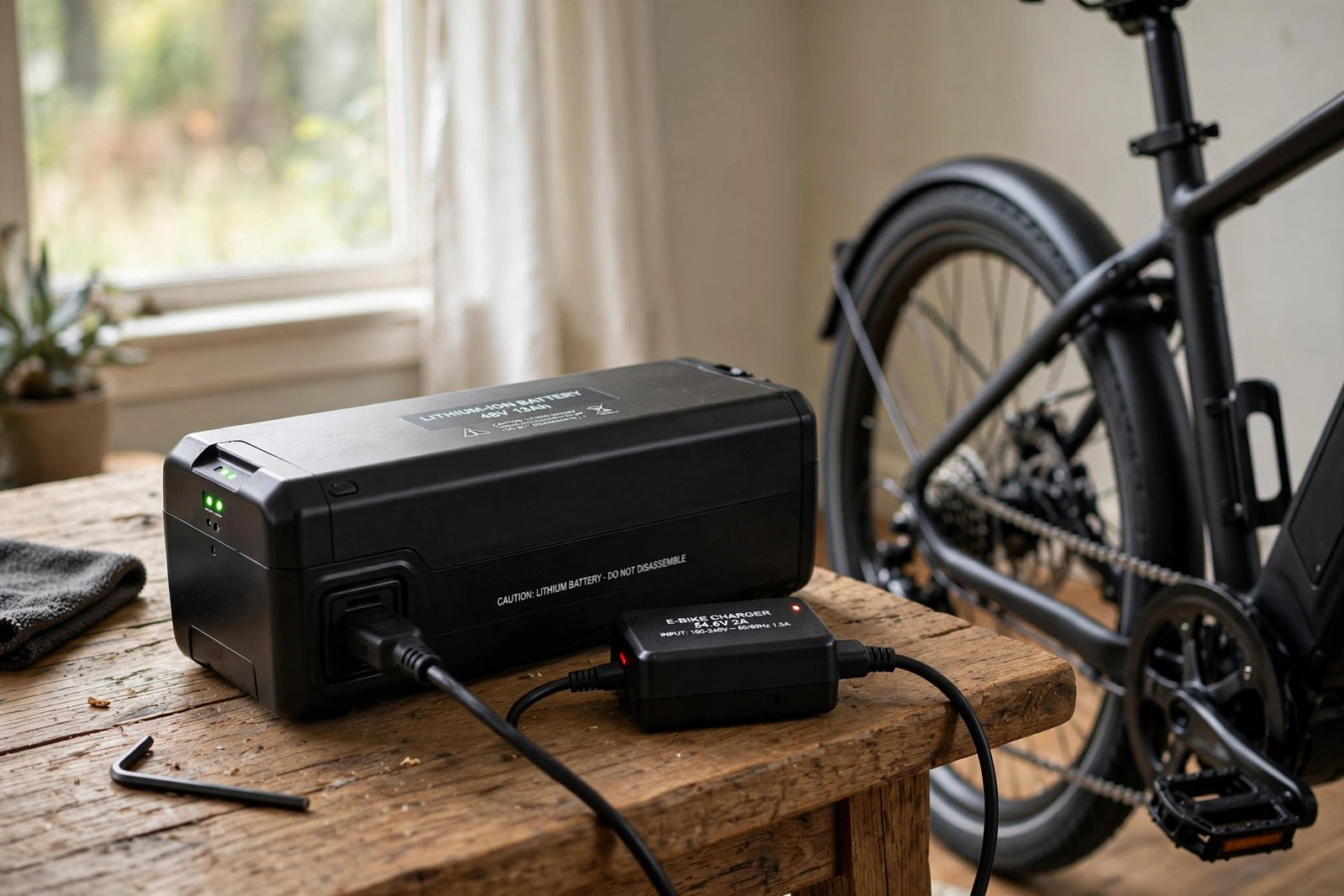
The battery is the most expensive part of an electric bike, so it is no surprise that the question every owner asks sooner or later is: how long do e-bike batteries last? The honest answer is that most modern lithium e-bike batteries last between 3 and 5 years, or roughly 500 to 1,000 full charge cycles, before they start losing noticeable range. But that range is wide for a reason. How you charge, store, and ride your bike can easily add or subtract years from the battery’s working life.
In this guide, you will learn what actually decides an e-bike battery’s lifespan, the simple habits that protect it, how to spot a battery that is nearing the end, and what a replacement really costs. If you want your battery to outlast the average, this is the place to start.
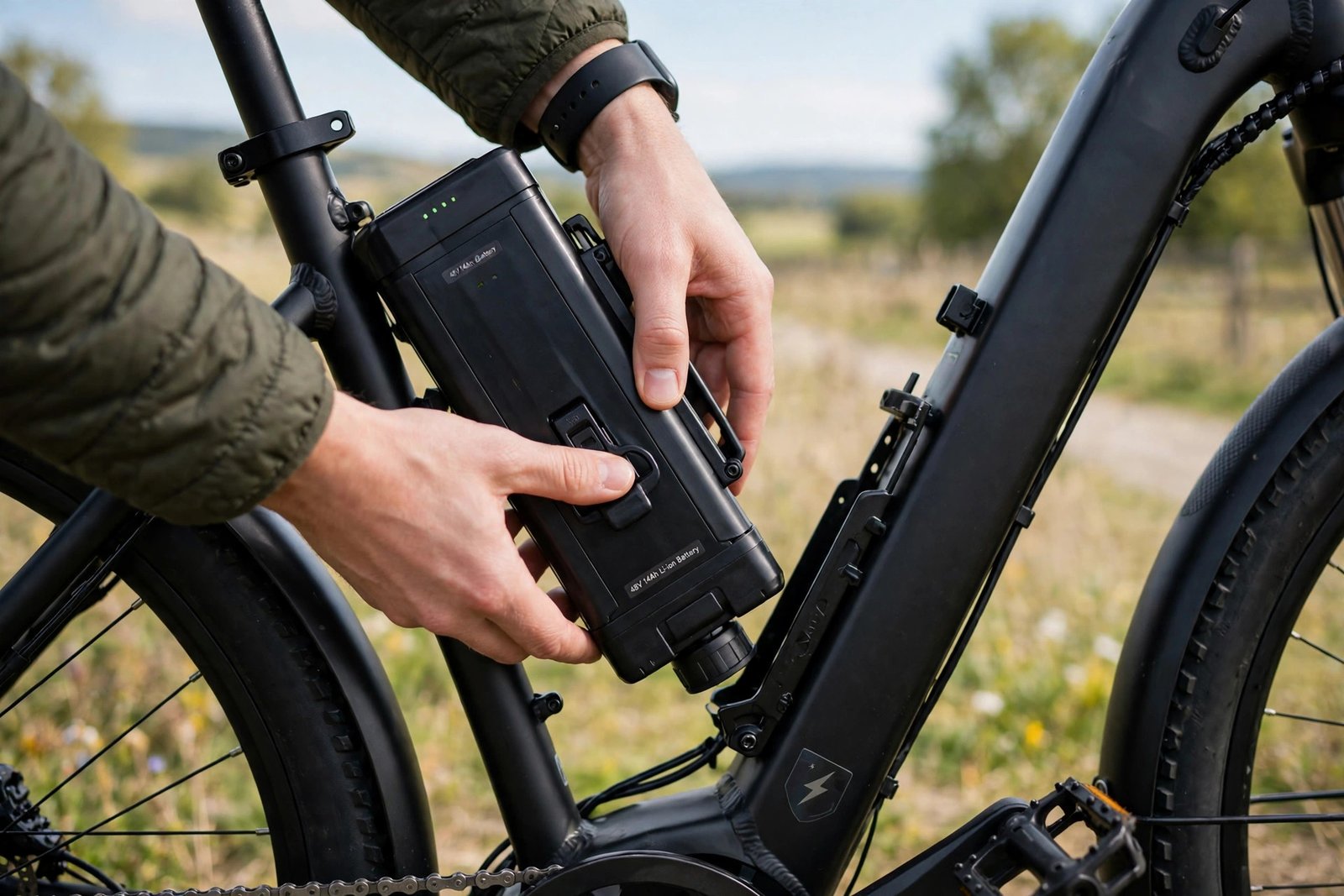
What Decides How Long an E-Bike Battery Lasts?
Charge cycles matter more than years
Battery life is measured in charge cycles. One cycle means using the full capacity of the battery once, whether that happens in a single ride or across several shorter ones. A quality lithium-ion e-bike battery typically keeps about 80 percent of its original capacity after 500 cycles. Cheaper batteries can drop to that level after only 300 cycles.
This is why two riders with the same bike can see very different results. A daily commuter charging five times a week reaches 500 cycles in about two years. A weekend rider charging once a week takes almost ten years to get there. The battery does not age only on the shelf; it ages with use.
Battery capacity and quality
Bigger batteries work less hard. A 720Wh battery powering a relaxed commute uses a smaller share of its capacity per ride than a 360Wh battery doing the same trip, so it completes fewer deep cycles and usually lasts longer. Cell quality matters just as much. Batteries built with cells from established makers like Samsung, LG, or Panasonic tend to hold their capacity longer than no-name cells, which is one reason two batteries with the same watt-hour rating can age very differently.
Temperature and riding style
Heat is the battery’s biggest enemy. Regular riding in very hot weather, heavy throttle use, and constant maximum assist all push the battery harder and shorten its life. Cold weather does the opposite in the short term: range drops on a freezing day, but the cold itself does not permanently damage a battery that is stored and charged correctly. The real damage happens when a battery is charged while it is still freezing, which is why warming it to room temperature before plugging in matters.
How to Make Your E-Bike Battery Last Longer
The good news is that most of what extends battery life is free and takes almost no effort.
Avoid running the battery completely flat. Lithium batteries prefer partial use. Keeping your charge roughly between 20 and 80 percent for everyday riding puts far less stress on the cells than full charges and full discharges.
Charge to 100 percent only when you need it. A full charge before a long ride is fine. Charging to 100 percent every night and leaving the battery sitting full is not ideal. If your charger or bike offers a charge limit setting, use it for daily riding.
Store it half charged. If the bike will sit unused for a few weeks or over winter, store the battery at around 40 to 60 percent charge, indoors, in a cool and dry place. Never store it empty, and check it every month or two, topping it up slightly if the level falls.
Keep it out of extreme heat. Do not leave the battery in a hot car or in direct summer sun. A cool room, roughly 10 to 25 degrees Celsius, is perfect for storage.
Use the right charger. Always charge with the charger made for your battery, or a quality replacement with the same voltage and connector. Cheap chargers can overcharge or charge unevenly, and that quietly eats the battery’s lifespan.
Ride smoothly. Gentle starts in a lower assist level, spinning the pedals instead of relying only on the throttle, and avoiding maximum assist on every hill all reduce the strain on the battery during each ride.
Signs Your E-Bike Battery Is Wearing Out
Batteries rarely die suddenly. They fade, and the warning signs are easy to spot once you know them.
The clearest sign is range loss. If a ride that once used 40 percent of your battery now uses 60 percent, the capacity is shrinking. Other signs include the battery dropping from a mid-level charge to empty much faster than it used to, the bike cutting power earlier on hills, longer charging times, and the battery or charger getting unusually warm. A battery that swells, cracks, or smells strange is not just worn out, it is a safety risk. Stop using it and recycle it properly.
A simple way to track health is to repeat the same regular route every few months and note the charge left at the end. That small habit tells you more than any guess about how your battery is ageing.
When Should You Replace an E-Bike Battery?
Replace the battery when its remaining range no longer covers your normal rides, even after good care. For many riders that point arrives when capacity falls to about 70 percent of the original. At that stage, a battery that once gave 60 miles per charge gives closer to 40, and if your commute needs 45, the battery no longer does its job.
Replacement batteries typically cost between $300 and $800 depending on capacity and brand. Always match the voltage of your system, usually 36V or 48V, and buy from the bike maker or a reputable battery specialist. A very cheap replacement battery is a false economy: poor cells wear out faster and, in rare cases, create a fire risk. Think of the replacement cost per year of use. A $500 battery that serves four years costs about $125 a year, far less than running a car or paying for daily public transport.
Frequently Asked Questions
How many years does an e-bike battery last?
Most e-bike batteries last 3 to 5 years with regular use. Riders who charge carefully and store the battery indoors can often reach 5 years or more, while heavy daily use in hot conditions can shorten life toward the lower end.
Can an e-bike battery be repaired or rebuilt?
Sometimes. Specialists can rebuild some battery packs by replacing the cells inside, which can cost less than a new battery. Only use a qualified service, because opening a lithium battery pack at home is dangerous.
Does leaving an e-bike battery plugged in damage it?
Modern chargers stop charging when the battery is full, so an occasional overnight charge is not a disaster. Still, leaving the battery plugged in for weeks at 100 percent is not good for long-term health. Unplug it once charging finishes.
Should I remove the battery when the bike is parked outside?
Yes, when you can. Removing the battery protects it from heat, cold, and theft, and it makes the bike less attractive to steal because a replacement battery is expensive.
Do e-bike batteries lose charge when not used?
Yes, slowly. A stored battery loses a small amount of charge each month, which is why you should check it every one to two months and top it up to around 50 percent if it drops.
Final Thoughts
An e-bike battery is not a disposable part. With sensible charging, cool indoor storage, and smooth riding, most owners can expect 3 to 5 years of reliable service and thousands of miles from a single pack. Treat the battery as the heart of your bike, because that is what it is. Small habits, done every week, are worth more than any accessory when it comes to how long your e-bike battery lasts.
If you ride daily, battery size also shapes the bike you should buy, so see our guide to the best e-bike for commuting before choosing your next model.