Signs of a Bad Alternator vs Bad Battery: How to Tell Which One Is Failing
Your car will not start, the lights look dim, or a warning light glows on the dashboard. Almost every driver faces this moment, and almost every driver asks the same question: is it the battery or the alternator? Guessing wrong is expensive. A new battery costs around $100 to $250, while an alternator replacement can run $500 to $1,000 or more with labor. This guide shows you the clear signs of a bad alternator vs a bad battery, the simple tests that separate the two, and what to do next so you only pay to fix the part that is actually broken.
What the Battery and Alternator Actually Do
The two parts work as a team, but their jobs are different. The battery stores electrical energy. Its main job is to power the starter motor when you turn the key or press the start button, and to run lights and electronics while the engine is off. A typical car battery holds 12.6 volts when fully charged.
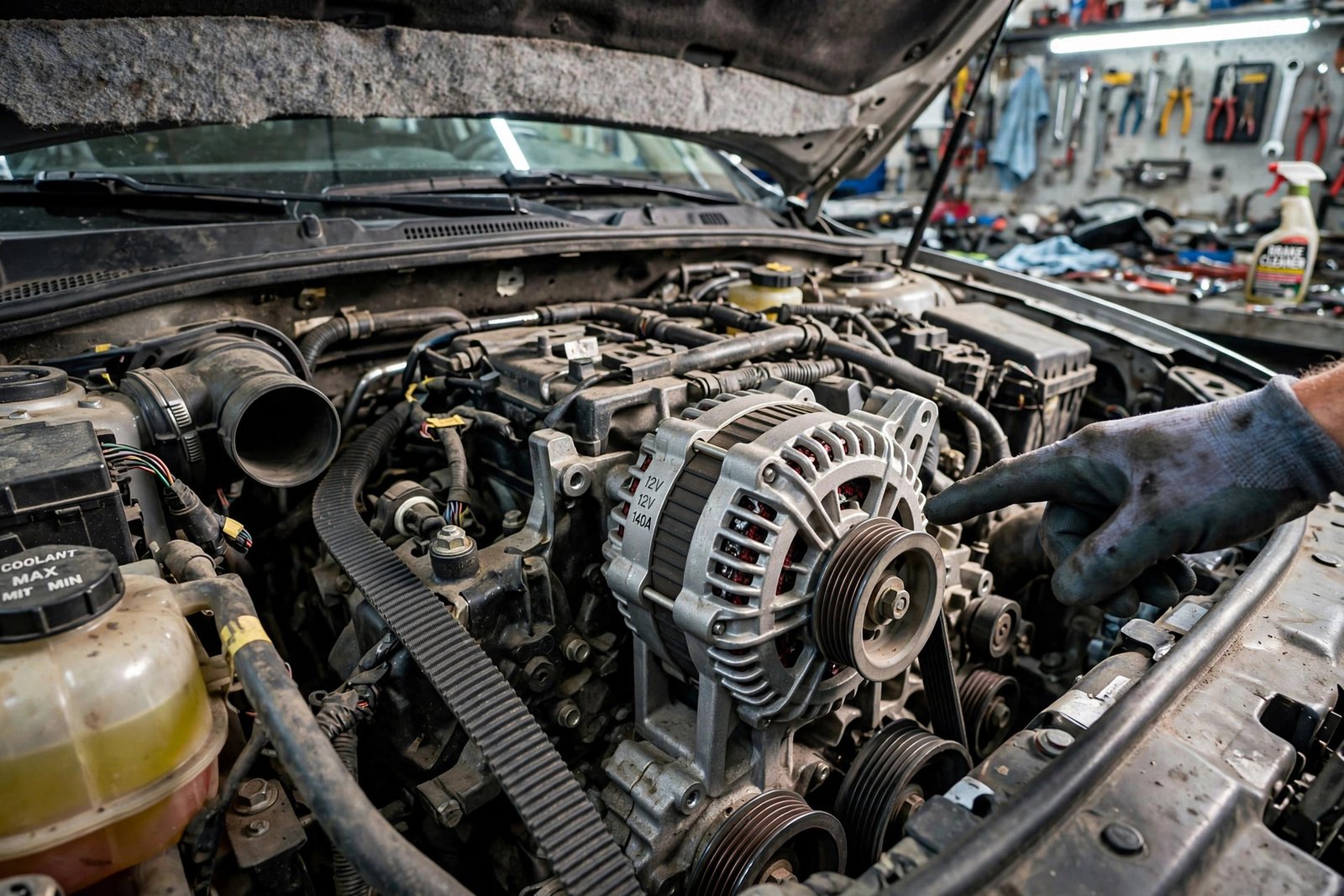
The alternator is a generator driven by the engine. Once the engine is running, the alternator produces electricity to power everything in the car and recharges the battery at the same time. A healthy alternator puts out about 13.8 to 14.4 volts while the engine runs.
This teamwork explains why the symptoms overlap. A weak alternator slowly drains the battery, so the battery looks guilty. A failing battery forces the alternator to work overtime, so the alternator looks guilty. The signs below help you separate them.
Signs of a Bad Battery
A battery is a wear item. Most last 3 to 5 years in US driving conditions, and heat in states like Arizona and Texas can shorten that life. Look for these signs:
The engine cranks slowly. When you start the car, the engine turns over in a sluggish, dragging way before it catches, or it only clicks. This is the classic weak battery symptom.
The car starts after a jump, then starts fine for a while. If a jump start works and the car then runs normally, and the problem returns after the car sits overnight, the battery is the prime suspect. It is no longer holding a charge.
Electrical issues appear when the engine is off. Dim interior lights, slow power windows, or a weak horn with the engine off point to low battery charge, because the alternator is not helping at that moment.
The battery is old or damaged. Check the date sticker on top of the battery. If it is over 4 years old, age alone is a strong clue. Swelling, a cracked case, heavy white or blue corrosion on the terminals, or a rotten-egg smell all mean the battery is done.
Problems are worse on cold mornings. Cold weather thickens engine oil and reduces battery output at the same time, so a weak battery often fails first on a chilly start.
Signs of a Bad Alternator
The alternator usually fails gradually, and its signs show up while you are driving, not when the car is parked.
The battery warning light comes on while driving. The dashboard light shaped like a battery does not only mean battery trouble. It means the charging system voltage is wrong, and most of the time that is the alternator.
Lights dim or flicker as you drive. Headlights that get brighter when you rev the engine and dimmer at idle are a textbook alternator sign. The same goes for a dashboard that flickers or accessories that behave strangely.
The car stalls or dies while running. Once the engine is running, the battery is mostly out of the picture. If the engine dies at a stoplight or the car loses power while moving, the alternator is not supplying enough electricity.
A jump start works, but the car dies again quickly. If the car starts with a jump and then dies within minutes, the battery was only the messenger. The alternator failed to recharge it and to run the car.
Strange noises or smells. A grinding or whining noise from the engine bay can be worn alternator bearings. A burning rubber smell can be the alternator belt slipping or overheating.
Repeated dead batteries. If you have replaced the battery recently and the new one keeps dying, stop blaming the battery. Something is draining it or failing to charge it, and the alternator is suspect number one.
Quick Comparison: Alternator vs Battery Symptoms
| Symptom | Battery | Alternator |
|---|---|---|
| Slow, dragging crank on start | Yes | Rarely |
| Dies while driving | No | Yes |
| Battery light on while driving | Rarely | Yes |
| Dim lights with engine off | Yes | No |
| Headlights dim at idle, brighten with revs | No | Yes |
| Starts with a jump, dies in minutes | No | Yes |
| Starts with a jump, fine until next morning | Yes | No |
| Battery over 4 years old | Yes | Either way |
| Clicking only, no crank | Yes | Rarely |
Simple Tests That Tell You the Truth
You do not need a mechanic for the first round of diagnosis. Two simple checks settle most cases.
The jump start test
Jump start the car and watch what happens. If the car keeps running after you remove the jumper cables and drives normally, but struggles to start again the next morning, the battery is likely at the end of its life. If the car dies soon after the cables come off, the alternator is not generating power, and it needs attention first.
The multimeter test
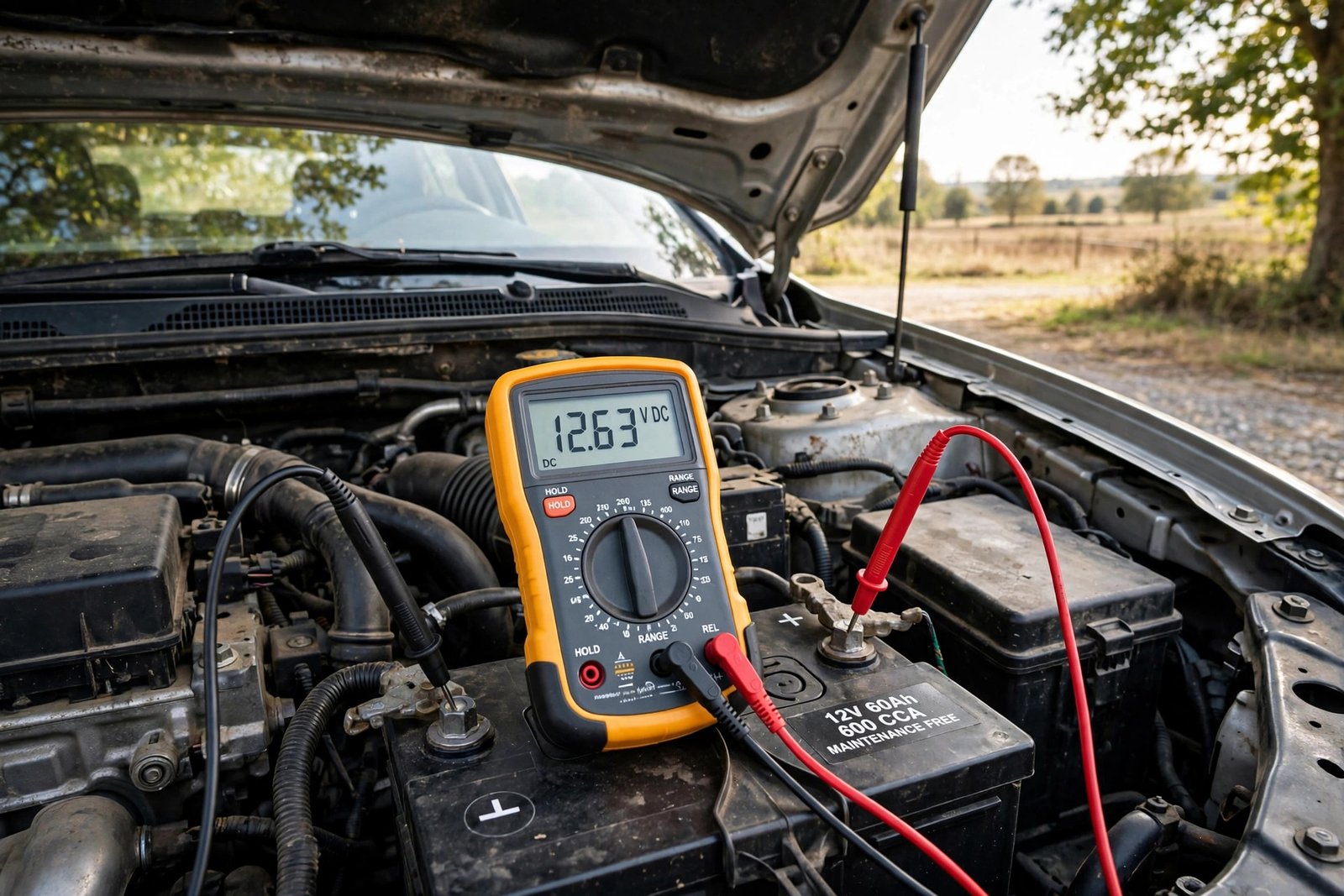
A basic multimeter costs under $20 and gives you hard numbers. With the engine off, touch the probes to the battery terminals. A healthy battery reads about 12.4 to 12.7 volts. Below 12.2 volts means it is discharged or failing. Then start the engine and measure again. The reading should rise to about 13.8 to 14.4 volts. If it stays near 12 volts or drops while the engine runs, the alternator is not charging. Our full guide on how to test a car battery walks through this step by step with more detail.
The free option: a parts store test
Most US auto parts stores, including AutoZone, O’Reilly, and Advance Auto Parts, will test your battery and charging system for free, often right in the parking lot. If you are unsure after your own checks, this is the smartest next step before spending money on parts.
What Happens If You Ignore the Signs
Driving on a failing alternator is a countdown. The car runs on battery power alone until the charge is gone, and then everything electrical shuts down, including power steering assistance and, on many modern cars, the ability to keep the engine running at all. Being stranded on a highway is worse than any repair bill.
A failing battery is less dramatic but just as final. One morning it simply will not turn the engine over. Replacing a battery on your own schedule, at home or at a store, is always cheaper and calmer than an emergency tow.
What the Repair Costs in the US
Prices vary by car and state, but typical 2026 ranges look like this:
Battery replacement: $100 to $250 for the battery itself. Many stores install it for free when you buy from them. Doing it yourself is a 20 to 30 minute job with basic tools, and our car battery installation guide covers the safe order for removing and fitting the cables.
Alternator replacement: $500 to $1,000 or more in total. The part alone often runs $200 to $600, and labor adds the rest because access can be tight on modern engines. Luxury and European models sit at the top of the range.
The smart money move: test before you replace. A free charging system test can save you from buying a battery when the alternator is the problem, or the other way around.
Frequently Asked Questions
Can a bad alternator ruin a good battery?
Yes. A weak alternator undercharges the battery every drive, which slowly sulfates and kills it. A faulty voltage regulator can also overcharge the battery and boil it dry. That is why a repeat dead battery should trigger an alternator check.
Can a bad battery damage the alternator?
It can strain it. A battery that will not hold a charge forces the alternator to work at maximum output all the time, which creates heat and wears it out faster. Replacing a clearly dead battery protects the alternator.
How long can I drive with a bad alternator?
Not far. Once the alternator stops charging, you are driving on the battery’s stored power only. Depending on the car and what is switched on, that can mean 15 to 30 minutes of driving before systems start failing.
Will a new battery fix a bad alternator?
No. A new battery will start the car and may work for a day or two, but the alternator will fail to recharge it and the car will die again. Fix the charging problem first.
What is the battery light on the dashboard really telling me?
It means the charging system voltage is out of range. Despite the battery shape of the icon, the cause is the alternator or its belt and wiring in most cases.
Final Thoughts
When your car struggles to start, do not guess and do not replace parts on hope. Slow cranking, overnight deaths, and old age point to the battery. Dying while driving, flickering lights, and a battery light on the move point to the alternator. A two minute multimeter check, or a free test at a parts store, tells you the truth before you spend a dollar. Fix the right part once, and your car will start reliably every morning.