E-Bike Classes Explained: Class 1 vs Class 2 vs Class 3 for US Riders in 2026
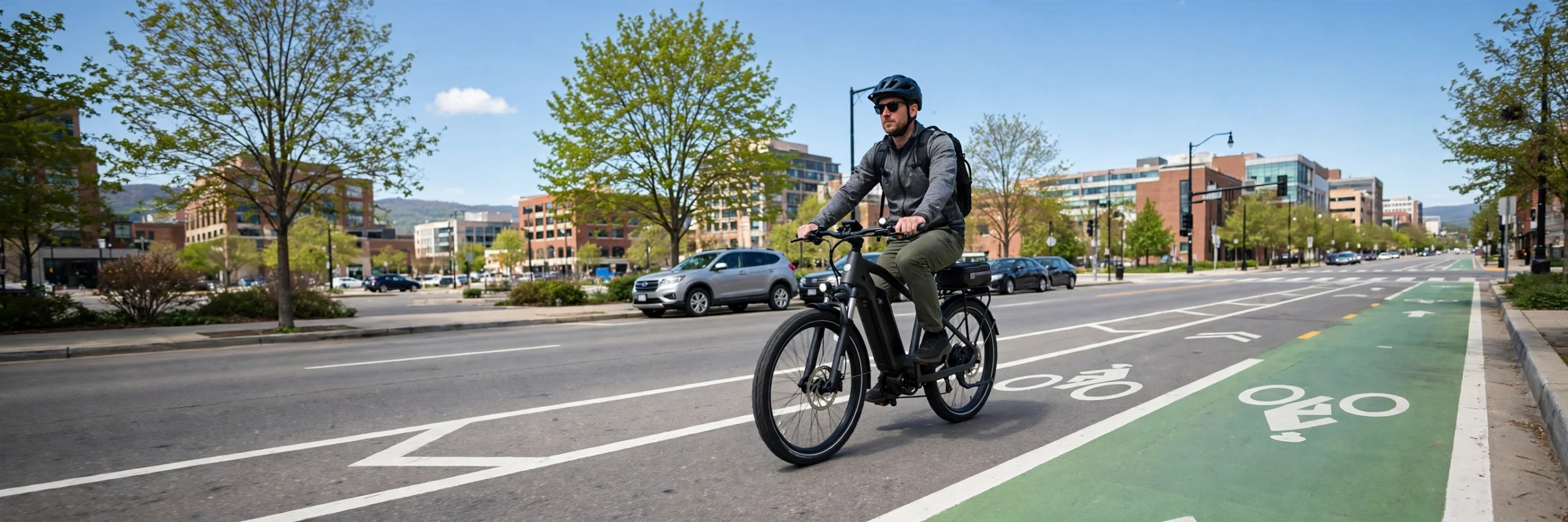
Shopping for an electric bike in the United States can feel confusing before you even test ride one. One listing says Class 1, another says Class 2, and a third proudly advertises Class 3 with a top assisted speed of 28 miles per hour. They all look like bicycles, they all have motors, and yet the rules for where you can ride them are not the same.
That is why e-bike classes matter. The class system is the shorthand that manufacturers, retailers, trail managers, and many state laws use to describe how an e-bike provides assistance and how fast that assistance goes. If you understand the three classes, you can avoid buying a bike that is not allowed on your favorite trail, and you can avoid paying for speed and power you will never use.
This guide explains Class 1, Class 2, and Class 3 e-bikes in plain language, compares them side by side, covers where each class is usually allowed, and helps you choose the right one for commuting, trail riding, and everyday errands in 2026.
What Are E-Bike Classes?
In the United States, most states that regulate e-bikes use a three class system. The system is based on two simple questions. First, does the motor help only when you pedal, or can it also propel the bike without pedaling? Second, at what speed does the motor stop assisting?
A Class 1 e-bike provides pedal assist only. The motor helps while you pedal and stops assisting at 20 miles per hour. There is no throttle, so you cannot twist a grip or press a lever and ride without pedaling.
A Class 2 e-bike can have a throttle. It can propel the bike without pedaling, and its motor assistance also stops at 20 miles per hour. Most Class 2 bikes also offer pedal assist modes, so you can choose between pedaling with help and using the throttle.
A Class 3 e-bike provides pedal assist only, like Class 1, but its motor keeps assisting up to 28 miles per hour. Class 3 bikes are built for faster commuters. They often come with a speedometer and stronger brakes, and many states set a minimum rider age for Class 3 bikes.
The federal definition used for product safety in the US generally covers low speed electric bicycles with motors of 750 watts or less, but state traffic and trail rules are what decide where you can ride. That distinction matters. A bike can meet the federal product definition and still be restricted on a particular trail or path in your state or city. Always check the local rule for the exact place you plan to ride, not just the national definition.
For a broader technical background on how electric bicycles work, see the overview on Wikipedia: Electric bicycle.
Class 1 vs Class 2 vs Class 3 at a Glance
| Feature | Class 1 | Class 2 | Class 3 |
|---|---|---|---|
| Motor assistance | Pedal assist only | Pedal assist plus throttle | Pedal assist only |
| Top assisted speed | 20 mph | 20 mph | 28 mph |
| Throttle | No | Yes | No |
| Best for | Trails, bike paths, fitness riding | Easy starts, errands, riders who want a throttle option | Longer commutes, faster road riding |
| Typical rider concern | Will I get enough help on hills | Will local trails allow throttles | Am I old enough, and is it allowed on this path |
| Common price range in 2026 | $900 to $2,500 | $800 to $2,500 | $1,500 to $4,000 |
Prices vary a lot by motor power, battery size, frame quality, and brand. A basic hub motor commuter can cost under $1,000, while a well built mid drive commuter with a larger battery can cost $3,000 or more. Use the ranges above as a starting point, not as a promise from any one brand.
Class 1 E-Bikes: Pedal Assist Only, Up to 20 MPH
Class 1 is the most widely accepted e-bike class on trails and multi use paths. The reason is simple. Because there is no throttle, a Class 1 bike behaves much more like a regular bicycle. You still have to pedal, and the motor simply makes pedaling easier.
This class is a strong choice if you ride rail trails, park paths, and greenways, or if you want exercise with a helpful boost. Many riders who are returning to cycling after a break choose Class 1 because it feels natural. You control the effort with pedal assist levels, usually Eco, Tour, Sport, and Turbo or similar names, and the bike feels predictable at intersections and on shared paths.
The trade off is that you cannot ride without pedaling. If you have a knee injury, if you need to get going quickly from a stop in traffic, or if you want to ride home without pedaling after a long day, Class 1 will not do that for you. You will still need to turn the pedals, even on the highest assist level.
Hill performance depends more on motor torque and gearing than on the class label alone. A 250 watt motor with good torque can handle moderate hills, but steep and sustained climbs are easier with a stronger motor and lower gears. If hills are your main worry, read our guide on whether a 250W motor is enough for hills before you buy.
Class 2 E-Bikes: The Throttle Option, Up to 20 MPH
Class 2 is the most flexible class for everyday riding. You get pedal assist plus a throttle, and assistance stops at 20 miles per hour either way. That throttle is useful in real life in ways that are easy to underestimate until you have one.
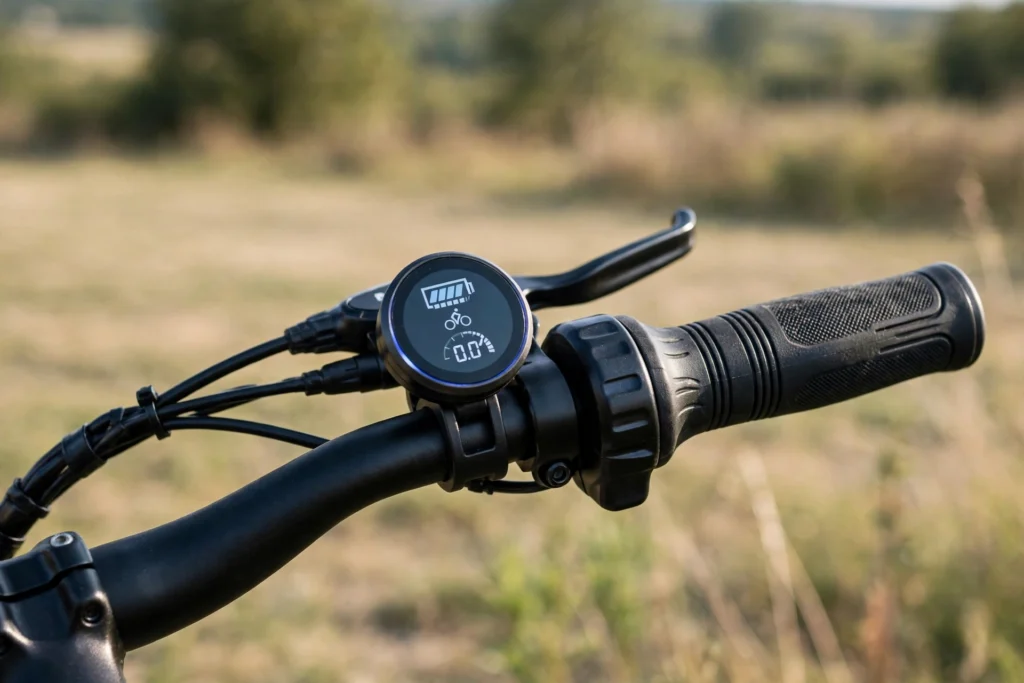
A throttle helps you pull away from a stop sign without wobbling, climb a short steep driveway, or ride through a parking lot at low speed. It also helps riders who need a break from pedaling for a few minutes, or who want to keep up with traffic for a short stretch without working hard.
The main downside is access. Some trails and parks allow Class 1 bikes but not Class 2 bikes, because managers worry about throttle use on crowded paths. That does not mean Class 2 bikes are banned everywhere. Many cities, bike lanes, and roads welcome them. It does mean you should check the rules for your regular routes before you assume a Class 2 bike can go everywhere a Class 1 bike can.
Another point to watch is weight and range. Throttle riding uses more battery than gentle pedal assist, so your real world range will drop if you ride on throttle most of the time. If you plan to commute 20 miles each way, test the bike in pedal assist mode and check the battery size in watt hours, not just the advertised maximum range.
Class 3 E-Bikes: Faster Pedal Assist, Up to 28 MPH
Class 3 is built for riders who want to go faster on roads and bike lanes. The motor assists up to 28 miles per hour, but only while you pedal. There is no throttle on a true Class 3 bike.
That extra speed makes a real difference on a longer commute. A 12 mile commute that takes about 45 minutes at 16 miles per hour can take closer to 30 minutes at higher average speeds, depending on traffic lights and hills. For riders who use an e-bike as a car replacement, that time saving adds up fast.
Class 3 bikes also come with more responsibility. At 28 miles per hour you are moving at the speed of slow city traffic, so good brakes, good tires, a helmet, and lights matter even more. Many states require Class 3 riders to be at least 16 years old, and some require a helmet for Class 3 riders of all ages. Some multi use paths restrict Class 3 bikes even when they allow Class 1 bikes, so a Class 3 bike is not automatically the best choice for trail riding.
If your main goal is commuting on roads and protected bike lanes, Class 3 is worth serious consideration. If your main goal is relaxed trail riding with family, Class 1 is usually the safer and more accepted choice. Our commuting guide can help you weigh motor, battery, and comfort features once you have picked a class: Best E-Bike for Commuting in 2026.
Where Can You Ride Each Class?
There is no single national trail rule that covers every park, path, and city in the US. Instead, think in layers: state law, city or county rules, and the rules of the specific park or trail manager.
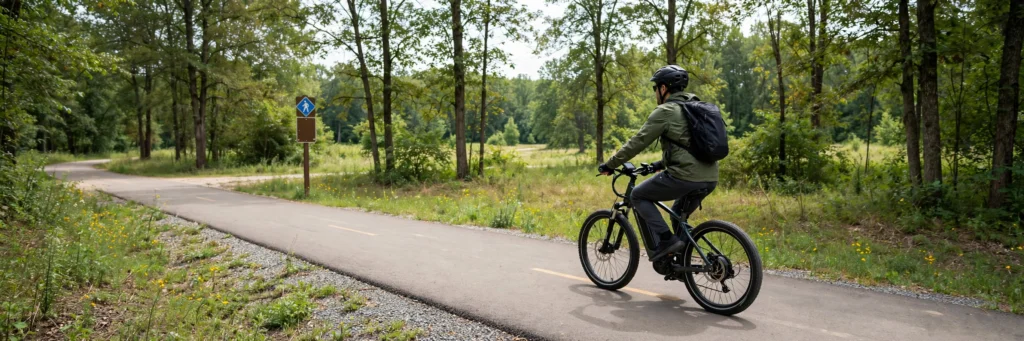
As a general pattern, Class 1 bikes are allowed in the most places, including many trails that allow regular bicycles. Class 2 bikes are allowed on most roads and bike lanes, but are restricted on some natural surface trails and multi use paths. Class 3 bikes are allowed on most roads and bike lanes, but are often restricted on multi use paths and are sometimes limited to riders aged 16 and older.
Some examples show why local checks matter. California, Colorado, Florida, New York, and Texas all have their own e-bike laws, and cities inside those states can add their own path rules. A trail in one county may welcome Class 1 and Class 2 bikes, while a trail one county over may allow only Class 1. National parks and state parks also set their own rules, and those rules can change by park and by trail.
Practical steps before you ride a new route: first, look up your state e-bike law and note the age and helmet rules for your class. Second, check the website of the park, trail, or city that manages the path. Third, look for posted signs at trailheads, because signs on the ground are what rangers and other riders will go by. If you cannot find a clear rule, choose the more conservative option for that ride, or contact the park office.
How to Choose the Right Class for You
Start with where you will ride most often, not with the fastest bike you can afford.
Choose Class 1 if you ride trails, greenways, and shared paths most of the time, you want the widest trail access, and you are happy to pedal on every ride. Class 1 is also a good pick if you want a workout with assistance, rather than a throttle powered ride.
Choose Class 2 if you commute through city traffic, you want help starting from stops, you run errands and carry cargo, or you sometimes need to ride without pedaling. Class 2 is also popular with riders who are new to cycling and want the confidence of a throttle for tricky starts.
Choose Class 3 if you commute 10 miles or more on roads and bike lanes, you want to keep up with traffic, and you are comfortable riding at higher speeds with good brakes and a helmet. Class 3 makes less sense if your favorite routes are crowded multi use paths that restrict faster bikes.
Then check three practical details before you buy. First, confirm the bike has a clear class label. Many US brands now print the class, top assisted speed, and motor wattage on the frame or in the manual. Second, confirm the motor wattage and battery size fit your hills and distance. Third, test ride if you can. A Class 3 bike feels very different from a Class 2 bike at low speed, and a throttle feels different from pedal assist in traffic.
Cost Comparison: What You Pay for Each Class
| Cost item | Class 1 | Class 2 | Class 3 |
|---|---|---|---|
| Typical bike price | $900 to $2,500 | $800 to $2,500 | $1,500 to $4,000 |
| Replacement battery (when needed) | $300 to $700 | $300 to $700 | $400 to $900 |
| Helmet (good quality) | $50 to $120 | $50 to $120 | $60 to $150 |
| Lock and lights | $80 to $200 | $80 to $200 | $80 to $200 |
| Annual maintenance (tires, brakes, tune up) | $100 to $250 | $100 to $250 | $150 to $300 |
Class 3 maintenance tends to cost a little more because higher speeds wear brake pads and tires faster. Battery replacement is the largest long term cost for any class, so ask about battery availability and price before you buy a bike from a small or new brand.
Common Mistakes to Avoid
The most common mistake is buying a bike that is marketed as an e-bike but is really closer to a moped or electric motorcycle. If a bike has a throttle that goes well above 20 miles per hour, or a motor far above 750 watts, or no working pedals, it may not count as a Class 1, 2, or 3 e-bike in your state. That can affect where you can ride, whether you need registration or insurance, and whether a trail will allow it.
Another mistake is removing a speed limiter or adding a tuning kit to make a Class 1 or Class 2 bike go faster. That can void your warranty, create safety problems with brakes and tires that were not designed for higher speeds, and put you outside your state class definition. If you need more speed, buy a bike that is built and labeled for that class instead of modifying one that is not.
A third mistake is assuming that all trails allow all classes because a bike shop or an online listing said so. Retailers sell nationally, but trail rules are local. A five minute check of the park website can save you a wasted trip and an awkward conversation with a ranger.
Finally, do not buy on top speed alone. Range, comfort, fit, brakes, tire size, and dealer support matter more for daily riding than a top speed number you may rarely reach. A comfortable Class 1 bike you ride every day is a better purchase than a fast Class 3 bike that stays in the garage.
FAQ
What is the difference between Class 1, Class 2, and Class 3 e-bikes?
Class 1 is pedal assist only up to 20 mph. Class 2 adds a throttle and also stops assisting at 20 mph. Class 3 is pedal assist only up to 28 mph. The class tells you how the motor helps and how fast it helps.
Do I need a license for a Class 1, 2, or 3 e-bike in the US?
In most states, no license or registration is required for a true Class 1, Class 2, or Class 3 e-bike that meets the state definition. Rules vary by state, and bikes that exceed the class limits may be treated differently, so check your state law.
Can I ride a Class 2 e-bike on bike trails?
It depends on the trail. Many roads and bike lanes allow Class 2 bikes, but some trails and parks allow only Class 1 bikes. Check the park or trail manager rules for your exact route before you ride.
Is a Class 3 e-bike worth it for commuting?
Yes, if you commute on roads and bike lanes and want to save time. The 28 mph assistance helps on longer commutes. It is less useful on crowded multi use paths, where Class 3 bikes are often restricted.
What happens if I ride a Class 3 bike where only Class 1 is allowed?
You may be asked to leave the trail, and you could face a fine depending on local rules. More importantly, faster bikes on crowded paths create safety risks for walkers and other riders. Ride the class that is allowed on that path.
Final Verdict
There is no single best e-bike class for everyone. Class 1 wins on trail access and natural ride feel. Class 2 wins on everyday flexibility and easy starts. Class 3 wins on commuting speed and time savings on the road.
Pick the class that fits the routes you actually ride, check your state and local trail rules, and test ride before you buy if you can. The right class is the one that gets you riding more often, safely, and without surprises at the trailhead.