Hub Motor vs Mid-Drive Motor: Which E-Bike Motor Is Better for US Riders in 2026
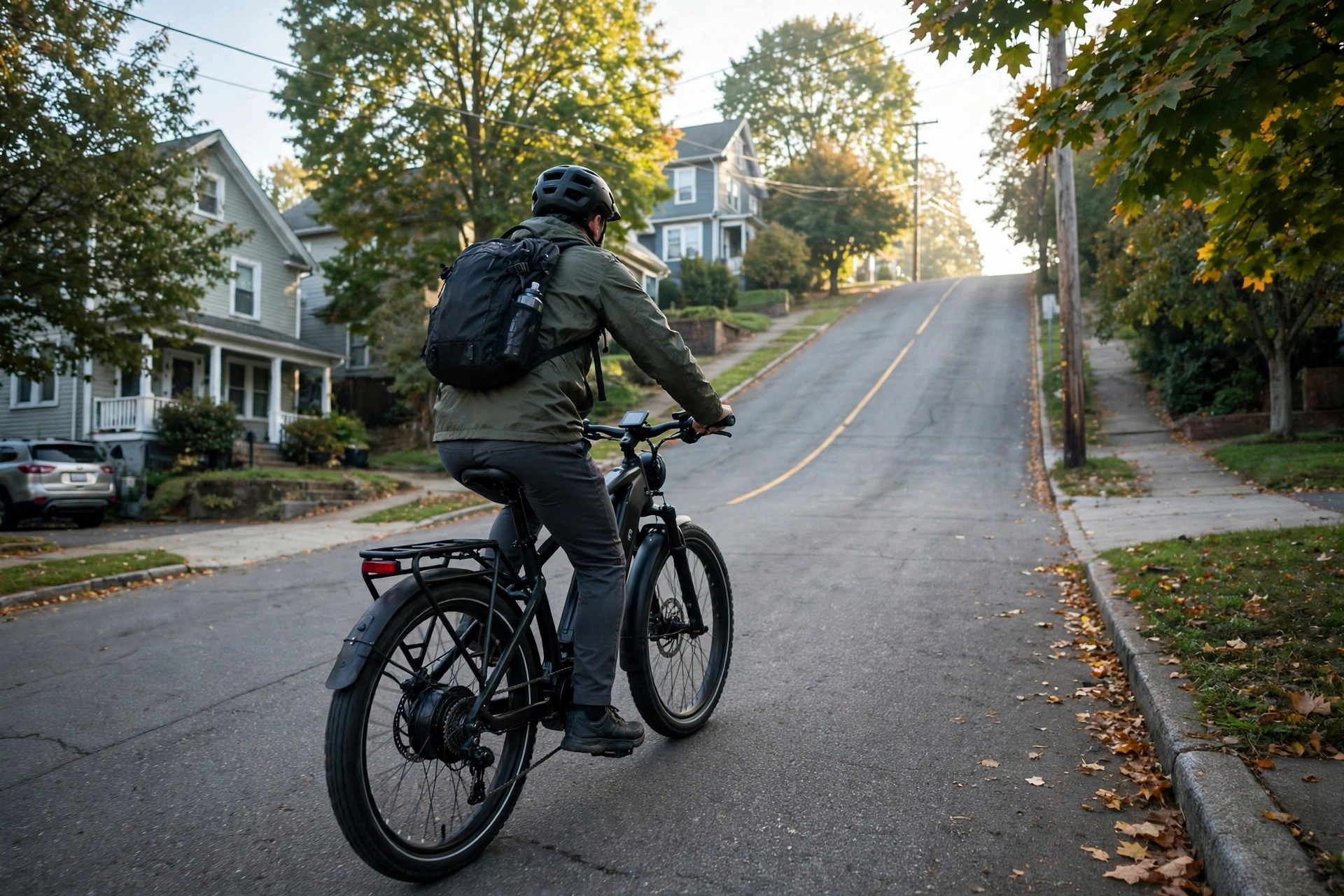
Shop for an electric bike in the United States in 2026 and you will run into the same question on almost every product page: hub motor or mid-drive motor? Both systems move the bike, both are legal under the same three-class system in most states, and both can feel great on a test ride. But they work in very different ways, and the wrong choice can leave you with a bike that struggles on your hills, drains its battery too fast, or costs more to fix than you expected.
A hub motor sits in the center of the front or rear wheel and drives that wheel directly. A mid-drive motor sits at the bottom bracket, where the pedals meet the frame, and drives the chain, which means it works through the bike’s gears. That one design difference shapes everything else: climbing power, range, weight balance, maintenance, and price.
This guide compares hub motors and mid-drive motors head to head for US riders, with real 2026 prices, so you can pick the system that fits your riding, not just the one with the flashiest spec sheet. If you are still deciding between bike classes, read our guide to e-bike classes explained first, and if commuting is your main use, our best e-bike for commuting guide will help you narrow down the whole bike.
How a Hub Motor Works
A hub motor is built into the hub of the wheel, almost always the rear wheel on modern US e-bikes. When you pedal or twist the throttle, the motor spins the wheel directly. There is no interaction with the chain or gears. Most affordable e-bikes sold in the US use a geared hub motor, which contains small internal planetary gears that let a smaller motor produce decent torque.
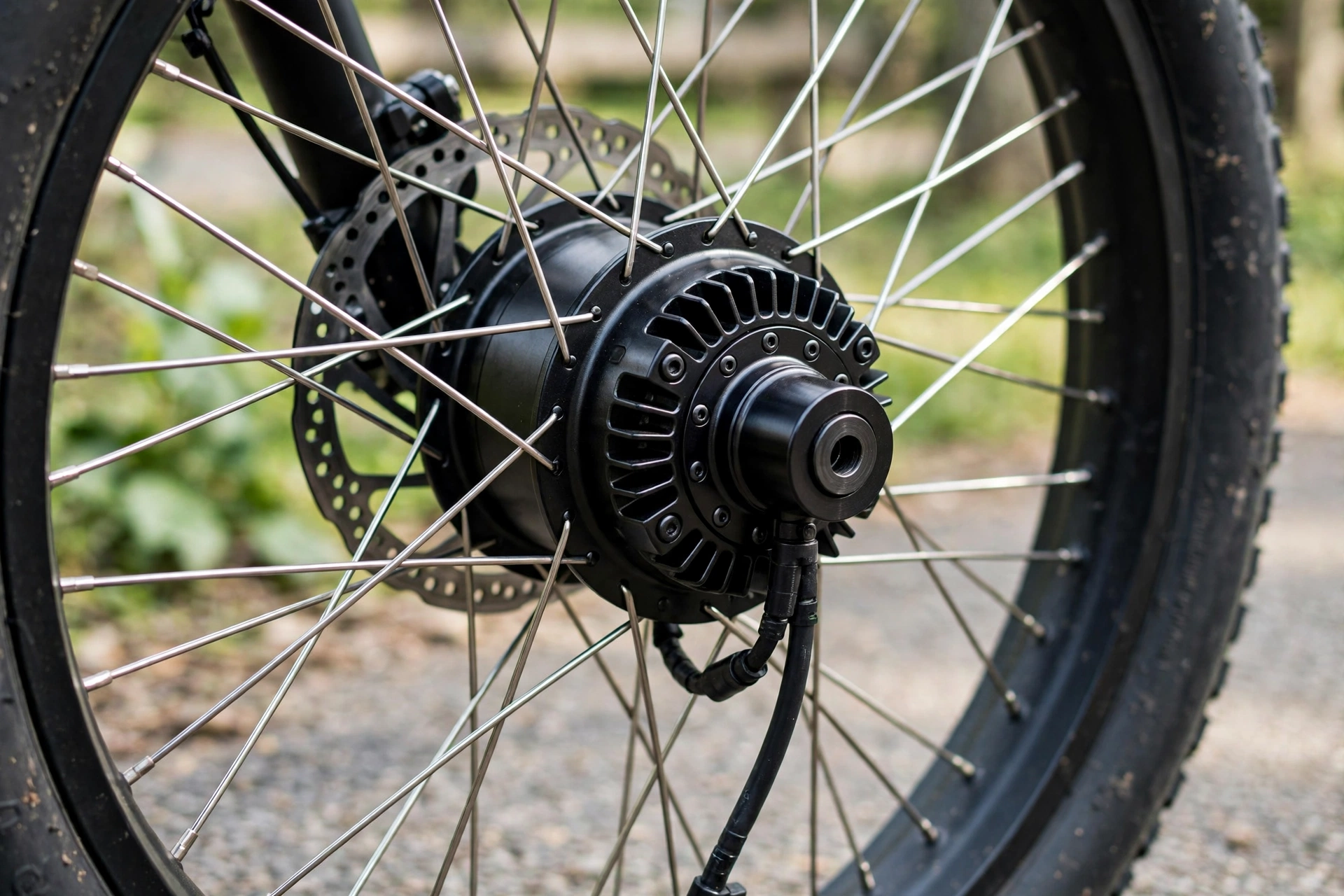
The big advantage is simplicity. The motor has no connection to the drivetrain, so shifting stays simple and the chain and cassette last longer. Hub motors are also quiet, and because the design is mature and cheap to manufacture, they dominate the under $2,000 segment. Most hub motor e-bikes pair the motor with a throttle, which is a major reason throttle-equipped Class 2 bikes almost always use hub motors.
The trade-off is efficiency on hills. A hub motor runs at one fixed gear ratio, so on a steep climb it cannot downshift the way you can with your legs. It works harder, draws more current, and heats up. On flat ground and gentle rolling terrain this barely matters. On long, steep grades it matters a lot, which is why a 250W hub motor can feel underpowered on hills while a mid-drive of the same rated wattage climbs with confidence.
How a Mid-Drive Motor Works
A mid-drive motor mounts at the crank and sends its power through the chain and rear cassette. That means the motor benefits from the bike’s gears exactly like your legs do. On a steep hill you shift down, the motor spins faster, and it delivers its torque more efficiently instead of straining at low speed.
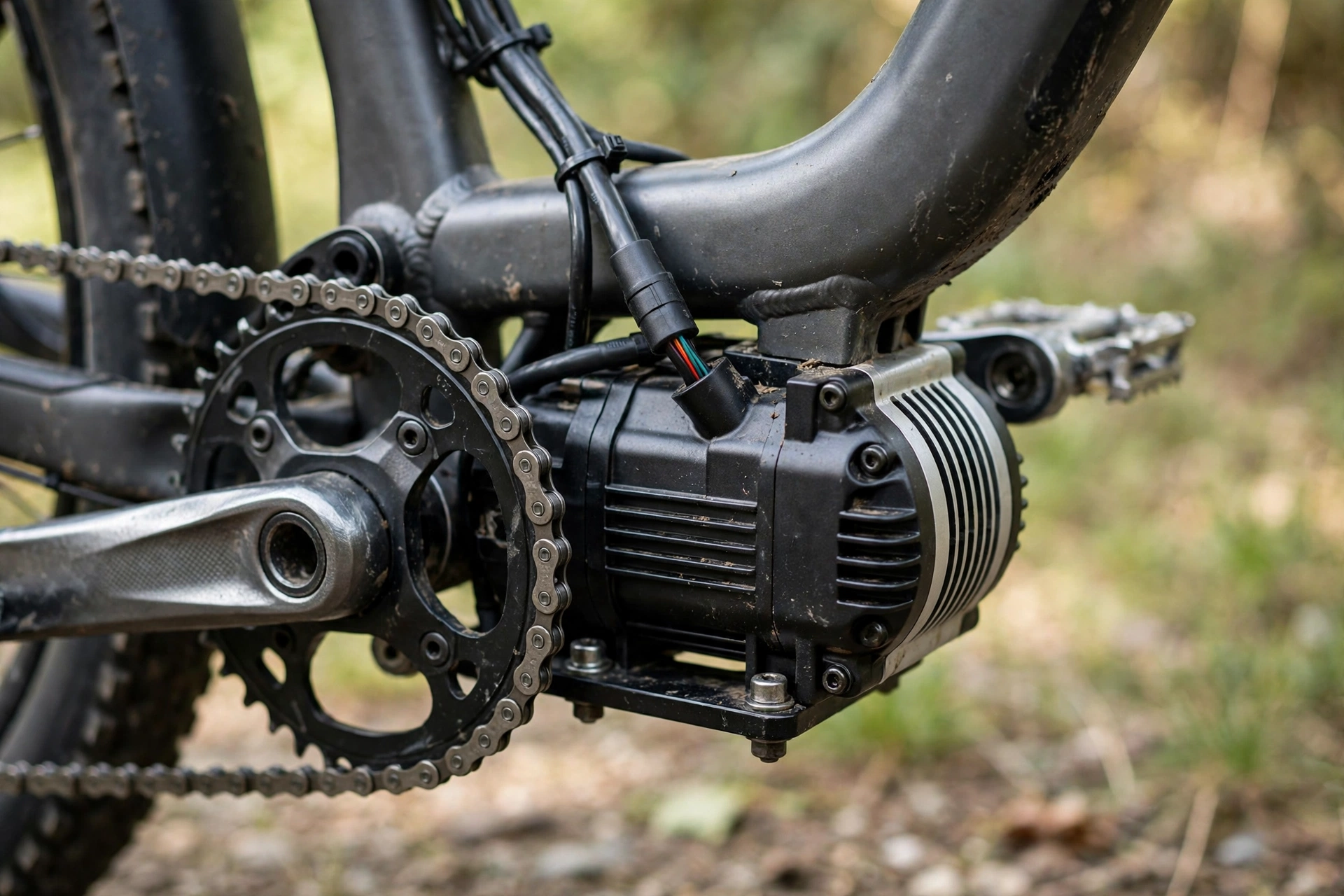
The result is better climbing, better range in hilly terrain, and a more natural ride feel, because the power arrives where you pedal and the bike’s weight sits low and centered. That centered weight also improves handling on trails and at low speed. It is no accident that almost every premium e-mountain bike and high-end commuter from brands like Trek, Specialized, and Bosch-powered models uses a mid-drive.
The trade-offs are cost and drivetrain wear. Mid-drive systems are more expensive to build, so bikes using them typically start around $2,500 and climb well past $5,000. Because the motor drives through the chain, chains, cassettes, and chainrings wear faster, and a replacement chain every 1,000 to 2,000 miles is normal for a hard-ridden mid-drive bike, versus 2,000 to 3,000 miles or more on a hub motor bike.
Hub Motor vs Mid-Drive Motor: Side-by-Side Comparison
| Feature | Hub Motor | Mid-Drive Motor |
|---|---|---|
| Typical US price range (complete bike) | $800 to $2,000 | $2,500 to $6,000+ |
| Hill climbing | Good on moderate hills, strains on steep grades | Excellent, uses gears for efficient climbing |
| Range on flat ground | Very good, often equal to mid-drive | Very good |
| Range in hilly terrain | Drops noticeably on long climbs | Holds up better thanks to gearing |
| Throttle | Common, standard on most Class 2 bikes | Rare, most mid-drives are pedal assist only |
| Weight balance | Rear-heavy, can feel tail-heavy | Low and centered, best handling |
| Drivetrain wear | Low, chain lasts longer | Higher, chains and cassettes wear faster |
| Maintenance cost | Lower, motor is sealed and simple | Higher, drivetrain parts replaced more often |
| Repair complexity | Wheel swap or motor replacement, shops vary | Specialized parts, dealer support often needed |
| Best for | Commuting, flat cities, budget buyers | Hills, trails, heavy loads, long-distance touring |
Which Motor Is Better for Hills?
If your daily route includes steep hills, a mid-drive wins, and it is not close. A mid-drive motor working through a low gear can climb grades that leave a hub motor overheating and crawling. Riders in San Francisco, Seattle, Pittsburgh, and other hilly US cities consistently report that mid-drives feel stronger and use less battery on the same climbs.
That said, a powerful hub motor is not helpless on hills. A 750W rear hub motor, the legal Class 2 and Class 3 limit in most states, handles moderate hills fine, especially with a throttle to help from a stop. The problem zone is long, steep grades above roughly 10 percent, or heavy cargo loads on hills. If your hills are short and your load is light, a hub motor saves you $1,000 or more and you will never notice the difference.
Which Motor Gives More Range?
On flat ground, there is little difference. Range is decided mostly by battery size, rider weight, speed, and wind, not motor placement. A 500Wh battery will deliver roughly 30 to 50 miles of mixed riding on either system.
In hilly terrain, mid-drives pull ahead because they stay in their efficient speed range by using the gears, while a hub motor on a steep climb draws high current at low speed. Expect a mid-drive to return 10 to 20 percent more range on a hilly route with the same battery. If range anxiety is your main worry, a bigger battery matters more than motor type.
Cost: Purchase Price and Long-Term Ownership
Hub motor bikes win on purchase price by a wide margin. In 2026, solid hub motor commuters start around $1,000, while the cheapest decent mid-drive bikes start near $2,500. That $1,500 gap buys a lot of replacement chains.
Long-term costs narrow the gap but rarely close it. A mid-drive rider might spend $100 to $200 per year on chains, cassettes, and chainrings with heavy use, versus $50 to $100 for a hub motor rider. Mid-drive motors from Bosch, Shimano, and Brose also tend to need dealer diagnostics for electronic faults, while a hub motor fault usually means replacing the wheel motor unit, which costs $200 to $500 including labor.
If budget is the deciding factor, buy the hub motor bike and spend the savings on a bigger battery or better brakes. If you ride daily in hills or carry cargo, the mid-drive pays for itself in performance and range.
Maintenance and Reliability
Hub motors are sealed units with few moving parts exposed to weather, and they ask almost nothing of you. Keep the electrical connectors clean, avoid pressure washing the hub directly, and check spoke tension occasionally, because the motor’s weight stresses the wheel.
Mid-drives need more attention. Check chain wear every few hundred miles with a cheap chain checker tool, keep the drivetrain clean and lubed, and replace the chain before it stretches enough to damage the cassette. The upside is that the motor itself is well protected in the frame, and brands like Bosch and Shimano have dealer networks across the US for warranty work.
Neither system is fragile. Both routinely last 10,000 miles or more with basic care. The difference is that hub motor maintenance is simpler and cheaper, while mid-drive maintenance is more frequent but keeps a higher-performing bike running at its best.
Which Motor Should You Choose?
Choose a hub motor if you ride mostly flat or gently rolling terrain, want a throttle, want the lowest price, or want the simplest maintenance. This covers most US commuters, casual riders, and anyone buying their first e-bike.
Choose a mid-drive motor if you ride steep hills daily, ride trails, carry heavy cargo or a child seat, tour long distances, or want the most natural pedal feel and best handling. This is the pick for serious riders who will use the bike’s full capability.
Either way, test ride both if you can. Motor specs on paper never tell the full story, and a well-tuned 500W mid-drive can feel stronger than a rough 750W hub motor, while a quality hub motor bike at $1,200 can be a better buy than a mediocre mid-drive bike at $2,800.
Frequently Asked Questions
Are mid-drive motors worth the extra money?
Yes, if you ride hills, trails, or heavy loads regularly. For flat commuting, a hub motor gives you nearly the same experience for much less money, so the extra cost is harder to justify.
Can a hub motor handle steep hills?
A 750W hub motor handles moderate hills well but struggles on long, steep grades, where it draws more power and can overheat. For consistently steep terrain, a mid-drive is the safer choice.
Do mid-drive motors work with a throttle?
Most mid-drive e-bikes are pedal assist only, because adding a throttle to a chain-driven system complicates the design. A few models offer it, but if a throttle is a must-have, a hub motor bike is the easier choice.
Which motor type lasts longer?
Both last 10,000 miles or more with basic care. Hub motors need less maintenance, while mid-drives wear chains and cassettes faster but keep the motor itself well protected.
Is a mid-drive motor better for heavy riders or cargo?
Yes. The ability to use low gears means a mid-drive climbs better under heavy loads and uses its battery more efficiently, which matters a lot for cargo bikes and heavier riders.
Final Thoughts
There is no single best e-bike motor, only the best motor for your terrain, budget, and riding style. Hub motors deliver simple, affordable, throttle-friendly riding that suits most US commuters perfectly. Mid-drive motors deliver superior climbing, range in hills, and handling for riders who push their bikes harder. Pick based on the hills you actually ride, not the specs you admire, and you will end up with a bike you love riding every day. For more background on how electric bikes are classified in the US, see the Wikipedia overview of electric bicycles, and to compare motor choices against full bike picks, revisit our e-bike classes and commuting guides linked above.