How Much Does a Transmission Fluid Change Cost in 2026? Prices, Signs, and When to Change It for US Drivers
Your transmission works hard every time you drive, and the fluid inside it is what keeps that work smooth. Clean transmission fluid cools moving parts, helps gears shift cleanly, and protects seals and clutches from wear. When that fluid gets old, dirty, or low, shifting can turn rough, parts can overheat, and a small maintenance job can turn into a repair bill worth thousands of dollars.
So, how much does a transmission fluid change cost in 2026? For most US drivers, a standard drain and refill costs between $150 and $300 at an independent shop, while a dealer or a full flush with a filter replacement can push the total to $300 or more. The exact price depends on your vehicle, the type of fluid it needs, whether the filter is replaced, and where you live.
This guide breaks down real 2026 prices, explains the difference between a fluid change and a flush, lists the warning signs that your fluid needs attention, and shows how often you should change it. By the end, you will know what a fair price looks like and when it makes sense to book the service.
What Is a Transmission Fluid Change?
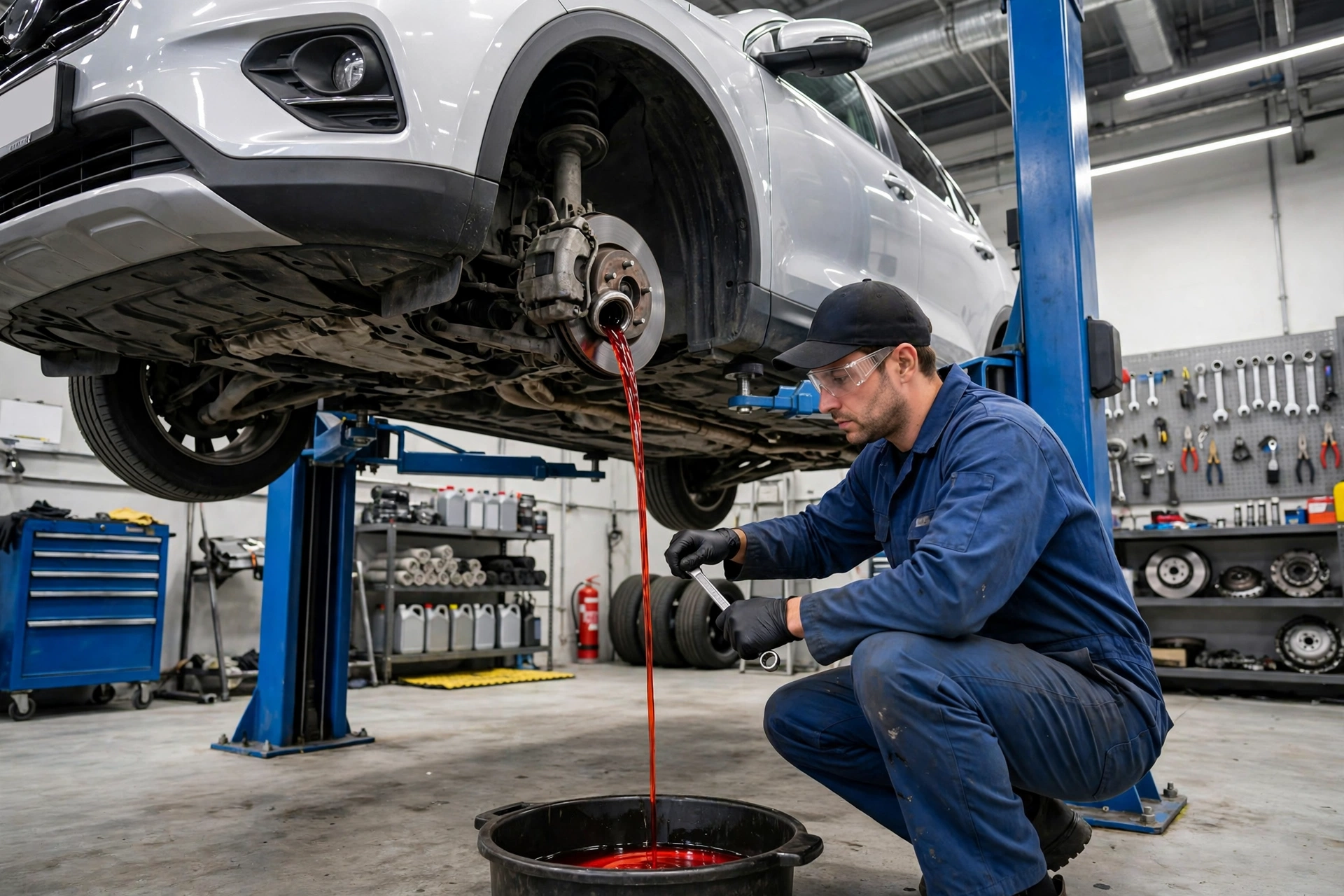
A transmission fluid change, often called a drain and refill, removes old fluid from the transmission pan and replaces it with fresh fluid that meets your vehicle maker specifications. In many cars, the technician also replaces the transmission filter and the pan gasket at the same time, because both are easy to reach once the pan is off.
This is different from a transmission flush. A flush uses a machine to push new fluid through the whole system, including the torque converter and cooler lines, until almost all of the old fluid is replaced. A drain and refill typically replaces only 40 to 60 percent of the total fluid, because some old fluid stays trapped in the torque converter and internal passages. That is normal, and it is why some shops recommend repeating a drain and refill after a few thousand miles if the fluid was very dirty.
Neither service is automatically better for every car. A regular drain and refill is gentle, affordable, and ideal for routine maintenance. A flush replaces more fluid at once, but it is not recommended for every high mileage transmission, especially one that has never been serviced and already shows shifting problems. Your owner manual and a trusted mechanic should guide that choice, not a coupon or a sales pitch.
How Much Does a Transmission Fluid Change Cost in 2026?
For a typical gasoline car or SUV with an automatic transmission, expect to pay $150 to $300 for a drain and refill with a standard filter service. Prices vary by region, and labor rates in large coastal cities tend to run higher than in smaller towns.
Here is a realistic breakdown for US drivers in 2026:
| Service | Typical US price range | What it usually includes |
|---|---|---|
| Drain and refill only | $150 to $250 | Old fluid drained, fresh fluid added, level checked. |
| Drain, refill, and filter replacement | $200 to $350 | Fluid, new filter, new pan gasket, level checked. |
| Full transmission flush | $250 to $450 | Machine flush of the whole system, fresh fluid throughout. |
| CVT fluid change | $200 to $400 | CVT specific fluid, often a dealer or specialist job. |
| Manual transmission fluid change | $120 to $250 | Gear oil drained and replaced, usually simpler labor. |
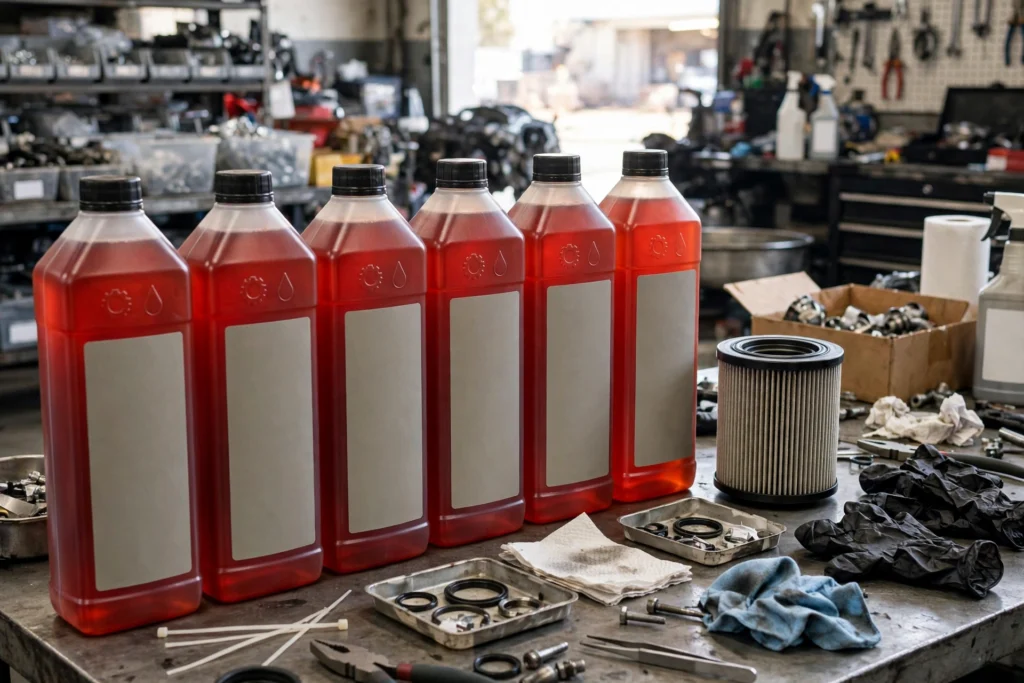
Parts make up a large share of the bill. Modern automatic transmissions can need 5 to 12 quarts of fluid, and synthetic or manufacturer specific fluid can cost $10 to $25 per quart. A filter kit usually adds $30 to $80. Labor is typically 1 to 2 hours, at $100 to $180 per hour depending on the shop.
Luxury cars, trucks with heavy duty transmissions, and vehicles with sealed transmissions often cost more. Sealed units have no dipstick and may need a special fill procedure, a lift, and a scan tool to check the fluid temperature during filling. That extra time shows up in the labor charge.
A related cost guide worth reading is our breakdown of how much does a brake job cost, because brake work and transmission service are both common maintenance items where shop prices vary widely by vehicle and region. Planning both services together can also save a second trip to the shop.
What Affects the Price?
Several factors move the price up or down, and understanding them helps you judge a quote.
First, fluid type matters. A basic automatic transmission fluid is cheaper than a low viscosity synthetic fluid made for a 9 or 10 speed automatic, and CVT fluid is a different product entirely. Using the wrong fluid can cause shifting problems, so shops should always use the fluid your maker specifies, even if it costs more.
Second, filter access matters. Some transmissions have a filter that is easy to reach once the pan drops. Others have an internal filter that requires far more labor, or a sealed design with no serviceable filter at all. The harder the access, the higher the labor charge.
Third, shop type matters. Dealers usually charge the highest labor rates, but they stock the exact fluid and parts for your model and follow the maker procedure. Independent shops are often $30 to $80 cheaper for the same service, and a good independent specialist can be an excellent choice. Quick lube chains may advertise a low price, but check exactly what is included, because a cheap flush without a filter change is not the same service as a full drain, filter, and refill.
Fourth, your location matters. Labor rates in California, New York, and other high cost states can be 20 to 40 percent higher than in the Midwest or South. Always compare quotes in your own area rather than relying on a national average alone.
Finally, extra work adds cost. If a pan bolt is seized, a gasket is leaking, or a cooler line needs replacement, the shop may add parts and labor. A reputable shop will call you before doing that extra work, so ask for that promise when you drop the car off.
Signs Your Transmission Fluid Needs Changing
You do not need to guess. Your car gives clear signs when transmission fluid is old, low, or contaminated.
Rough or delayed shifting is the most common sign. If the car hesitates before moving into gear, shifts with a clunk, or slips out of gear under acceleration, worn fluid may be part of the problem. Fresh fluid cannot fix a mechanically damaged transmission, but it can restore smooth shifting when the fluid itself is the issue.
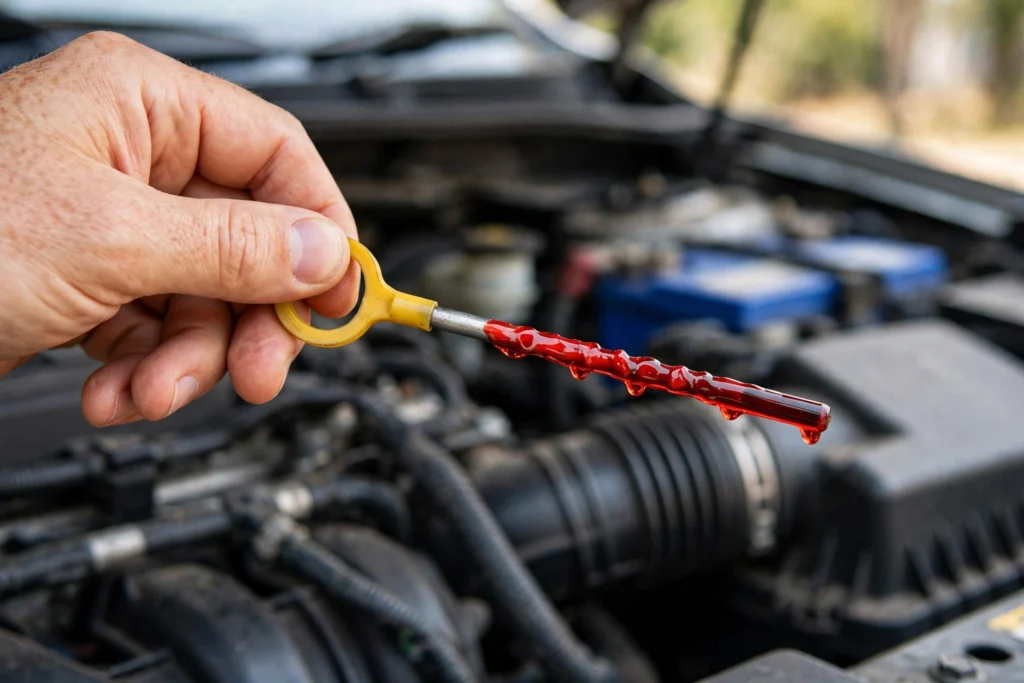
Dark or burnt smelling fluid is another warning. Healthy automatic transmission fluid is usually red or pink and smells slightly sweet. Fluid that looks dark brown or black, or smells burnt, has lost much of its protective ability and should be changed soon.
Leaks under the car deserve attention too. Transmission fluid leaks often appear as red or brown spots near the center of the vehicle. Even a slow leak lowers the fluid level over time, and low fluid causes overheating and harsh shifts.
Unusual noises, such as whining or buzzing that changes with speed, can also point to low or degraded fluid. So can a dashboard warning light for the transmission or a temperature warning on a hot day in stop and go traffic.
If you notice any of these signs, check the fluid level if your car has a dipstick, and book an inspection promptly. Driving for months with degraded fluid risks far more expensive damage to clutches, solenoids, and bearings.
How Often Should You Change Transmission Fluid?
There is no single interval that fits every car, and the old advice to never change it is outdated for most modern vehicles. A practical range for most US drivers is every 30,000 to 60,000 miles for a standard automatic, and every 30,000 to 50,000 miles for many CVTs, but your owner manual is the final authority.
Some makers list longer intervals, such as 100,000 miles, under normal driving conditions. That figure often assumes gentle highway driving. If you tow, drive in heavy city traffic, climb hills regularly, or drive in very hot weather, your driving counts as severe service, and a shorter interval is wise. Many mechanics suggest halving the maker interval for severe service.
For a car you just bought used with no service history, ask a shop to inspect the fluid before deciding. If the fluid is dark but the transmission still shifts well, a gentle drain and refill is usually safer than an aggressive flush. If the transmission already slips badly, changing fluid may not save it, and a proper diagnosis should come first.
Keep a simple record of the service date and mileage. That record helps the next owner, supports a warranty claim, and makes it easy to plan the next change without guessing.
Fluid Change vs Flush: Which Should You Choose?
This is the question drivers ask most, and the answer depends on the age, mileage, and condition of your transmission.
Choose a drain and refill with a filter change if your car is on a regular maintenance schedule, the fluid is only moderately dark, and shifting feels normal. This is the safest routine service, and it is what most makers describe in their maintenance schedules.
Consider a flush only if the fluid is very dirty, the maker allows it, and the transmission still shifts normally. A flush replaces nearly all of the fluid in one visit, which can be useful after a long gap in service, but it should not be used as a fix for a transmission that already slips or bangs into gear.
Avoid a flush if your high mileage transmission has never been serviced and already shows problems. In that case, dislodged debris can make shifting worse, and a shop should diagnose the transmission before flushing anything. When in doubt, start with an inspection and a drain and refill, then reassess after a few hundred miles.
For drivers comparing routine service costs, our guide to how much does a wheel alignment cost shows the same pattern: routine maintenance is far cheaper than the repair that follows when it is skipped. Transmission service follows the same logic, only the repair bill is much larger.
Can You Change Transmission Fluid Yourself?
Yes, on some cars, but it is messier and more technical than an oil change. You need the correct fluid, a new filter and gasket if your model uses them, a drain pan, a torque wrench, and a safe way to lift and support the car. You also need to fill to the exact level, which on many modern cars means checking the level at a specific fluid temperature with the engine running.
DIY savings are real: fluid and a filter kit might cost $80 to $180, compared with $200 to $350 at a shop. But mistakes are costly. Overfilling, underfilling, or using the wrong fluid can cause shifting problems within days. Sealed transmissions, CVTs, and cars that need a scan tool for the level check are best left to a professional.
If you do it yourself, recycle the old fluid at an auto parts store or local recycling center, never pour it down a drain. Wear gloves, work on a level surface, and double check the level after a short test drive.
How to Save Money Without Cutting Corners
You can lower the bill without risking your transmission. Get two or three quotes and compare exactly what each includes: fluid type, filter, gasket, and labor time. A $150 quote that skips the filter is not cheaper than a $220 quote that includes it, if your car needs a filter.
Ask whether the shop uses the maker specified fluid, and ask to see the old fluid and filter after the job. A good shop will show you both without hesitation. Time the service with other maintenance, such as an oil change or tire rotation, to save a second visit, and keep the receipt with your service records.
Skip additives that promise to fix slipping or seal leaks in a bottle. They rarely fix the root cause, and they can change the friction properties of the fluid in ways your transmission was not designed for. Spend the money on fresh, correct fluid instead.
Final Thoughts
A transmission fluid change is one of the best value maintenance jobs you can buy. At $150 to $300 for most US drivers, it protects a component that can cost $3,000 to $7,000 or more to rebuild or replace. Change it on schedule, watch for rough shifting, dark fluid, or leaks, and choose a drain and refill with a filter change for routine care.
Book the service before a small problem becomes a large one, keep your service record, and your transmission will reward you with smooth shifts for many more miles.
FAQ
How much does a transmission fluid change cost in 2026?
Most US drivers pay $150 to $300 for a drain and refill, $200 to $350 with a filter replacement, and $250 to $450 for a full flush, depending on the vehicle, fluid type, and shop labor rate.
How often should transmission fluid be changed?
Every 30,000 to 60,000 miles is a practical range for most automatics, and every 30,000 to 50,000 miles for many CVTs, but always follow your owner manual and shorten the interval for towing, heavy traffic, or hot weather driving.
Is a transmission flush better than a fluid change?
Not always. A drain and refill is gentler and best for routine maintenance, while a flush replaces more fluid at once but is not ideal for a high mileage transmission that has never been serviced or already slips.
What happens if you never change transmission fluid?
Old fluid loses its ability to cool and protect moving parts, which can cause rough shifting, overheating, and wear to clutches and bearings, eventually leading to a rebuild that costs thousands of dollars.
Can low transmission fluid cause shifting problems?
Yes. Low fluid can cause delayed shifts, slipping, harsh engagement, and overheating, so a leak or low level should be checked and fixed promptly rather than ignored.