How to Winterize Your Car: The Complete Winter Prep Checklist for US Drivers
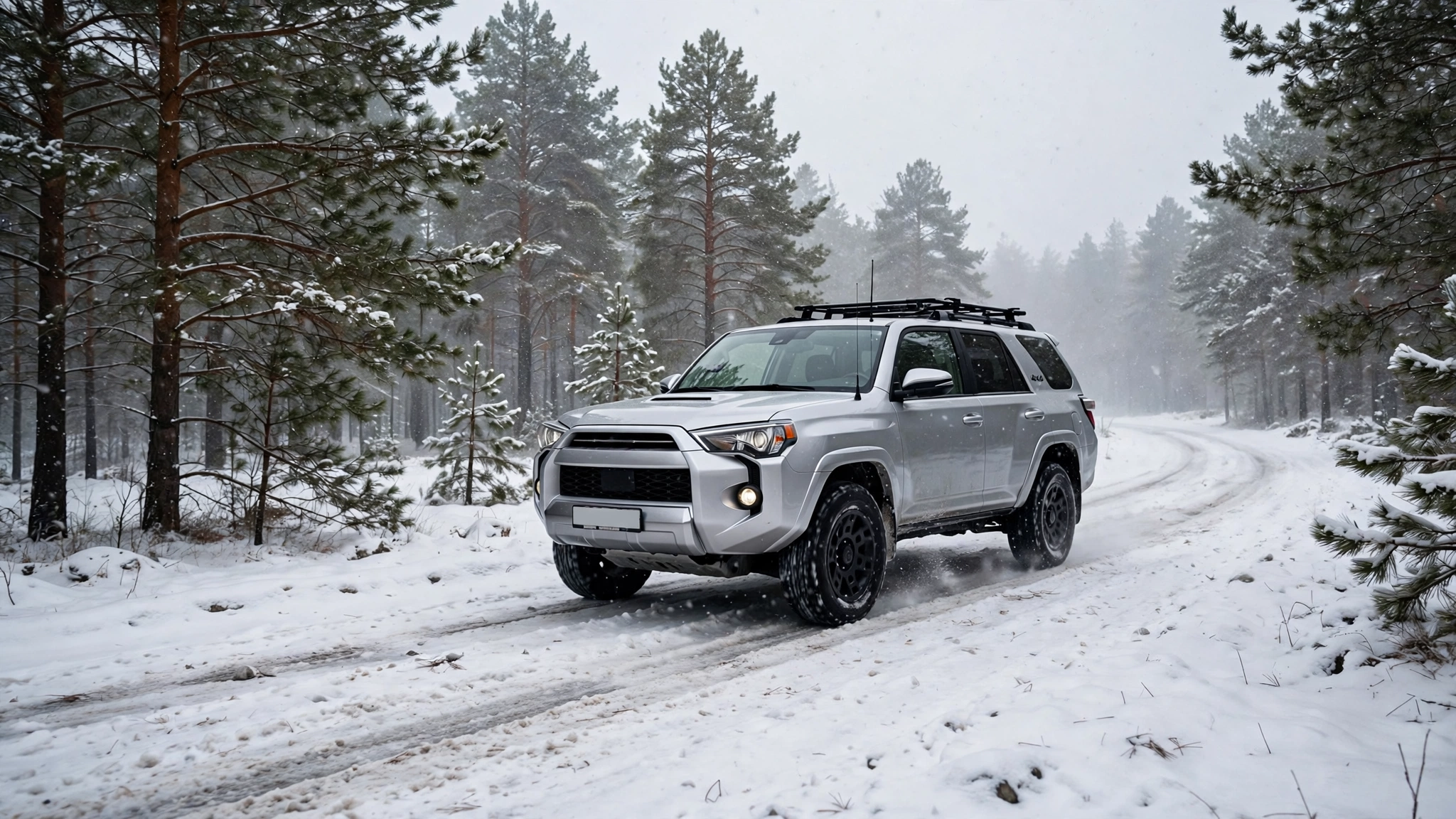
Winter in the US does not forgive an unprepared car. A weak battery that started fine in October can leave you stranded in a January parking lot, and all-season tires that felt confident in the rain can turn helpless on black ice. Winterizing your car is not about spending a fortune at the shop. It is a short checklist of inspections, fluid swaps, and gear that takes a weekend afternoon and can save you a tow bill, an accident, or a very cold walk home. This guide walks through exactly how to winterize your car, what it costs, and the mistakes that catch most drivers off guard.
Start With Your Tires: The Single Biggest Safety Upgrade
Tires are the only part of your car that touches the road, and winter exposes every weakness in them. Cold air drops tire pressure roughly 1 PSI for every 10 degrees Fahrenheit the temperature falls, so a tire that was perfect in September can be dangerously underinflated by December. Check pressures monthly through winter, always when the tires are cold, and inflate to the number on the driver’s door jamb sticker, not the maximum printed on the tire sidewall.
Tread depth matters just as much. The classic penny test still works: stick a penny into the tread with Lincoln’s head upside down. If you can see the top of his head, you have less than 2/32 of an inch left and the tires are done. For winter driving, 4/32 of an inch is a smarter minimum, because worn tread cannot channel slush away from the contact patch.
Then comes the big decision: winter tires or all-season tires. Here is how they compare.
| Feature | Winter tires | All-season tires |
|---|---|---|
| Rubber compound | Stays flexible below 45°F | Hardens in real cold, grips less |
| Tread design | Deep grooves and biting edges for snow and slush | Compromise pattern, weaker in snow |
| Ice and snow grip | Best by a wide margin | Adequate on light snow, poor on ice |
| Typical set of 4 (US) | $400 to $800 installed | Already on most cars |
| Dry-road feel | Softer, slightly less sharp | Better steering response |
| Best for | Snow-belt states: MN, WI, MI, NY, New England, mountain West | Mild-winter states: FL, TX, AZ, Southern CA |
If you live anywhere that sees regular snow, a set of dedicated winter tires is the highest value safety purchase you can make, worth more than all-wheel drive on all-seasons. In mild-winter states, quality all-seasons with good tread are fine. Either way, do not forget the spare: check its pressure and condition before you need it on a freezing night.
Test the Battery Before the First Freeze
Cold is a battery killer. At 32°F a car battery loses about 20 percent of its cranking power, and at 0°F it can lose half, right when thick cold oil demands more power to turn the engine over. Most batteries last 3 to 5 years, so if yours is approaching that age, have it tested before winter, not after it fails.
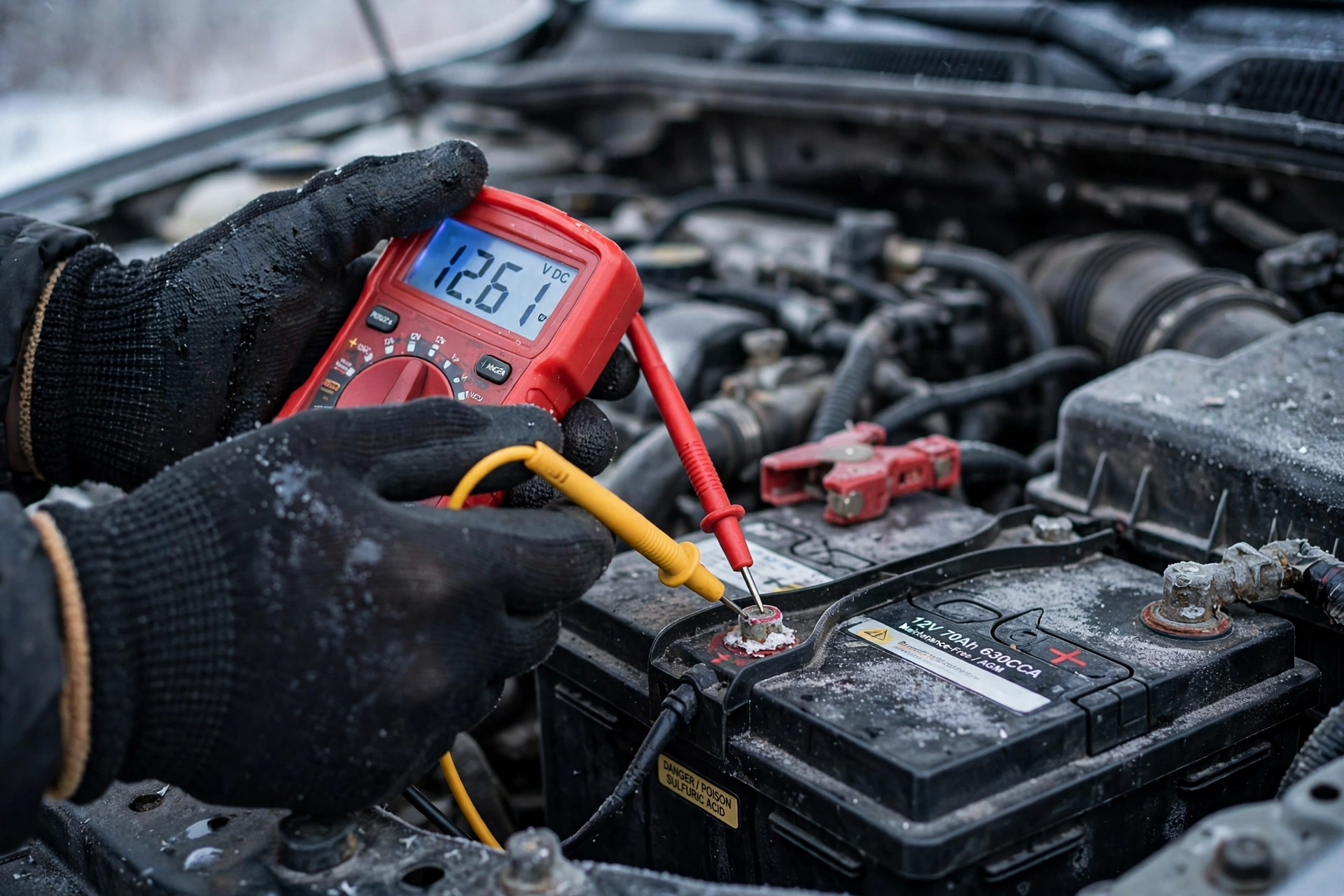
Many US auto parts stores will test your battery and charging system for free, and the test takes just a few minutes. If you own a multimeter, you can do a basic check yourself: a healthy battery reads about 12.4 to 12.7 volts with the engine off. Our step by step guide explains exactly how to test a car battery so you know whether it will survive the winter. Clean any white or blue corrosion off the terminals too, since corroded connections add resistance exactly when the starter needs every amp it can get.
If the battery tests weak, replace it before the cold arrives. A battery swap typically runs $100 to $250, and many stores install it free with purchase. Our car battery installation guide walks through the safe order for the cables if you want to do it yourself in the driveway.
Fluids: Coolant, Oil, and Washer Fluid
Winter is when neglected fluids come back to haunt you. Three deserve attention.
Engine coolant (antifreeze). Coolant does more than stop overheating; in winter it stops your engine block from freezing and cracking. Most US cars run a 50/50 mix of antifreeze and water, which protects down to about -34°F. If you live in the northern plains or mountain states, a 60/40 mix protects even lower. Check the level in the overflow reservoir and have the mixture tested if it has been more than a couple of years. Never open a hot radiator cap.
Engine oil. Cold oil flows like honey, and the wrong viscosity makes cold starts harder on every bearing in the engine. Most modern cars specify a multi-viscosity oil like 5W-30, where the “5W” number describes cold flow. If your owner’s manual lists a thinner winter grade, use it. If an oil change is due anyway, schedule it before winter so you start the season fresh. If you want a refresher on the basics, our guide on checking your car’s fluids covers the dipstick checks in a few minutes.
Windshield washer fluid. Summer washer fluid can freeze solid in the reservoir and lines on the first hard freeze. Switch to a winter-rated washer fluid, usually labeled for -20°F or lower, and run the washers briefly after refilling so the winter fluid pushes the summer fluid out of the lines. This is a five dollar job that saves you from driving blind behind a salt-crusted windshield.
Wipers, Lights, and Visibility
You cannot drive safely through winter if you cannot see. Replace wiper blades that streak, skip, or chatter; winter-specific beam blades resist ice buildup better than old-fashioned framed blades and cost about $15 to $30 each. Top off the washer fluid as described above, and consider a water-repellent windshield treatment, which helps rain and slush bead off at speed.
Walk around the car and check every light: headlights, taillights, brake lights, turn signals, and hazards. Winter means driving in the dark far more often, and a dead brake light in a snowstorm is genuinely dangerous. Replace dim headlight bulbs in pairs so the beams match, and clean the headlight lenses, since cloudy lenses can cut light output dramatically. Keep an ice scraper and a snow brush in the car from the first frost, not the first blizzard.
Brakes, Belts, and Hoses Deserve a Look
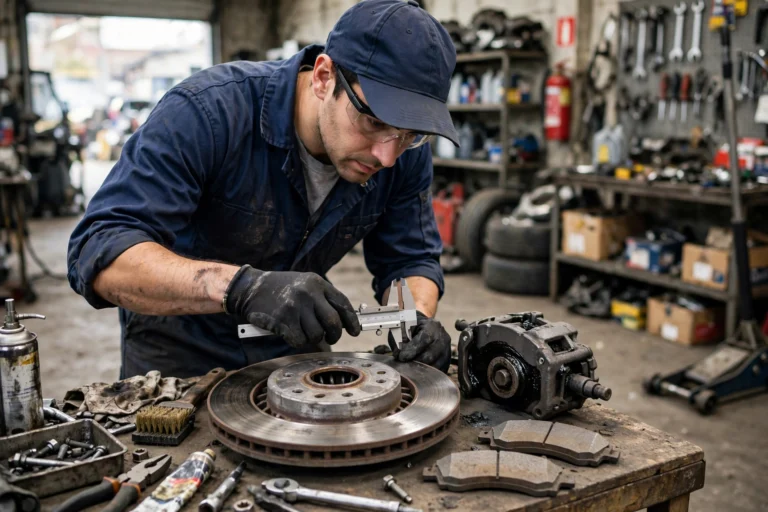
Winter magnifies brake problems. Worn pads, warped rotors, and tired brake fluid all perform worse when everything is cold and wet. If you hear squealing or grinding, feel a pulsing pedal, or notice the car pulling to one side under braking, get the brakes inspected before winter. A standard brake pad replacement runs $150 to $300 per axle at most US shops.
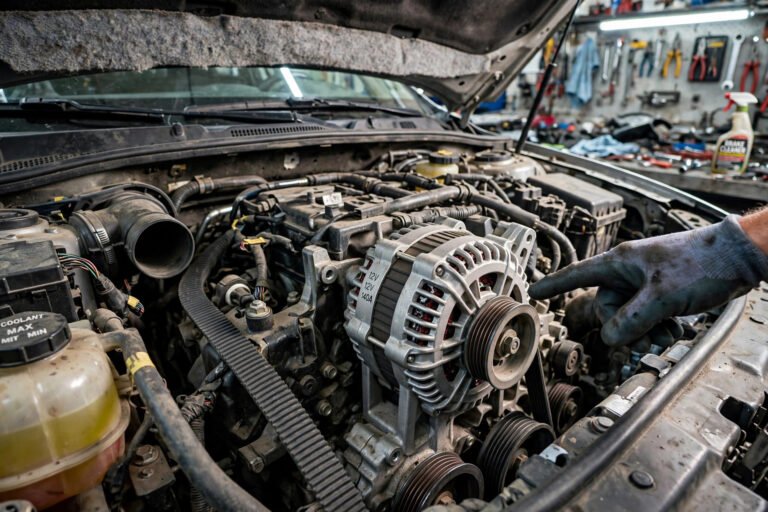
Pop the hood and glance at the belts and hoses. A serpentine belt with cracks or fraying can snap without warning, and a burst radiator hose in subzero weather ends your trip instantly. Both are cheap parts; the tow is the expensive part. While you are in there, make sure the heater and defroster actually work. Finding out the defroster is dead on an icy morning is a miserable discovery.
Pack a Winter Emergency Kit
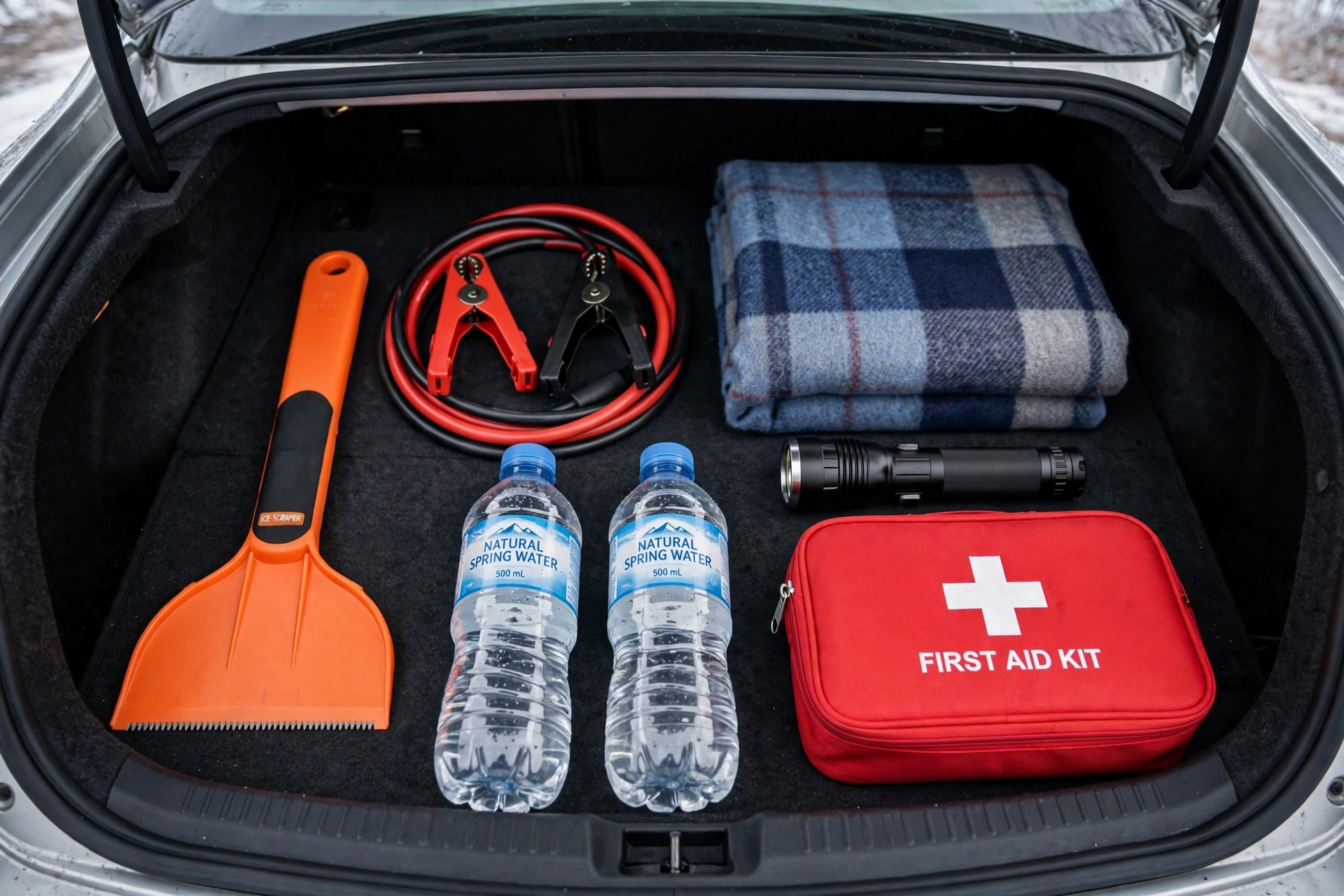
Even a perfectly winterized car can get stuck, and winter turns a minor delay into a real emergency fast. Keep these in the trunk or cargo area all season:
- Ice scraper and snow brush
- Jumper cables or a portable jump starter ($50 to $100, and worth every penny)
- Flashlight with fresh batteries
- Blanket or sleeping bag
- Extra warm clothing, hat, and gloves
- Bag of sand or kitty litter for traction if you get stuck
- Small shovel
- First aid kit
- Bottled water and a few energy bars
- Phone charger or power bank
The National Highway Traffic Safety Administration publishes its own winter driving safety checklist, and it is worth a read alongside this guide: NHTSA winter driving tips. Their advice on tire checks, batteries, and emergency supplies lines up exactly with what professional mechanics recommend.
What Winterizing Your Car Costs in the US
You do not need to do everything at a shop. Here is what the common winter prep items cost, DIY versus professional.
| Winter prep item | DIY cost | Shop cost (typical US) |
|---|---|---|
| Wiper blade replacement | $30 to $60 for a pair | $50 to $90 |
| Winter washer fluid swap | $5 to $10 | Included with service |
| Battery test | Free at parts stores | Free at parts stores |
| Battery replacement | $100 to $250 | $130 to $300 installed |
| Set of 4 winter tires | $400 to $800 | $500 to $1,000 mounted and balanced |
| Coolant flush and refill | $30 in coolant | $100 to $170 |
| Oil change (winter grade) | $30 to $50 | $50 to $100 |
| Brake pad replacement | $50 to $100 in parts | $150 to $300 per axle |
| Winter emergency kit | $60 to $120 | Not applicable |
A solid DIY winter prep session with new wipers, washer fluid, a battery test, and an emergency kit can cost under $150. Even a full shop visit with winter tires lands in a range far below the cost of one winter accident or a single emergency tow in a storm.
Common Winterizing Mistakes to Avoid
Warming up the car for 10 minutes. Modern fuel-injected engines need about 30 seconds of idle before driving gently. Long idling wastes fuel, builds carbon, and warms the engine far slower than driving does. Start it, clear the windows, and go easy for the first few minutes.
Pouring hot water on an icy windshield. The sudden temperature shock can crack the glass. Use the defroster, an ice scraper, and patience instead.
Ignoring the gas tank. Keep the tank at least half full through winter. It reduces condensation in the tank and guarantees you have fuel to run the heater if you get stranded.
Forgetting the door seals. A thin wipe of silicone lubricant on the rubber door seals stops them freezing shut overnight. It takes two minutes and saves a lot of swearing.
Skipping the test drive after prep. After any brake, tire, or fluid work, take a short drive and confirm everything feels right before the first storm does the testing for you.
Frequently Asked Questions
When should I winterize my car?
Aim for October or early November, before the first hard freeze. In snow-belt states, tire shops get booked solid once the first snow is forecast, so mounting winter tires early also saves you a long wait.
Do I really need winter tires, or are all-seasons enough?
It depends on where you live. In states with regular snow and ice, winter tires stop shorter and grip far better than all-seasons; the rubber stays flexible in cold that hardens all-season compounds. In mild-winter states, good all-seasons with healthy tread are perfectly fine.
How cold is too cold for a car battery?
There is no single cutoff, but battery power drops fast below freezing. At 0°F a battery can deliver only about half its rated cranking power. If your battery is over 3 years old, have it tested before winter; weak batteries almost always fail on the coldest morning, not a mild one.
Should I change my oil before winter?
If an oil change is due within the next couple of thousand miles, do it before winter and use the winter viscosity your owner’s manual recommends. Fresh oil with the right cold-flow rating makes cold starts noticeably easier on the engine.
Is it bad to drive with the check engine light on in winter?
It depends on the cause, but winter is the worst time to ignore it. A steady light with no symptoms can often wait for a scheduled diagnosis, but a flashing check engine light means an active misfire that can damage the catalytic converter. Get a flashing light checked immediately, in any season.
Final Thoughts
Winterizing your car is one of the highest value afternoons you can spend as a car owner. Tires with real tread, a tested battery, the right fluids, working wipers and lights, and a stocked emergency kit cover nearly every winter roadside scenario. Do it in October, not during the first storm warning, and winter becomes something you drive through confidently instead of something you survive. Your future self, warm and moving while others wait for a tow, will thank you.
Before the first hard freeze, check your brakes as well as your tires: if the pads are thin or the pedal feels soft, review how much does a brake job cost so winter brake work does not catch you by surprise.