How to Prevent E-Bike Theft: Best Locks and Tips for US Riders in 2026
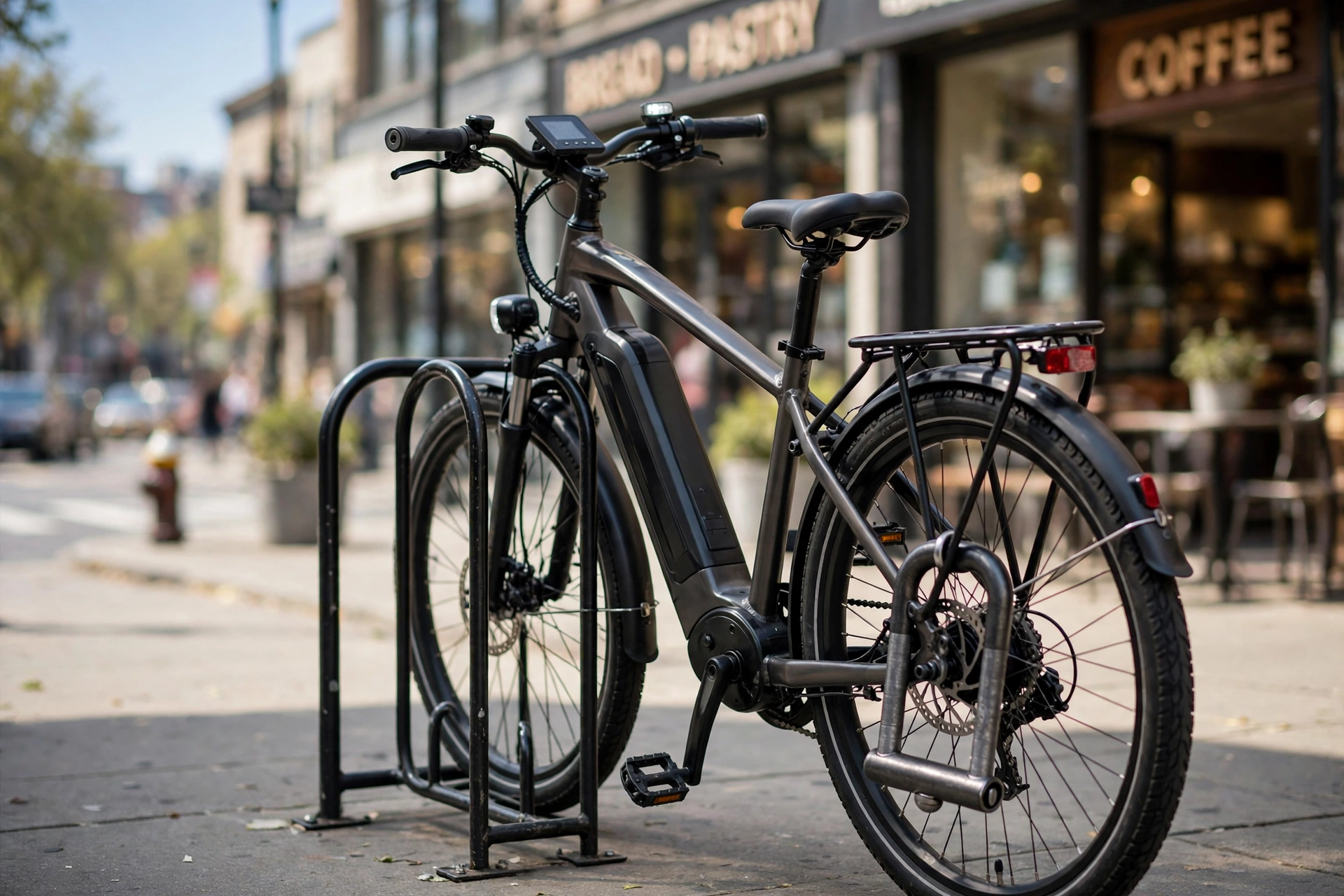
An e-bike is one of the best purchases a rider can make, and one of the easiest things to lose. A good e-bike costs $1,500 to $3,000 or more, and that price tag makes it a prime target. Bike theft has always been a problem in US cities, but e-bikes made it worse. They are valuable, easy to resell, and their parts alone can fetch hundreds of dollars.
The good news is that most e-bike thefts are crimes of opportunity. A thief walks past a row of bikes, spots the one with a thin cable lock or no lock at all, and takes it in under a minute. A few smart habits and the right lock change that calculation completely. Thieves want a quick, quiet steal. Your job is to make your bike the hardest one on the rack.
This guide covers the locks that actually work, how to use them properly, where to park, and what to do with your battery, GPS trackers, registration, and insurance so your e-bike stays yours.
Why E-Bikes Are a Prime Target for Thieves
Understanding why thieves want your e-bike helps you protect it. First, the resale value is high. A stolen e-bike can be sold quickly on local marketplaces, often for $800 to $1,500, even without a charger or paperwork. Second, the parts are valuable on their own. A replacement battery alone sells for $400 to $800, and motors, displays, and wheels all have a ready secondhand market.
Third, e-bikes are easy to move. Many weigh 50 to 70 pounds, which sounds heavy, but two people can lift one into a van in seconds. A thief with an angle grinder can cut through a cheap lock in under a minute, and a battery powered grinder is quiet enough to use on a side street at night. Finally, many owners make it easy. Surveys of bike theft victims keep finding the same pattern: the bike was locked with a cable, locked only through a wheel, or left outside overnight in the same spot every day.
None of this means you cannot own an e-bike safely. It means the basics matter more than most riders think.
The Best Types of E-Bike Locks
Not all locks are equal, and the difference is measured in seconds. A cable lock can be cut with small hand tools. A good U-lock or folding lock needs power tools and several noisy minutes. Thieves avoid noise and time, so your lock choice is your first line of defense.
Look for independent security ratings when you shop. Sold Secure rates locks as Bronze, Silver, Gold, and Diamond, and Diamond is the highest. ART ratings use a similar star system. A lock with a Gold or Diamond rating has been tested against real cutting and picking tools.
| Lock Type | Security Level | Typical Price | Best For |
|---|---|---|---|
| Heavy-duty U-lock | High | $70 to $150 | Daily commuting and city parking |
| Folding lock | High | $80 to $180 | Riders who want a compact lock to carry |
| Heavy chain lock | High | $90 to $200 | High-theft areas and longer stops |
| Cable lock | Low | $15 to $40 | Quick stops only, never as your only lock |
| Smart lock with alarm | Medium to high | $100 to $250 | Extra deterrent with app alerts |
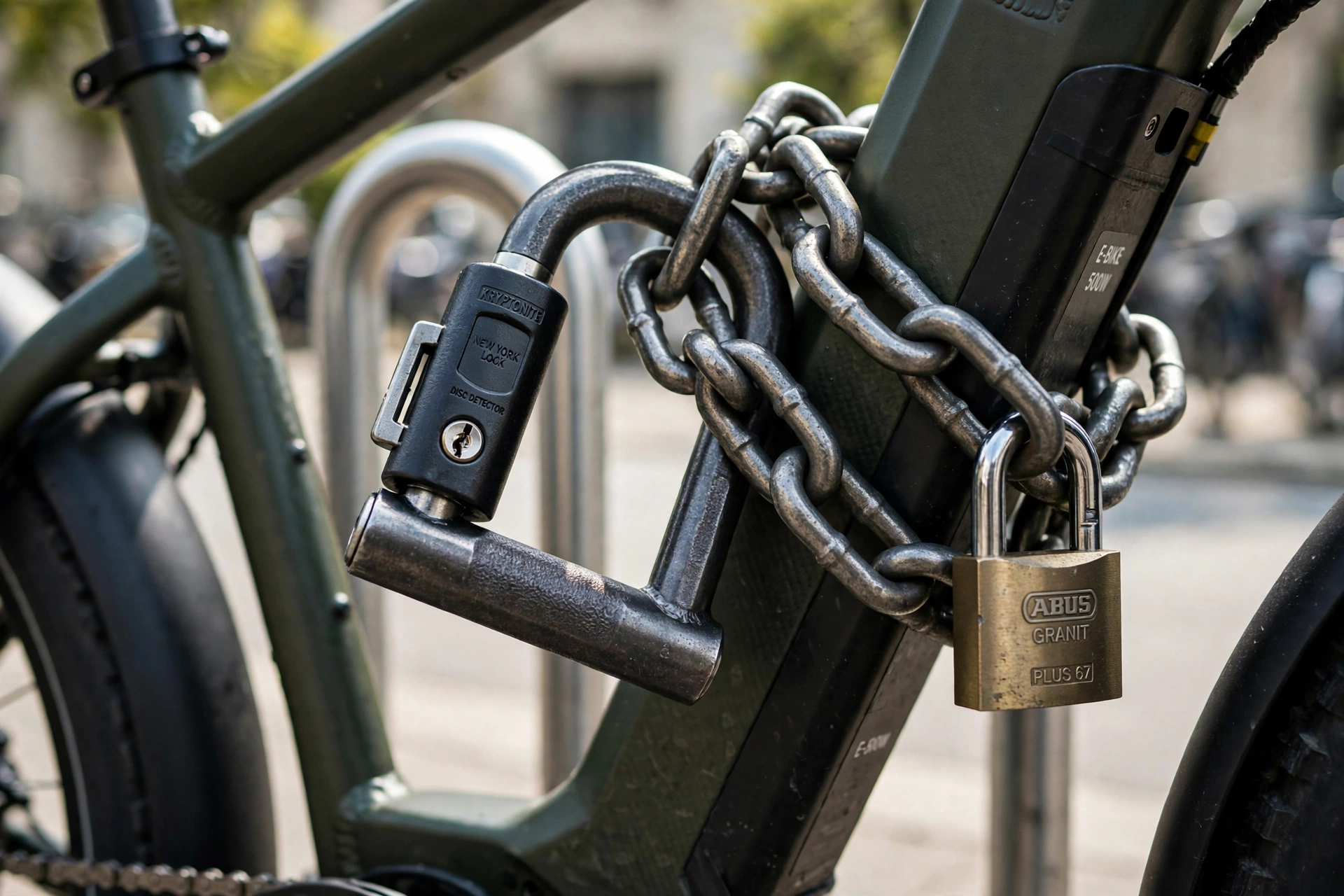
A U-lock is the best all-around choice for most riders. It is strong, relatively light, and easy to carry on a frame mount. A folding lock offers similar security and folds down small enough to fit in a bag. A heavy chain is the strongest option of all, but it is heavy to carry, so it works best as a second lock you keep at work or at home.
A cable lock should never be your only lock. Use it only as a second lock to secure a front wheel while a U-lock protects the frame and rear wheel. If you are choosing your first lock, spend at least $70. A $20 lock protects a $20 bike, not a $2,000 e-bike.
Two locks beat one lock. In a high-theft city, pairing a U-lock with a chain or folding lock forces a thief to defeat two different tools, and most will simply move on to an easier bike. When you pick your bike, think about security from the start. Our guide to the best e-bike for commuting in 2026 covers frame styles and features that make daily locking easier.
How to Lock Your E-Bike Properly
A great lock used badly is barely better than a cheap one. Locking technique matters as much as the lock itself, and most riders get at least one part wrong.
Lock the frame, not just a wheel. A wheel can be removed in seconds with a quick-release lever, so a lock through the wheel alone leaves the rest of the bike free. Pass the lock through the frame triangle and the rear wheel together, then around a fixed object.
Choose a solid, fixed object. A proper bike rack, a thick steel post, or a railing bolted to the ground all work. Avoid thin signposts a thief can lift the bike over, wooden fences that can be cut, and short railings the bike can be slipped off. Give the rack a shake before you lock up. If it wobbles or moves, find another one.
Keep the lock off the ground. A lock resting on the pavement gives a thief a surface to smash it against with a hammer. Hold it high on the frame, with the keyhole facing down so water and dirt stay out.
Fill the space inside the U-lock. A thief uses leverage and cutting tools, and empty space inside the shackle makes both easier. Pick a lock size that fits snugly around your frame, wheel, and the rack with as little slack as possible.
Lock in a busy, well-lit spot. Thieves prefer quiet corners and dark streets where nobody will notice an angle grinder. A rack in front of a busy store, near a security camera, or under a streetlight is far safer than a hidden rack behind a building.
If your front wheel has a quick-release lever, lock it too. Either use a second cable through the front wheel or replace the quick-release skewer with a locking skewer that needs a special key. A front wheel alone can cost $200 or more to replace.
Where to Park (and Where Never to Park)
Where you leave your e-bike matters as much as how you lock it. The safest place is indoors: a garage, a bike room at work, or inside your apartment. If your building has a secure bike room, use it every day, and still lock the bike inside the room. Bike rooms get broken into too.
At work, ask about indoor bike parking or a secure cage. Many employers now offer it, and a bike stored inside a staffed building is far safer than one on the street. If you ride to a gym or a store, use the rack closest to the entrance, in view of windows and foot traffic.
Never leave your e-bike in the same outdoor spot overnight, every night. Thieves watch patterns. A bike that appears at the same rack at the same time each evening is an easy target to plan around. If you must park outside regularly, vary the spot and the time when you can.
Avoid leaving your bike outside for days at a time. A bike covered in dust with a flat tire signals that nobody is watching it, and it invites a thief to take their time. Even a short trip deserves a proper lock, because most thefts happen in minutes, not hours.
If you store your bike at home for the winter, security still counts. Our guide on how to store an e-bike for winter covers safe indoor storage, battery care, and rust prevention in one checklist.
Take the Valuables With You
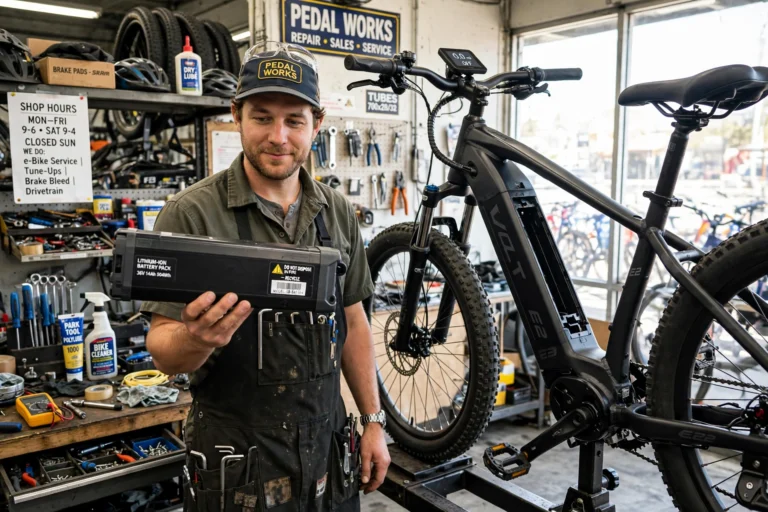
Your battery is the most valuable single part of your e-bike, and it takes ten seconds to remove on most models. Take it with you every time you park in a public place. A bike without a battery is worth far less to a thief, harder to ride away, and harder to sell. It also protects the battery itself from heat, cold, and rain.
Remove the display too if it pops off easily. Displays cost $100 to $300 to replace, and they are a quick grab for a thief. Take your lights, bags, and any accessories that unclip. A bare bike with no extras is a less tempting target.
Check whether your wheels use quick-release levers. If they do, consider swapping them for locking skewers or a security axle set, which cost about $30 to $60. That small upgrade stops a thief from walking off with a wheel while the frame stays locked.
Some riders carry a lightweight cover for longer stops. A cover hides the brand, the battery mount, and the display, so a thief cannot tell at a glance whether the bike is worth the effort. It is a simple trick, and it works best combined with a good lock.
GPS Trackers and Alarms Worth the Money
A lock stops a theft. A tracker helps you get the bike back after one. The two work together, and trackers have become cheap enough that every e-bike owner should consider one.
An Apple AirTag or a similar Bluetooth tracker costs about $25 to $35 and hides easily under a saddle, inside a bottle cage, or in a reflector mount. It will not stop a thief, but it can show you where the bike went, and police have recovered many stolen bikes this way. Hide it well, because a thief who spots it will throw it away.
Dedicated GPS trackers cost $50 to $100 plus a monthly subscription of $5 to $10. They report the bike’s location in real time, work over longer distances than Bluetooth, and send alerts when the bike moves. They are the better choice if you park in high-risk areas or own a bike worth $2,000 or more.
Motion alarms cost $25 to $60 and attach to the frame or the disc brake. They sound a loud alarm when the bike is moved, which scares off casual thieves and draws attention in a busy area. An alarm alone will not stop a determined thief, but combined with a good lock it adds a real layer of protection.
No tracker or alarm replaces a lock. Think of them as your backup plan, not your main defense.
Register Your Bike and Record the Serial Number
Registration is free, takes ten minutes, and is the single most useful step you can take for recovery. Register your e-bike on Bike Index and 529 Garage, the two largest free registries in the US. Police departments and bike shops check these databases when they recover stolen bikes.
Write down your serial number before you need it. It is usually stamped under the bottom bracket, on the head tube, or near the rear dropout. Take a clear photo of it, and keep the photo somewhere safe. Photograph the whole bike from both sides, note the brand, model, color, and any unique marks or accessories, and keep your receipt and the box the battery came in if you still have them.
If your bike is stolen, this information is what police and registries need to identify it. A bike with no serial number on file is nearly impossible to prove yours, even if it turns up.
E-Bike Insurance: Is It Worth It?
For many owners, the answer is yes, especially if your e-bike cost more than $1,500 or you park it outside every day. Check your homeowners or renters policy first, because some cover e-bikes, but many exclude them or cap payouts for motorized bikes at $500 to $1,000. That is far less than a replacement costs.
Standalone e-bike insurance usually costs $100 to $300 a year. It typically covers theft, damage from crashes, and sometimes liability if you injure someone while riding. Some policies also cover the battery and accessories, and a few include roadside help. Compare two or three providers, check the deductible, and confirm whether the policy covers theft away from home, which is the scenario most owners care about.
Insurance does not prevent theft, but it turns a $2,000 loss into a $200 deductible. For a daily commuter, that peace of mind is worth the price.
What to Do If Your E-Bike Is Stolen
Act fast, because the first 24 hours matter most. File a police report right away, and give them the serial number, photos, and the exact time and place it was taken. Mark the bike as stolen on Bike Index and 529 Garage so shops and buyers can see the alert.
Check local listings on Craigslist, Facebook Marketplace, and OfferUp for the next few days. Stolen bikes often appear for sale quickly, sometimes with the battery and accessories sold separately. If you find your bike listed, do not confront the seller yourself. Tell the police and let them handle it.
Tell your insurer the same day if you have a policy, and check nearby security cameras. Stores and apartment buildings sometimes keep footage for only a few days, so ask quickly. Share the theft on local cycling groups and neighborhood apps, because riders spot stolen bikes more often than anyone expects.
Frequently Asked Questions
What is the best lock for an e-bike?
A heavy-duty U-lock or folding lock with a Sold Secure Gold or Diamond rating is the best choice for most riders. Spend at least $70, and add a second lock in high-theft areas. A cable lock alone is not enough for an e-bike.
Can I leave my e-bike outside overnight?
You should avoid it whenever possible. Overnight parking gives thieves hours of quiet time. If you must park outside overnight, use two high-quality locks, remove the battery and display, and park in a well-lit, busy spot with cameras nearby.
Will removing the battery stop thieves?
Removing the battery makes your bike much less valuable and harder to sell, which deters many thieves. It does not stop someone from stealing the frame, so always lock the frame to a fixed object as well.
Are GPS trackers worth it for e-bikes?
Yes. A hidden AirTag costs about $30 and a dedicated GPS tracker costs $50 to $100 plus a small monthly fee. Trackers do not prevent theft, but they greatly improve your chances of getting the bike back, and police have recovered many bikes this way.
Does homeowners insurance cover e-bike theft?
Sometimes, but often only partly. Many homeowners and renters policies cap payouts for motorized bikes or exclude them entirely. Check your policy’s limits, and consider standalone e-bike insurance for $100 to $300 a year if your bike is valuable.
Final Thoughts
Preventing e-bike theft is not about one magic product. It is about layers: a strong lock used correctly, smart parking, a battery that comes with you, a hidden tracker, a registered serial number, and insurance as a safety net. Each layer alone helps a little. Together, they make your bike a poor target.
Most thieves are looking for the easy win. A bike with a cheap lock, parked in a dark corner with its battery still on, is the easy win. A bike with a Gold-rated U-lock, a second lock, no battery, and a tracker is a job most thieves will skip. Spend the money on a good lock before you need it, register your bike today, and enjoy the ride knowing you did the work to keep it.