How Much Does a Coolant Flush Cost in 2026? Prices, Signs, and When You Need One for US Drivers
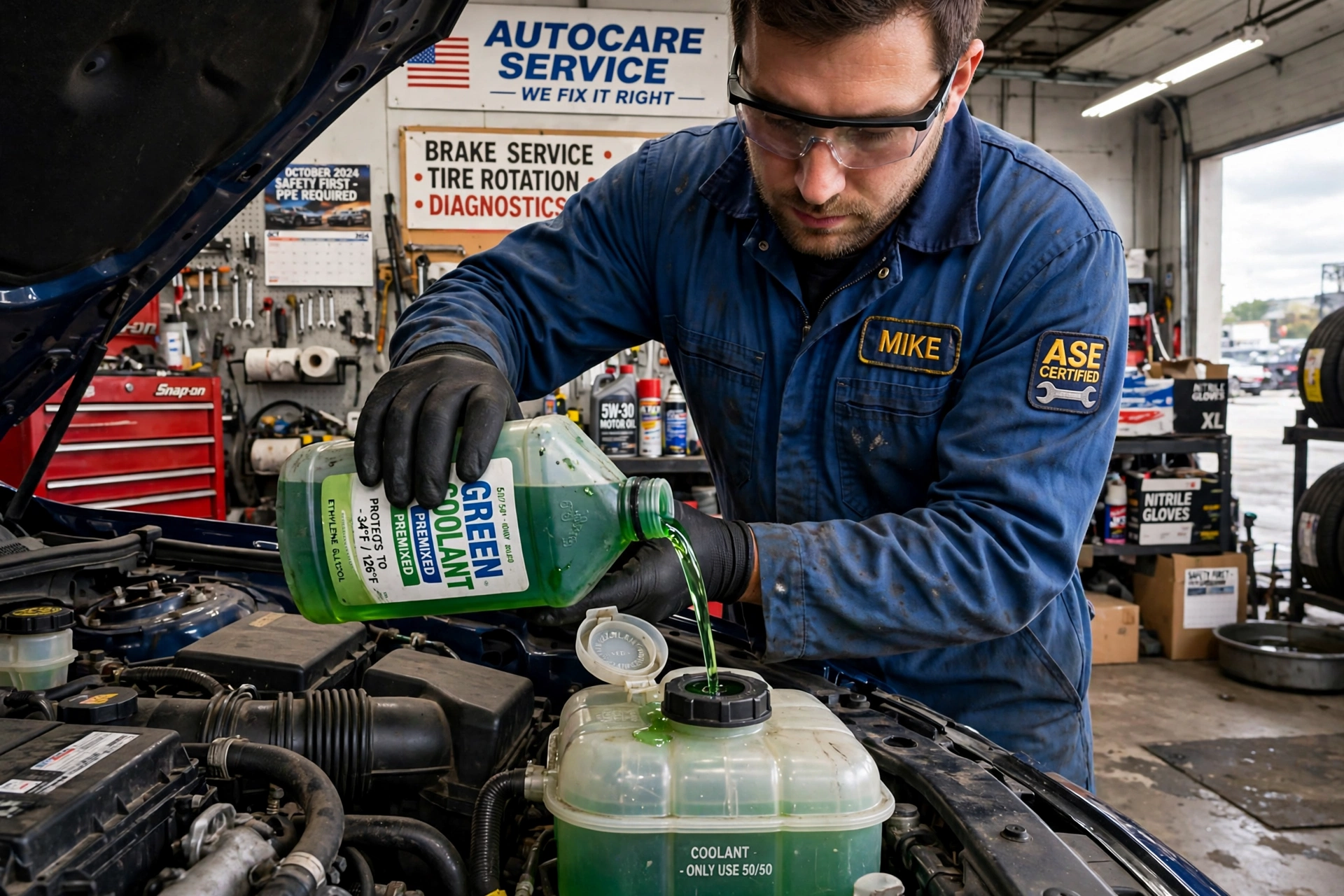
Your engine runs hot by design. Coolant is the fluid that keeps that heat under control, protects metal parts from corrosion, and stops the system from freezing in winter. Over time, though, coolant breaks down, picks up rust and scale, and loses its ability to protect your engine. That is when a coolant flush comes in. So, how much does a coolant flush cost in 2026? Most US drivers pay between $100 and $200 at a shop, with the average landing around $150. A simple drain and refill costs less, usually $70 to $120, while a full flush with a machine, new thermostat, or extra labor can push the bill past $200. The exact price depends on your car, your location, and what else the shop finds during the service. In this guide, you will learn what a coolant flush includes, what drives the price up or down, the warning signs that mean you should not wait, and how to decide between a shop service and a DIY job.
What Is a Coolant Flush?
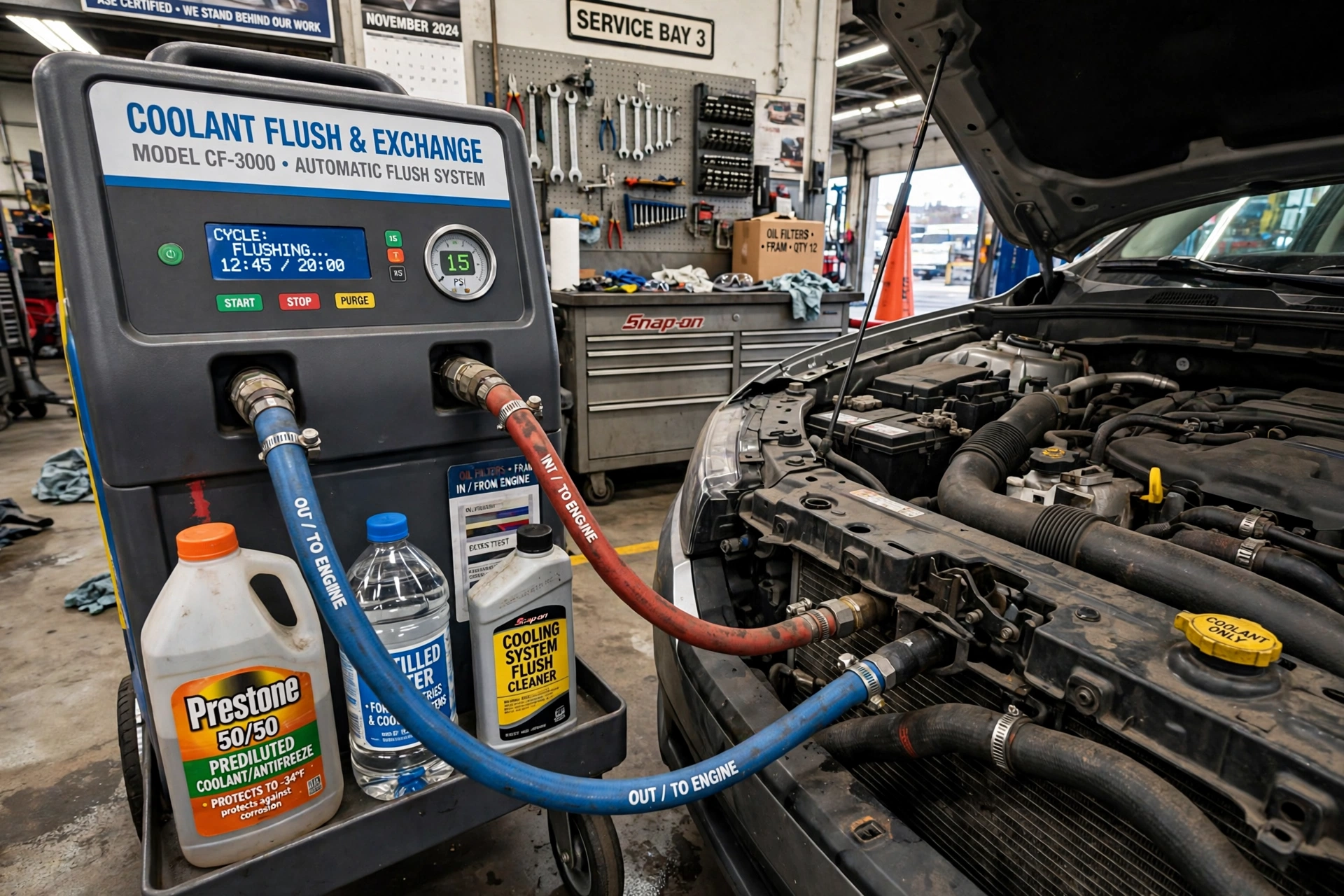
A coolant flush is a service that removes old coolant from your engine, radiator, heater core, and hoses, cleans out deposits, and refills the system with fresh coolant mixed to the right ratio. It is different from a simple drain and refill. A drain and refill only empties the radiator, which leaves a good amount of old fluid still sitting in the engine block and heater core. A full flush pushes clean water or a cleaning solution through the whole system first, so more of the old fluid and buildup comes out before fresh coolant goes in.
Most shops follow the same basic steps. They drain the old coolant, flush the system with water or a cleaner, inspect hoses and clamps, refill with the correct coolant type for your car, bleed air out of the system, and check for leaks and proper operating temperature. That last step matters a lot. Air trapped in the cooling system can cause overheating even with fresh coolant in place.
How Much Does a Coolant Flush Cost in 2026?
Here is what US drivers typically pay in 2026:
| Service | Typical Price Range | Best For |
|---|---|---|
| Drain and refill only | $70 to $120 | Cars with fairly clean coolant that just need a refresh |
| Full coolant flush (machine flush) | $100 to $200 | Most cars at a scheduled service interval |
| Flush plus thermostat replacement | $200 to $350 | Cars with a sticking thermostat or slow warm-up |
| Flush plus hose or water pump work | $250 to $600 or more | Older cars with worn cooling parts |
Luxury cars, trucks, and SUVs with larger cooling systems tend to cost more because they hold more coolant and sometimes need a specific, more expensive coolant type. European models often use a special formula that costs more per gallon than the standard green or orange coolant used in many US cars. Labor is the other big factor. A straightforward flush takes about one hour. If the shop has to remove splash guards, work around a tight engine bay, or bleed a system that is known to trap air, the job takes longer and the labor charge rises with it.
What Affects the Price?
Your vehicle. A compact sedan with a small four-cylinder engine costs less to service than a full-size truck, a diesel, or a luxury SUV. Bigger systems need more coolant, and some models have harder-to-reach drain plugs.
Coolant type. Coolant is not all the same. Green, orange, pink, and blue formulas serve different engines, and mixing the wrong type can cause sludge and damage. Your shop should use the type your owner’s manual specifies. The price per gallon varies, and some dealer-specific formulas cost more.
Your location. Shop labor rates in large cities on the coasts are usually higher than in smaller towns in the Midwest or South. A flush that costs $120 in one state can easily cost $180 in another, for the exact same car.
Extra parts. If the technician finds a cracked hose, a weak radiator cap, or a thermostat that sticks open, replacing it during the flush makes sense. It adds to the bill, but it is cheaper than coming back for a second visit and a second labor charge.
Dealer vs independent shop. Dealers usually charge the most, often $180 to $250 for a flush alone. Independent shops and national chains tend to charge $100 to $180. A good independent shop that follows your manual and uses the right coolant can do the job just as well for less.
Signs You Need a Coolant Flush
You do not need to guess. Your car gives clear warnings when the coolant is past its best:
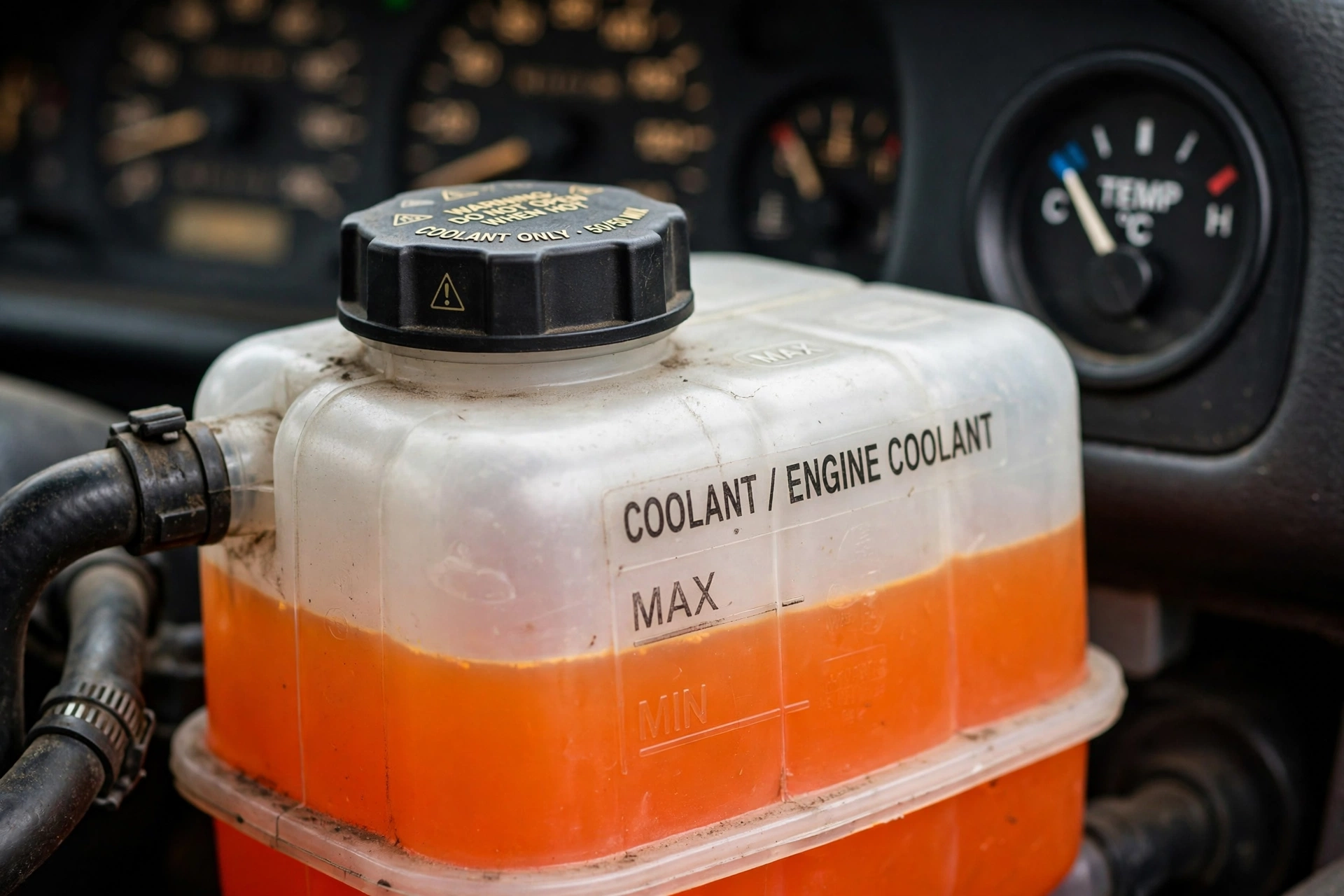
- Rusty or brown coolant. Fresh coolant is bright green, orange, pink, or blue depending on the type. If the fluid in the reservoir looks rusty, brown, or murky, it has picked up corrosion and needs to be replaced.
- Engine running hotter than normal. If the temperature gauge climbs higher than usual, especially in traffic or on hills, weak coolant or a partially blocked system could be the cause.
- Sweet smell or puddles under the car. Coolant has a sweet smell. A puddle under the front of the car, or that sweet smell after parking, points to a leak that should be checked right away.
- Heater not working well. If your heater blows lukewarm air even after the engine warms up, old coolant or air in the system could be blocking flow to the heater core.
- You hit the service interval. Most carmakers recommend a coolant change every 30,000 to 60,000 miles, or every 3 to 5 years, depending on the coolant type. Long-life coolants can last longer, but they still age. Check your owner’s manual for your car’s exact interval.
If you notice overheating, steam, or a sudden temperature spike, pull over safely and turn the engine off. Driving an overheating engine can warp the cylinder head and turn a $150 service into a repair bill in the thousands.
Coolant Flush vs Drain and Refill: Which Should You Choose?
A drain and refill is fine if your coolant is still fairly clean and you are simply keeping up with routine maintenance. It costs less and takes less time. A full flush is the better choice if the coolant looks dirty, if you have skipped services, if you are switching coolant types, or if the car has overheating or heater problems. The flush removes more old fluid and deposits, which gives the fresh coolant a clean system to work in. Ask the shop which service they are quoting. Some shops advertise a low flush price but only perform a drain and refill. A real flush should include a system flush step, not just a drain and a top-up.
Can You Do a Coolant Flush Yourself?
Yes, if you are comfortable working under the hood and you follow safety rules. A DIY flush costs about $30 to $60 in coolant and supplies. You will need the right coolant for your car, distilled water, a drain pan, basic tools, and a safe way to dispose of the old fluid. Coolant is toxic to pets and wildlife, so never pour it on the ground or down a storm drain. Most auto parts stores accept used coolant for recycling. The tricky parts are bleeding air from the system and disposing of the old fluid properly. Some cars have specific bleed procedures, and skipping them can leave air pockets that cause overheating. If you are unsure about the bleed step for your model, a shop service is worth the extra cost for peace of mind.
How to Save Money on a Coolant Flush
You can keep the cost down without cutting corners. Get quotes from two or three shops and ask each one to list exactly what is included. Bundle the flush with other scheduled work, like an oil change, so you pay for one visit instead of two. That pairing makes sense because both are routine fluid services, and you can read our guide to how much does an oil change cost to plan that visit. If your car is due for other fluid services too, ask about a package price, and check how much does a transmission fluid change cost so you can budget the full visit in one go.
Stick to the service interval in your manual. Flushing too often wastes money, but waiting too long risks corrosion, overheating, and expensive cooling system repairs. On-time maintenance is almost always the cheapest option.
Finally, fix small leaks early. A $20 radiator cap or a $40 hose replaced during a flush is far cheaper than a tow and a warped engine later.
When to Skip the Flush and Get a Diagnosis Instead
A flush is maintenance, not a repair. If your car is already overheating, losing coolant fast, blowing white smoke, or showing milky oil on the dipstick, do not just flush it and hope for the best. Those symptoms can point to a head gasket problem, a cracked head, or a failing water pump. Get a proper diagnosis first. A flush on a damaged engine will not fix the real problem and can waste money.
The Bottom Line
For most US drivers in 2026, a coolant flush costs $100 to $200, with $150 as a fair average for a full machine flush at an independent shop. A drain and refill costs less, while extra parts or dealer labor push the price higher. Watch for rusty coolant, higher temperatures, and weak heat, and follow your manual’s interval. Done on time, a coolant flush is one of the cheapest ways to protect your engine from one of the most expensive kinds of damage. For more on how coolant works and the different formulas used in modern cars, see the Wikipedia guide to antifreeze.
FAQ
How much does a coolant flush cost at a dealer in 2026?
A dealer coolant flush usually costs $180 to $250 in 2026. Independent shops typically charge $100 to $180 for the same service, and a drain and refill alone usually runs $70 to $120.
How often should you flush your coolant?
Most cars need a coolant flush every 30,000 to 60,000 miles or every 3 to 5 years. Long-life coolant can last longer. Always check your owner’s manual, since the interval varies by make, model, and coolant type.
Is a coolant flush worth it?
Yes, if your coolant is old, dirty, or due by mileage or time. Fresh coolant prevents corrosion, protects against freezing and overheating, and helps the water pump and thermostat last longer. It is far cheaper than an overheating repair.
Can I just top off coolant instead of flushing it?
Topping off is fine for a small drop in the reservoir level, but it does not remove old, broken-down fluid or deposits. If the coolant is discolored or past its service interval, a flush or drain and refill is the right fix, not just a top-up.
What happens if you never flush your coolant?
Old coolant turns acidic, corrodes metal parts, clogs narrow passages, and loses its freeze and boil protection. Over time that can cause overheating, water pump failure, heater core blockage, and in severe cases, head gasket damage.
And if your cabin AC is blowing warm air too, check how much does a car AC repair cost so you can plan both cooling jobs in one shop visit.