Best E-Bike for Commuting in 2026: How to Choose the Right One for US Riders
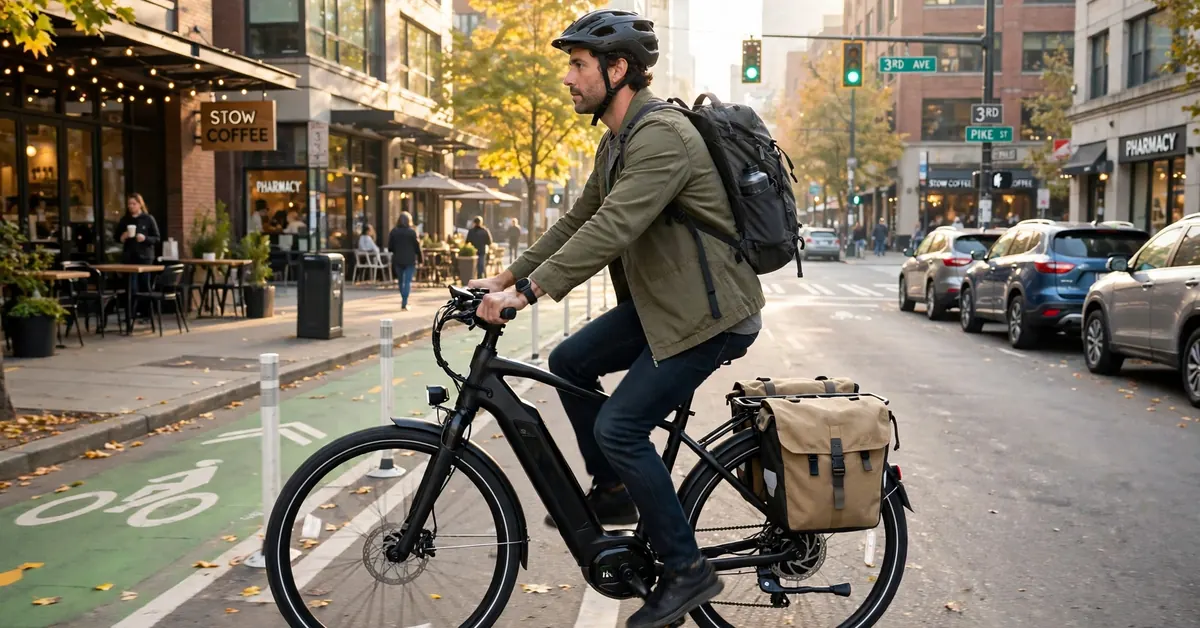
A good commuter e-bike can replace a car for most daily trips, and in 2026 it has never been easier to find one that fits your ride. The problem is choice: hundreds of models, confusing motor ratings, and prices from $800 to over $4,000. This guide cuts through the noise and shows how to pick the best e-bike for commuting based on your distance, terrain, and budget, so you buy once and ride happily for years.
First, Know Your Commute
Before comparing models, answer three questions honestly:
- How far is the ride? Under 5 miles is easy for almost any e-bike. 5 to 15 miles needs a bigger battery. Over 15 miles each way means you want a 500Wh battery or larger and a comfortable riding position.
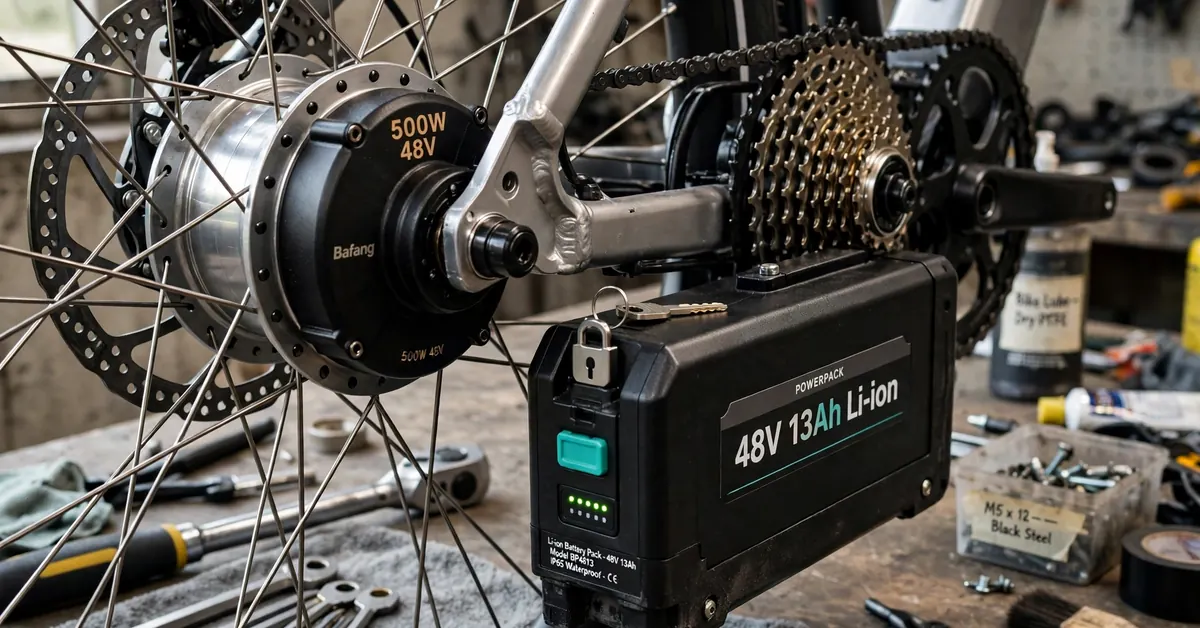
- How hilly is it? Flat city streets are fine with a 250W or 350W motor. Real hills need 500W or more, or a mid-drive motor that uses the gears.
- Where will the bike live? Apartment stairs and office storage favor lighter bikes (under 50 pounds) and folding models. A garage makes weight almost irrelevant.
Write these answers down. They decide everything that follows.
Motor Power: What the Watts Actually Mean
Motor ratings confuse everyone because brands measure them differently. Here is the practical version for US riders:
| Motor size | Best for | What it feels like |
|---|---|---|
| 250W | Flat cities, short rides | Gentle help, like a strong tailwind |
| 350W | Mixed city riding | Confident starts at lights and mild hills |
| 500W | Hills and heavier riders | Strong pull up real grades |
| 750W | Steep hills, cargo, heavier loads | The legal US Class 3 ceiling in most states |
US e-bikes are grouped into e-bike classes: Class 1 (pedal assist to 20 mph), Class 2 (throttle plus assist to 20 mph), and Class 3 (pedal assist to 28 mph). For commuting, Class 3 saves real time on longer rides, but check your local rules first. Some bike paths limit Class 3 bikes.
If your commute has serious hills, read our honest take on whether a 250W e-bike motor is enough for hills before you buy. Many riders underestimate hills and regret it.
Battery and Range: The Number That Matters Most
Advertised range is measured in perfect conditions: a light rider, flat ground, low assist. Real range is usually 60 to 75 percent of the claim. Use this rule: buy a battery rated for at least 1.5 times your round-trip distance.
| Battery size | Real-world range (mixed assist) | Good for |
|---|---|---|
| 400Wh | 20 to 30 miles | Short commutes under 5 miles each way |
| 500Wh | 30 to 45 miles | Most commuters |
| 625Wh and up | 45 to 70 miles | Long commutes and cargo |
A removable battery is a big practical win. You can charge it at your desk, which matters if your building has no bike charging, and it makes winter storage easier. Cold weather cuts range noticeably, so if you ride through winter, the bigger battery pays for itself.
Battery care is the other half of range. Our guide on how long e-bike batteries last covers charging habits that can add years to a battery’s life, and those habits start on day one.
The Commuter Features Worth Paying For
A commuter e-bike is not a weekend toy, so some features matter far more than marketing suggests:
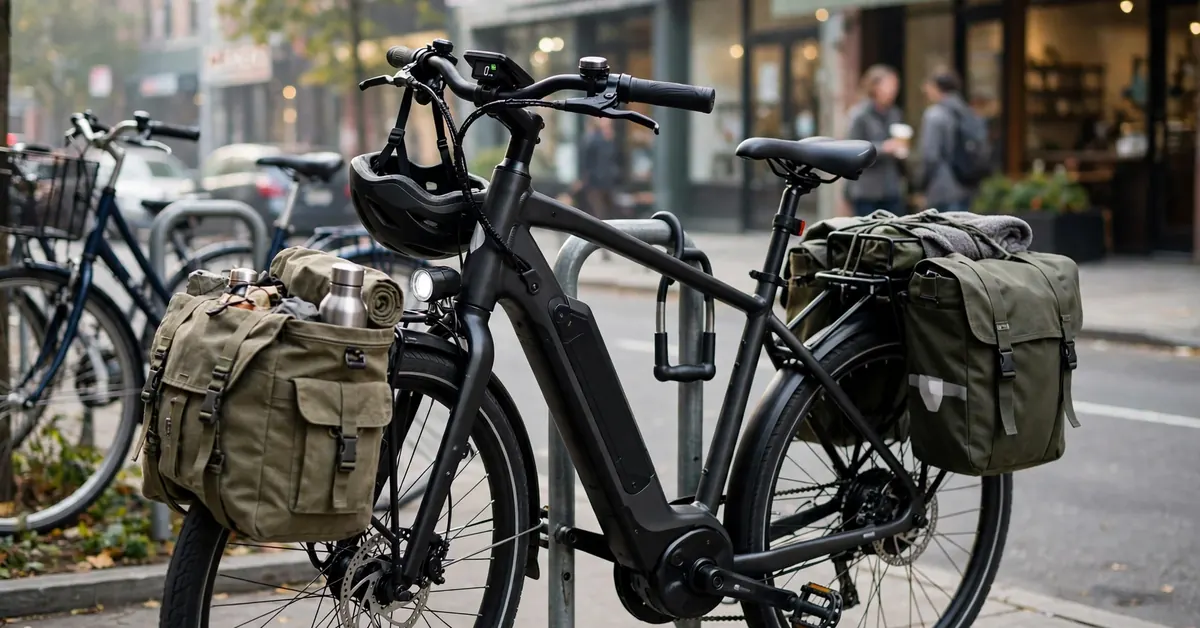
- Fenders and a rear rack. Riding to work without fenders means arriving wet after rain. A rack with panniers beats a sweaty backpack every day.
- Integrated lights. Built-in lights wired to the battery mean you never forget them, and drivers see you better.
- Hydraulic disc brakes. E-bikes are heavier and faster than regular bikes. Hydraulic brakes stop you reliably in rain and on descents. Mechanical brakes work, but hydraulics are worth the upgrade.
- Puncture-resistant tires. A flat on the way to work ruins a morning. Tires with puncture protection layers are cheap insurance.
- A comfortable, upright position. Aggressive racing posture gets old fast on a daily ride. Flat bars and a slightly upright position win for commuting.
- A display you can read in sunlight. A dim display is useless at 7 a.m. in summer glare.
Things you can skip at first: suspension (unless your roads are truly rough), a suspension seatpost upgrade later is cheaper, and fancy app connectivity. Focus your money on motor, battery, brakes, and tires.
Budget Tiers: What You Get at Each Price
Under $1,000
Basic hub motors, smaller batteries, and mechanical brakes. Fine for flat, short commutes if you buy from a brand with real US support. Watch out for no-name brands with no spare parts.
$1,000 to $2,000: The Sweet Spot
This is where most commuters should shop. You get 500W motors, 500Wh batteries, hydraulic brakes, fenders, racks, and integrated lights from established brands. Reliability jumps sharply in this range.
$2,000 to $3,500
Mid-drive motors, larger batteries, better components, lighter frames, and dealer support. Worth it for long or hilly commutes and riders who will put on thousands of miles a year.
Over $3,500
Premium cargo bikes, high-end mid-drives, and belt drives that need almost no maintenance. Justified for car replacement and heavy cargo, not for a 3-mile flat ride.
A Simple Decision Framework
If you want a shortcut, follow this:
- Short flat commute (under 5 miles): 350W hub motor, 400 to 500Wh battery, $1,000 to $1,500.
- Medium mixed commute (5 to 12 miles): 500W hub or mid-drive, 500Wh battery, hydraulic brakes, $1,500 to $2,500.
- Long or hilly commute (12+ miles): 500W to 750W mid-drive, 625Wh or larger battery, $2,000 to $3,500.
- Cargo or kid-hauling: Cargo-specific frame, 750W motor, 625Wh or larger battery, $2,500 and up.
Before You Buy: The Test Ride Checklist
Never buy a commuter e-bike without riding it first, or at least buying from a seller with a real return policy. On the test ride, check:
- Does it start smoothly, or lurch?
- Can you reach the ground comfortably at stops?
- Are the brakes strong with one finger?
- Is the display readable in daylight?
- Can you lift it onto a rack or up your stairs?
If a bike fails two or more of these, keep looking. Comfort on a 10-minute ride predicts comfort on a 10-month commute.
Frequently Asked Questions
How much should I spend on a commuter e-bike?
Most US commuters get the best value between $1,500 and $2,500. Below $1,000, reliability and support drop fast. Above $3,000, you pay for premium parts most commuters do not need.
Is a 750W motor legal everywhere in the US?
E-bike classes are set by state law, and most states allow Class 3 bikes with motors up to 750W. Some local paths restrict Class 3. Check your state and city rules before buying, and confirm the bike’s class rating.
How long does a commuter e-bike battery last?
A quality lithium battery lasts 3 to 5 years or roughly 500 to 1,000 full charges before capacity drops noticeably. Good charging habits, avoiding full discharges and extreme heat, stretch that further.
Can I ride an e-bike in the rain?
Yes, most commuter e-bikes are built for wet weather, with sealed electronics and fenders. Avoid submerging the motor or battery, dry the bike after heavy rain, and check brake pads more often in wet seasons.
Do I need a license or insurance for an e-bike?
In most US states, no license, registration, or insurance is required for Class 1, 2, and 3 e-bikes, which are treated like bicycles. A few states and cities have exceptions, so verify your local rules.
Final Thoughts
The best e-bike for commuting is not the most powerful or most expensive one. It is the one that matches your distance, your hills, and your storage, with a battery big enough for real-world range and brakes strong enough for daily traffic. Use the tiers above, test ride before you buy, and spend your money on motor, battery, brakes, and tires first.
For more on the e-bike side of AutoSparq, browse the Electric Bikes category for guides on batteries, motors, and maintenance, and check our winter car care guide if your commute includes a car for the coldest months.
For a clearer comparison of the three classes before you buy, see our guide to e-bike classes explained.