E-Bike vs Electric Scooter: Which Is Better for US Commuters in 2026?
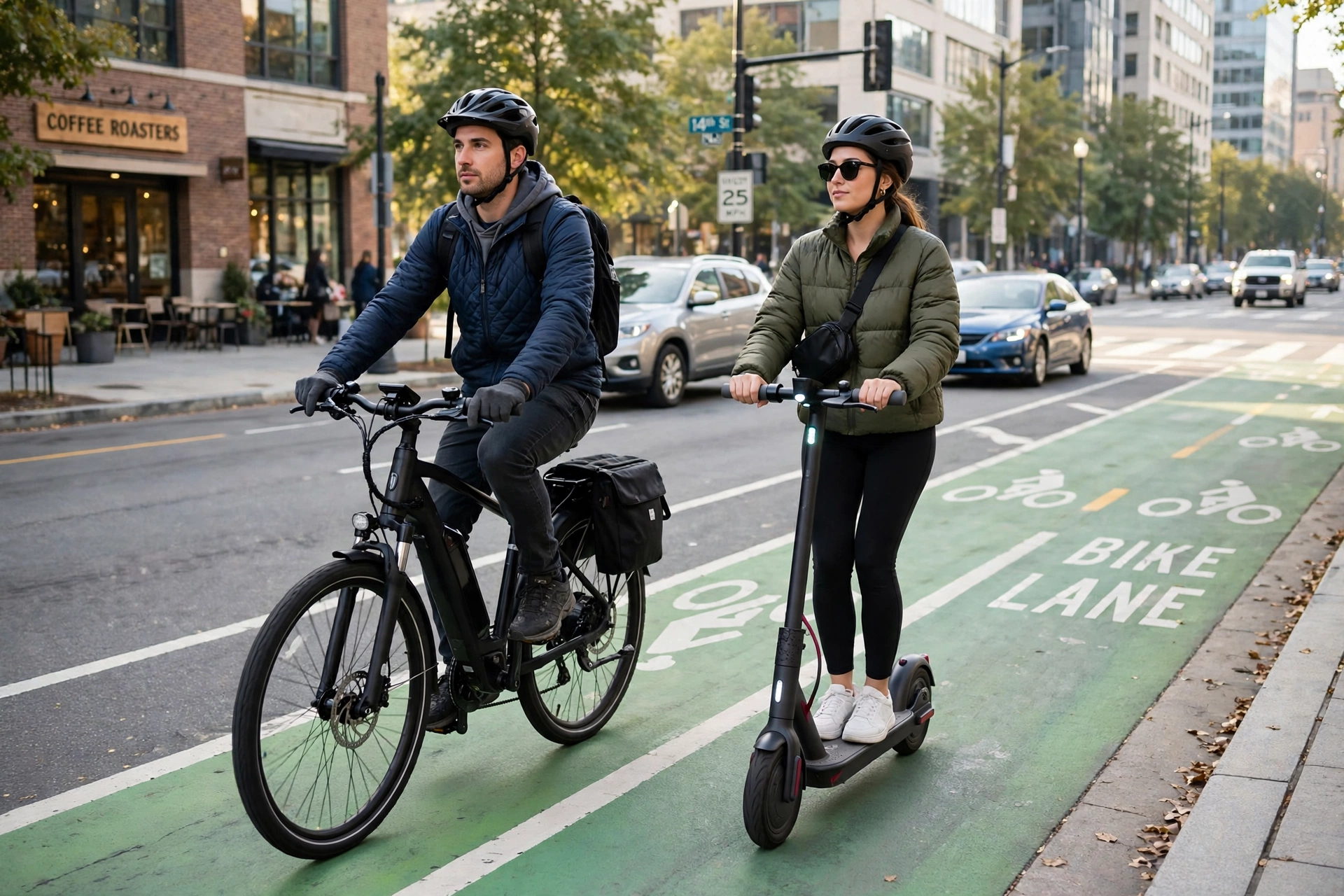
If your daily commute is under 20 miles, you have probably looked at both an e-bike and an electric scooter and wondered which one is the smarter buy. Both skip gas, both dodge traffic, and both cost far less than a second car. But they ride very differently, and the right choice depends on your distance, your roads, and how much you want to carry.
This guide compares the two side by side on speed, range, cost, comfort, safety, and the law, using real US prices and rules for 2026, so you can pick the ride that fits your commute instead of the one with the flashiest ad.
E-Bike vs Electric Scooter at a Glance
Here is the quick comparison if you only have a minute. The rest of this guide explains each row in detail.
| Feature | E-Bike | Electric Scooter |
|---|---|---|
| Typical top speed | 20 to 28 mph | 15 to 25 mph |
| Typical range per charge | 30 to 60 miles | 15 to 40 miles |
| Purchase price | $1,000 to $3,500 | $300 to $1,500 |
| Riding position | Seated, like a bicycle | Standing on a deck |
| Cargo capacity | Racks and panniers, up to 50 pounds | Small bag or backpack only |
| Best commute distance | 5 to 20 miles | Under 5 miles |
| Weather protection | Better, you can add fenders and rain gear | Limited, standing in the rain is miserable |
| Theft risk | High, needs a strong lock | High, but folds and goes indoors |
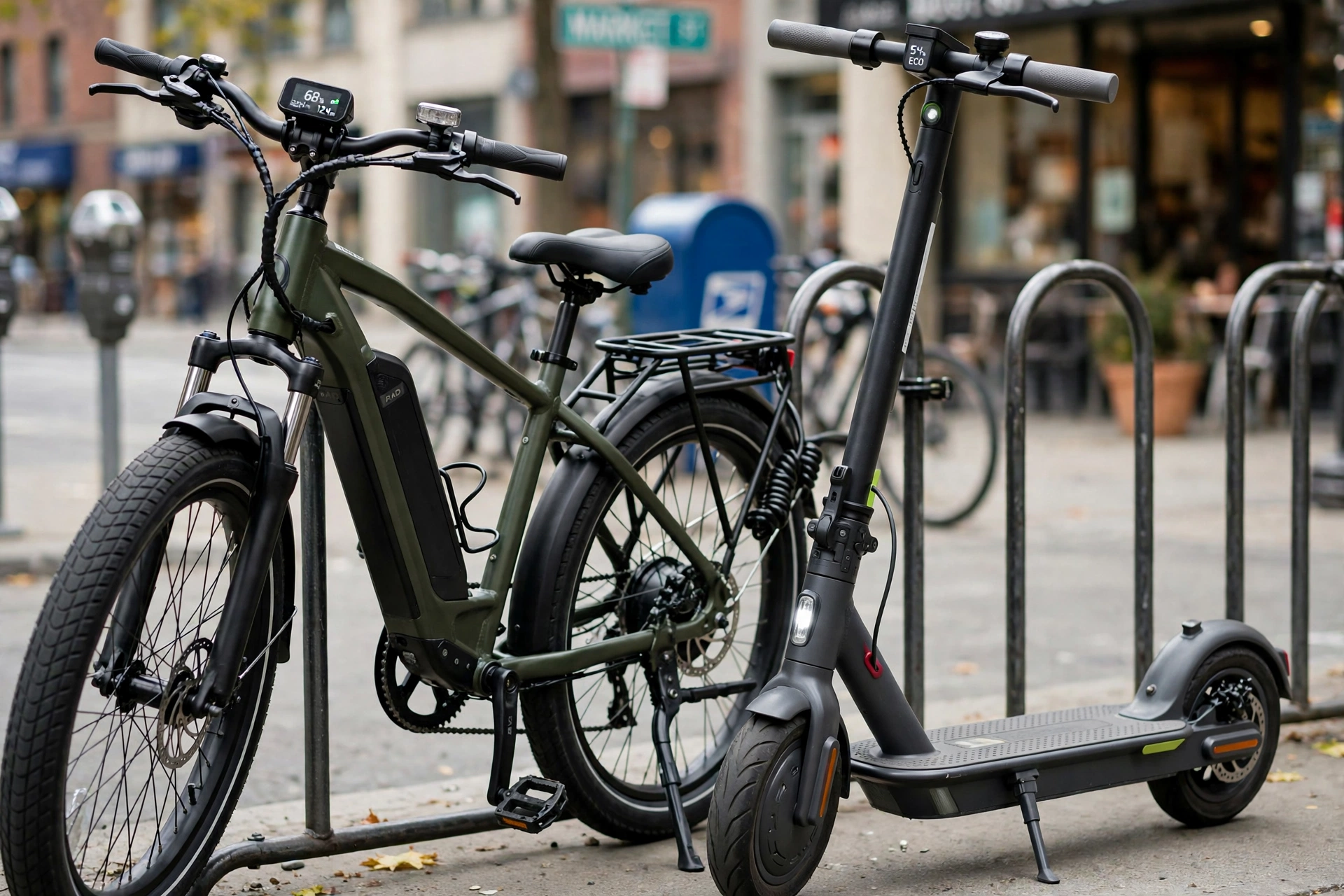
An e-bike is a bicycle with a motor that helps you pedal. An electric scooter is a stand-up platform with a motor, a throttle, and small wheels. That one difference in riding position drives almost every trade-off in this guide.
Speed and Range: How Fast and How Far
Most Class 2 e-bikes in the US top out at 20 mph on throttle, and Class 3 e-bikes reach 28 mph with pedal assist. Good commuter electric scooters usually top out between 15 and 25 mph, with most city models sitting near 19 mph. On paper the speeds look close, but the real-world gap is bigger than the numbers suggest.
An e-bike holds its speed better on hills and in a headwind because you add your own pedaling power to the motor. A scooter relies on its motor alone, so it slows down on climbs and drains its battery faster when you push it hard. If your route has a steep hill, an e-bike will feel much stronger.
Range tells the same story. A typical commuter e-bike covers 30 to 60 miles on a charge, while most electric scooters manage 15 to 40 miles. The gap widens in cold weather, when small scooter batteries lose capacity faster than larger e-bike batteries. For a 10 mile round trip, either one works. For a 20 mile round trip, the e-bike is the safer choice because you still have charge left at the end of the day.
If you want the full breakdown of e-bike speed classes, our guide on e-bike classes explained shows what Class 1, Class 2, and Class 3 mean for your commute.
Cost: Purchase Price and Running Costs
Electric scooters win on purchase price. A solid commuter scooter costs $300 to $1,500, while a decent commuter e-bike starts around $1,000 and good models run $1,500 to $3,500. That price gap is real, and it is the main reason many people start with a scooter.
The running costs, though, are close. Here is what a year of commuting looks like for each.
| Cost | E-Bike | Electric Scooter |
|---|---|---|
| Purchase price | $1,000 to $3,500 | $300 to $1,500 |
| Annual maintenance | $100 to $250 | $50 to $150 |
| Electricity per year | $20 to $40 | $10 to $25 |
| Replacement battery | $300 to $800 | $150 to $400 |
| Helmet and lock | $80 to $200 | $60 to $150 |
| Tires per year | $40 to $80 | $30 to $60 |
An e-bike costs more to maintain because it has a chain, gears, and brake pads that wear out, just like a regular bicycle. A scooter has fewer moving parts, but its small solid or pneumatic tires wear fast, and its battery is smaller, so it needs replacing sooner if you ride daily.
Over three years, a $600 scooter and a $1,800 e-bike can end up surprisingly close in total cost when you count repairs and a battery replacement. The scooter is still cheaper overall, but the gap is smaller than the sticker prices suggest.
Comfort and Everyday Practicality
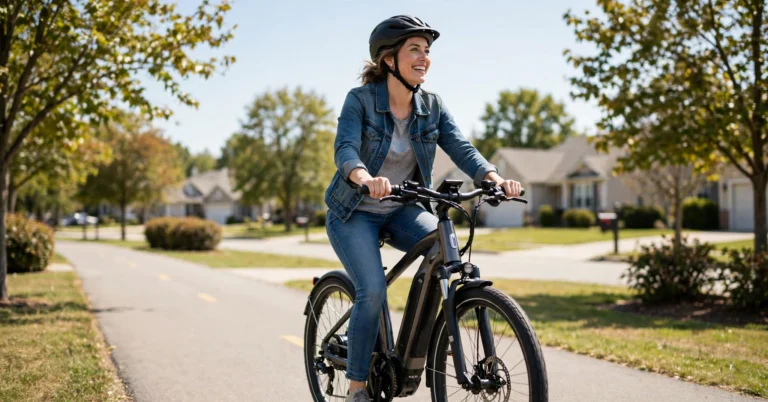
Comfort is where the e-bike pulls ahead clearly. You sit on a saddle, your weight is supported, and you can ride for an hour without your legs or back complaining. Suspension forks and wider tires smooth out rough city streets. Add a rack and panniers and you can carry a laptop, a change of clothes, and groceries without a sweaty backpack.
A scooter asks you to stand for the whole trip. That is fine for 10 or 15 minutes, but after 30 minutes your feet, knees, and lower back start to notice. Small wheels also feel every crack and pothole, and a surprise bump at 20 mph can throw you off balance. Good scooters have suspension and 10 inch pneumatic tires, and those two features are worth paying for if you choose a scooter.
Cargo is the other big difference. A scooter leaves you with a backpack and not much else. An e-bike with a rear rack can carry 40 to 50 pounds of gear, which matters if you stop at the grocery store on the way home or need to bring a laptop and a lunch bag. If your commute involves carrying anything beyond a phone and keys, the e-bike is the practical choice.
Safety on US Roads
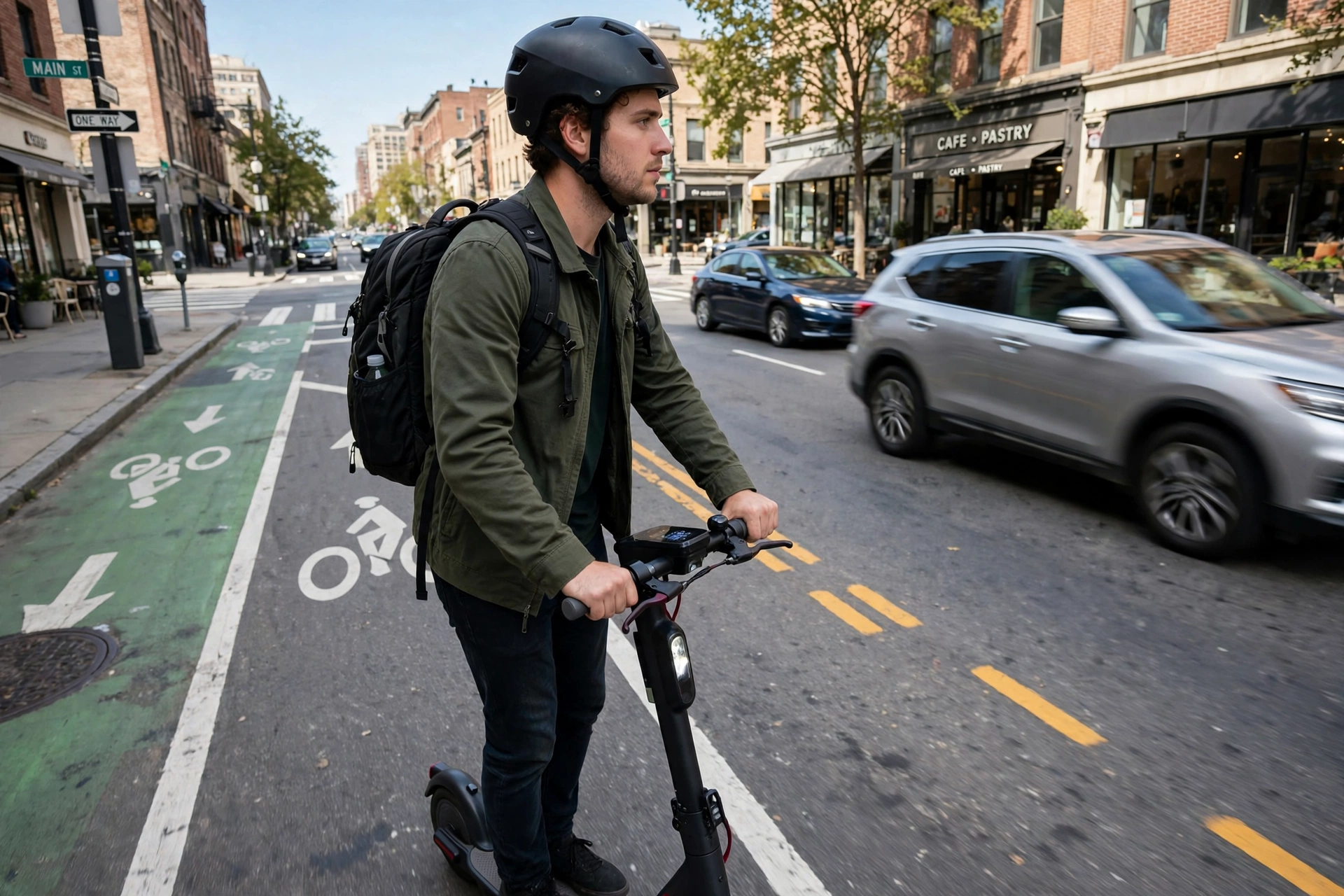
Both vehicles share the road with cars, so safety comes down to visibility, stability, and braking. E-bikes are larger, more visible, and more stable at speed. Two big wheels, a seated position, and a longer wheelbase make an e-bike steadier over bumps and in crosswinds. Most e-bikes also have better brakes, with hydraulic disc brakes standard on many commuter models.
Scooters are smaller and harder for drivers to see, and their small wheels can catch on cracks, grates, and potholes that a bicycle wheel would roll over. Braking distances are longer on many scooters, especially budget models with a single drum brake. A scooter rider also stands higher and more upright, which raises the center of gravity and makes sudden stops trickier.
That does not mean scooters are unsafe. It means the safety margin is thinner, and the rider has to be more careful. On either vehicle, a helmet is non-negotiable, bright lights front and rear are essential, and a reflective vest or jacket makes a real difference at dawn and dusk. If your route has bike lanes separated from traffic, both options are far safer than riding in mixed traffic.
Laws: Where You Can Legally Ride
US rules for e-bikes and electric scooters vary by state and by city, and the rules are not the same for the two vehicles. That is one of the most important things to check before you buy.
E-bikes are regulated in most states under the three-class system. Class 1 and Class 2 e-bikes are allowed on bike paths and bike lanes almost everywhere, and no license or registration is required. Class 3 e-bikes, which assist up to 28 mph, are usually restricted to roads and bike lanes, not multi-use paths. Our best e-bike for commuting guide covers which class suits different US commutes.
Electric scooters sit in a greyer area. Many states treat them like e-bikes, but some cities ban them from sidewalks, cap their speed at 15 mph, or require them to stay in bike lanes. A few cities still restrict private scooters on certain streets. Before you buy a scooter, check your city and state rules, because a scooter that is legal in Austin may not be legal on the same kind of street in New York City.
The safest move is to check your state DMV page and your city transportation page before you spend money. Rules change often, and a quick check beats a ticket or a confiscated ride.
Storage, Theft, and Maintenance
A scooter has one clear win here: it folds. Most commuter scooters fold in seconds and fit under a desk, in a closet, or in the trunk of a car. If you take a bus or train for part of your commute, a folding scooter is easy to carry on board.
An e-bike does not fold unless you buy a folding model, and it needs a secure place to park. That means a good U-lock, and ideally a second lock, every time you leave it outside. E-bikes are prime theft targets in US cities because they are valuable and easy to resell. A scooter can simply come inside with you, which removes the theft problem entirely.
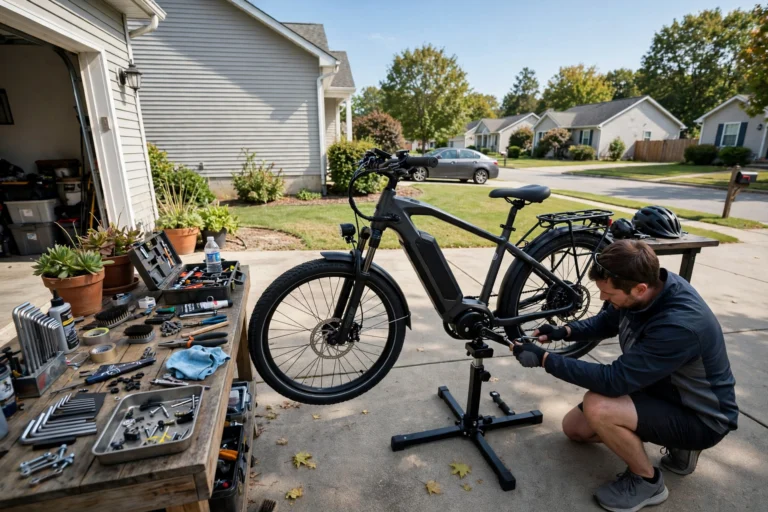
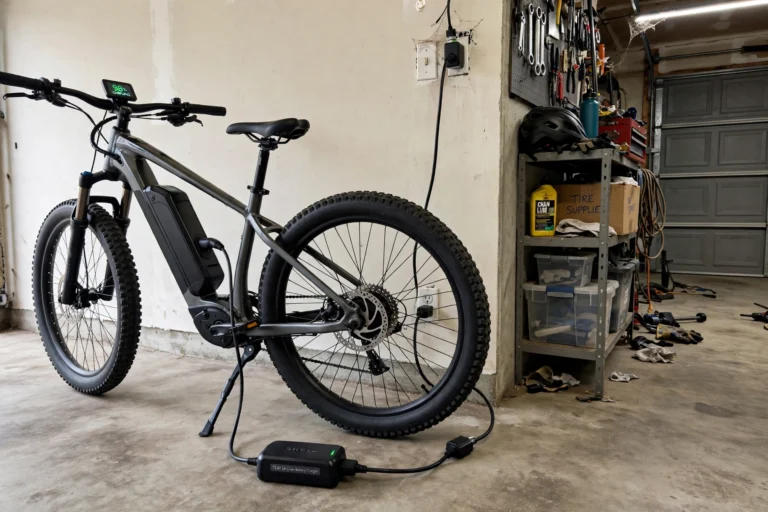
Maintenance is straightforward for both. An e-bike needs regular chain lubrication, brake pad checks, and tire pressure checks, just like a regular bike. A scooter needs tire pressure checks, brake adjustments, and occasional bolt tightening. Both need their batteries stored indoors in winter, since cold damages lithium batteries. Budget 30 minutes a month for basic checks on either vehicle, and you will avoid most breakdowns.
Which One Fits Your Commute?
The honest answer depends on your trip. Use these scenarios to decide.
Choose an electric scooter if:
- Your commute is under 5 miles each way
- You need to carry it onto a bus or train
- You have no secure place to lock a bike at work
- Your budget is under $1,000
- Your route is mostly flat with smooth pavement
Choose an e-bike if:
- Your commute is 5 to 20 miles each way
- You ride in rain, cold, or hilly terrain
- You carry a laptop, groceries, or work gear
- You want to arrive without sweating through your shirt
- You plan to ride year-round, including winter
Consider owning both if:
- You have a short flat ride to the train station and a longer ride on the other end
- One of you in the household prefers standing and the other prefers sitting
- You want a scooter for quick errands and an e-bike for the daily commute
The Verdict
For most US commuters, the e-bike is the better daily vehicle. It is faster on hills, more comfortable over distance, carries more gear, and is safer on rough roads. The higher price buys a real advantage in range and comfort that shows up every single day you ride.
But the electric scooter is the better choice for short, flat commutes, especially when you need to fold it and take it inside or onto public transit. It costs less, needs less maintenance, and is easier to store. If your trip is under 5 miles and your roads are smooth, a scooter will serve you well and save you real money.
The best test is a real ride. Many US bike shops now rent e-bikes by the day, and scooter rental services let you try a stand-up ride for a few dollars. Ride your actual route on each one before you buy. The vehicle that feels right on your streets, your hills, and your distance is the one you will actually use, and the one you use is the one that saves you money.
Can I ride an e-bike or electric scooter on the road in the US?
Yes, in most states both are allowed on roads and bike lanes. E-bikes follow the three-class system in most states, while electric scooter rules vary more by city. Always check your state and city rules before you buy.
Which is faster, an e-bike or an electric scooter?
An e-bike is usually faster in real use. Class 3 e-bikes reach 28 mph with pedal assist, while most commuter scooters top out at 15 to 25 mph. E-bikes also hold their speed better on hills because you add pedaling power to the motor.
Is an electric scooter good for a 10 mile commute?
A 10 mile commute is at the upper limit for most scooters. The ride takes 30 to 40 minutes standing up, and you will use most of the battery on a round trip. An e-bike is the more comfortable and reliable choice for a 10 mile commute.
Do I need a license or insurance for an e-bike or electric scooter?
In most US states, no license, registration, or insurance is required for a Class 1 or Class 2 e-bike or for a private electric scooter under 20 mph. Some states and cities have different rules, so check your local DMV page before riding.
Which is safer, an e-bike or an electric scooter?
E-bikes are generally safer because they are larger, more visible to drivers, and more stable at speed, with bigger wheels that handle cracks and potholes better. Scooters are safe when ridden carefully on smooth roads with a helmet, but their small wheels and standing position leave less margin for error.
An e-bike and an electric scooter both beat sitting in traffic, and both cost a fraction of driving a car. Match the vehicle to your distance, your roads, and your storage situation, and you will end up with a ride you actually enjoy using every day. If you are still unsure, rent each one for a day and ride your real commute. The answer will be obvious by the time you get home.