
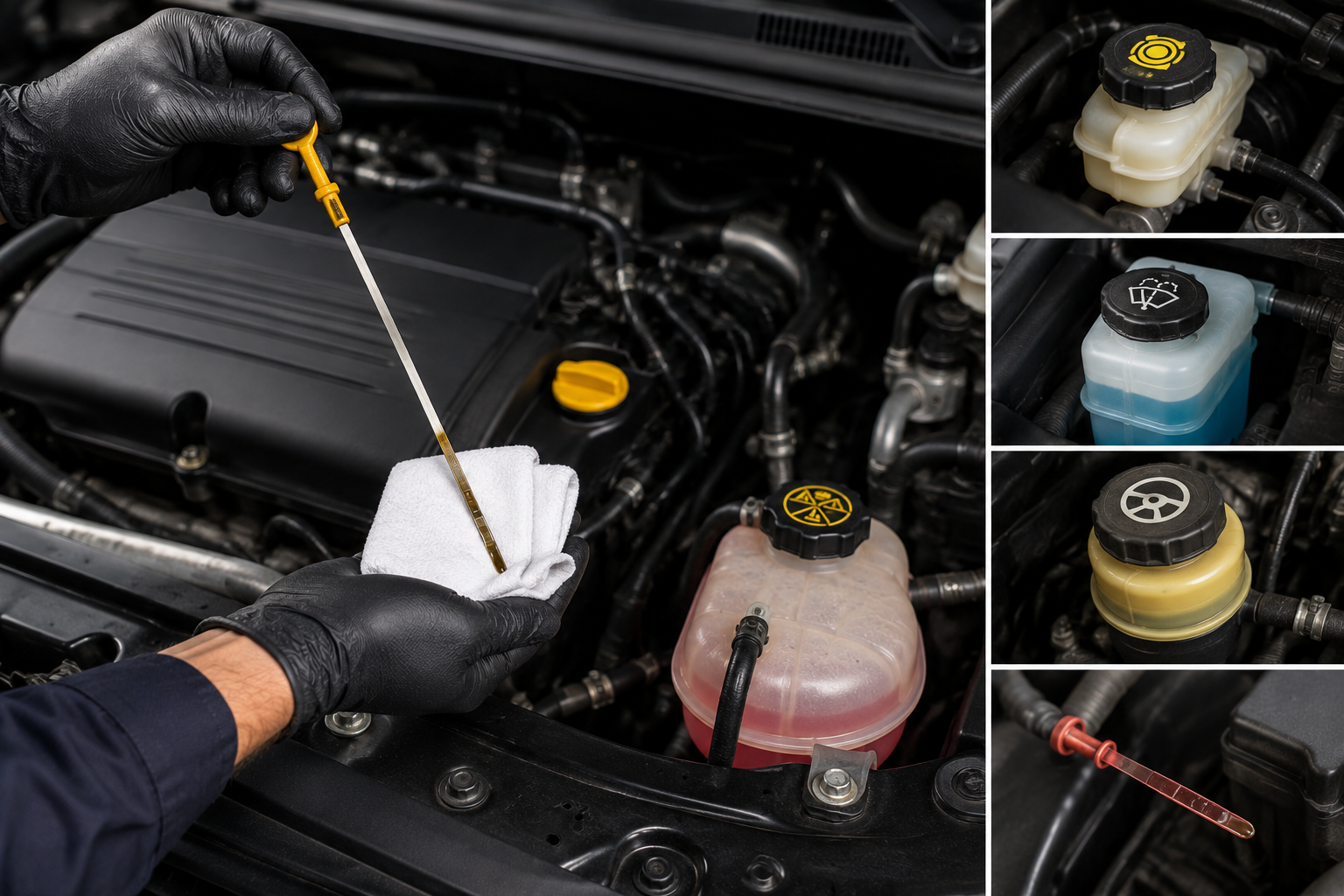
Every responsible driver should know how to check car fluids regularly. Fluids are the lifeblood of your vehicle; they keep the engine cool, brakes responsive, and steering smooth. Unfortunately, most people ignore fluid levels until something goes wrong. However, catching a low or dirty fluid early can save you from expensive repairs and dangerous breakdowns. Therefore, this guide walks you through every essential fluid check, step by step, so you stay safe on the road at all times.
Why You Should Know How to Check Car Fluids
Car fluids perform critical functions that protect your engine and ensure safe driving. Furthermore, neglecting them leads to overheating, brake failure, and premature engine wear. According to Wikipedia’s article on preventive maintenance, routine fluid checks are one of the most effective ways to extend the lifespan of any mechanical system, including automobiles.
Moreover, regular fluid inspections help you spot leaks early before they become costly problems. Therefore, checking your car fluids should be part of your monthly maintenance routine, just like checking your tyre pressure. Learning how to check car fluids is an essential part of regular vehicle maintenance.
Essential Car Fluids You Must Check When Learning How to Check Car Fluids
1. Engine Oil
Engine oil is the most critical fluid in your vehicle. It lubricates moving engine parts, reduces friction, and prevents overheating. Consequently, low or dirty engine oil causes serious engine damage very quickly.
How to Check Engine Oil
First, park your car on a flat surface and turn off the engine. Then, wait five minutes so the oil settles back into the pan. Next, pull out the dipstick, wipe it clean with a cloth, and reinsert it fully. Finally, pull it out again and check the oil level between the minimum and maximum marks.
Additionally, check the oil colour. Fresh oil appears amber and clear. However, dark black or gritty oil signals it is time for an oil change. Therefore, always address dirty oil promptly to protect your engine.
2. Coolant (Antifreeze)
Coolant regulates your engine’s temperature and prevents it from overheating in summer or freezing in winter. Moreover, it protects internal metal components from corrosion over time.
How to Check Coolant Level
Locate the coolant reservoir under the hood — it is usually a translucent plastic tank. Then, check whether the fluid level sits between the MIN and MAX lines. Furthermore, inspect the coolant colour. Healthy coolant appears bright green, orange, or pink. However, if it looks brown or rusty, flush and replace it immediately.
Important: Never open the radiator cap when the engine is hot. Doing so releases pressurised steam that causes serious burns.
3. Brake Fluid
Brake fluid transfers the force from your brake pedal directly to the brake pads. As a result, without adequate brake fluid, your stopping power reduces significantly. This makes low brake fluid one of the most dangerous fluid issues you can face on the road.
How to Check Brake Fluid
Find the brake fluid reservoir near the back of the engine bay on the driver’s side. Next, check the level through the translucent reservoir walls without opening the cap. The fluid should sit between the MIN and MAX lines. Additionally, healthy brake fluid appears light yellow or clear. Therefore, if it looks dark or murky, have it replaced by a mechanic soon.
4. Power Steering Fluid
Power steering fluid makes turning your steering wheel effortless. Consequently, when this fluid runs low, steering becomes stiff and difficult — especially at low speeds or during parking.
How to Check Power Steering Fluid
Locate the power steering reservoir, which usually has a steering wheel icon on the cap. Then, check the fluid level using the dipstick attached to the cap or the markings on the reservoir. Furthermore, look for any leaks under your car near the front wheels, as power steering leaks are common in older vehicles.
5. Transmission Fluid
Transmission fluid lubricates the gears inside your gearbox and ensures smooth gear shifts. Moreover, it acts as a coolant for the transmission system, preventing overheating under heavy loads. This guide explains how to check car fluids safely and correctly, even if you’re a beginner.
How to Check Transmission Fluid
With the engine running and warmed up, pull out the transmission dipstick, usually located toward the back of the engine bay. Then wipe it clean, reinsert it, and pull it out again to read the level. Additionally, healthy transmission fluid appears red or pink. However, if it smells burnt or looks dark brown, schedule a fluid change immediately.
6. Windshield Washer Fluid
While windshield washer fluid does not affect mechanical performance, it directly impacts visibility, which is crucial for safe driving. Therefore, always keep this reservoir full, especially before long trips or during winter months.
How Often Should You Check Car Fluids?
Ideally, you should check engine oil every month and before long road trips. Similarly, check coolant and brake fluid every three months. Furthermore, transmission and power steering fluids need inspection every six months or during every oil change service.
However, if your car sits unused for an extended period, such as during seasonal storage, fluid levels can still drop or degrade. In that case, finding a reliable Car Storage Near Me that offers proper climate-controlled facilities helps protect your vehicle and preserve all fluid levels during long storage periods.
Common Signs Your Car Fluids Are Low or Dirty
Additionally, your car often tells you when something is wrong. Watch out for these warning signs:
- Engine overheating: usually points to low coolant
- Spongy or soft brake pedal: indicates low or contaminated brake fluid
- Difficulty shifting gears: signals low or burnt transmission fluid
- Stiff steering wheel: suggests low power steering fluid
- Oil warning light on dashboard: means engine oil needs immediate attention
Therefore, never ignore dashboard warning lights or unusual driving sensations. Acting quickly prevents minor fluid issues from turning into major mechanical failures.
Pro Tips for Checking Car Fluids Like a Mechanic
First, always check fluids when the engine is cold unless the manufacturer specifies otherwise. Second, keep a fluid log in your glove box to track when you last checked and topped up each fluid. Third, use only the manufacturer-recommended fluid type for every reservoir; mixing incompatible fluids causes serious damage.
Furthermore, invest in a basic fluid test kit available at most auto parts stores. These kits let you test brake fluid quality and coolant freeze protection at home within minutes. As a result, you gain a much clearer picture of your car’s health without visiting a mechanic every time.
Conclusion
Learning how to check car fluids is one of the simplest yet most impactful things you can do as a vehicle owner. Moreover, regular fluid checks protect your engine, improve safety, and save you significant money on repairs in the long run. Therefore, make fluid inspections a consistent habit, check them monthly, top them up promptly, and replace them on schedule. Your car works hard for you every day, so give it the care it deserves. A well-maintained vehicle not only performs better but also lasts significantly longer on the road. Knowing how to check car fluids can help you prevent costly engine repairs.
About the Author