Torque Sensor vs Cadence Sensor: Which E-Bike Feels Better to Ride in 2026?
Two e-bikes can have the same motor wattage, the same battery size, and the same price, yet feel completely different on the road. In many cases, the reason is a small part you cannot see: the pedal assist sensor. If you are shopping for an e-bike in the US in 2026, the choice between a torque sensor and a cadence sensor will shape how natural the ride feels, how much effort you put in, how smooth the power arrives, and even how far your battery takes you. This guide explains both systems in plain language. You will learn how each sensor works, how it feels on flat streets and steep hills, what it costs, who it suits best, and what to test on a test ride before you spend your money. By the end, you will know which sensor matches your riding style, whether you commute every day, ride trails on weekends, or just want an easy, relaxed cruise around town.
What Does an E-Bike Sensor Actually Do?
An e-bike sensor tells the motor when to help and how much help to give while you pedal. It is the link between your legs and the motor controller. Without a sensor, pedal assist would not know you had started pedaling, and it would not know when to stop. Think of it this way. The sensor watches your pedaling and sends a signal to the controller. The controller then decides how much motor power to add on top of your own effort. The assist level you select on the display sets the ceiling, but the sensor decides how the power behaves inside that ceiling. That behavior is what riders notice most. Some bikes surge forward as soon as the pedals turn. Others build power gradually as you press harder. Some feel like a strong tailwind. Others feel like the bike is doing all the work while you spin lightly. The sensor is a major reason for those differences, even though the motor and battery often get all the attention in ads.
How a Cadence Sensor Works
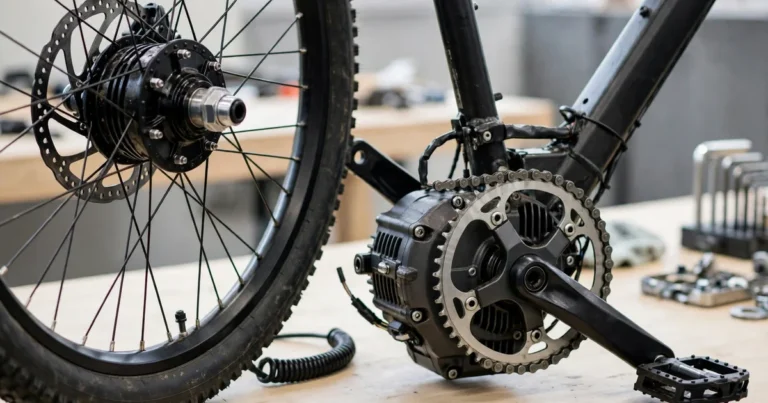
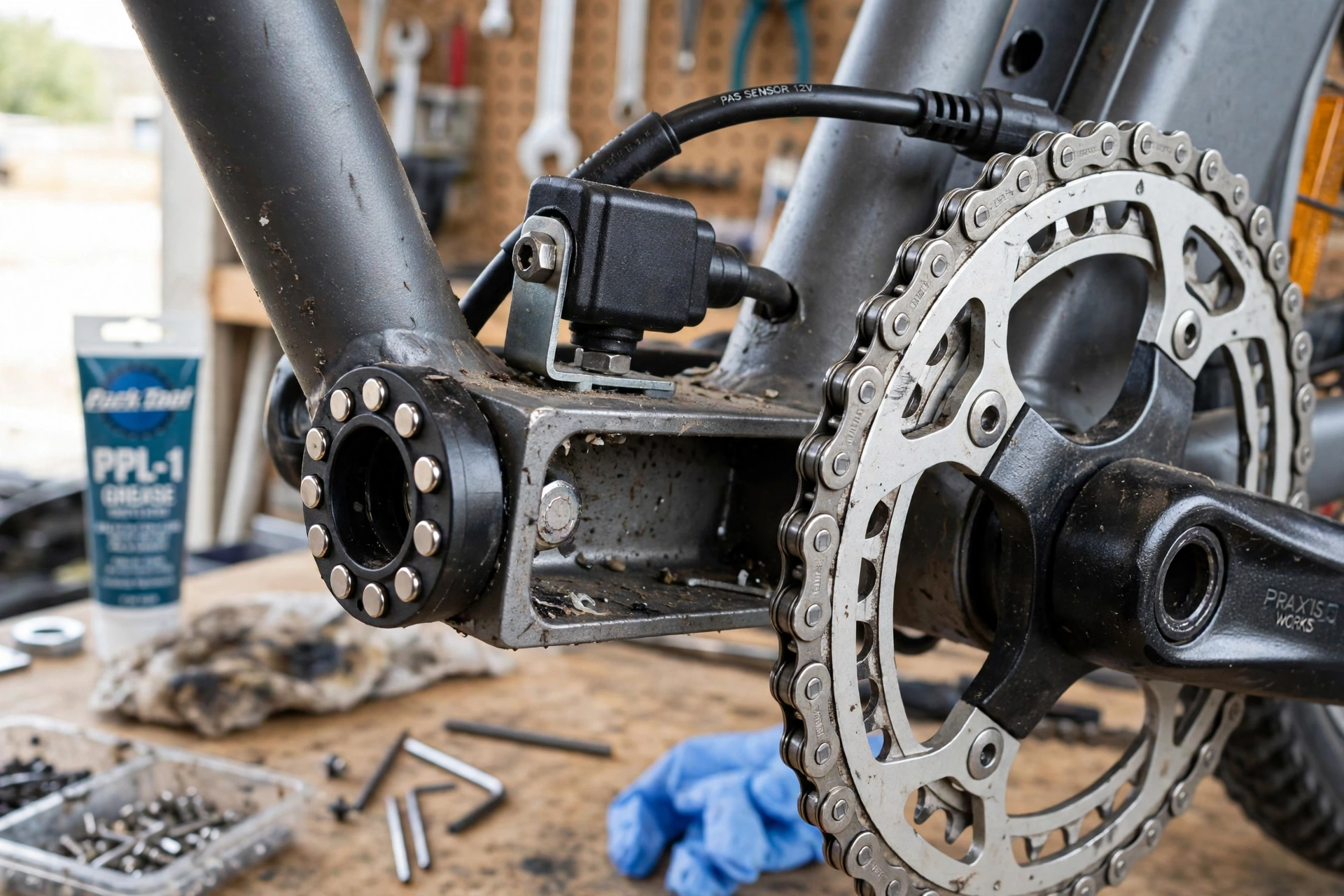
A cadence sensor measures whether the pedals are turning. It does not measure how hard you press. A small sensor near the crank watches magnets pass as the crank rotates. Once it detects rotation, it tells the motor to switch on at the assist level you selected. In practice, that means the motor gives a fixed amount of help for that assist level, regardless of whether you pedal gently or push hard. Pedal softly and you still get the same preset boost. Pedal hard and you get the same preset boost, unless you change the assist level yourself. This on and off style is simple, reliable, and cheap to build. That is why cadence sensors are common on budget friendly commuter e-bikes in the US, often in the $800 to $1,500 range. They are easy to understand: start pedaling, get help. Stop pedaling, help stops. The trade off is feel. Because the sensor only knows that you are pedaling, the power can arrive in a sudden rush, then stay flat until you stop. Some riders love that easy, moped-like push. Others find it jerky at low speed, especially when starting from a stop sign, turning in a parking lot, or riding slowly through a crowded path.
How a Torque Sensor Works
A torque sensor measures how hard you press on the pedals, not just whether they are turning. It uses a strain gauge in the crank, bottom bracket, or rear dropout to read your pedaling force many times per second. The harder you push, the more motor power it adds. Ease off, and the motor eases off with you. The result feels much closer to riding a regular bike, only stronger. Push gently on flat ground and the bike gives a light, natural boost. Push hard up a hill and the motor rises to meet your effort. Stop pushing and the help fades smoothly instead of cutting off abruptly. Torque sensors cost more to make and to tune well, so they are more common on midrange and premium e-bikes, often from about $1,800 upward, though some value brands now offer them near $1,500. They also tend to pair well with mid-drive motors, but you will find them on hub motor bikes too. If you have already compared motor types, our guide to hub motor vs mid-drive motor will help you see how sensor and motor work together.
Torque Sensor vs Cadence Sensor: The Ride Feel Side by Side
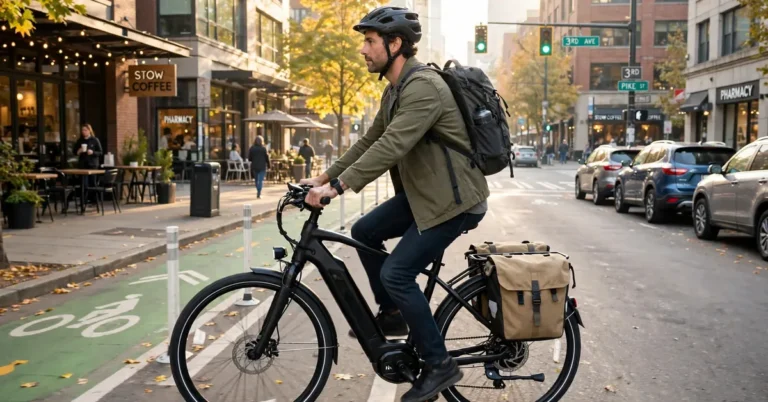
Ride feel is where most buyers make their decision, and it is hard to judge from a spec sheet alone. A cadence sensor bike feels easy and relaxed. You can spin the pedals lightly and still cruise at 15 to 20 mph, depending on your e-bike class and assist level. That is a real advantage if you have knee pain, ride in work clothes, carry groceries, or want to arrive without sweating. It is also forgiving on flat commutes where you do not need fine control. A torque sensor bike feels athletic and connected. Your legs stay part of the ride, and the bike rewards you for pedaling with intent. Starts feel smoother, speed changes feel more predictable, and slow speed control feels easier because power follows your feet instead of switching on at full strength. Many experienced cyclists prefer this feel because it still feels like cycling, just with a strong helper. On hills, the difference grows. A cadence bike may hold the same assist level while you struggle, so you must shift assist levels or gears yourself to cope. A torque bike responds as soon as you press harder, which makes steep climbs feel more natural and less like a fight with the controls. On trails, that instant response also helps when the surface changes from smooth dirt to loose gravel or a short steep pitch. In stop and go city traffic, a torque sensor usually wins for control. A cadence sensor can surge when you only wanted a gentle nudge, which takes getting used to at crosswalks and tight turns. With practice, most riders adapt to either system, but first time riders often feel safer on a torque sensor bike in busy areas.
Comparison Table: Torque Sensor vs Cadence Sensor at a Glance
| What it measures | How hard you pedal | Whether pedals are turning |
| Ride feel | Natural, smooth, bike-like | Easy, steady, sometimes jerky at start |
| Power delivery | Rises and falls with your effort | Fixed boost per assist level |
| Hills and trails | Strong, responsive, easier control | Works, but needs more manual assist changes |
| City stop and go | Smooth starts, good low speed control | Can surge, takes practice |
| Rider effort | You pedal with real intent | Light pedaling still gets full boost |
| Battery efficiency | Often better, power matches effort | Can waste power at fixed boost |
| Typical US price range | Often $1,500 to $3,500 plus | Often $800 to $1,800 |
| Best for | Commuters who want control, trail riders, cyclists | Casual riders, easy cruising, budget buyers |
Prices vary by brand, motor, battery size, and build quality, so treat these ranges as a guide, not a rule. A well tuned cadence bike can feel better than a poorly tuned torque bike, which is why a test ride matters more than any single spec.
Which Sensor Is Better for Range?
Range depends on battery size, rider weight, terrain, wind, tire pressure, and assist level, but sensor type does play a role. A torque sensor only gives as much power as your effort calls for, so it can stretch battery life on mixed rides where you pedal steadily and ease off on downhills. Many riders report 10 to 20 percent better real world range on similar bikes when the system is well tuned, though your results will vary. A cadence sensor gives full preset power whenever you pedal, even if you only need a little help. On flat ground at a steady pace, that can drain the battery faster than needed. You can manage this by riding in a lower assist level, but then you must remember to raise it for hills and lower it again after. It is workable, just less automatic. If range is your top worry, also check battery size in watt hours, motor efficiency, and your own assist habits. A larger battery will usually matter more than sensor type alone, but a torque sensor helps you use that battery more wisely.
Cost, Maintenance, and Reliability
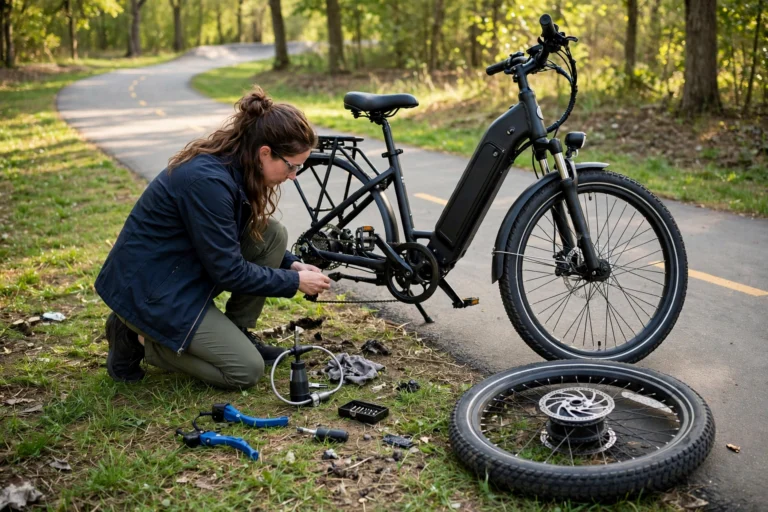
Cadence sensors win on simplicity and cost. They have fewer precision parts, they are cheap to replace, and most bike shops can service them without special tools. If you ride mainly on flat streets and want the lowest purchase price, that simplicity is a real benefit. Torque sensors cost more up front and can cost more to replace if the strain gauge or bottom bracket unit fails. In normal use, though, they are reliable, sealed units with no regular maintenance beyond normal bike care. Keep the drivetrain clean, check for loose cranks, and follow the maker’s service schedule, and a torque sensor should last for years. Neither sensor needs weekly attention. The bigger maintenance costs on any e-bike are tires, brakes, chains, and battery care over time. Choose your sensor for ride feel first, and let total bike quality, warranty, and local service support decide close calls.
Which Sensor Should You Choose?
Choose a torque sensor if you want a natural ride, ride hills or trails often, ride in busy traffic, like to feel connected to the bike, or plan to ride longer distances where smooth power and better efficiency help. It is the better pick for riders who enjoy pedaling and want the motor to amplify their effort rather than replace it.
Choose a cadence sensor if you want the easiest possible ride, have limited leg strength or joint issues, ride mostly flat routes, want the lowest price, or prefer a relaxed cruise where light pedaling still moves you along. It is also a smart pick for a first e-bike when you are not sure how much you will ride and do not want to overspend.
Some newer e-bikes use both sensors together, combining cadence detection with torque measurement for quick starts and smooth power. If you find a bike with a combined system in your budget, it can offer the best of both, though tuning still matters more than the label.
Before you buy, check your local e-bike class rules too, since assist speed and throttle rules vary by state and by trail system. Our explainer on e-bike classes will help you match sensor choice to the class you actually need for commuting and trails.
How to Test Ride Both Sensors Before You Buy
A short parking lot loop will not tell you enough. Use this simple test ride checklist on each bike you consider. First, start from a dead stop on flat ground. Notice whether power arrives smoothly or with a sudden push. Second, ride slowly through a turn at walking speed and see if you can control speed with light pedaling. Third, climb a short hill and notice whether you must change assist levels or whether the bike responds to harder pedaling on its own. Fourth, ride at a steady cruising speed and see if the power feels even or if it pulses on and off. Finally, stop pedaling briefly and notice how quickly and smoothly the motor fades.
Ride the same route on both sensor types if you can, at the same assist level, and with similar tire pressure. Small differences in motor power or bike weight can confuse the comparison, so keep the test as fair as possible. If a shop only has one type in stock, ask for a longer demo or a rental day before committing $1,500 or more. Also ask about warranty on the sensor and controller, and whether the shop stocks replacements. A great ride feel means little if a failed sensor leaves your bike in the shop for weeks.
Common Mistakes Buyers Make
The first mistake is judging a sensor by price alone. A cheap torque sensor with poor tuning can feel worse than a good cadence sensor. The second mistake is assuming more watts always means a better ride. A 750W bike with smooth torque sensing can feel better and more controlled than a 1,000W bike with jerky cadence assist. The third mistake is skipping the test ride and ordering online based only on range claims, which are often measured in ideal lab conditions, not real US streets with hills, wind, and stops. Finally, do not confuse motor torque, measured in Newton meters, with a torque sensor. Motor torque describes how much turning force the motor can produce. A torque sensor describes how the bike measures your pedaling force. A bike can have high motor torque and still use a cadence sensor, and vice versa. For background on how e-bikes work overall, see the general overview of electric bicycles.
Closing: The Sensor Shapes the Ride More Than the Spec Sheet Suggests
There is no single winner for every US rider in 2026. A torque sensor feels more natural, controlled, and efficient, and it is usually worth the extra cost if you ride hills, trails, or busy streets often. A cadence sensor feels easier, simpler, and cheaper, and it is a great fit if you want relaxed cruising and the lowest price. If you can only remember one rule, make it this: test ride both, on the same kind of route you will actually ride. The sensor that feels right under your feet is the right sensor for you, even if another rider would choose differently. Spend a little extra time on this one choice now, and every ride after will feel better for it.
FAQ
Is a torque sensor better than a cadence sensor?
A torque sensor feels more natural and gives smoother, more controlled power because it responds to how hard you pedal. A cadence sensor feels easier because it gives full preset help once you pedal. Torque is better for control and hills, while cadence is better for easy, low effort cruising.
Do torque sensor e-bikes cost more?
Yes, usually. Torque sensor e-bikes often start around $1,500 and go well above $2,500, while many cadence sensor e-bikes sell for $800 to $1,800 in the US. The gap is narrowing as more value brands add torque sensing, so compare full bike quality, not sensor type alone.
Can you convert a cadence sensor e-bike to a torque sensor?
In most cases, no, not easily. The sensor, controller, and wiring are designed as a system, and a conversion would need compatible parts and tuning. If you want torque sensing, it is usually better to buy a bike built with it from the factory.
Which sensor is better for hills?
A torque sensor is usually better for hills because power rises as soon as you press harder, without waiting for you to change assist levels. A cadence sensor still climbs well, but you will need to shift assist levels and gears more actively to keep speed steady.
Which sensor is best for beginners?
Beginners who want the easiest ride often like cadence sensors, since light pedaling still gives full help. Beginners who want a bike-like feel and better control in traffic often prefer torque sensors after a test ride. Try both if you can, and choose the feel you trust most.
Whichever sensor you choose, it is worth learning how to maintain an e-bike so your new bike stays reliable for years.