How Much Does a Car Battery Replacement Cost in 2026? Prices, Signs, and DIY vs Shop for US Drivers
Introduction
Few car problems arrive with less warning than a dead battery. One morning the engine cranks slowly, the next morning it does not crank at all, and suddenly you are late for work and looking at a tow bill on top of a repair bill. A car battery replacement is one of the most common repairs in the United States, and it is also one of the easiest to overpay for if you do not know what a fair price looks like.
In 2026, most US drivers pay between $200 and $400 for a complete car battery replacement at a shop, including the battery itself and labor. A basic battery for a small sedan can cost as little as $150 installed, while a large AGM battery for a truck or a luxury SUV can push the total past $500. Doing the job yourself can save $50 to $150 in labor, but only if you buy the right battery and install it safely.
This guide breaks down real 2026 prices by battery type and vehicle, the warning signs that your battery is failing, what shops actually charge for, and when it makes sense to replace the battery yourself instead of paying a shop. Prices are in US dollars and reflect typical US parts stores and repair shops.
How Much Does a Car Battery Replacement Cost in 2026?
The total cost of a car battery replacement has two parts: the battery and the labor to install it. Most shops charge $50 to $150 for labor, which usually covers testing the old battery, removing it, cleaning the terminals, installing the new battery, and testing the charging system. Some auto parts stores install a battery for free when you buy it from them, which can cut the total cost sharply.
| Battery and vehicle type | Battery only | Installed at a shop |
|---|---|---|
| Standard flooded battery, small sedan or hatchback | $120 to $200 | $170 to $300 |
| Standard flooded battery, midsize SUV or truck | $150 to $250 | $200 to $350 |
| AGM battery, most modern cars with start-stop | $200 to $350 | $280 to $450 |
| AGM battery, large truck or luxury SUV | $280 to $450 | $380 to $550 |
| EV auxiliary 12-volt battery (not the drive battery) | $150 to $300 | $220 to $400 |
A standard flooded battery is the cheapest option for an automotive battery and works fine in older cars without start-stop systems. An AGM (absorbent glass mat) battery costs more, but it handles repeated start-stop cycles, runs accessories with the engine off, and usually lasts longer. Many newer cars require an AGM battery, so check your owner’s manual before choosing a cheaper flooded battery to save money.
Core charges also matter. Many US retailers add a refundable core charge of $10 to $25 to the price. You get that money back when you return the old battery, which is also the responsible way to dispose of it, since car batteries contain lead and acid and should never go in household trash.
Signs Your Car Battery Needs Replacing
A car battery rarely fails with no warning at all. The signs are often small at first and easy to dismiss, especially in mild weather. Cold winter mornings and hot summer afternoons both expose a weak battery, which is why so many batteries fail in January and July.
- slow engine cranking especially on cold mornings
- clicking sound when you turn the key or press the start button
- dim headlights or interior lights that brighten when the engine revs
- battery warning light on the dashboard
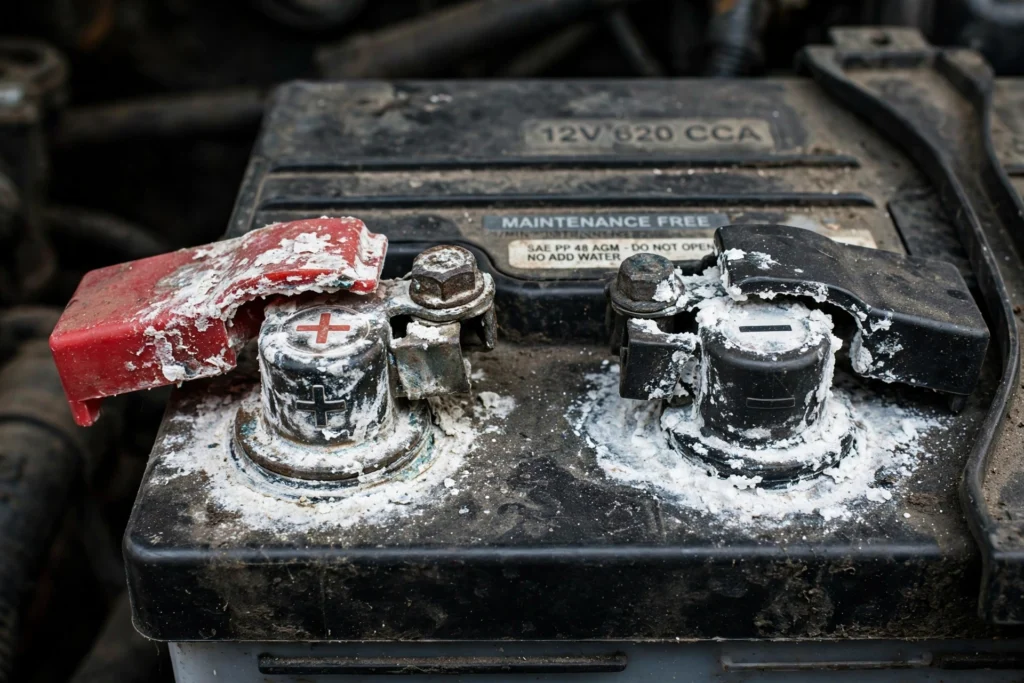
- corrosion, white or blue-green buildup, on the battery terminals
- swollen or cracked battery case
- electrical problems, such as power windows moving slowly or the radio resetting
- battery that is more than four years old
Age alone is a useful guide. Most car batteries last three to five years in normal US driving. Heat shortens battery life, so drivers in Arizona, Texas, and Florida often replace batteries closer to three years, while drivers in cooler northern states may get five years. If your battery is past four years and showing even one symptom above, get it tested before it strands you.
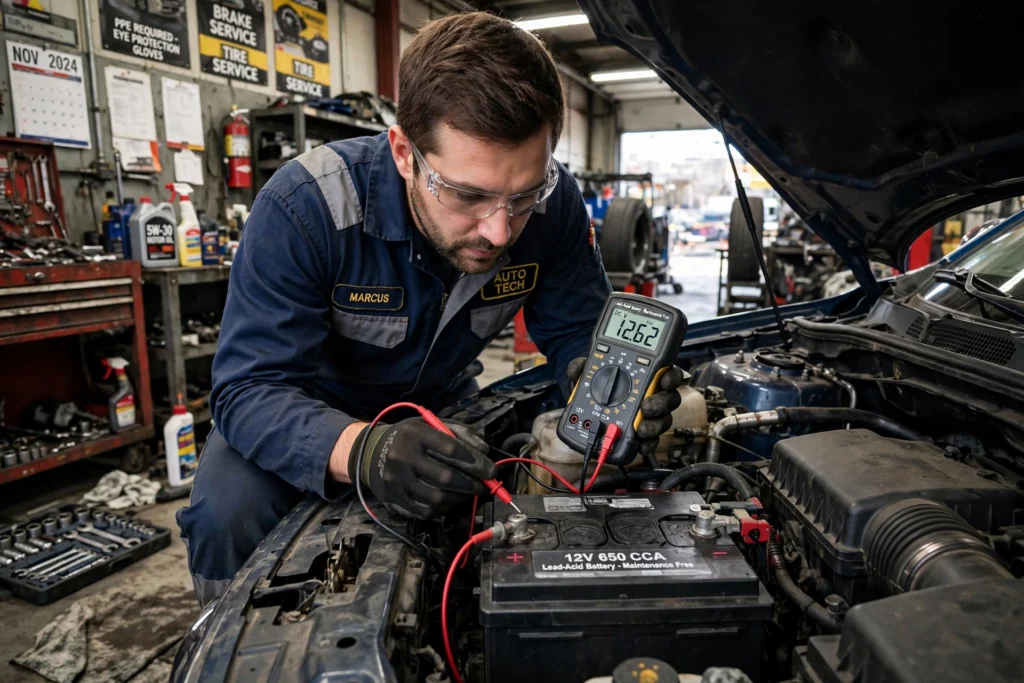
A free battery test at an auto parts store takes about five minutes and tells you whether the battery, the alternator, or something else is the problem. That test is worth doing before you spend money, because a bad alternator can mimic a bad battery. For a full comparison, see how to test a car battery.
What Affects the Price?
Not every car battery costs the same, and not every shop charges the same labor rate. Knowing the factors behind the price helps you spot an inflated quote.
First, battery size and group size matter. Your car needs a battery that physically fits the tray and matches the terminal layout. A larger group size usually costs more, and buying the wrong size can cause fitment problems or loose connections.
Second, cold cranking amps (CCA) matter. CCA measures how well a battery starts an engine in cold weather. Cars in Minnesota or Maine need higher CCA ratings than cars in Southern California, and higher CCA batteries usually cost a bit more. Your owner’s manual lists the minimum CCA your car needs. Going above it is fine, but going below it is not.
Third, brand and warranty matter. Major brands such as Interstate, DieHard, Optima, and store brands from AutoZone, O’Reilly, and Walmart all sell reliable batteries. The main difference is often the warranty. A battery with a three-year free replacement warranty may cost $30 to $50 more than a similar battery with a one-year warranty, and that extra coverage is often worth it.
Fourth, labor rates vary by region and shop type. Dealerships usually charge the highest labor rates, often $130 to $180 per hour, while independent shops typically charge $90 to $140 per hour. A battery swap takes 20 to 45 minutes on most cars, but on some models the battery sits under a seat, in the trunk, or behind a panel, which adds labor time.
Finally, some cars need extra steps after a battery swap. Modern vehicles may need a battery registration or reset so the charging system charges the new battery correctly, and radio presets, clock settings, and window positions may need resetting. A good shop handles these steps as part of the job, so ask whether they are included in the quoted price.
DIY vs Shop: Which Is Better?
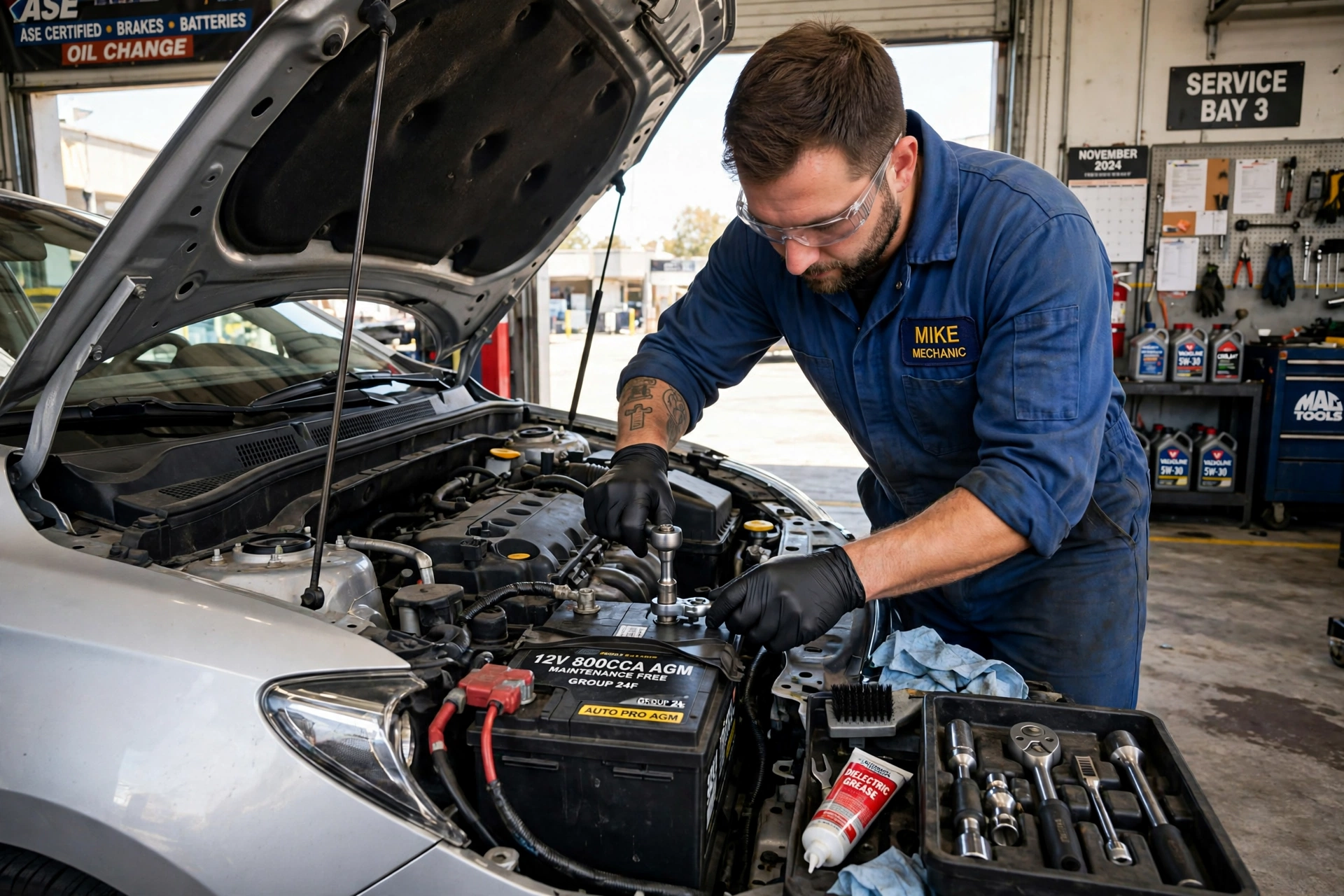
Replacing a car battery is one of the few repairs many drivers can safely do at home with basic tools. You need a wrench set, gloves, and eye protection, and the job usually takes 20 to 30 minutes on cars where the battery sits under the hood in an accessible spot.
The DIY route saves labor, which is usually $50 to $150. It also lets you shop around for the best battery price instead of accepting whatever brand the shop stocks. Many parts stores will still test your old battery for free and take it for recycling, even if you install the new one yourself.
A shop is the better choice in several cases. If the battery is hard to reach, if your car requires battery registration, if you are not comfortable working around electrical parts, or if the problem might be the alternator rather than the battery, let a professional handle it. A wrong connection can damage electronics, and a battery that is installed loosely can short out or leak.
Safety matters either way. Always disconnect the negative terminal first and reconnect it last, wear gloves and eye protection, and never let a metal tool touch both terminals at once. If the battery case is cracked or leaking, do not handle it yourself. Have a shop deal with it.
For drivers who do decide to install their own battery, follow this car battery installation guide for smart drivers.
How to Save Money on a Battery Replacement
Start by getting the battery tested first. About one in three dead battery complaints turns out to be a loose terminal, a corroded connection, or a charging problem, not a bad battery. A free test can save you the whole cost of a replacement.
Next, compare prices at two or three retailers. Prices for the same group size can vary by $40 or more between stores, and stores often run rebates or gift card deals on batteries. Ask about free installation, because several national chains install a battery free when you buy it there, which removes the labor charge entirely.
Check your warranty before you buy. If your battery is still under its free replacement period, the replacement may cost nothing. Even a prorated warranty can cut the price. Keep the receipt and the warranty paperwork in your glove box so you can prove the purchase date.
Finally, do not buy a battery with far more capacity than your car needs unless you have a real reason, such as a powerful sound system or frequent short trips in cold weather. The right size, the right CCA rating, and a solid warranty beat the most expensive battery on the shelf.
When to Replace Instead of Jump Starting
A jump start can get you going once, but it is not a fix for a failing battery. If you need a jump more than once in a few weeks, the battery is almost certainly on its way out. Repeated jump starts also put extra strain on the alternator, which can turn a $250 battery job into a $600 alternator repair.
Replace the battery right away if it fails a load test, if the case is swollen or cracked, or if it is more than five years old and showing symptoms. Waiting rarely saves money. A battery that dies in your driveway is an inconvenience, but a battery that dies on a highway rest stop at night is a safety problem and a tow bill.
If your car sits unused for weeks at a time, a battery maintainer or trickle charger can extend battery life by keeping it fully charged. That small investment often pays for itself by adding a year or more to the battery’s life.
Frequently Asked Questions
How long does a car battery last?
Most car batteries last three to five years. Heat, short trips, and long periods of sitting unused shorten battery life, while regular driving and moderate climates extend it. Testing your battery once a year after it turns three years old is a smart habit.
Can I replace a car battery myself?
Yes, on most cars where the battery sits under the hood and is easy to reach, a DIY replacement takes 20 to 30 minutes with basic tools. Disconnect the negative terminal first, wear gloves and eye protection, and follow your owner’s manual. If the battery is in the trunk, under a seat, or requires registration, use a shop.
Does a new battery need to be registered?
Some modern cars, especially European models and cars with start-stop systems, require battery registration so the charging system treats the new battery correctly. Skipping registration can shorten the new battery’s life. Ask your shop whether your car needs this step and whether it is included in the price.
How much does a car battery cost at Walmart or AutoZone?
In 2026, a standard car battery at a major US retailer typically costs $120 to $250 before installation, and an AGM battery typically costs $200 to $350. Some stores install the battery free with purchase, while others charge $20 to $50 for installation. Prices vary by group size and warranty length.
Is an AGM battery worth the extra cost?
If your car has start-stop, regenerative braking, or heavy electrical loads, an AGM battery is usually required and worth the cost because it handles repeated cycling far better than a flooded battery. For an older car without start-stop, a good flooded battery is usually the better value.
Closing
A car battery replacement in 2026 is a routine repair, not a budget emergency, as long as you know the fair price range and catch the problem early. Expect $200 to $400 installed for most cars, more for AGM batteries and large trucks, and less if you buy from a parts store that installs for free or do the job yourself. Get the battery tested at the first sign of trouble, match the group size and CCA rating to your car, and keep the warranty paperwork.
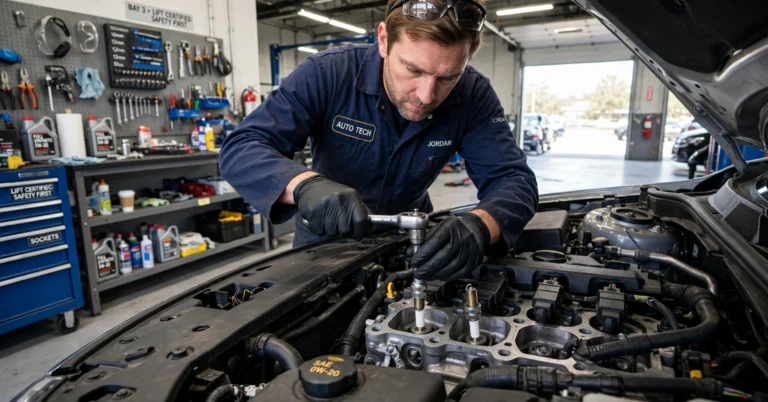
That approach turns a stressful breakdown into a planned, affordable repair, and it keeps your car starting reliably through the coldest winter mornings and the hottest summer afternoons. If rough starting comes with a shaky idle or a misfire, see our guide on how much does a spark plug replacement cost in 2026 to compare the symptoms and the price before you book the repair.
Glass is another part that can fail without warning, so check how much does a windshield replacement cost before a small chip spreads across the whole windshield.
And if the AC starts acting up too, find out how much does a car AC repair cost so you can plan the next repair before summer heat arrives.