How Much Does a Brake Job Cost in 2026? Pads, Rotors, and Full Brake Replacement Prices for US Drivers
Intro
Few car repairs cause as much sticker shock as brakes. One shop quotes $250, another quotes $900, and both claim they are doing the same job. The truth is that a “brake job” is not one single service. It can mean new pads only, pads plus rotors, a caliper replacement, or a full brake system overhaul, and each version has a very different price.
In this guide, you will learn what a brake job costs in the United States in 2026, what drives the price up or down, when you can safely choose the cheaper option, and when paying more is the only smart choice. All prices below are typical US shop prices, including parts and labor, based on common sedans, SUVs, and trucks. Luxury cars, performance cars, and heavy-duty trucks usually sit at the higher end or above these ranges.
If your brakes are squealing, grinding, or vibrating, do not put this repair off. Brakes are your car’s most important safety system, and a small problem that costs a few hundred dollars today can turn into a far more expensive repair if a worn pad scores a rotor or damages a caliper.
What Exactly Is a Brake Job?
A brake job is any service that restores your braking system to safe working order. Most cars on US roads use disc brakes on at least the front wheels, and many use them on all four wheels. A disc brake system has three main wear parts: the brake pads, the rotors, and the calipers.
Brake pads press against the rotors to slow the wheel. They are designed to wear down over time and are the most common replacement item. Rotors are the metal discs the pads grip. They can warp, rust, or wear thin, and they are often replaced at the same time as the pads. Calipers are the clamps that squeeze the pads against the rotors. They last much longer, but they can stick, leak, or seize, and when they do, they must be replaced.
A basic brake job usually means new pads on one axle, meaning the front two wheels or the rear two wheels. A standard brake job adds new rotors on that same axle. A full brake job covers both axles, and it may include calipers, brake fluid, and hardware if those parts are worn. When a shop gives you a quote, always ask exactly which parts and which axles are included. Two quotes that look very different often describe two very different jobs.
How Much Does a Brake Job Cost in 2026?
For a typical sedan or small SUV, a front-axle pad replacement costs about $250 to $400 at an independent shop and $350 to $550 at a dealership. Adding new rotors on the same axle brings the total to roughly $400 to $700 at an independent shop and $600 to $900 at a dealership. A full job covering all four wheels with pads and rotors usually runs $800 to $1,400, depending on the vehicle and the parts used.
Larger SUVs and trucks cost more because their brake parts are bigger and heavier. Expect $350 to $550 for pads alone on one axle and $550 to $900 for pads plus rotors. Luxury brands such as BMW, Mercedes-Benz, and Audi often cost 30 to 60 percent more, partly because of parts prices and partly because of higher labor rates. Performance brakes with drilled or slotted rotors can push a single axle past $1,000.
Caliper replacement adds $150 to $350 per caliper for parts plus labor, on top of pads and rotors. A brake fluid flush, which most manufacturers recommend every two to three years, adds $80 to $150. If a brake line is rusted or leaking, that repair can add $150 to $400 depending on how hard the line is to reach.
Brake Job Cost Table
| Service (one axle unless noted) | Independent shop | Dealership | Notes |
|---|---|---|---|
| Brake pads only | $250 to $400 | $350 to $550 | Best for early wear with healthy rotors |
| Pads plus rotors | $400 to $700 | $600 to $900 | Most common full-axle job |
| Pads, rotors, and calipers | $600 to $1,000 | $900 to $1,400 | Needed when a caliper sticks or leaks |
| All four wheels, pads and rotors | $800 to $1,400 | $1,200 to $1,900 | Full vehicle brake service |
| Brake fluid flush | $80 to $150 | $100 to $180 | Every 2 to 3 years |
| Single caliper replacement | $150 to $350 | $250 to $450 | Plus pads and rotors if worn |
These are national averages for common vehicles. Labor rates vary a lot by region. Shops in New York, San Francisco, and other high-cost cities often charge $150 to $200 per hour, while shops in smaller towns may charge $90 to $130 per hour. That difference alone can move a quote by $100 or more.
What Makes One Brake Job Cost More Than Another?
The vehicle is the biggest factor. A Honda Civic and a Chevrolet Silverado 2500 do not use the same brakes, and a Porsche does not use the same brakes as either of them. Bigger, heavier vehicles need larger rotors and thicker pads, and those parts cost more.
Parts quality is the second factor. Economy pads may cost $40 per axle in parts, while premium ceramic pads can cost $100 or more. Ceramic pads are quieter, produce less dust, and often last longer, which is why many shops recommend them for daily drivers. Economy rotors are cheaper but may warp sooner under hard use, such as towing or mountain driving. Original equipment manufacturer parts, often called OEM parts, usually cost the most but match the exact specification your car left the factory with.
Labor time matters too. A straightforward pad and rotor job on a common car takes about one to two hours per axle. Rust changes everything. In the Northeast and Midwest, where road salt is heavy in winter, seized bolts and rusted rotors can add an hour or more to the job. If you live in a rust-belt state, a higher quote may simply reflect the real extra work, not an upsell.
Finally, the shop type matters. Dealerships charge more per hour and usually use OEM parts, but they also know your exact model and often include a warranty that is honored nationwide. Independent shops are usually cheaper and just as capable for standard brake work, especially if they specialize in your brand. A good rule is to get two quotes for any job over $500, and to compare them part by part rather than by the bottom line alone.
Warning Signs You Need a Brake Job
Your car gives you clear warnings before brakes fail, and learning them can save you money. A high-pitched squeal when you brake is usually the wear indicator on the pad telling you the pad is thin. This is the cheapest time to act, because the rotors are usually still in good shape.
Grinding is more serious. It means the pad material is gone and metal is touching metal. At this point, the rotors are almost certainly damaged and will need to be replaced too, which raises the bill. If you hear grinding, book a repair within days, not weeks.
Vibration or pulsing in the brake pedal or steering wheel when braking often means a warped rotor. It can also mean uneven pad deposits on the rotor surface. Either way, the rotor usually needs resurfacing or replacement. A soft or spongy brake pedal can point to air in the brake lines, a fluid leak, or a failing master cylinder, and that needs prompt professional diagnosis. If your car pulls to one side when braking, one caliper may be sticking, which causes uneven wear and can be dangerous in an emergency stop.
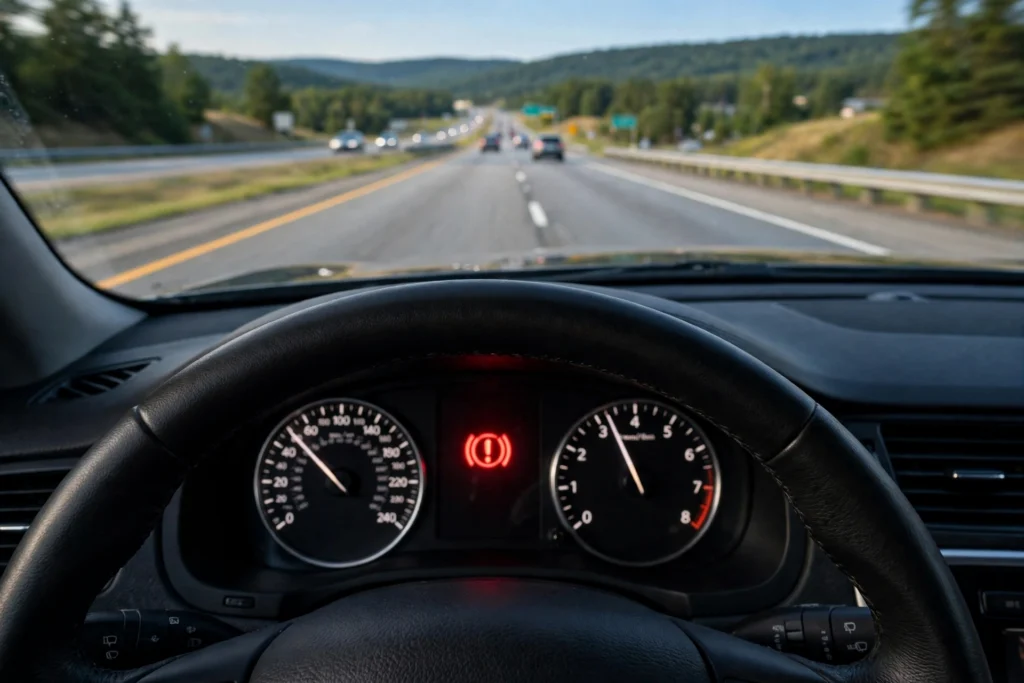
The brake warning light on the dashboard deserves attention as well. On many cars, it lights up for low brake fluid or a parking brake issue, but it can also signal a more serious fault. If the light stays on, check your brake fluid level if you know how, and get the car inspected soon. For a deeper look at how disc brakes work and what each part does, see the reference on disc brakes from Wikipedia.
Pads Only or Pads Plus Rotors?
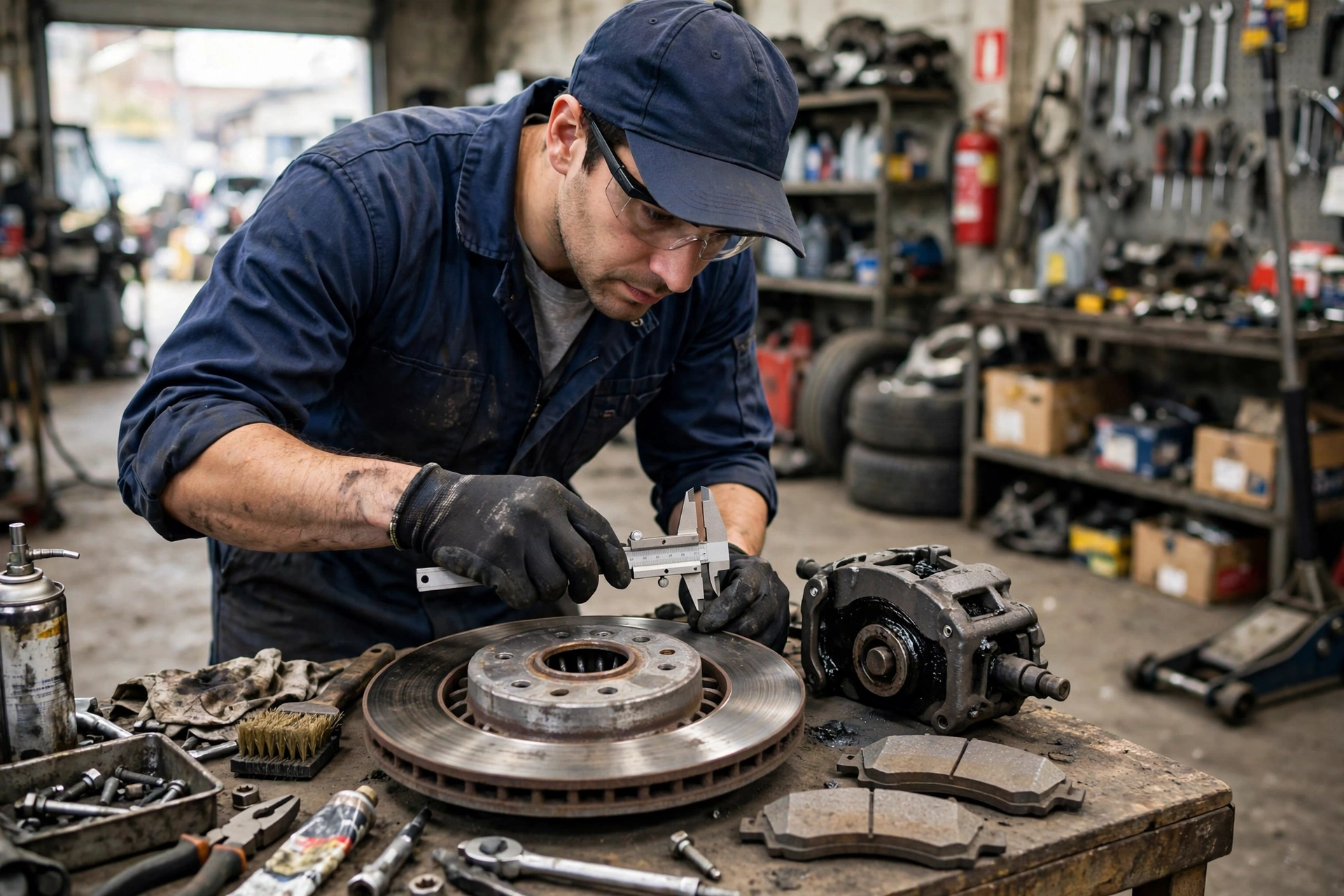
This is the question most drivers ask, and the answer depends on the condition of your rotors. If your rotors are thick enough, smooth, and free of deep grooves or rust damage, replacing only the pads is perfectly safe and saves $150 to $300 per axle. A good shop will measure rotor thickness with a micrometer and compare it to the manufacturer’s minimum specification before recommending this option.
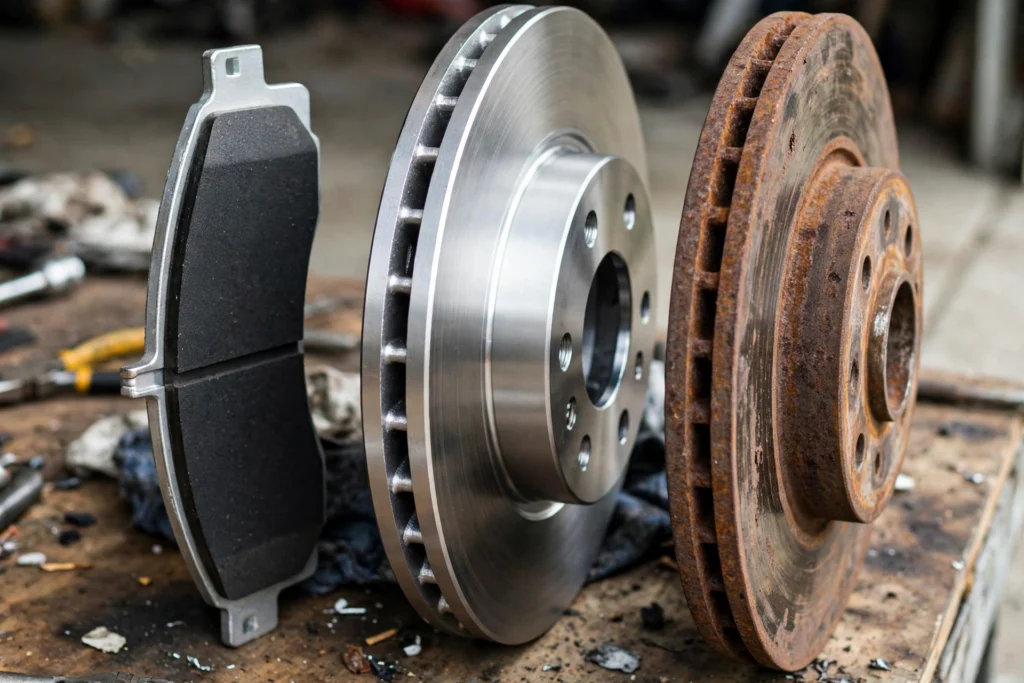
If the rotors are below minimum thickness, warped, deeply scored, or heavily rusted, they must be replaced. Resurfacing, also called turning the rotors, was once common, but many modern rotors are made thinner to save weight, leaving little material to remove. In many cases, new rotors cost only slightly more than resurfacing and last longer, so replacement is the better value.
As a practical rule, expect to replace rotors every second pad change on most cars, or sooner if you tow, drive in the mountains, or do a lot of stop-and-go city driving. If a shop insists on new rotors at every pad change without measuring them, ask to see the measurements. A trustworthy shop will be happy to show you.
Can You Save Money With a DIY Brake Job?
Replacing brake pads yourself can save $150 to $300 per axle in labor, and many car owners with basic tools do it successfully. A DIY pad and rotor job typically costs $100 to $300 in parts per axle, depending on the vehicle and parts quality. You will need a jack and jack stands, a lug wrench, a socket set, a C-clamp or brake piston tool, and brake cleaner. YouTube tutorials for your exact model make the job much easier.
However, brakes are not the place to learn by trial and error. A mistake here affects your ability to stop, so if you are not confident with tools, or if the job involves calipers, brake lines, or the electronic parking brake found on many newer cars, leave it to a professional. Some newer cars also require a scan tool to retract the rear calipers, which adds cost and complexity to a DIY job. A hybrid approach works well for many drivers: buy quality parts yourself if the shop allows it, or ask the shop to use premium ceramic pads, and let the professionals handle the labor and the safety check.
How to Avoid Overpaying for Brakes
First, get an itemized written quote that lists parts, labor, and any shop fees separately. If the quote only shows a single total, ask for the breakdown. Second, ask about the warranty. A good shop offers at least 12 months or 12,000 miles on parts and labor, and many offer 24 months. Third, do not authorize extra work on the spot without understanding it. A stuck caliper or a leaking line is a real safety issue, but a shop should be able to show you the problem or explain it clearly.
Fourth, keep up with maintenance that protects your brakes. Checking your brake fluid during routine service helps, and keeping the whole car maintained reduces surprises. Our guide on how to check car fluids explains what to look for under the hood between services. Finally, plan brake work before winter if you can. Cold weather, wet roads, and salt make braking harder, and a car that stops well in summer may feel very different on an icy road. Our winter preparation checklist covers brakes as part of a full seasonal inspection in how to winterize your car.
How Long Do Brakes Last?
Most brake pads last 30,000 to 70,000 miles, with city drivers at the low end and highway drivers at the high end. Rotors often last 50,000 to 100,000 miles, or roughly two sets of pads. Aggressive braking, heavy loads, towing, and mountain driving all shorten brake life. Gentle, anticipatory braking, where you slow down gradually instead of braking hard at the last moment, can add thousands of miles to a set of pads.
Electric vehicles and hybrids deserve a special note. Regenerative braking handles much of the slowing, so their pads and rotors often last far longer than those on gas cars. That does not mean EV brakes never need service, though. Infrequent use can let rotors rust, especially in wet climates, so EV owners should still have their brakes inspected at least once a year.
Closing
A brake job is one of the few repairs where the cheapest quote is not always the best deal, and the most expensive quote is not always a rip-off. What matters is what is actually included: which parts, which axles, what quality of pads and rotors, and what warranty backs the work. For most drivers, a pads-plus-rotors job on the worn axle, using quality ceramic pads, with a 12-month warranty or better, is the sweet spot between cost and safety.
Do not wait for grinding to force your hand. Get your brakes inspected at the first squeal, compare itemized quotes, and keep a record of when the work was done so you can plan the next service before it becomes urgent. Your brakes are the one system you never want to test at their limit, and a few hundred dollars spent on time is a small price for stopping power you can trust.
Frequently Asked Questions
How much does a brake job cost on average in the US?
For a typical sedan, expect $250 to $400 for pads on one axle and $400 to $700 for pads plus rotors on one axle at an independent shop. A full four-wheel job with pads and rotors usually costs $800 to $1,400. Trucks, SUVs, and luxury cars cost more.
How do I know if I need new brakes or just new pads?
If you hear squealing but the pedal feels normal and there is no vibration, you probably need pads only, provided the rotors measure above minimum thickness. Grinding, vibration, or a soft pedal usually means rotors, calipers, or fluid also need attention. A shop inspection with rotor measurements gives the definitive answer.
Is it safe to drive with squeaky brakes?
Light squeaking from a wear indicator is a warning, not an emergency, but it means you should book a repair within a week or two. Grinding, a brake warning light, or a change in pedal feel means you should stop driving the car for anything but a trip to the shop.
Should I replace brakes on both sides at the same time?
Yes. Brakes should always be serviced in axle pairs, meaning both front wheels or both rear wheels together. Replacing only one side causes uneven braking and can make the car pull to one side in an emergency stop.
How long does a brake job take?
A pad and rotor job on one axle takes about one to two hours for a professional shop. A full four-wheel job usually takes two to four hours. Rust, seized parts, or caliper replacement can extend that time.