How Much Does a Tire Replacement Cost in 2026? Prices, Signs, and When to Replace Your Tires for US Drivers
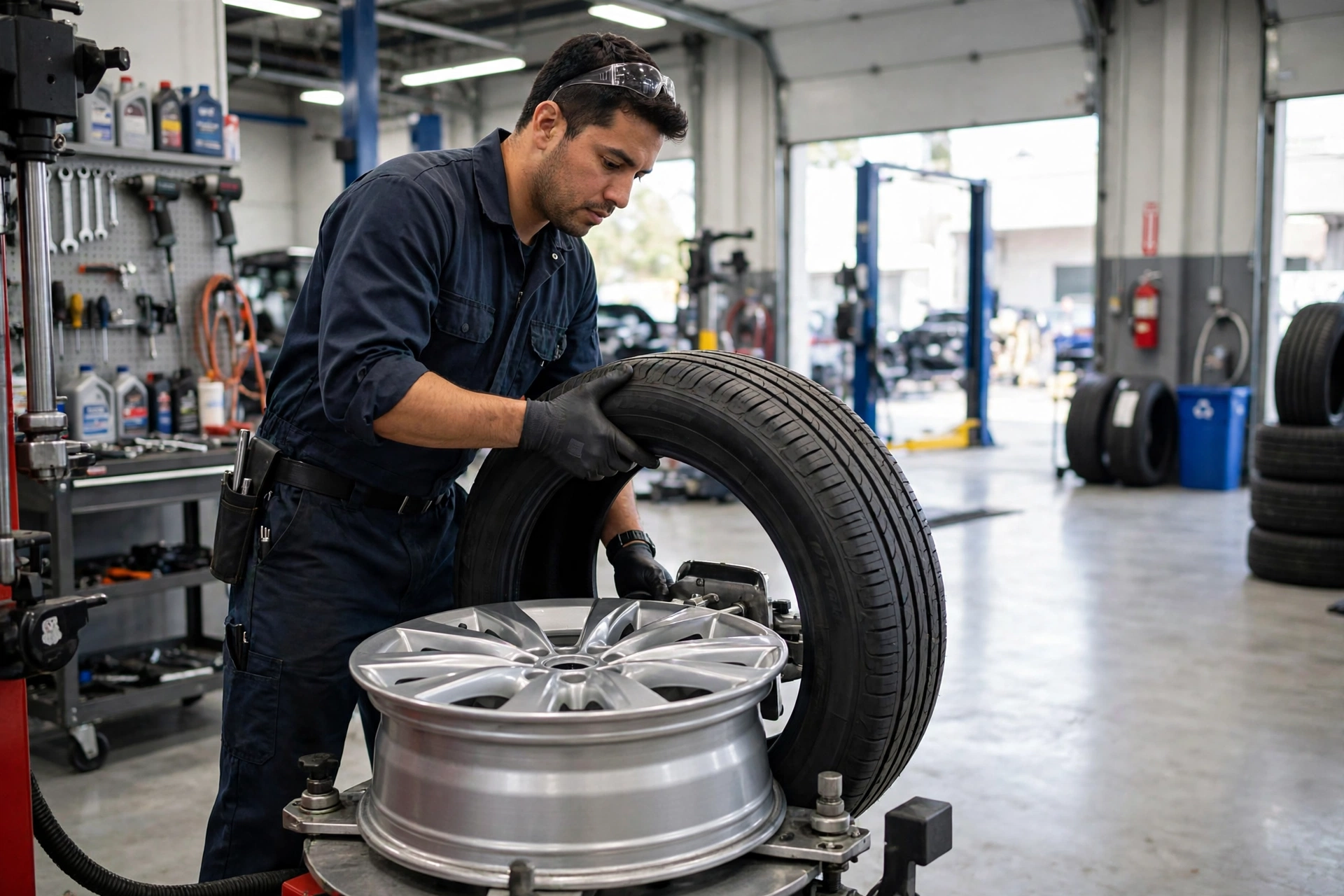
Tires are the only part of your car that actually touches the road, yet most drivers only think about them when one goes flat. If your tread is worn, your tires are cracking, or your car has started pulling to one side, you are probably wondering what a replacement will cost you. The short answer: a tire replacement in the US usually costs $150 to $400 per tire in 2026, including mounting and balancing. A full set of four runs $600 to $1,600 or more, depending on your vehicle, the tire type, and where you buy them.
That is a wide range, and the final bill depends on choices you can control. In this guide we break down tire replacement prices by tire type and vehicle, explain the hidden fees shops add, show you the signs that your tires are truly done, and share practical ways to save money without buying unsafe tires.
How Much Does a Tire Replacement Cost in 2026?
For a typical passenger car, expect to pay $100 to $300 per tire for the tire itself, plus $25 to $50 per tire for mounting, balancing, and valve stem service. Luxury cars, trucks, SUVs, and performance vehicles cost more because their tires are larger and built for heavier loads or higher speeds.
Here is what US drivers are paying in 2026:
| Tire type | Price per tire (tire only) | Installed price per tire | Full set of 4 installed |
|---|---|---|---|
| Economy all-season | $80 to $140 | $110 to $180 | $440 to $720 |
| Standard all-season | $130 to $220 | $160 to $270 | $640 to $1,080 |
| Performance summer | $180 to $350 | $210 to $400 | $840 to $1,600 |
| All-terrain (truck/SUV) | $200 to $400 | $230 to $450 | $920 to $1,800 |
| Winter/snow | $120 to $280 | $150 to $330 | $600 to $1,320 |
| Run-flat | $200 to $450 | $230 to $500 | $920 to $2,000 |
These are typical prices at national tire chains and independent shops in 2026. Dealerships often charge 10 to 20 percent more for the same tire, while warehouse clubs like Costco and Sam’s Club can be cheaper, especially when they run rebate promotions.
What Affects the Price of a New Tire?
Several factors push a tire toward the cheap end or the expensive end of the range.
Tire size
Bigger tires cost more. A compact sedan running 195/65R15 tires will always be cheaper to re-tire than a full-size SUV running 275/55R20 tires. The size is printed on your tire sidewall, and it is the first thing any shop will ask for.
Tire type
All-season tires are the cheapest option for most drivers. Performance tires use softer rubber compounds for grip and wear out faster, so they cost more. All-terrain and mud-terrain tires for trucks use heavier construction and larger tread blocks, which also raises the price. Winter tires are a separate seasonal purchase.
Brand
Premium brands like Michelin, Bridgestone, and Continental usually cost $30 to $80 more per tire than budget brands. They often last longer and come with better treadwear warranties, so the cost per mile can actually be lower. Budget brands are fine for older cars and low annual mileage, but check the treadwear rating before you buy.
Speed rating and load index
Tires rated for higher speeds (H, V, W, Y) and heavier loads cost more because they use stronger materials. Your owner’s manual lists the minimum rating your car needs. Never buy a tire with a lower speed rating or load index than the manufacturer specifies.
Installation fees
The tire price is only part of the bill. Shops charge for mounting ($15 to $30 per tire), balancing ($12 to $25 per tire), a new valve stem ($5 to $10), tire disposal ($3 to $5 per tire), and sometimes a shop supplies fee. Some shops also charge extra for TPMS sensor service, which can add $10 to $20 per wheel. Always ask for an out-the-door quote before you agree to the work.
Tire Replacement Cost by Vehicle Type
The car you drive matters as much as the tire you choose.
| Vehicle type | Typical tire size | Installed cost per tire | Full set installed |
|---|---|---|---|
| Compact sedan | 195/65R15 | $110 to $180 | $440 to $720 |
| Midsize sedan | 215/55R17 | $150 to $260 | $600 to $1,040 |
| Compact SUV | 225/65R17 | $160 to $280 | $640 to $1,120 |
| Full-size SUV | 275/55R20 | $230 to $450 | $920 to $1,800 |
| Pickup truck | 265/70R17 | $200 to $400 | $800 to $1,600 |
| Sports car | 245/40R18 | $220 to $450 | $880 to $1,800 |
If you drive a truck or SUV, remember that many of these vehicles need a matching spare or a full-size spare, which adds to the total if yours is also worn out.
7 Signs You Need New Tires
Tires do not last forever, and waiting too long is a safety risk. Check for these signs regularly.
1. Tread depth below 2/32 of an inch
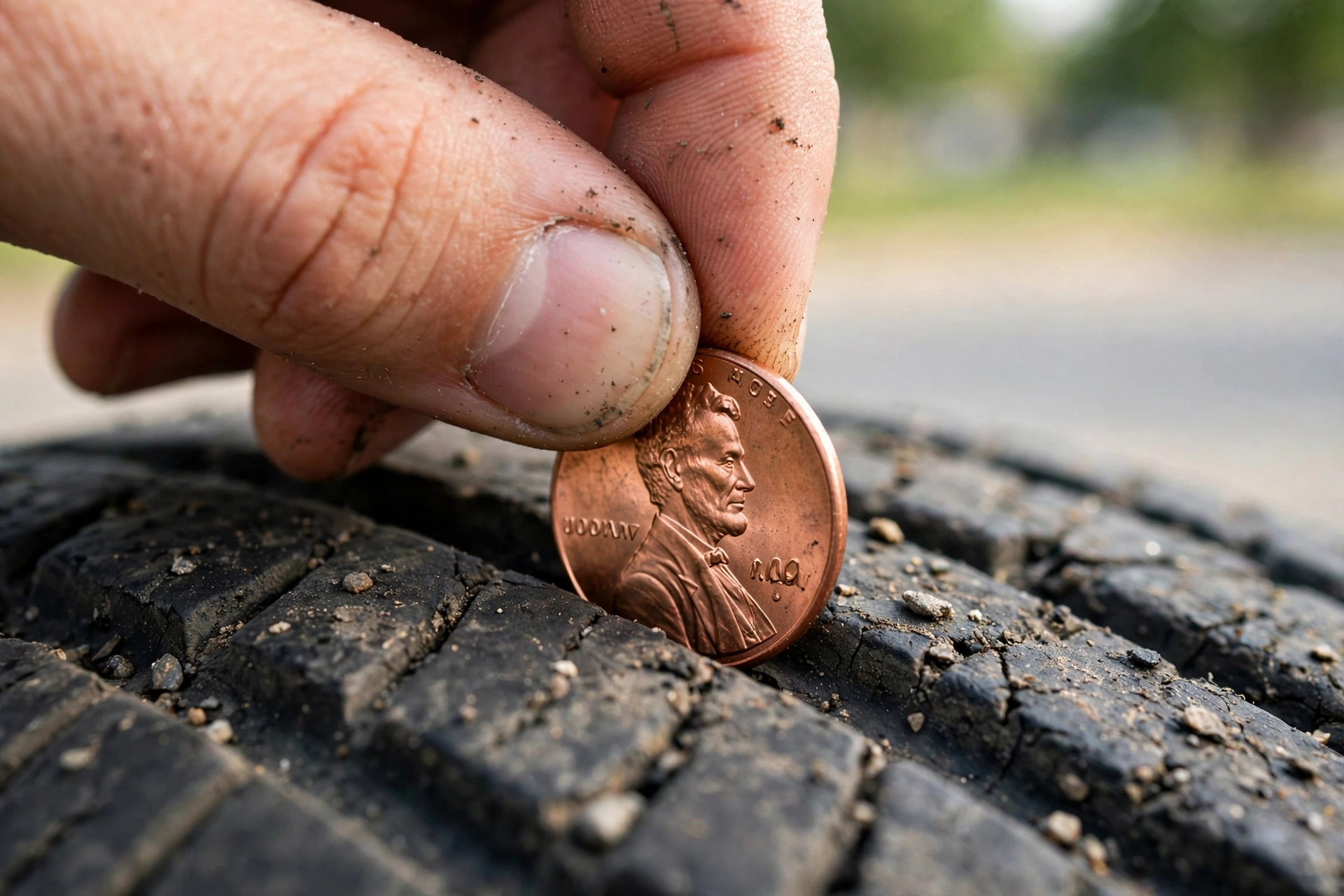
The penny test still works. Stick a penny into the tread with Lincoln’s head upside down and facing you. If you can see the top of his head, your tread is below 2/32 of an inch, which is the legal minimum in most US states. At 4/32 of an inch, wet-weather grip drops sharply, so many safety experts recommend replacing tires at 4/32, not 2/32.
2. The tread wear bars are showing
Tires have small raised bars molded across the tread grooves. When the tread wears down flush with these bars, the tire is done. No test needed, just look.
3. Cracks in the sidewall
Small cracks, called dry rot, appear as tires age, even if the tread looks fine. Sidewall cracking means the rubber is breaking down. A cracked sidewall can fail suddenly, so do not ignore it.
4. Bulges or blisters
A bulge on the sidewall means the inner structure of the tire is damaged, often from hitting a pothole or curb. A bulging tire can blow out without warning. Replace it immediately.
5. Vibration while driving
A vibration that starts at highway speed can mean a tire is out of balance, but it can also mean internal tire damage or a separated belt. If balancing does not fix it, the tire itself may be the problem.
6. Your tires are more than 6 years old
Rubber degrades with age, even on a car that sits in a garage. Check the DOT date code on the sidewall. The last four digits show the week and year of manufacture. Most tire makers recommend replacement at 6 to 10 years, regardless of tread depth.
7. Uneven wear
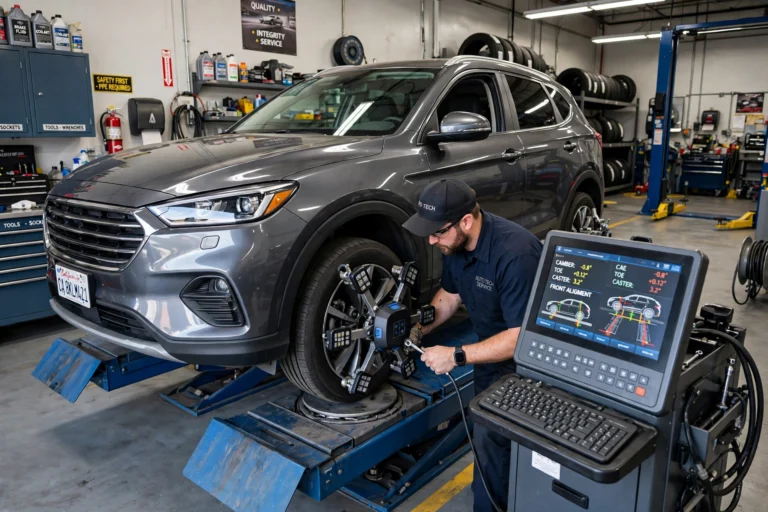
If one edge of the tire is worn smooth while the rest looks fine, you may have an alignment or inflation problem. Fixing the cause matters, but a badly worn tire still needs replacing. A wheel alignment after new tires protects your investment, and you can see what that service costs in our guide to how much a wheel alignment costs.
Can You Replace Just One Tire?
Sometimes, yes. If the other three tires are fairly new and have similar tread depth, replacing one damaged tire is fine. The rule most shops follow: the new tire should be within 2/32 of an inch of tread depth of the others on the same axle.
Replace tires in pairs when the difference is bigger than that. A large tread difference between the left and right tires on one axle can affect handling and braking, and it can strain all-wheel-drive systems. On AWD vehicles, many manufacturers recommend replacing all four tires at once if the tread depth difference is more than 2/32 of an inch, because mismatched tires can damage the drivetrain.
If you are replacing two tires, put the new pair on the rear axle, even on a front-wheel-drive car. New tires on the rear reduce the risk of the back end sliding out in wet conditions.
How Long Do Tires Last?
Most tires last 3 to 5 years or 40,000 to 60,000 miles, whichever comes first. High-quality touring tires with long treadwear warranties can reach 70,000 to 80,000 miles. Performance tires often last only 20,000 to 30,000 miles because their softer rubber wears faster.
Your driving habits matter too. Aggressive acceleration, hard braking, and fast cornering wear tires faster. So does driving with the wrong tire pressure. Underinflated tires wear on the edges, overinflated tires wear in the center, and both wear out sooner than a properly inflated tire.
Regular tire rotation spreads wear evenly across all four tires and is one of the cheapest ways to make a set last longer. Our guide on how often to rotate your tires explains the schedule and the rotation patterns for front-wheel, rear-wheel, and all-wheel-drive cars.
How to Save Money on Tire Replacement
New tires are expensive, but you do not have to pay full price.
Buy during rebate season
Tire makers run rebates in spring and fall, often $70 to $110 back on a set of four when you buy through a participating retailer. Check the manufacturer’s website before you shop.
Compare installed prices, not tire prices
One shop may sell the tire for $20 less but charge $40 more for installation. Ask every shop for the out-the-door price including mounting, balancing, valve stems, disposal, and tax.
Consider last year’s model
When a tire maker releases a new version, the previous model often goes on clearance at a steep discount. It is the same quality tire, just not the newest name.
Check warehouse clubs
Costco, Sam’s Club, and BJ’s often include installation, rotation, balancing, and road hazard coverage in the tire price. The membership pays for itself quickly if you buy a full set.
Keep your tires properly inflated
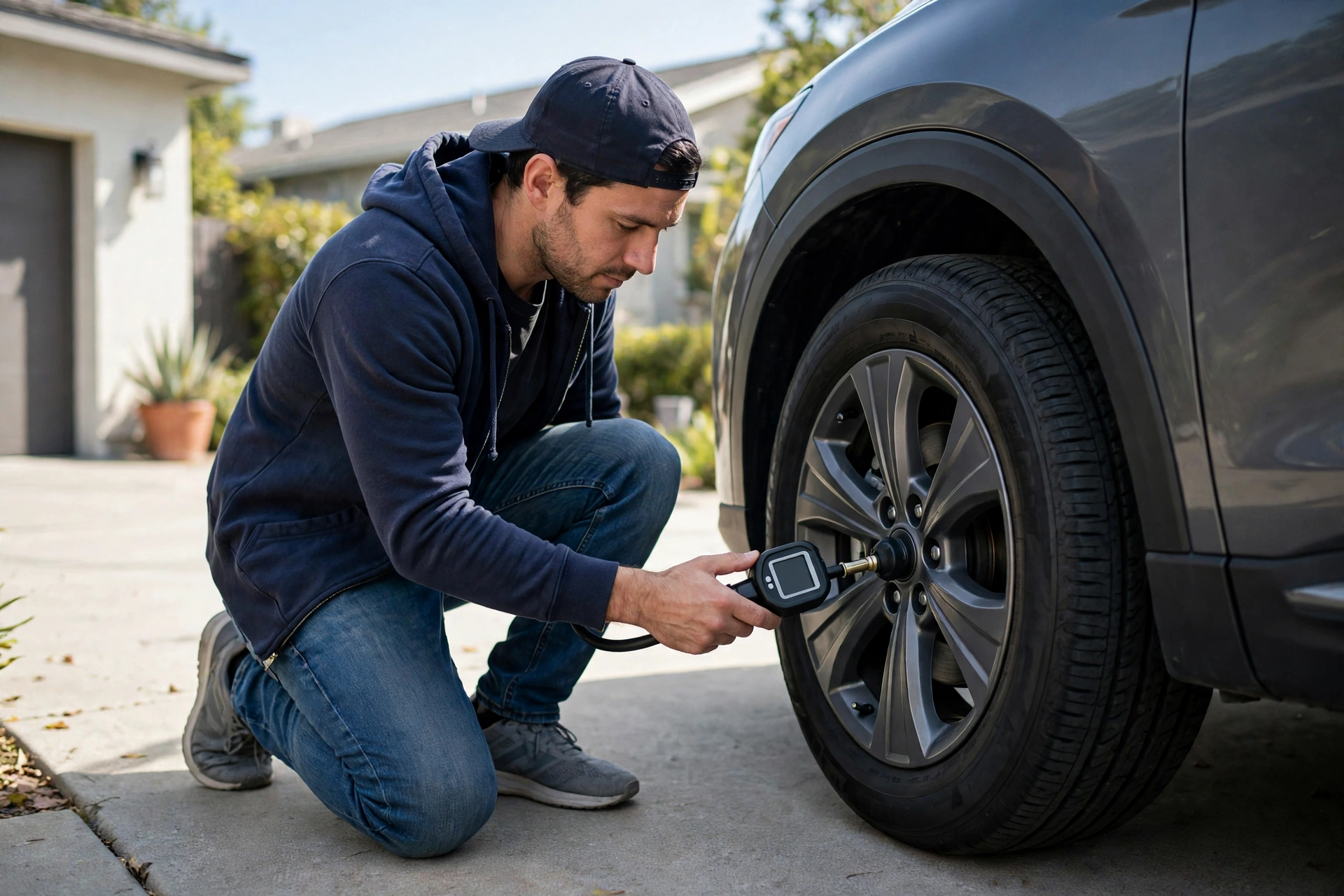
This costs nothing and extends tire life. Check pressure monthly with a gauge, not by eye, and inflate to the number on the driver’s door sticker, not the number on the tire sidewall.
Do not buy used tires
Used tires may look fine but hide internal damage, repairs, or age. You cannot see a tire’s history, and a $50 used tire that blows out at highway speed is the most expensive tire you will ever buy.
DIY vs Shop Installation
Changing a tire yourself is possible if you have a jack, a torque wrench, and a way to balance the wheel, but most drivers do not. Balancing requires a machine, and mounting a tire onto a rim without the right equipment risks damaging the tire bead or the wheel.
A shop charges $25 to $50 per tire for mounting and balancing, and that price includes the equipment, the disposal of your old tires, and a warranty on the work. For most drivers, paying for installation is the right call. If you do install tires yourself, have them balanced at a shop before driving at highway speed, and torque the lug nuts to the specification in your owner’s manual.
Frequently Asked Questions
How much does it cost to replace one tire in 2026?
One tire typically costs $150 to $400 installed, including mounting and balancing. Economy tires on a small car can be as low as $110 installed, while large truck, SUV, or run-flat tires can reach $500 installed.
How much does it cost to replace all four tires?
A full set of four tires usually costs $600 to $1,600 installed for a typical car. Trucks, SUVs, and performance cars run $900 to $2,000 or more for a set of four.
Do I need an alignment after getting new tires?
An alignment is not required with every tire purchase, but it is strongly recommended. Bad alignment is one of the most common reasons new tires wear out early. Many shops offer a free alignment check with a tire purchase.
Can I drive with a tire that has a nail in it?
If the tire is holding air, drive slowly to a repair shop and do not pull the nail out. A puncture in the tread area can often be repaired for $25 to $40. A puncture in the sidewall cannot be repaired safely, and the tire must be replaced.
How often should tires be replaced?
Replace tires when tread depth reaches 4/32 of an inch for safety, or 2/32 of an inch at the legal minimum. Also replace tires that are more than 6 years old, have sidewall cracks or bulges, or show uneven wear that cannot be corrected.
The Bottom Line
A tire replacement costs $150 to $400 per tire installed in 2026, and a full set runs $600 to $1,600 for most cars. The exact price depends on your tire size, the tire type, the brand, and where you buy. Check your tread depth and tire age today, get an out-the-door quote from two or three shops, and look for a rebate before you buy. Good tires are not the place to cut corners. They are your car’s only contact with the road, and the right set at the right price is money well spent.
Glass damage is another common repair to budget for, so learn how much does a windshield replacement cost before a small chip turns into a full replacement.