How Much Does an Oil Change Cost in 2026? Conventional, Synthetic, and High-Mileage Prices for US Drivers
An oil change is the cheapest insurance you can buy for your engine, and it is also one of the most confusing services to price. One shop quotes $39.99, another quotes $129, and a dealership may quote even more for the same car. The difference is rarely a scam. It usually comes down to the type of oil, the amount your engine needs, the filter, and whether you are paying for a quick lube service or a full inspection with your oil change. In 2026, most US drivers will pay between $40 and $130 for a standard oil change at a shop. A basic conventional oil change sits at the low end of that range. A full synthetic oil change for a larger engine or a European model sits at the high end, and it can pass $150 in some cases. Doing it yourself is cheaper on parts alone, usually $30 to $70, but you still need the right oil, the right filter, and a safe way to dispose of the old oil. This guide breaks down the real 2026 prices by oil type, vehicle type, and service location. It also covers how often you actually need an oil change, the signs that you are overdue, and the mistakes that turn a simple service into an expensive repair. If you drive in the US, use US prices, and want a straight answer without upsell pressure, this is the guide to bookmark.
How Much Does an Oil Change Cost in 2026?
For a typical gasoline car or SUV in the US, expect these 2026 price ranges at a repair shop or quick lube center.
| Service | Typical shop price in 2026 | Best for |
|---|---|---|
| Conventional oil change | $40 to $70 | Older cars that specify conventional oil. |
| Synthetic blend oil change | $60 to $90 | Drivers who want better protection at a mid-range price. |
| Full synthetic oil change | $75 to $130 | Most modern cars, turbo engines, and longer intervals. |
| High-mileage oil change | $70 to $120 | Cars over 75,000 miles with minor leaks or oil burning. |
| Diesel oil change | $90 to $180 | Diesel trucks and SUVs that need more oil and special filters. |
| DIY oil change (parts only) | $30 to $70 | Drivers with tools, space, and a recycling plan. |
Prices vary by state, by shop labor rate, and by how many quarts your engine holds. A small sedan that takes 4 quarts will almost always cost less than a full-size truck that takes 8 quarts. Luxury and European brands also tend to cost more, because they often require a specific oil specification and a cartridge-style filter that takes longer to replace. If a quote seems far outside these ranges, ask what it includes. A $29 oil change that excludes the filter, the disposal fee, and shop supplies is not really $29. A $140 synthetic change that includes a full inspection, tire rotation, and fluid top-offs may be fair value, even if the oil alone is not worth that much.
Conventional vs Synthetic Blend vs Full Synthetic
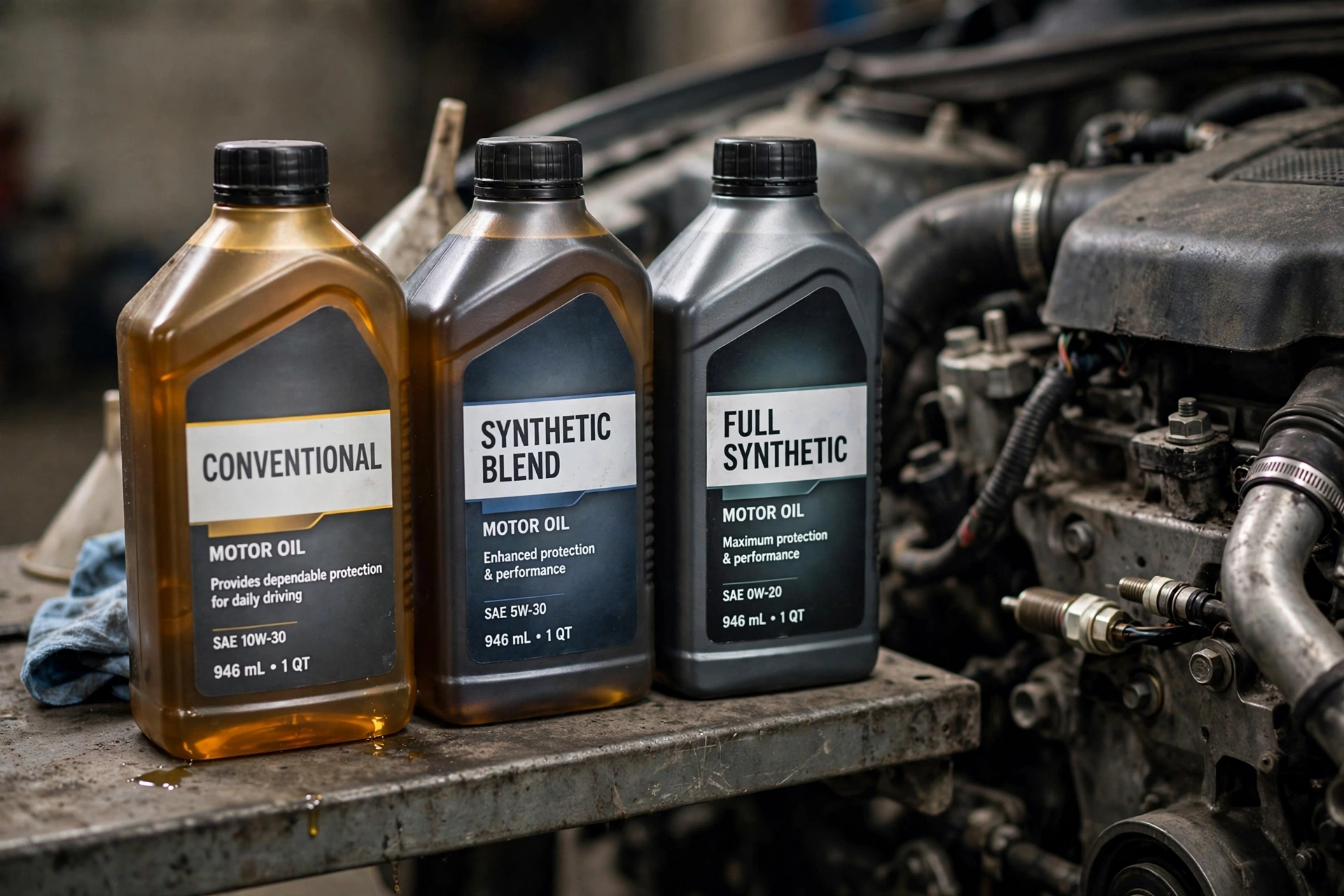
The oil type is the single biggest factor in your bill, so it is worth understanding what you are paying for. Conventional oil is refined crude oil with additives. It works fine in older engines that were designed for it, and it is the cheapest option. Its downside is that it breaks down faster under heat, so it usually needs changing every 3,000 to 5,000 miles. Synthetic blend oil mixes conventional and synthetic base oils. It offers better heat resistance and longer life than conventional oil, at a price between the two. It is a sensible middle step for drivers who want extra protection without paying full synthetic prices. Full synthetic oil is chemically engineered for stable performance in heat and cold. It flows better on cold starts, resists breakdown longer, and protects turbocharged and high-performance engines better. Most cars built in the last decade specify full synthetic, and many can go 7,500 to 10,000 miles between changes on it. The higher upfront price is often offset by the longer interval. High-mileage oil is usually a synthetic blend or full synthetic formula with seal conditioners added. It is designed for cars over 75,000 miles and can help slow small seal leaks and reduce oil burning. It will not fix a major leak or worn piston rings, but for an aging daily driver it is often worth the small premium. Check your owner’s manual before choosing. Using a cheaper oil than your manufacturer specifies can void warranty coverage and, in a turbo engine, can cause sludge that is far more expensive than the money saved on the oil change.
Oil Change Cost by Vehicle Type
Not every car costs the same to service, even with the same oil. Engine size, oil capacity, and filter design all matter. Small sedans and hatchbacks are usually the cheapest. They take 4 to 5 quarts, use a common spin-on filter, and are easy to lift and drain. Expect $40 to $90 for most small cars, depending on oil type. Midsize SUVs and crossovers are the middle of the range. They often take 5 to 6 quarts and may need a skid plate removed for access, which adds a little labor. Expect $60 to $120 for a full synthetic change. Full-size trucks and large SUVs cost more because they hold more oil, often 7 to 8 quarts, and use larger filters. A full synthetic change on a V8 truck commonly runs $90 to $140. Luxury and European cars are the wildcard. Some require a manufacturer-specific oil, a special filter housing tool, and an electronic oil level reset. Prices of $120 to $200 are common at a dealership, though a good independent specialist is often $30 to $50 cheaper for the same specification. Electric vehicles do not need engine oil changes at all, which is one of their lower running costs. Hybrids do need them, but often less often, because the gasoline engine runs fewer miles than the odometer suggests. Always follow the hybrid manufacturer’s interval, not a generic shop sticker.
Shop vs Dealership vs DIY: Where Should You Go?
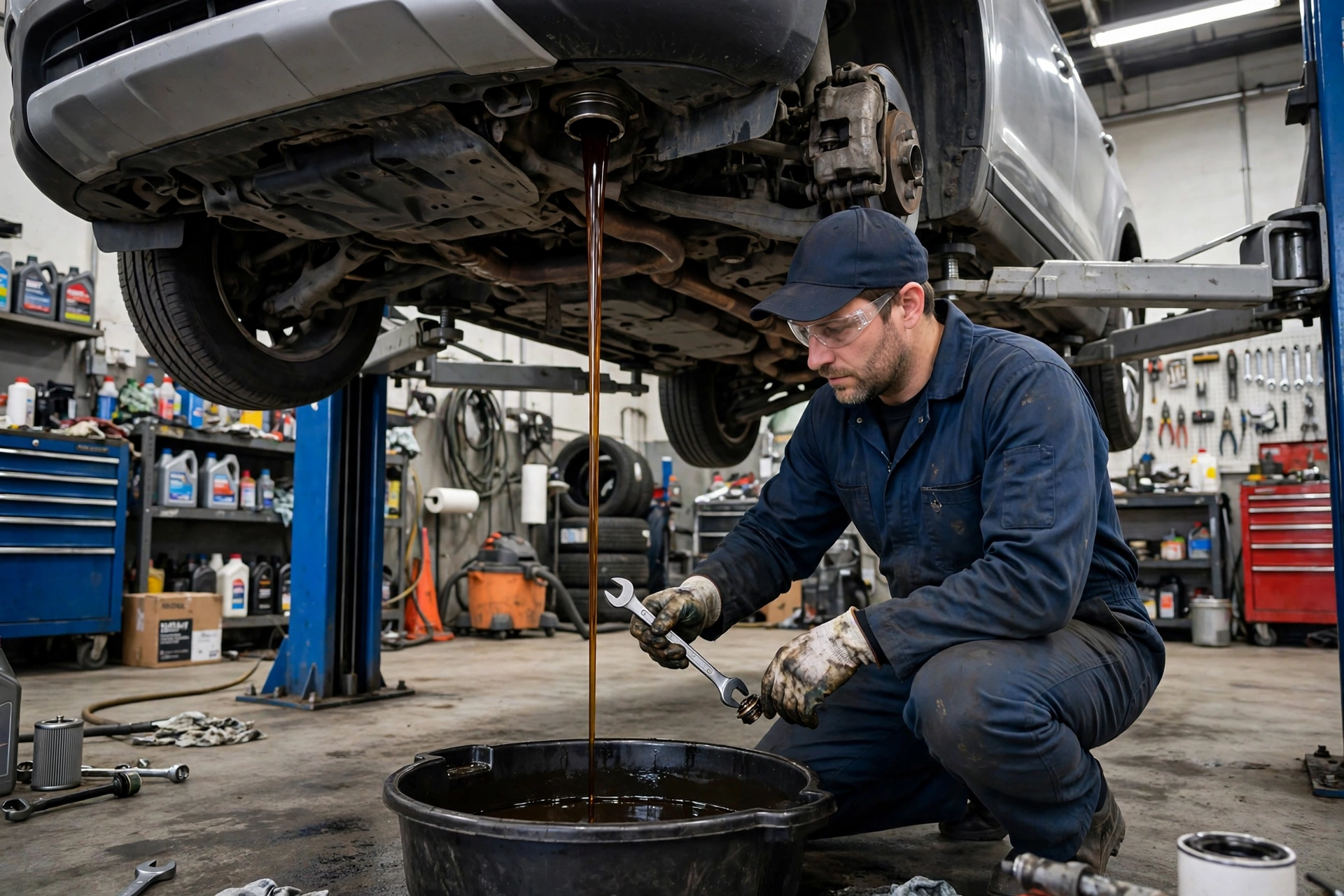
A quick lube chain is fast and cheap, and it is fine for a basic car with a standard oil. The trade-off is upsell pressure. You may be offered an air filter, a cabin filter, a coolant flush, and a transmission service in one visit. Some of those services are legitimate, but none of them should be decided in a hurry at the counter. If you are unsure, decline and check your maintenance schedule at home. An independent repair shop is often the best balance of price and care. Labor rates are usually lower than a dealership, the technician is more likely to spot other problems, and you can build a relationship with a shop that knows your car’s history. Ask whether the price includes a multipoint inspection and fluid top-offs, because those extras explain many price differences. A dealership costs the most, but it uses factory parts, factory oil specifications, and technicians trained on your exact model. For a car still under warranty, or for a European model with a tricky filter setup, that premium can be worth it. For an older car out of warranty, an independent shop usually offers the same quality for less. Doing it yourself saves $30 to $60 per change on labor, and it is satisfying work. You need a jack and jack stands or ramps, a drain pan, a wrench, a filter wrench, and a funnel. You also need a plan for the used oil. Every US state has free recycling options, and most auto parts stores accept used oil at no charge. Never pour used oil down a drain or into the trash. If you are not comfortable working under a car safely, pay a shop. Saving $50 is never worth a safety risk.
How Often Should You Change Your Oil?
The old 3,000-mile rule is outdated for most modern cars. It made sense when conventional oil and older engines were the norm. Today, the right interval depends on your oil, your engine, and your driving. As a general guide for US drivers in 2026: Conventional oil: every 3,000 to 5,000 miles, or every 6 months. Synthetic blend: every 5,000 to 7,500 miles, or every 6 to 12 months. Full synthetic: every 7,500 to 10,000 miles, or every 12 months. Severe driving (short trips, towing, extreme heat, dusty roads): shorten the interval by about 25 percent. Your owner’s manual wins over any shop sticker. Some manuals list two intervals, normal and severe, and most real-world US driving counts as severe if your trips are short, your traffic is heavy, or your summers are very hot. When in doubt, follow the severe schedule. It costs a little more in oil, but it costs far less than an engine repair. Oil life monitors in modern cars are helpful, but they estimate based on driving conditions, not a lab test of your oil. Treat the monitor as a reminder, not a guarantee, and check your oil level yourself between changes. Low oil does more damage than old oil, and many engines burn a quart between changes without any warning light.
Signs You Need an Oil Change Now
Do not wait for a dashboard warning if you notice these signs. Dark, gritty oil on the dipstick is normal to a degree, but oil that looks thick, black, and gritty long before your interval is due suggests contamination or overheating. Fresh oil is amber and translucent. It darkens with use, but it should still feel smooth between your fingers. A louder engine, ticking on startup, or a rough idle can mean the oil is too thin or too low to cushion moving parts. This is more common in older engines and in very hot weather. The smell of oil inside the car, or visible oil spots under the engine, points to a leak. A leak lowers your oil level and can damage rubber parts and the exhaust system if it drips onto hot surfaces. The oil pressure warning light is urgent. It does not mean “schedule a change soon.” It means stop driving safely as soon as you can and check the level. Driving with low oil pressure can destroy an engine in minutes. If you are overdue by more than 1,000 miles, book the change this week. An overdue oil change rarely causes instant failure, but it steadily increases wear, sludge, and fuel use, and it is the easiest expensive repair to prevent.

Hidden Fees and Upsells to Watch For
A fair oil change quote should list the oil type, the number of quarts, the filter, the labor, and any disposal or shop supply fee. Ask for that breakdown before approving the work. Common add-ons that are sometimes pushed too early include engine flushes, fuel injector cleaning, and transmission flushes. An engine flush is rarely needed on a car with regular oil changes. A transmission service has its own interval and cost, and it should not be bundled into an oil change visit without discussion. For a sense of what a separate transmission service costs, see our guide on how much does a transmission fluid change cost. Other routine maintenance has its own price and schedule too. Brakes, for example, wear on a different cycle from oil, and knowing how much does a brake job cost helps you judge whether a shop’s combined quote is fair or padded. When a shop recommends extra work, ask three questions: Is it due by mileage or time in my manual? Can you show me the worn part or the test result? What happens if I wait until my next visit? A good shop will answer all three clearly. Also check the oil specification on your invoice after the job. It should match your manual’s viscosity, such as 0W-20 or 5W-30, and the correct specification for your brand. If the invoice just says “bulk oil” with no grade, ask what was actually used. You can learn more about oil grades and standards from the motor oil reference on Wikipedia.
How to Save Money Without Cutting Corners
You do not need the most expensive oil, but you do need the right oil. Saving money starts with matching the oil to your manual, not with choosing the cheapest bottle on the shelf. Buy oil and filters on sale if you do your own changes, and keep the receipt. Many auto parts stores run rebates on full synthetic oil that bring the price close to a blend. Bundle wisely. If your shop offers a free tire rotation with an oil change, take it, because rotation extends tire life. If it offers a “free” inspection, ask for the written report. A real inspection report lists tire tread, brake pad thickness, belt condition, and fluid levels, not just a verbal “everything looks good.” Skip the extras you do not need. A cabin air filter change takes five minutes and a $15 part on most cars, and a shop may charge $50 or more for it. Watch one video for your model, and you can do it in your driveway. Finally, keep a simple log of every oil change: date, mileage, oil type, and shop. It helps you spot a shop that is shortening your interval without reason, and it adds value if you sell the car. A documented maintenance history is one of the first things a careful used-car buyer asks to see. If you are planning other routine fluid work at the same visit, learn how much does a coolant flush cost so you can budget the full service in one go.
Closing: What a Fair Oil Change Should Cost You
For most US drivers in 2026, a fair price is $40 to $70 for conventional oil, $60 to $90 for a synthetic blend, and $75 to $130 for full synthetic. Trucks, diesels, and European models sit higher, and DIY work sits lower on parts alone. The right interval is the one in your owner’s manual, adjusted for severe driving, not the sticker a shop puts on your windshield. An oil change is small money compared with an engine. Pay for the correct oil, change it on time, check your level between services, and question any upsell that is not in your manual. Do that consistently, and your engine will repay you with years of quiet, reliable miles. If your car is also due for new spark plugs, see our guide on how much does a spark plug replacement cost in 2026 so you can plan both jobs in one visit.
FAQ
How much does an oil change cost in 2026 in the US?
Most US drivers pay $40 to $130 at a shop in 2026. Conventional oil is $40 to $70, synthetic blend is $60 to $90, and full synthetic is $75 to $130. Trucks, diesels, and European cars can cost more, while a DIY change costs $30 to $70 in parts.
Is full synthetic oil worth the extra cost?
Yes, for most modern cars. Full synthetic protects better in heat and cold, lasts longer, and is specified by most manufacturers for cars built in the last decade. The longer interval often makes the total yearly cost similar to conventional oil.
How often should I change my oil?
Follow your owner’s manual. As a guide, conventional oil lasts 3,000 to 5,000 miles, synthetic blend lasts 5,000 to 7,500 miles, and full synthetic lasts 7,500 to 10,000 miles. Shorten the interval if you drive mostly short trips, tow, or drive in extreme heat.
Can I go 10,000 miles between oil changes?
Yes, if your car specifies full synthetic oil and your manual allows a 10,000-mile interval. Check your oil level regularly, because many engines burn some oil between changes, and low oil is more damaging than old oil.
Is a dealership oil change better than an independent shop?
A dealership uses factory parts and specifications, which matters for warranty cars and some European models. A good independent shop usually matches that quality for less money on older cars. The key is the correct oil grade and filter, not the sign over the door.