Cargo E-Bikes: A Complete Guide for US Families and Commuters in 2026
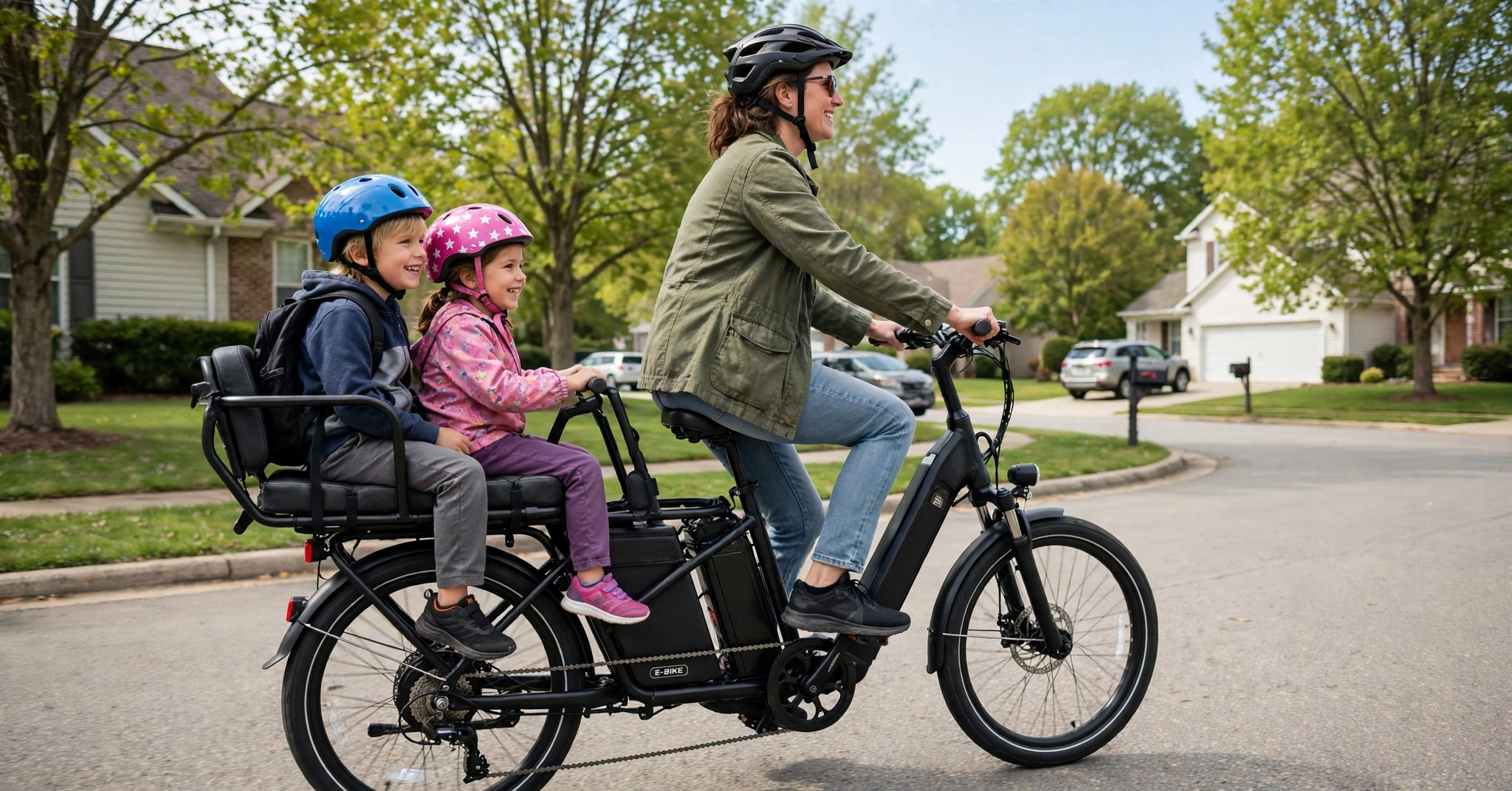
A cargo e-bike is an electric bike built to carry heavy loads. It can haul two kids to school, a week of groceries, or a work toolbox, all without a car. Cargo bikes have carried loads for over a century, and the electric motor is what finally made them practical for everyday American families. You can read the background on cargo bikes on Wikipedia.
For many American families, it is the closest thing to a second car that costs a few thousand dollars instead of tens of thousands, and it never needs gas.
Cargo e-bikes are one of the fastest growing parts of the US e-bike market. Parents use them for school runs, city riders use them to replace car trips, and small businesses use them for local deliveries. If you are thinking about one, this guide covers the types, the prices, the rules, and how to pick the right model.
What Is a Cargo E-Bike?
A cargo e-bike is an electric bicycle with a frame designed to carry weight. A normal e-bike is built for one rider and a small bag. A cargo e-bike is built for the rider plus 100 to 400 pounds of extra load, depending on the model.
The motor does the heavy lifting. Most cargo e-bikes in the US use a 750 watt motor, which is the legal limit in most states, paired with a large battery of 500 to 1,000 watt hours. That combination keeps the bike moving at a steady speed even when it is fully loaded.
There are three main designs, and each one suits a different job.
The Three Types of Cargo E-Bikes
Longtail Cargo E-Bikes
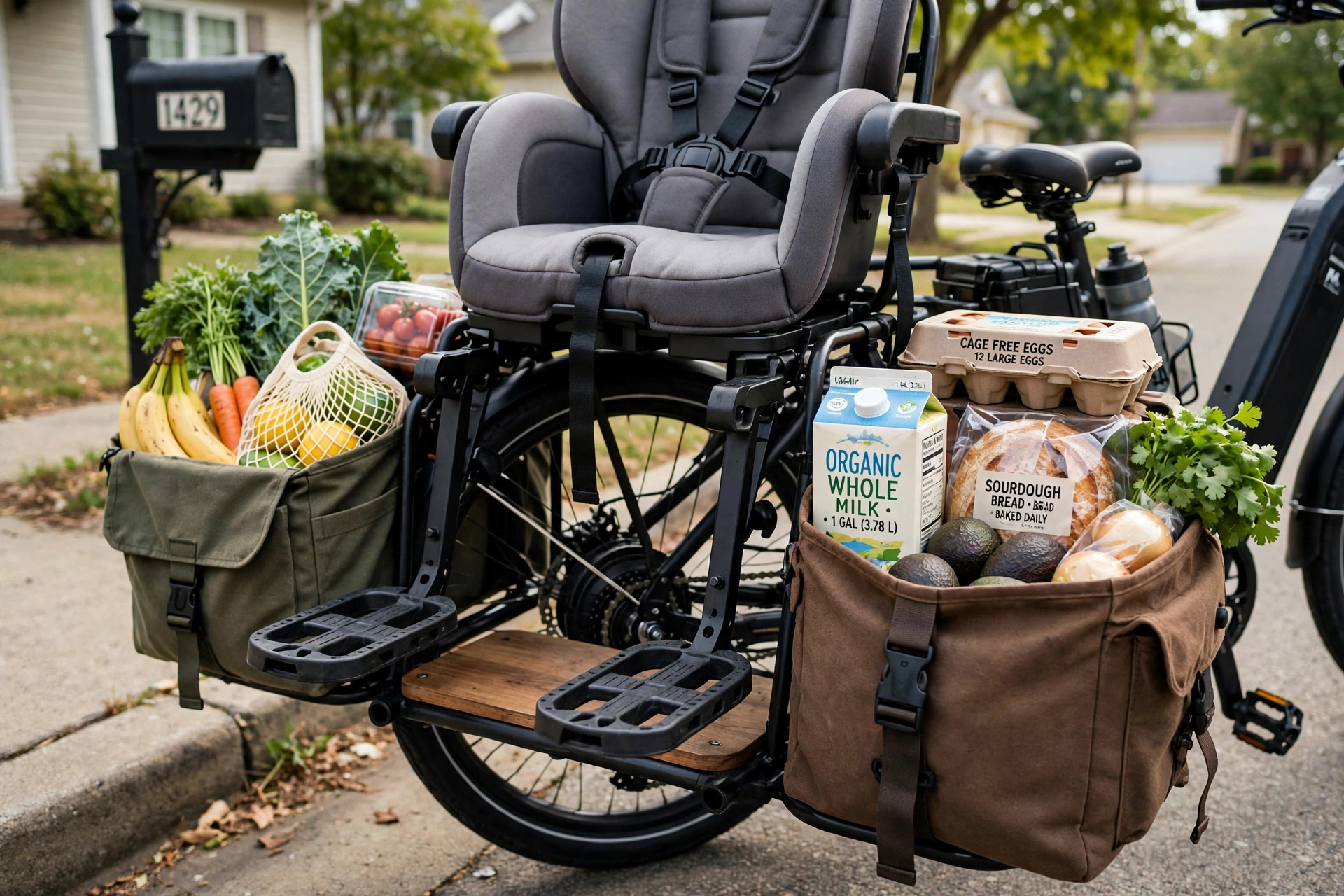
A longtail stretches the rear of the bike so a rack sits behind the rider. Kids sit on the rear rack, often with a padded seat and footrests, and groceries go in panniers or a rear basket.
Longtails ride most like a normal bike. They are the easiest cargo e-bike to handle, they fit in most bike racks, and they are the best choice for parents who want to carry one or two kids. Most cost between $2,000 and $4,500.
Front Loader Cargo E-Bikes
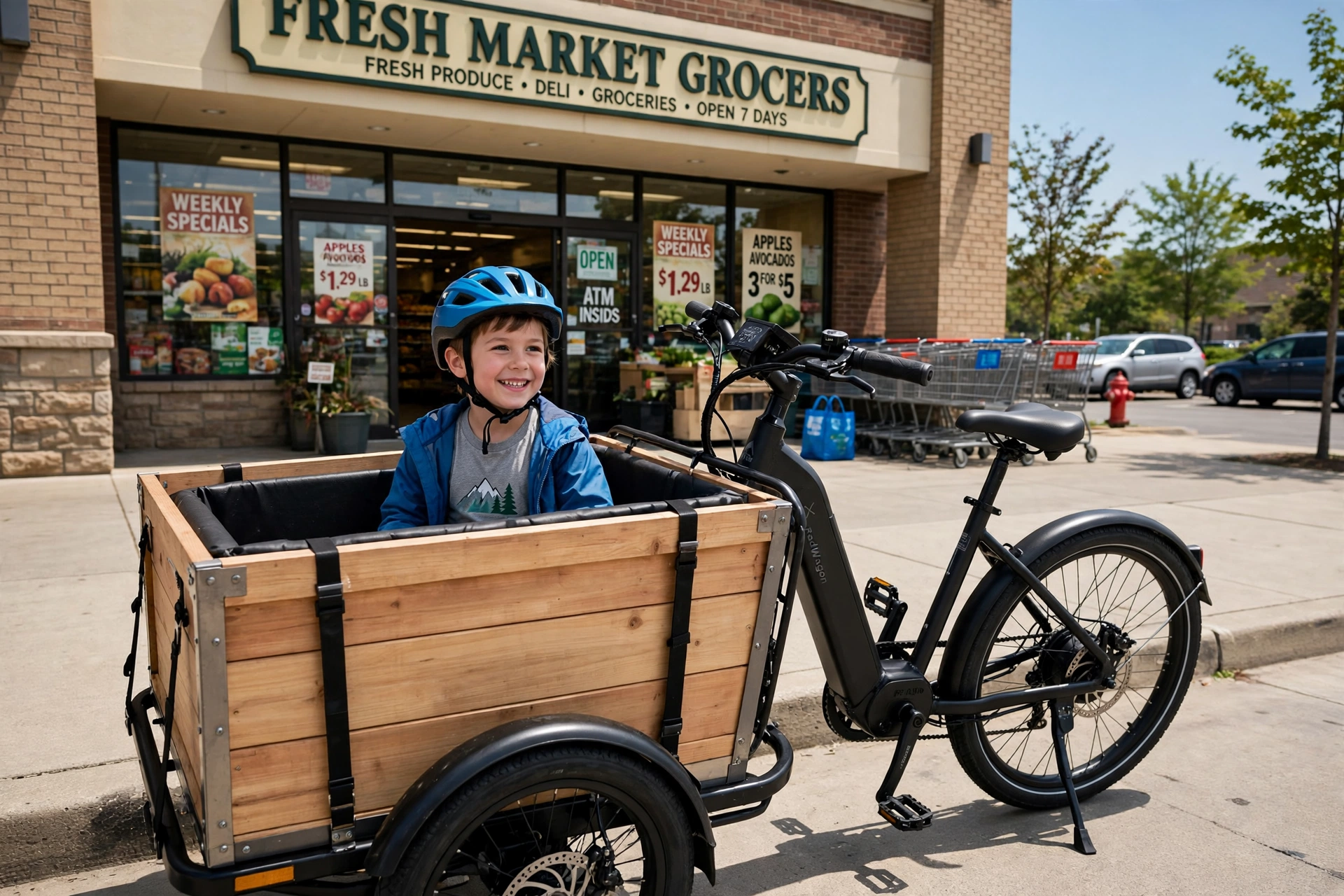
A front loader, also called a bakfiets, puts a big box or bucket between the front wheel and the handlebars. The load sits low and in front of you, so you can watch your kids while you ride.
Front loaders carry the most weight and the bulkiest items, including two small children plus bags, or a large dog. They are stable at low speed but longer and heavier than longtails, and they need more space to park and turn. Most cost between $3,500 and $7,000.
Compact and Folding Cargo E-Bikes
Compact cargo e-bikes use smaller 20 inch wheels and a shorter frame to keep the bike easy to store. Some fold. They carry less weight than a longtail or front loader, usually up to 250 pounds of load, but they fit in an apartment, a garage corner, or the back of an SUV.
These are the best choice for apartment dwellers and commuters who need to carry groceries and a work bag rather than kids. Most cost between $1,500 and $3,500.
Cargo E-Bike Prices in 2026
| Type | Typical price range | Load capacity | Best for |
|---|---|---|---|
| Compact cargo e-bike | $1,500 to $3,500 | Up to 250 lbs | Groceries, commuting, small loads |
| Longtail cargo e-bike | $2,000 to $4,500 | Up to 400 lbs | Kids, school runs, family errands |
| Front loader cargo e-bike | $3,500 to $7,000 | Up to 400 lbs | Two kids, big loads, deliveries |
| Premium longtail (Bosch motor) | $5,000 to $8,000 | Up to 400 lbs | Daily car replacement, hills |
Prices vary by motor, battery size, and brand. A bigger battery adds $300 to $600. A mid drive motor from Bosch or Shimano adds $800 to $1,500 over a hub motor model. Many US states and cities also offer e-bike rebates of $300 to $1,500, so check your state program before you buy.
How Much Can a Cargo E-Bike Really Carry?
The number on the spec sheet is the total weight the bike can carry, including the rider. A longtail rated for 400 pounds with a 170 pound rider can still carry about 230 pounds of kids and cargo. A front loader rated for 400 pounds works the same way.
Weight changes how the bike rides. A loaded cargo e-bike needs more braking distance, turns more slowly, and climbs hills more slowly than an empty one. Hydraulic disc brakes are not optional on a cargo e-bike. They are the single most important safety feature, and every model worth buying has them.
Battery range also drops with weight. A bike rated for 60 miles of range with one rider may only manage 35 to 40 miles fully loaded. Plan your trips around the loaded range, not the headline number.
Carrying Kids Safely on a Cargo E-Bike
Carrying kids is the most common reason Americans buy a cargo e-bike, and it is also where safety matters most.
Kids should always wear a helmet, and the bike should have foot guards so small feet cannot reach the rear wheel. On a longtail, use a padded rear seat with a backrest and a safety rail. On a front loader, use the manufacturer seat and harness, and a rain cover for bad weather.
Most manufacturers say children should be at least one year old before riding in a cargo box or on a rear seat, and able to sit up and hold their head steady. Check your state law as well. Some states set a minimum age for child passengers, and a few require helmets for all riders under 18.
Practice without the kids first. Load the bike with sandbags or grocery bags of the same weight and ride your school route a few times. You will learn the braking distance and the turning feel before your children are on board.
Cargo E-Bikes vs a Second Car
For many families, the real question is whether a cargo e-bike can replace a second car. Run the numbers for your own household.
A second car costs about $5,000 to $9,000 a year in the US once you add insurance, gas, maintenance, and depreciation. A cargo e-bike costs $2,000 to $5,000 to buy and about $200 to $400 a year to run, mostly electricity, tires, and brake pads.
If your daily trips are under 10 miles, your weather is manageable, and you have safe bike routes, a cargo e-bike can replace most second car trips. School runs, grocery runs, and trips to the park are the easiest to replace. Long highway trips, winter blizzards, and hauling furniture are not.
Many families keep one car and add a cargo e-bike. That is the most common setup in the US, and it is where the savings are biggest.
What to Look For Before You Buy
Motor type
A mid drive motor sits at the pedals and uses the gears, so it climbs hills better with a heavy load. A hub motor sits in the wheel and is cheaper and simpler. If your area is flat, a hub motor is fine. If you have hills and a full load, a mid drive is worth the extra money.
Battery size
Look for at least 500 watt hours for a cargo e-bike, and 750 watt hours or more if you carry kids or ride in hills. A bigger battery means more range when loaded, and it will last more years before it needs replacing. For more on battery care, see our guide on how to extend your e-bike range.
Brakes
Hydraulic disc brakes are a must. Mechanical disc brakes work, but they need more hand strength and more frequent adjustment, and a loaded cargo e-bike is the worst place to discover weak brakes.
Frame and storage
Check the total weight rating, not just the rack rating. Measure where you will park it. A front loader is about 8 feet long and will not fit a standard bike rack. A longtail is about 6.5 feet long and fits most racks.
Test ride with weight
Never buy a cargo e-bike without a test ride, and test it loaded. Good bike shops keep sandbags for this. If the shop will not let you test with weight, buy somewhere else.
If you are new to e-bikes in general, our guide to choosing your first e-bike covers motor classes, sizing, and budget in more detail.
Cargo E-Bike Laws in the US
Cargo e-bikes follow the same rules as other e-bikes in most states. The three class system applies: Class 1 gives pedal assist up to 20 mph, Class 2 adds a throttle up to 20 mph, and Class 3 gives pedal assist up to 28 mph.
A few states treat Class 3 bikes differently, with minimum age rules or bans from some bike paths. New York City has its own rules for commercial cargo bikes. Always check your state and city rules before you buy, because the class that is legal on your local trail may not be the one the shop recommends.
Cargo e-bikes do not need a license, registration, or insurance in most states, though some owners add e-bike insurance for theft and liability. That is a personal choice, not a legal requirement in most places.
Best Uses for a Cargo E-Bike
Cargo e-bikes shine on short, repeated trips. School runs are the classic use, and parents report that the school run becomes the best part of the day. Grocery runs are next, because a cargo e-bike carries a full week of shopping in panniers and a front basket.
Commuters use them to carry a laptop, gym bag, and work clothes without arriving sweaty, since the motor handles the effort. Small businesses use them for local deliveries, and they are faster than a van in city traffic.
The uses that do not work well are long trips over 20 miles each way, carrying adults as passengers, and riding in heavy snow or ice. Know the limits before you buy.
Maintenance Costs
A cargo e-bike costs more to maintain than a normal e-bike because it is heavier and works harder. Budget $200 to $400 a year for a bike you ride daily.
Brake pads wear fastest, especially on the rear wheel, and may need replacing every 1,000 to 2,000 miles when loaded. Tires wear faster too, so check them monthly. The chain and drivetrain need cleaning and lubrication more often than on a normal bike, because the motor and the load put more stress on them.
The battery is the biggest long term cost. A replacement battery costs $400 to $900 and is usually needed after 3 to 5 years of daily use. Store the battery indoors in winter and avoid leaving it fully charged for weeks, which shortens its life.
Frequently Asked Questions
How much does a cargo e-bike cost in 2026?
Most cargo e-bikes cost between $2,000 and $5,000 in the US. Compact models start around $1,500, longtails run $2,000 to $4,500, and front loaders run $3,500 to $7,000. Premium models with Bosch mid drive motors can reach $8,000. State rebates can cut $300 to $1,500 off the price.
Can a cargo e-bike replace a car?
For short trips under 10 miles, yes, for many families. A cargo e-bike handles school runs, groceries, and commuting, and costs about $200 to $400 a year to run versus $5,000 to $9,000 a year for a second car. It cannot replace a car for long highway trips or severe winter weather.
How many kids can a cargo e-bike carry?
A longtail cargo e-bike usually carries one or two kids on the rear rack. A front loader can carry two small children in the box. Always use the manufacturer seat, foot guards, and helmets, and check your state rules for minimum age and helmet requirements.
Do I need a license or insurance for a cargo e-bike?
No license or registration is needed for a cargo e-bike in most US states, because it is classed as a bicycle. Insurance is not legally required in most states, though some owners buy e-bike insurance for theft and liability cover.
Are cargo e-bikes hard to ride?
They feel different from a normal bike at first, especially when loaded, because they are longer and heavier and need more braking distance. Most riders feel comfortable after a few practice rides. Always practice with a loaded bike before carrying children.
Final Thoughts
A cargo e-bike is one of the best value purchases in the e-bike world. It costs less than a year of running a second car, it turns the school run into the best part of the day, and it makes short trips faster and more fun than driving.
Pick the type that matches your load. A longtail is the best all rounder for families. A front loader is best if you want to watch your kids while you ride. A compact cargo e-bike is best if space is tight.
Test ride loaded, buy hydraulic brakes, and get the biggest battery you can afford. Do that, and your cargo e-bike will earn its place in your garage for years.